Chapter 32
 Call Kai
 Learn
 Practice Test
 Spaced Repetition
 Match
 Flashcards
 Knowt Play
1/58

There's no tags or description
Looks like no tags are added yet.
59 Terms
What key characteristics of animals make them such efficient consumers?
1.) heterotrophs - get nutrients/energy by eating other organisms
2.) tissues - layers of embryonic cells
3.) efficient digestive systems - mouth from one end and anus at other
4.) unique nerve and muscle cells - help move and detect prey
What proteins are found in animals, but not found in plants or fungi?
abundant proteins called collagen (lack structure and support of cell wallks like in plants and fungi)
Tissues
groups of similar cells that act like a unit
ex.) muscle system responsible for moving body
What is dominant phase for animals?
diploid dominant
Cleavage
PROCESS
many mitotic divisions w/out cell growth in between
leads to multicellular embryo

After a diploid zygote is made, whats the sequence of early embryonic stages?
cleavage → blastula → gastrula

Blastula
multicellular embryonic stage that surround fluid filled cavity called blastocoel
“hollow ball”
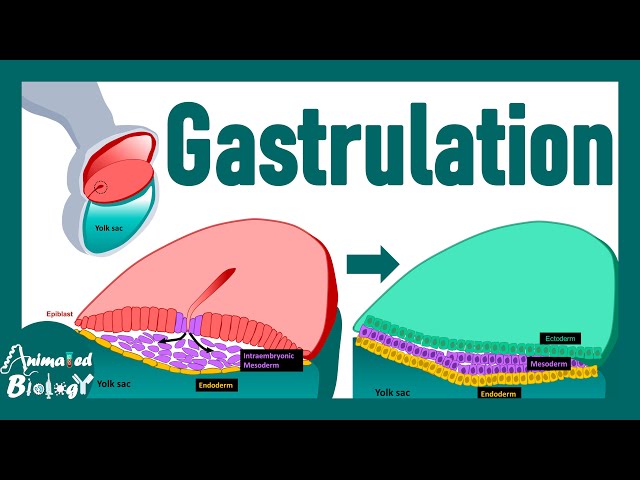
Gastrulation
PROCESS
embryotic tissue develops into adult body parts to get stage gastrula
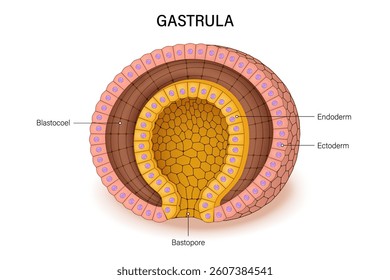
Gastrula
one end of blastula’s cells have folded and rearranged into multiple tissue layers, expands to fill with blastocel, which produces embryotic tissue
resulting developmental stage of gastrulation

Larva
sexually immature form of adult
→ morphologically different
→ different food
→ maybe different habitat
ex.) dragonfly, mosquito

Metamorphosis
developmental transformation that transforms animal into juvenile that resembles adult, but is not sexually mature

HOX gene
gene that determines the identity and position of body structures during embryonic development.
Early embryonic development in animals
1.) zygote goes through series of cleavage (mitosis cell division)
zygote → eight cell stage
2.) eight cell embryo formed by 3 rounds of cell division, goes through cleavage again
eight cell stage → blastula
3.) (most cases) cleavage produces multicellular stage called blastula (“hollow ball”) which surrounds cavity called blastocoel
blastula → gastrulation
4.) (most) undergo gastrulation (one end of embryo folds inward, expands, and fills with blastocoel) - forms embryonic tissues ectoderm and endoderm
5.) pouch formed by gastrulation (archenteron) opens to outside via blastopore
6.) endoderm of archenteron develops inro rissue lining of animals digestive tract
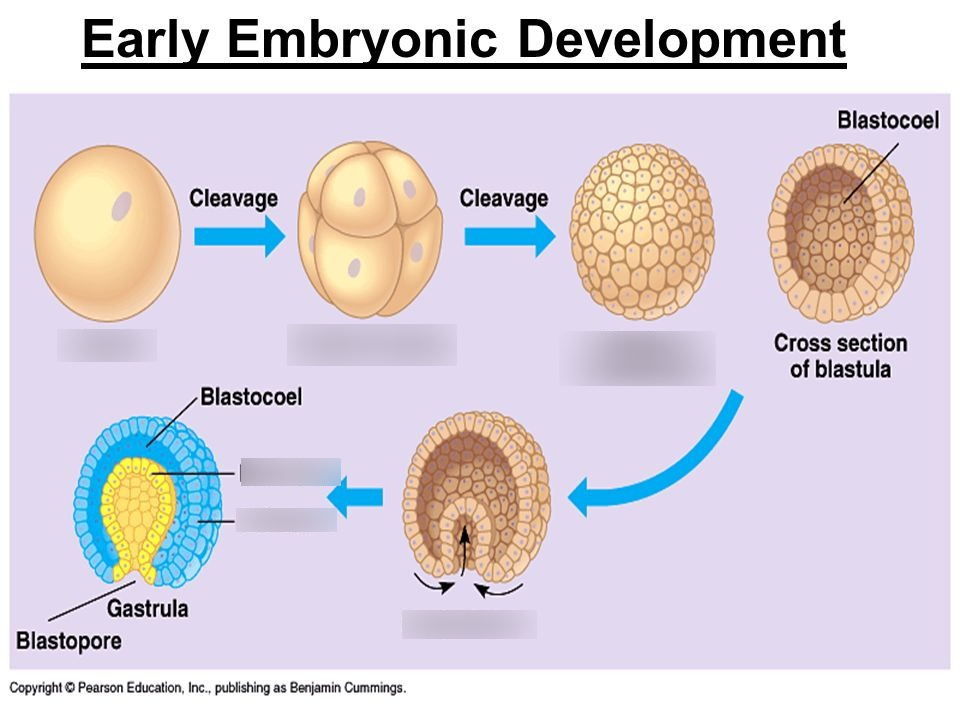
Embryonic tissues are called…
ectoderm (outer layer)
endoderm (inner layer)
Archenteron
pouch formed by gastrulation
Which group of organism is closest to animals?
protists- specifically chanoflagellates

Cadherins
certain proteins that play key role is how animal cells attach to each other + protein domain that ONLY animals use for cell signaling
What protein is found in animals and chanoflagellates, and which protein domain is found only in animals?
1- cadherin proteins also found in cadherin LIKE proteins of chanoflagellates
2- CCD protein domain unique to animals and not in chanoflagellates

Ediacaran Biota
earliest group (known fossils/macroscpic animals) in Proterozoic era of mostly soft bodied multicellular eukaryotes
600 million years ago

Cambrian Explosion
“explosion” in animal diversification
most were bilaterarians, ediacarians decreased
535-525 million years ago
Why were most in Cambrian Explosion bilaterians?
dramatic climate shift resulted in dramtic mineral influx in ocean, causing animals to form hardened structure-like shells
Why did the Edicarians decrease? 3 hyphothesis
1.) predators adapted to catching prey (claws), prey adapted new defenses (shells)
→remember, edicarians were soft bodied, so with no shell they were easily caught by predators
2.) atmospheric oxygen increases, allowing animals w/ higher metabolic rates and larger bodies to thrive
→ larger bodies = easier to catch prey
3.) genetic changes like HOX gene and new microRNA
Body Plan
morphological and developmental traits for whole animal
→ symmetry
→ tissues
→ body cavity
What kinds of symmetry are there?
radial, bilateral. and asymmetry
Radial symmetry
single main axis through center of animal that divides it into mirror images - symmetrical on multiple planes

Traits of radial animals
sessile (living attached to substrate) or planktonic (drifting/swimming weakly)

Bilateral symmetry
symmetrical on one plane; head-tail axis and dorsal-ventral axis dividing animal into mirror image halves

Traits for bilateral animals
-move place to place
-have brains

Asymmetry
no symmetry
→ Porifera/sponges

Ectoderm
outer germ layer covering surface of embryo
Endoderm
inner germ layer
Diploblastic
those that only have ecto and endoderms (no mesoderms)
→ cnidarians

Mesoderm
filling in between endo and ectoderm
→ symmetrical animals have this, as it forms muscles and other organs between digestive tract and outer coverings
Triploblastic
all 3 germ layers
→ most animals have this

Body Cavity
fluid/air filled sac between digestive tract (endoderm) and ectoderm
provides:
→structural support
→internal transport of nutrients, gases, waste
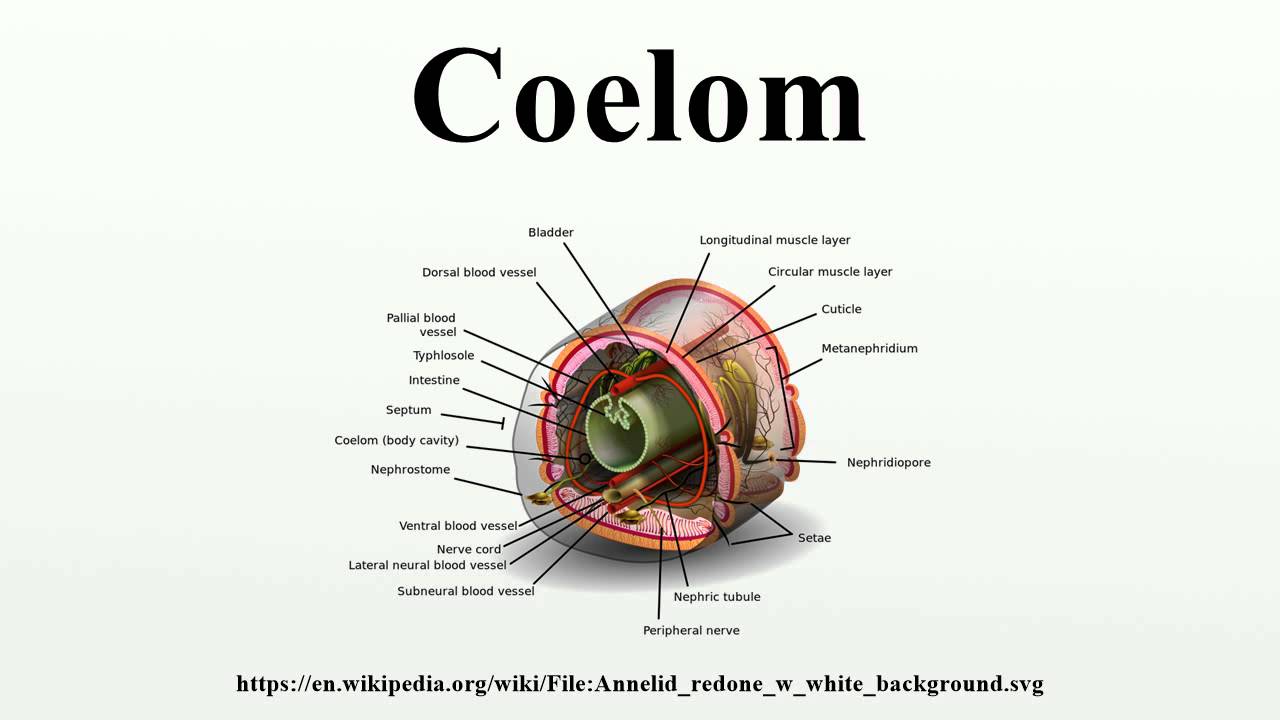
Coelom
body cavity that forms from tissues derived from mesoderm
fluid…
→ fills and cushions organs (helps prevent internal injury)
→ allows internal organs to move and grow
Example of coelom
Earthworms- soft bodies, fluid in coelom acts like skeleton where muscles can grow


Hemocoel
body cavity that forms from mesoderm and endoderm
hemolymph fluid transports waste and nutrients internally
Example of hemocoel
molluscs - hemocoel is primary, but they have reduced coelom surrounding heart

Compact
no body cavity
tend to have flat and thin bodies
don’t require internal transport system bc only a few cells thick

Protostome Development
embryonic development where blastopore develops into mouth first, then anus

4 key feature of protostome development
→ undergo spiral cleavage
→ bilateral animals in clades lophotrochoza and ecdysozoa
→ mouth developes from blastospore
→ coelom formation (gastrula stage) splits in the mesoderm in archentron

Spiral cleavage
cells divide diagonally to vertical axis of embryo, causing smaller upper cells to sit between larger, lower cells

Determinate cleavage
“determines” fate of embryo early on, preventing individual cells from developing into complete embryos
protostomes

Archenteron
blind pouch that becomes gut

Deuterostome development
embryotic development where blasospore develops into anus

4 key features of deuterstome development
→ radial cleavage
→ bilateral animals in clade duetersostomia
→ anus develops from blastapore
→ coelom formation (gastrula stage) forms from mesodermal outpockets of archenteron

Radial cleavage
planes either parallel or perpendicular to vertical axis of embryo - cells upper layers align directly above cells in lower layers

Indeterminate cleavage
early embrytoic cells have the ability to develop into complete embryos if separated
deterosomes
ex.) human twins

Compare three aspects of the early development of a snail
(a mollusc) and a human (a chordate).
1- snail has spiral cleavage, human has radial cleavage
2- snail had determinate cleavage, human has indeterminate cleavage
3- snail forms mouth first, human forms anus first
What animal is sister group to all other animals?
sponges
Basal
lineage that diverges early from common ancestor of a group in a tree
Eumetazoa
clade of animals with tissues- all except sponges
→ bilateral and triploblastic symmetry
→ most animals are this
Three major clades of bilaterian animals
1.) Deuterstomia
2.) Lophotrochozoa
3.) Ecdysoza

Deuterostomia
NOT deuterostomes
hemichordata (acorn worms), echnioderms (sea stars) and chordata
In the Deuterstomia, which are the invertebrates and which are the vertebrates?
Hemichordata (acorn womrs) → invertebrate
Echnioderms (sea stars) → invertebrate
Chordata → invertebrate and vertebrate
Lophotrochoza
entirely made of invertebrates
develops unique structure called lophophore
Lophophore
crown of ciliated tentacles that function in feeding

Trochophore Larva