l20 - gastro
 Call Kai
 Learn
 Practice Test
 Spaced Repetition
 Match
 Flashcards
 Knowt Play
1/81

There's no tags or description
Looks like no tags are added yet.
82 Terms
explain the skin as a barrier
the epidermis provides mechanical and chemical protection
it acts as a SELECTIVE barrier to chemicals and microorganisms
AND prevents water loss from the body

explain the STRATUM CORNEUM
the most outer layer of the epidermis
made of corneocytes embedded in a lipid matrix
organised structure - not just randomly assorted dead cells
what is the cornification process
the process of keratinocytes moving towards the surface of the epithelium
so this process is called CORNIFICATION
compare the cells in the stratum granulosum VS the stratum corner
SG
living keratinocytes that are PREPARING to become surface cells
SC
the outermost layer which contains dead flattened cells called CORNEOCYTES

what FORMS in the stratum granulosum?
keratohyalin granules form in this layer
lamellar bodies form in this layer
what is a keratohyalin granule?
these are granules which contain proteins which help organise and pack keratin into the cells
so this helps make the cell tough

what is a lamellar body?
these are produced by keratinocytes
they release lipids between cells in our epidermal layer, which help form protective lamellar sheets

what FORMS in the stratum corneum?
cornified envelope
lamellae sheets
what is a cornified envelope?
a tough structure around each individual corneocyte
this is what replaces a cells normal membrane, as that cell dies and moves toward the outer surface
this cornified envelope is made of cross-linked proteins
SO ITS A TOUGH PROTEIN SHELL SURROUNDING A CORNEOCYTE
what is a lamellae sheet
rememer that we had lamellar bodies in our stratum granulosum layer
when our cells reach the stratum corneum layer, these lamellar bodies RELEASE these lipids which they contain
these lipids then arranged themselves into organised layers called lamellar sheets
when does shedding of the skin occur?
when the connections between corneocytes are cleaved
we have junctions between corneocytes/keratinocytes which hold them together
then at the top layer, the proteases cleave these junctions and the cells shed off

what junctions connect corneocytes?
tight junctions
corneodesmosomes

explain what is inside of a corneocyte/cornified envelope
cornified envelope = the tough outer shell of a corneocyte
and then INSIDE OF THE CELL = tightly packed keratin filaments associated with filaggrin

what is outside of our corneocytes?
a matrix containing lipids, natural moisturising factors, and proteases
can se the lipid lamellae outside of these cells
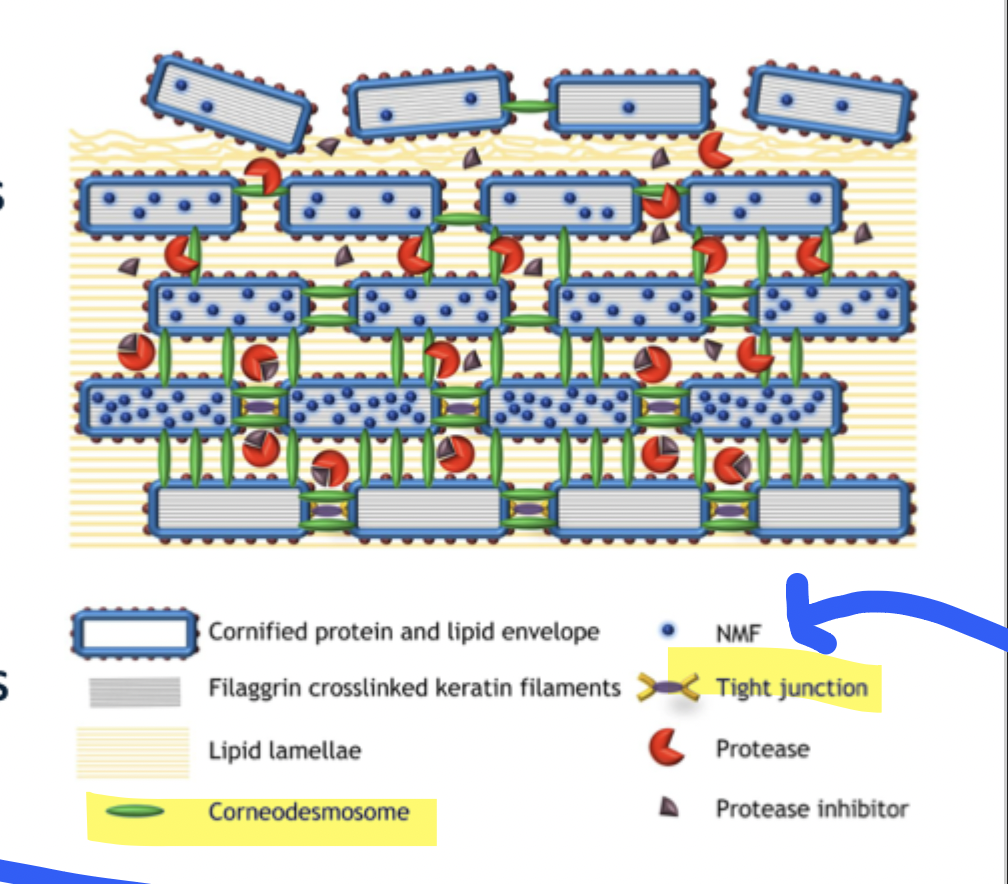
how come only the outer layer of cells is cleaved?
we have proteases and protease inhibitors scattered throughout all the epidermal layers
can see at the basal layer, there is LOTS of inhibitors, hence no cleavage
but as get to that top layer, we lose the inhibitors, so these proteases can effectively cleave off the cells
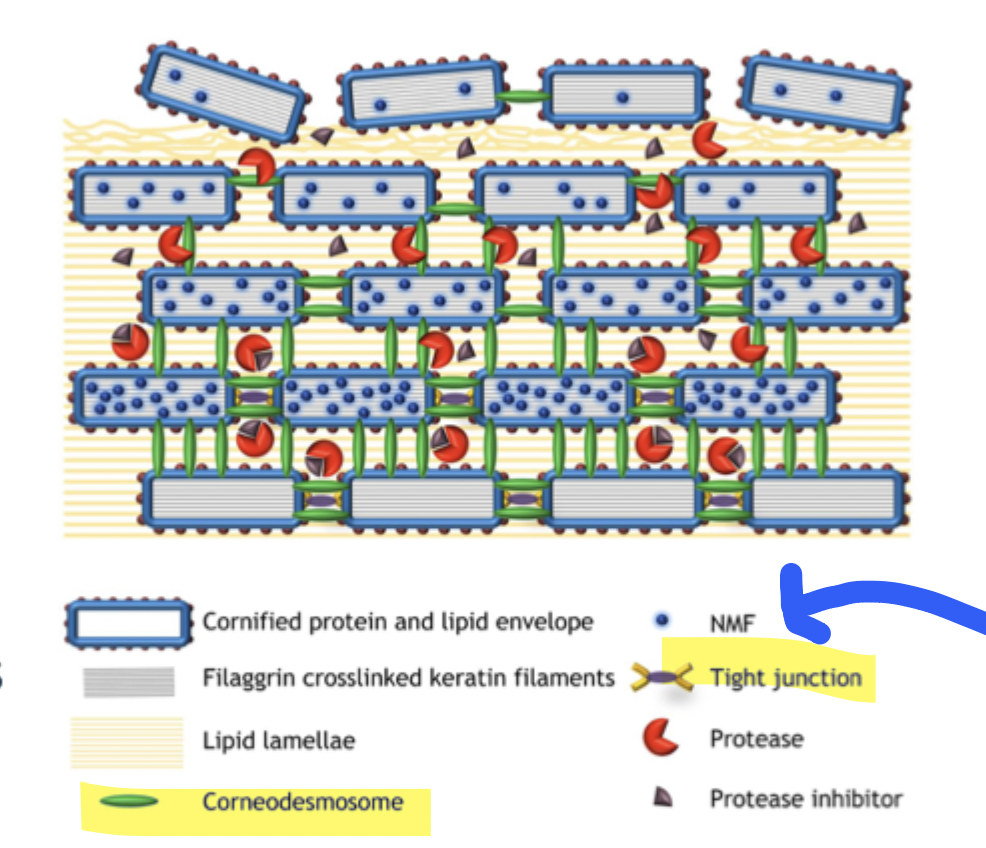
where are NMF’s PRIMARILY found?
within the corneocytes
what is an NMF
NMF is a group of tiny molecules inside a corneocyte that grab onto water and hold it there.
so stops the corneocyte from becoming too dry
What are lamellar granules/bodies?
Lipid-filled structures made by keratinocytes in the stratum GRANULOSUM that provide the lipids for extracellular lamellar sheets
these granules are made in the golgi apparatus
What happens to lamellar granules as keratinocytes move toward the stratum corneum?
They move to the cell membrane and release their lipid contents outside the cell.
What happens to the lipids after they are released from lamellar granules?
They reorganise into highly organised, stacked lipid sheets called lipid lamellae.
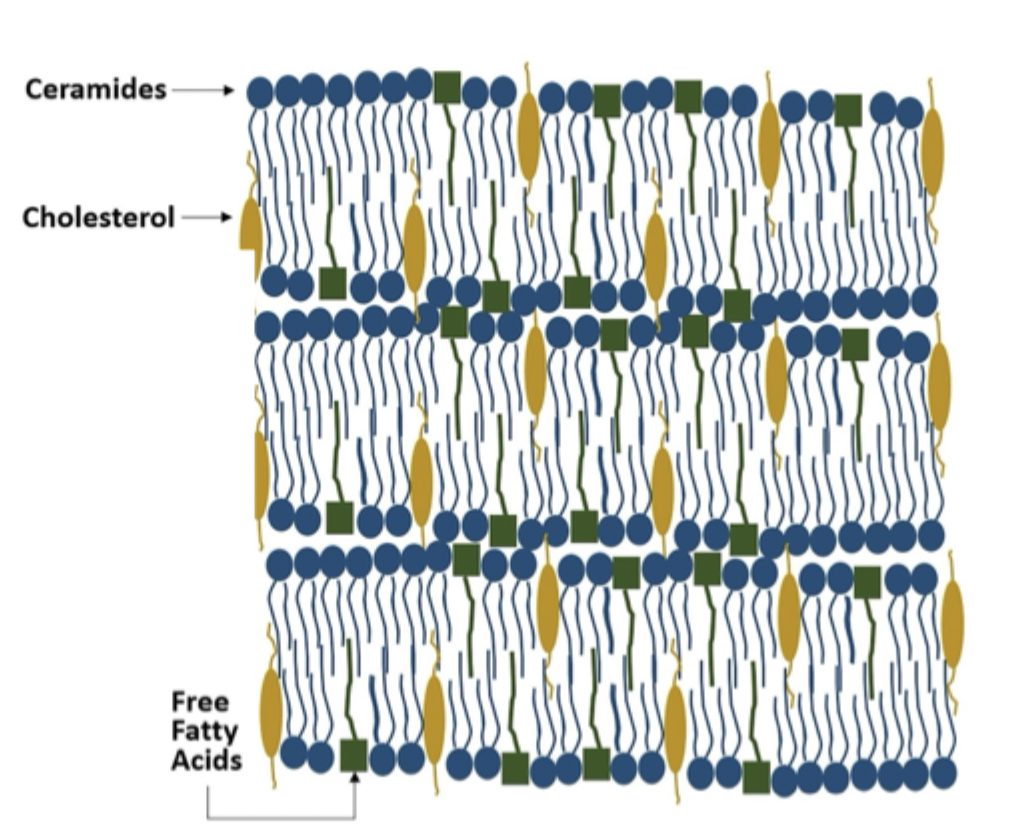
What major lipids contribute to the lipid lamellae?
Ceramides, cholesterol and free fatty acids.

does keratin change as our cells differentiate through our epidermal layer?
YES'
there is a change in keratin production as our cells differentiate towards the top layer
how and WHY does keratin production change as our epidermal cells differentiate?
as keratinocytes move closer to the epithelial outer layer, they are exposed to more calcium
this calcium stops the dividing of cells, and cuases them to start differentiating into strong keratin cells
what calcium gradient do we have in our epidermis
LOW calcium in the basal layers
this is why the cells divide so much
HIGH in the outer layers
this is what causes cells to completely halt dividing, and progress with differentiating
aside from halting the division of cells, what else does the increased concentration of calcium do?
increases the expression of keratin
which is why our outer cells have a lot more keratin
the TYPE of keratin protein expresed is also different to the basal and most outer layer
increases junctional proteins
so cells are most strongly connected to each other - this is very helpful in aiding the skin in being a STRONG barrier

what are the 2 main molecules we have within keratinocytes/corneocytes?
keratin filaments
filaggrin
what is significant about the filagrinn within our corneocytes?
it is responsible for the production of NATURAL MOISTURISING FACTORS
when filaggrin is broken down, some of its broken down products form this NMF
what 2 functions does filaggrin have?
in keratinocytes (stratum granulosum)
it helps in PACKING keratin together
once broken down (stratum corneum)
its broken down products form NMF’s
what is filaggrin INITIALLY produced as?
PRO-FILAGGRIN
this is a large precursor protein which is processed to produce filaggrin > so contains lots of the filaggrin molecules stuck together
Where is profilaggrin found?
In keratohyalin granules of keratinocytes in the stratum granulosum.
What happens to profilaggrin during keratinocyte differentiation?
it is DEPHOSPHORYLATED, and this causes that bunch of filaggrin molecules to dissociate from each other
so during keratinocyte differentiation, the profilaggrin is processed into individual filaggrin molecules
what happens once profilaggrin is dephosphorylated, and turned into individual filaggrin molecules?
they become interwoven with the keratin filaments
so it binds to the keratin and helps bind the keratin together
what happens to our filaggrin as differentiation occurs?
as the cell progresses into the stratum corneum, there is this release of proteases and caspases
these begin to CLEAVE our filaggrin molecules > so filaggrin broken down by proteolysis
what happens once filaggrin is broken down?
it is broken down into free amino acids and other derivatives
some of these products are water attracting molecules which contribute to NMF
SO:
profilagrin > filagrin > NMF

What is the main function of NMF?
To attract and retain water, keeping corneocytes hydrated and flexible.
where does profilaggrin to filaggrin occur, and where does filaggrin to NMF occur?
profilaggrin to filaggrin > STRATUM GRANULOSUM
filaggrin to NMF > STRATUM CORNEUM
what happens due to the sequence of events: profilaggrin > filaggein > NMF
we have a DROP IN pH
because acidic products are produced as filagrin is broken down > causing this decrease in pH
acid mantle?
this refers to the outer most surface of the epidermal layer
it is ACIDIC due to the the filaggrin break down that occurs in the stratum corneum layer
whats the pH of the acid mantle?
4.5
why do we need the acid mantle?
prevents microbial invasion
regulates enzymatic activity
helps maintain a proper lipid barrier
what TWO things work together primarily to maintain a healthy skin barrier?
NMF
these hold onto water within our corneocytes
lipid lamellae
these form a waterproof barrier BETWEEN our corneocytes
how does the NMF work to maintain a healthy skin barrier?
the NMF’s act as humectants
a humectant is a substance which attracts and holds onto water
they are able to hold onto water as they form hydrogen bonds with the water - which traps it within the corneocytes
how does the lipid lamellae work to maintain a healthy skin barrier?
our NMFs work to keep water in so we do not have dry and brittle corneocytes… BUT this is useless if we cannot keep that water IN the cells
so lamellar bodies release lipids (ceramides + cholesterol + free fatty acids)
these lipids organise into the lipid lamellae
this lipid lamellae are located BETWEEN the corneocytes
these lipids are very hydrophobic, so they repel water, which helps to keep it within the corneocytes
SO THE LIPID LAMELLAE PREVENTS WATER LOSS FROM THE BODY
how do we test if someone has a healthy skin barrier?
we can do a test
trans epidermal water loss (TEWL)
what is a TEWL test?
trans epidermal water loss
this is a test where a machine with a humidity sensor goes onto the skin
this machine can measure the amount of water which is being released over a period of time
explain the results of a TEWL test for sensitive skin?
if someone has MORE sensitive skin, it means that their barrier is LESS intact
they will score lower on a TEWL test because they cannot retain as much water as their barrier is less intact

explain how we can use a TEWL test to see if someone has a COMPROMISED skin barrier?
TEWL = The amount of water that passes from inside the body, across the epidermal barrier, and escapes to the outside environment.
HEALTHY > we do lose water, but remains relatively low
COMPROMISED > much more water escaping due to this compromised barrier
so skin is drier
and TEWL is higher
what are the consequences of a compromised skin barrier?
more susceptible to UV exposure
this means keratinocyte damage/death is more likely to occur
irritants can now enter the skin more easily (e.g. microbe, sunblock, etc.)
this can cause sensitivity, redness, itching, and dermatitis
you will have a higher TEWL and drier skin
what main THREE hydrating moisturizing ingredients that help protect the skin barrier?
occlusives
humectants
emollients
occlusives?
these form a protective layer of the skin that stops water from ESCAPING
so they can reduce trans-epidermal water loss - TEWL
so they seal moisture IN
increases skin hydration
humectants?
humectants are water attracting substances - they attract water from the surrounding environment OR the deeper skin layers, and then they HOLD this moisture in this environment
so this is how they increase our skins hydration
emollients?
emmolients are responsible for SMOOTHING and REPAIRING the skin barrier
so they help by filling in gaps between the skin cells
helps to support the lipid barrier
what is an eccrine gland?
a gland composed of clear and dark secretory cell that excretes sweat, composed of water, mucus, and electrolytes
they can be found in the dermis, close to the hypodermis
they are involved in THERMOREGULATION

EXPLAIN the structure of an eccrine gland
the main gland is a coiled duct, that extends upwards through the dermis AND the epidermis
there are 2 parts
secretory coil: this is what produces the INITIAL sweat
duct: this transports sweat towards the surface and modifies its composition
whats the difference between a clear and a dark secretory cell in an eccrine gland?
clear = secretes water and electrolytes into the gland
so they help produce the WATERY component of sweat
dark = secrete mucus like components into the sweat
what do myoepthelial cells found near the eccrine glands do?
these surround the SECRETORY portion of the gland
they contract in order to help squeeze the sweat INTO the duct, and TOWARDS the skin surface
so how does the body actually stimulate the eccrine glands to release sweat?
the HYPOTHALAMUS
the hypothalamus is the part of the brain that helps to regulate body temperature
if you get too hot, the hypothalamus detects this and sends signals through SYMPATHETIC NERVE FIBERS to the eccrine glands
these sympathetic nerve fibers release acetylcholine onto the eccrine gland
Ach binds to muscarinic receptors on the eccrine gland
this cause some ions to be secreted - which water then FOLLOWS down its osmotic gradient
SO THIS IS HOW IT TRIGGERS SWEAT PRODUCTION
NAME some reasons why sweating release of moisture onto the skin is important
thermoregulation
improved grip
a small amount of moisture on the palms and fingers can improve grip and friction
helps influence the hydration of skin AND the skins acid mantle
what are apocrine glands?
these are sweat glands that secrete viscous liquid and protein contents of the cytoplasm INTO hair follicles
these are found commonly in armpits, groin, and perianal region
found deeper in the dermis then an epicrine gland is
structure of apocrine gland?
it is a ductal epithelium wiht lobules of cuboidal cells
what controls the apocrine glands?
the limbic system
What causes body odour?
Body odour occurs when bacteria on the skin break down relatively odourless substances in apocrine sweat into strong-smelling compounds.
What are odour precursors?
Substances released in sweat that are initially relatively odourless but can be converted by skin bacteria into molecules that cause body odour.
What are the two main types of compounds responsible for body odour?
Short-chain fatty acids and thioalcohols, which are produced when skin bacteria metabolise sweat-derived precursors.
Why is apocrine sweat particularly associated with body odour?
Because apocrine sweat contains protein- and lipid-related precursors that skin bacteria can break down into odour-producing molecules.
whats the difference between deoderant, and an antiperspirant?
antiperspirants block the release of sweat by PHYSICALLY BLOCKING THE PORE
whereas deoderant works to minimise the body odour produced by sweat. BUT microbes can become resistance to deoderants very quickly > so these can become ineffectve
what is a sebaceous gland?
these are glands which produce SEBUM and release it onto the skin
these are usually attached to hair follicles
why is sebum good?
it helps…
lubricate the skin and hair > which reduces friction and damage
reduce transepithelial dermal loss and increases hydration
support the skin barrier
delivers antioxidants and antmicrobial peptides to protect against UV damage and microbial invasion
How is sebum produced and released by sebaceous glands?
the outerlay of a sebaceous gland consists of basal cells
these basal cells divide and mature into sebocytes
which accumulate lipid droplets.
The sebocytes eventually die and break apart, releasing their contents as sebum into the hair follicle.
so sebum is release due to the cell EXPLODING
What is holocrine secretion?
A type of secretion in which the entire secretory cell dies and breaks down, releasing its contents. This is how sebaceous glands release sebum.
how does sebum production vary
it varies between sex, age, and skin site
the sex component is the MAIN component of sebum production
How do testosterone and IGF-1 contribute to acne?
They stimulate sebaceous glands to produce more sebum and promote epithelial hyperproliferation, which can block hair follicles and contribute to acne.
What is epithelial hyperproliferation, and how does it contribute to acne?
It is excessive division of epithelial cells. In hair follicles, increased cell accumulation can block the follicle opening, trapping sebum and contributing to acne.
what can cause inflammatory acne?
infection, diet, and chemicals
what inhibits excess sebum production?
ESTROGEN
if estrogen inhibits acne, why can it still contribute to it?
if estrogen levels are FLUCTUATING then this can contribute to excess sebum and acne
treating acne - what are the two ends of the scale?
exfoliation vs anti-bacterial

How does salicylic acid treat acne?
this is on the EXOFILIANT side of acne treatments
it treats acne by exofliating the skin and unclogging the pores
how do topical retinoids treat acne?
this is closer to the exfoliant side of acne
it NORMALIZES cell turn over and prevents clogging of pores
how does azelaic acid treat acne?
this is in the MIDDLE of the exfoliant/antibacterial acne spectrum
it is anti-bacterial
anti inflammatory
and LIGHTENS pigment
how does benzoyl peroxide treat acne?
this is closer to the anti-bacterial side of the spectrum
it reduces bacteria and UNCLOGS pores
how do topical antibiotics treat acne?
these are on the anti-bacterial side of the spectrum
they reduce inflammation and bacteria