8 - Attention
 Call Kai
 Learn
 Practice Test
 Spaced Repetition
 Match
 Flashcards
 Knowt Play
1/73

There's no tags or description
Looks like no tags are added yet.
74 Terms
we need to _______ define a problem to build cognitive models and design experiments with testable hypothesis
operationally
william james definition of attention
everyone knows what attention is
It is the taking possession by the mind in clear and vivid form of one out of what seems several simultaneous possible objects or trains of thought
implies withdrawal from some things in order to deal effectively with others
is a condition which has a real opposite in the confused, dazed, scatter brained state
selection
the act of attending to an object to select it apart from the unattended objects
attention
conscious ability to attend to the info that is relevant to our goals
autonomic processes
triggered involuntarily by external events
involuntarily “capture” your attention
fast, efficient
controlled processes
triggered voluntarily
voluntarily “capture” your attention
slow, effortful
limited (attention in this way can be split)
our resources for ________ _________ are limited
controlled processes
e.g. if you’re driving a car and start talking to a passenger, you typically slow down (your attention is split)
2 concepts of automatic processes related to learning
salience
effortful tasks becoming automatic through practice
salience
(a salient piece of info) is one that appears to naturally pop out at you
e.g. a nearby driver honking their horn; you can’t ignore it
michael posner
there is an analogous process for visual attention
attentional spotlight
focusing on only part of the environment at a time
how are objects within the spotlight processed?
faster reaction time
higher accuracy
ways to examine attention in a lab setting
queuing paradigms
queuing paradigms study
participant stares at a plus sign in the middle of screen, w/ 2 boxes on either side
will be asked to determine which box the star appeared in
before the star appears, one of the boxes will flash
when the star appears in the box that flashed (cued trial), participants tend to react more quickly (because their attention was already attracted to that box)
when the star doesn’t appear in the box that flashed (uncued trial), participants tend to react more slowly (because their attention was attracted away from that box)
true or false: attention can shift faster than the eye
true
cocktail party effect
despite competing background noises, a listener can focus on a single channel of info
experiments on cocktail party effect
subjects listen to 2 diff messages played from a loudspeaker at same time
subjects tried to separate the messages by repeating only 1 of the messages (shadowing)
shadowing
person immediately repeats stimuli aloud (during a dichotic listening paradigm)
(cherry) the ability to separate target sounds from background noise is based on _______ characteristics, such as the gender of the speaker and the direction, _____, or _____ of the speech
physical, pitch, speed
attention processes are compared to a _____
filter (sifts away distractions and only allows important info through)
filter model
attention sifts away distractions and only allows important info through
how do the spotlight and filter models approach examining a flower in a field of grass?
spotlight:
attention would enhance the processing of visual info from the single flower relative to the grass
filter:
attention helps us ignore/block visual info from grass, allowing the single flower info to continue on for further processing
filter models are readily applied to understanding _______ attention, whereas the spotlight model is readily applied to understand _____ attention
auditory
visual
true or false: filter and spotlight models cannot be applied across modalities
false: they can
donald broadbent
proposed first filter model of attention

single filter model
attentional filter selects important info on the basis of physical characteristics + allows info to continue on for further processing
info that does not pass this early filter is assumed to be eliminated + unavailable for deeper analysis

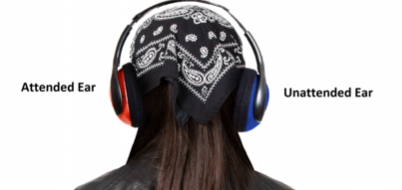
dichotic listening paradigm
participant puts on headphones w/ a different message in each ear
repeat back the message only in 1 ear (attended ear)
participants remember nothing about unattended info (even major changes like a change in language)
limitations of broadbent’s model (single filter model)
assumes there is no additional processing of unattended signals (there is)
breakthrough
Von Right experiment
association of particular word w/ electric shock to produce fear conditioning
dichotic listening: when participants heard a word similar in sound/meaning in attended ear, they reacted with fear
even when the word was in the unattended ear, they reacted with fear

breakthrough effect
participants remember unattended info
more common when info is highly relevant
e.g. you’re having a convo with someone but hear your name from someone else in a crowd; your attention is grabbed

treisman’s dual filter model
1 physical filter and 1 semantic filter
info first passes thru physical filter then whatever is left after filtering thru the physical filter goes thru the semantic filter

physical filter of treisman's dual filter model
info evaluated based on physical cues (e.g. intensity/pitch) to find the most relevant signal
e.g. a brighter or louder stimulus will be given a higher weight than a dim or quiet stimulus (aka will be able to filter through to the semantic filter)

semantic filter of treisman's dual filter model
info evaluated based on meaning
takes into account the weights assigned by the physical filter
chooses which info will be attended to
rest of info is discarded

which filter model accounts for the breakthrough effect?
treisman’s dual filter model

if you’re at a loud party and talking with a friend, but hear your name at a lower volume in a nearby convo, do you pay attention to it?
probably; the early/physical filter will weigh it lower because of the low volume, but the late/semantic filter will weigh it high and may let it become attended to because of the importance of your name
the cocktail party effect can be explained by a _____ filter model
single
stroop task
participants presented w/ a word on a screen + asked to state aloud the colour the font is displayed in
the word is a colour (e.g. “red”)
measure how long it takes to identify the colour while trying to ignore the word

stroop effect
words that are congruent in colour and meaning are read faster than when incongruent

2 test items in stroop task
word and colour are congruent (e.g. word is “red” and colour of word is red)
word and colour are incongruent (e.g. word is “red” but colour of word is blue)

the stroop effect demonstrates that attention is facilitated by ________ relevance
stimulus
proportion congruent manipulation
change the ratio of congruent to incongruent trials
high proportion congruent = 75% congruent to 25% incongruent trials
leads to increased stroop effect
low proportion congruent = 25% congruent to 75% incongruent trials
leads to decreased stroop effect

the stroop task allows us to measure the influence of both _______ and ________ processes of attention.
automatic, controlled
word reading is a _____ process
automatic
the _________ ________ ________ demonstrates that people can gain conscious control over an automatic process
proportion congruent manipulation
visual search experiments
test how we use every day attention
look for a target in an array of distractors (e.g. trying to find your keys, or look for your friend in a crowd)
set size
the # of items needed to search through in a visual search array
size size effect
increase in difficulty as set size increases
single feature search task
only have to look for 1 particular feature to identify the target in a visual search array
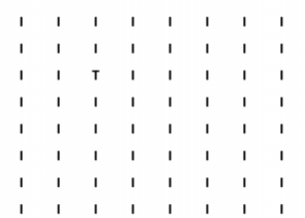
pop-out effect
when the object of a single feature visual search is easily found, regardless of set size
ONLY REFERS TO COLOUR
conjunction search task
identifying a target by considering 2 or more features in a visual search array
more difficult to find the target than a single feature search task

contextual queuing
context of conjunctive search task serves as a cue to help search more effectively
e.g. if you know you usually put your keys on the right side of your desk, you’ll prob start by looking there, allowing you to find them more quickly

chronic attentional errors
play a role in psychological problems (e.g. attention deficit, hyperactivity disorder, anxiety, insomnia, depression and OCD)
flashbulb memories
highly detailed/vivid ‘snapshot’ of a moment
typically occurs during important news
not always accurate
change blindness
even w/ directed focus, attention limits lead us to miss info
alertness arousal
everything you are attentive to
selected focus
what you’re focused on within your alertness arousal
vigilance
ability to focus attention for long periods of time
top down processing
relying on prior experiences/heuristics/expectations to recognize objects/events
aka what we “expect” something to be
your brain “fills in the blanks”
associated with cases where you direct your attention to match current goals/expectations
e.g. you typically put your keys in the same place, so when you go to look for them, you already have a general idea of where to look

bottom up processing
data gathered through the senses
occurs when attention is automatically captured by changes in environment (e.g. you fall on the floor with a huge crash, or a police siren)

we have both ______ and _______ environments for attention. what is the difference?
external: things in our environment that we are paying attention to and/or trying to incorporate into our internal environment
internal: things in our head that we think about (that may distract us from external stimuli)
true or false: people tend to do better at the stroop effect when it has taboo words
true
focused attention
participants are told to attend to one stimulus and ignore another
informs us about process of selection + what happens to unattended stimuli
divided attention
participants attend to all stimuli
informs us about processing limitations + attentional capacity
orienting
shifting one’s attention to something in the environment
Posner’s spatial cueing paradigm
allows us to measure shifts in attention in the absence of eye mvmts
overt attending
looking to where you are attending
covert attending
attending to something w/o looking at it (e.g. having a convo w/ someone while waiting for someone else to enter through the door)
inhibition of return
prevents your gaze + attention from revisiting a previously attended location
promotes orienting towards new + previously unsearched locations, resulting in a more efficient search
schema
range of plausible objects + likely configurations of those objects within particular scenes
e.g. you can expect to find the toaster in the kitchen and not in the bathroom, and in the kitchen you can focus your search for the toaster on the counter and not on the floor
helps guide your search for a target
inattentional blindness
limited attentional resources result in missing out/not noticing very important things
change blindness paradigm
2 nearly identical scenes are alternately presented in quick succession with an intervening blank screen
participant asked to identify what is different b/w the 2 scenes ASAP
how to prevent mind-wandering during studying
make the material more exciting
drawing pictures
writing bizarre stories that incorporate the material
attenuation theory
Treismans double-filter
both the single filter and dual filter model are in charge of ______ attention
auditory