Art History Exam 2
 Call Kai
 Learn
 Practice Test
 Spaced Repetition
 Match
 Flashcards
 Knowt Play
1/36

Earn XP
Description and Tags
All Key works for exam 2
37 Terms

Geometric Krater, from Dipylon cemetery, Athens (Geometric Period) 740 BCE
Krater: wide mouth bowl used to mix water and wine
this was a grave marker of a wealthy man, used for liquid offerings
Depicts a funerary ceremony

Kouros from Attica, Greece 600 BCE Archaic Period (Marble)
Kouros: statue of nude young man, idealized & youthful, grave marker & offering to gods
similar to Egyptian practices (stiff arms, leg slightly forward)
Reduced to simple elements though with slightly more details (celebration of human form

Peplos Kore, Acropolis, Athens, Greece. Archaic Period 530 BCE (Marble)
Kore = statue of a woman grave marker (fully clothed)
Peplos = simple, long, belted garment of wool worn by women in greece
Thought that she might be a representation of a goddess

Achilles and Ajax Playing a Dice Game (Bilingual Vase), Athenian amphora. Archaic Period 525-520 BCE
Andokides Painter: Red figure
Lypsippides Painter: Black figure
was a transitional piece as it had one side red figure and the other was black figure
was a copy of exekias pot which depicted trojan war heros and mythological scenes as the primary narrative (achilles is winning)

Temple of Aphaia, Aegina, Greece. Archaic Period 490 BCE
Doric order temple (plain capitals with doric friezes and no column bases)
Dying Warrior (west pediment) 490 BCE: in the older archaic style depicting a battle scene from the Trojan war
guy is very stiff with decorative hair, and sitting in a very unnatural angle
has archaic smile, expressionless even though wounded
Dying Warrior (east pediment) 480 BCE: in early classical style
warrior has look of pain from wound though still a bit emotionless
more natural angle/torsion, though still slightly stiff
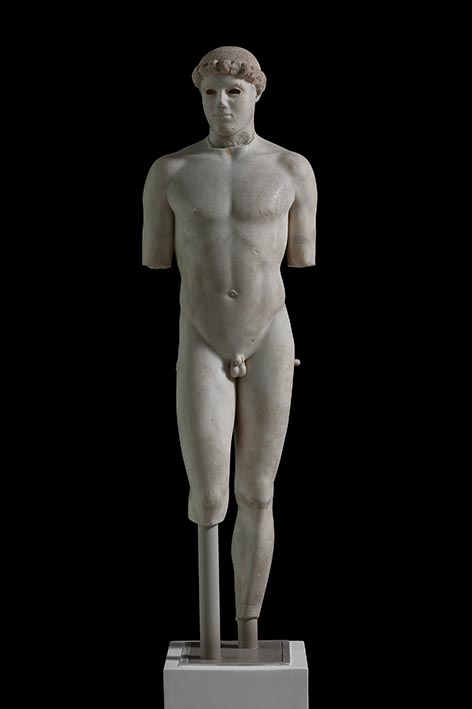
Kritios Boy, Acropolis, Athens, Greece. Early Classical 480 BCE
Found in a pit at the Acropolis
was a transitional figure
legacy of kouros but more movement
In contrapposto

Polykleitos, Doryphoros. High Classical 450 BCE
Figure in contrapposto
Original sculpture in Bronze (was melted down) so only Roman marble copy is left
Represents perfected ideal of the athlete, warrior, or hero
Also followed the canon of proportions (head is 1/7 of body)

Parthenon, Athens. High Classical 447 BCE
Panathenaic Festival Procession Frieze (447-438 BCE): Is the inner frieze depicting the procession for Athena.
Top: horsemen
Center: Gods (Poseidon, Apollo, Artemis, Aphrodite, and Eros
Bottom: elders and maidens

Porch of the Maidens, Erechtheion, Acropolis, Athens. High Classical 421-405 BCE
The caryatids were very ornately decorated (glass inlay, shells, etc)
Caryatid: frontal, very rigid with slight contrapposto, garment resembles peplos (fluttering fold).
very naturalistic, idealized general features
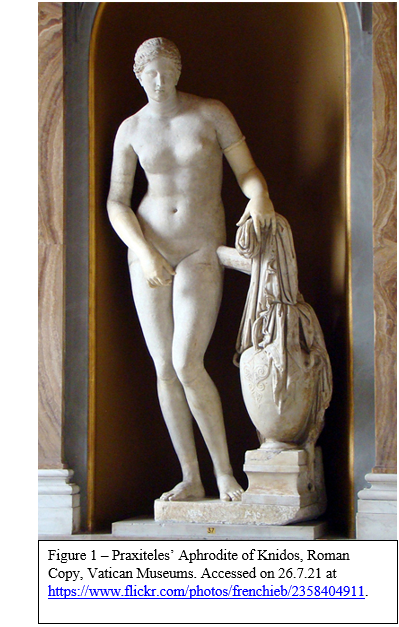
Praxiteles, Aphrodite of Knidos. Late Classical 350-340 BCE
More humanized representation of a deity
first known depiction of important women displayed nude
many copies were made later

Lysippos, Apoxyomenos (Scraper), Late Classical 330 BCE
Did not follow the Canon of Proportions
body was elongated
head is 1/8 body
Breaking out of rigid frontality
arms are reaching toward viewer
encouraged viewer to move around sculpture

Altar of Zeus, Pergamon, Turkey. Hellenistic 175 BCE
Athena Battling Alkyoneos: gigantomachy frieze
represents rationality vs Chaos (greeks vs enemies)
Athena in the center, Nike placing a crown on her head as a show of victory, Ge is teh goddess of earth and the mother of the giants they are fighting
Carved in High Relief so lots of contrast and is more dramatic

Athanadoros, Hagesandros, Polydoros of Rhodes, Laocoon and his sons. Hellenistic first century CE
Trojan priest and 2 sons
connects to the trojan war
greek gods send sea snakes to kill him and his sons
Very dramatic, contorted poses, very emotional, sense of fear and desperation

Fibula with Orientalizing Lions, Regolini-Galassi Tomb, Italy. Proto-Archaic 640 BCE (Gold)
Fibula: a decorative pin or broach worn at the shoulder
Made by granulation: tiny metals balls are used to make the design
Made by repousse: hammering metal from behind so that its raised in the front
Lion design is a sign of interconnection with Egypt

Apulu, Portonaccio temple, Italy. Archaic period 510-500 BCE (painted terracotta)
Religious sculpture, representing a greek myth but sits upon the roof of etruscan temple.
More movement compared to Archaic greece
reaching forward, feet more in motion
Face is animated, clothes similar between genders, very stylized (not naturalistic), uses a different proportional scale

Sarcophagus with Reclining Couple, Banditaccia necropolis, italy. Archaic Period 520 BCE (painted terracotta)
Very generic figures, but highly stylized/abstracted
elongated features
very smooth, no surface detail
similar to archaic greek kouros/kouri
were originally holding objects likely for banqueting or symbolic to the afterlife
Funerals: celebrate the life of the dead in a complicated, lengthy rituals

Wall Paintings, Tomb of the Leopards, Monterozzi necropolis, Italy. Archaic period 480 BCE (painted terracotta)
Was a banqueting scene, very lively
Differs from greek as women are present
Etruscan women have more equitable life, can go outside

Chimera of Arezzo, Italy. Classical period 4th century BCE (bronze)
Metal sculpture is becoming more popular
Greek mythical creature depicted in combat
Is a votive offering placed in a sanctuary
has inscription on leg detailing offering
Evidence of greek culture connection and mythology

Temple of Portunus, Roman Republic 75 BCE
Ionic Columns (greek influence)
Frontally oriented (Etruscan influence)
built out of local stone with engaged columns along the side, foundation was made from concrete
Temple for the god of the Harbor

Man with Portrait Busts of his Ancestors, Roman Republic late first century BCE. (marble)
Man dressed in the elite class robes holding the heads of his ancestors (father and grandfather)
Portrait busts used in funerary and religious ceremonies
ancestral worship: rituals and ceremonies happen at tombs, masks of ancestor’s face sometimes worn
Shows history of families elitism, (competitive idea)

Dionysiac Mystery Frieze, 2nd Style Wall Painting, Villa of Mysteries, Pompeii. Roman Republic 60-50 BCE (Fresco)
2nd Style: contained illusionistic architectural elements
this one had a ledge that people were on
Depicts a ritual of a mystery religion (not a Roman religion)
religion likely came from the east
practice was looked down on and with some suspicion
This one is about Dionysius portraying a mystical marriage

Gardenscape, 2nd Style Wall Painting, Villa of Livia, Primaporta. Early Empire 30-20 BCE
Was in the empirical summer dining rooms
Attempt at linear and atmospheric perspective
Illusions of small fence and stone wall wrapping around room
feels like you’re in the garden

Third Style Wall Painting, Villa of Agrippa Postumus. Early Empire 10 BCE
3rd Style: monochromatic planes of color with delicate painted architecture
Very moody and monochromatic
Tiny gold columns and friezes

Portrait of Augustus as Imperator (Augustus of Primaporta), Early Empire: Augustus, 20 BCE
Marble copy of the bronze original (massed produced)
Dressed in military clothes
armor is highly decorative depicting a scene where a roman is getting back their battle standard from the Persians (diplomatic victory)
around this image are the roman gods and personifications of the land
Highly idealized and youthful, very similar to the greek statue Doryphorus
connects him to the greeks which the romans revered
propaganistic
Wants people to know that he is the sole emperor and reason for the good things (so his portrait is put everywhere)
the small cupid at the bottom connects to his potential godly ancestory

Altar of the Augustan Peace, Early Empire: Augustus 13-9 BCE
Has a bunch of mythological scenes
romulus and remus
a bunch of scene with aeneas (thought to be a godly relative of augustus)
the lower half is covered in swirling vines and spirals
thought to portray growth and fertility

Maison Carree, Early Empire 1-10 CE
An emphasis on frontality (Estruscan idea)
Dedicated to the worship of the emperor and his family
emperors are now allowed to be deified after their deaths (voted on by the senate)
Corinthian order columns
Conforms to the Roman ideal temple (virctuvious)
Has engaged columns of 3 sides, and raised up on a podium

Colosseum (Flavian Amphitheater). Early Empire: Vespasian 70-80 BCE
Built in the same location of Nero’s big palace
give back the land to the public (hated Nero)
Each level has a different architectural orders
Top: Corinthian
Middle: ionic
Bottom: tuscan order (similar to doric)
each level had 80 arches
used for public displays like rituals, hunting scenes, gladiatorial fights, etc

Arch of Titus, Early Empire 81 CE
Triumphal Arches were used to commemorate military victories
On ceiling relief shows the deification of Titus
Reliefs show of Titus’s military victories
one panel has personification of winged victory with him

Apollodorus of Damascus, Markets and Forum of Trajan. High Empire: Trajan 112 CE
Emperor’s loved to build forums which are public-oriented buildings
included a temple to Trajan
Markets
Basillica
Column of Trajan
Was covered in sculptures
Column of Trajan: is a continuous narrative (ascending)
Narrative of conquering Dacia, but more of a generalized version of basic Roman warfare
Friezes at the top are larger than those at bottom to help make the reading easier for viewer
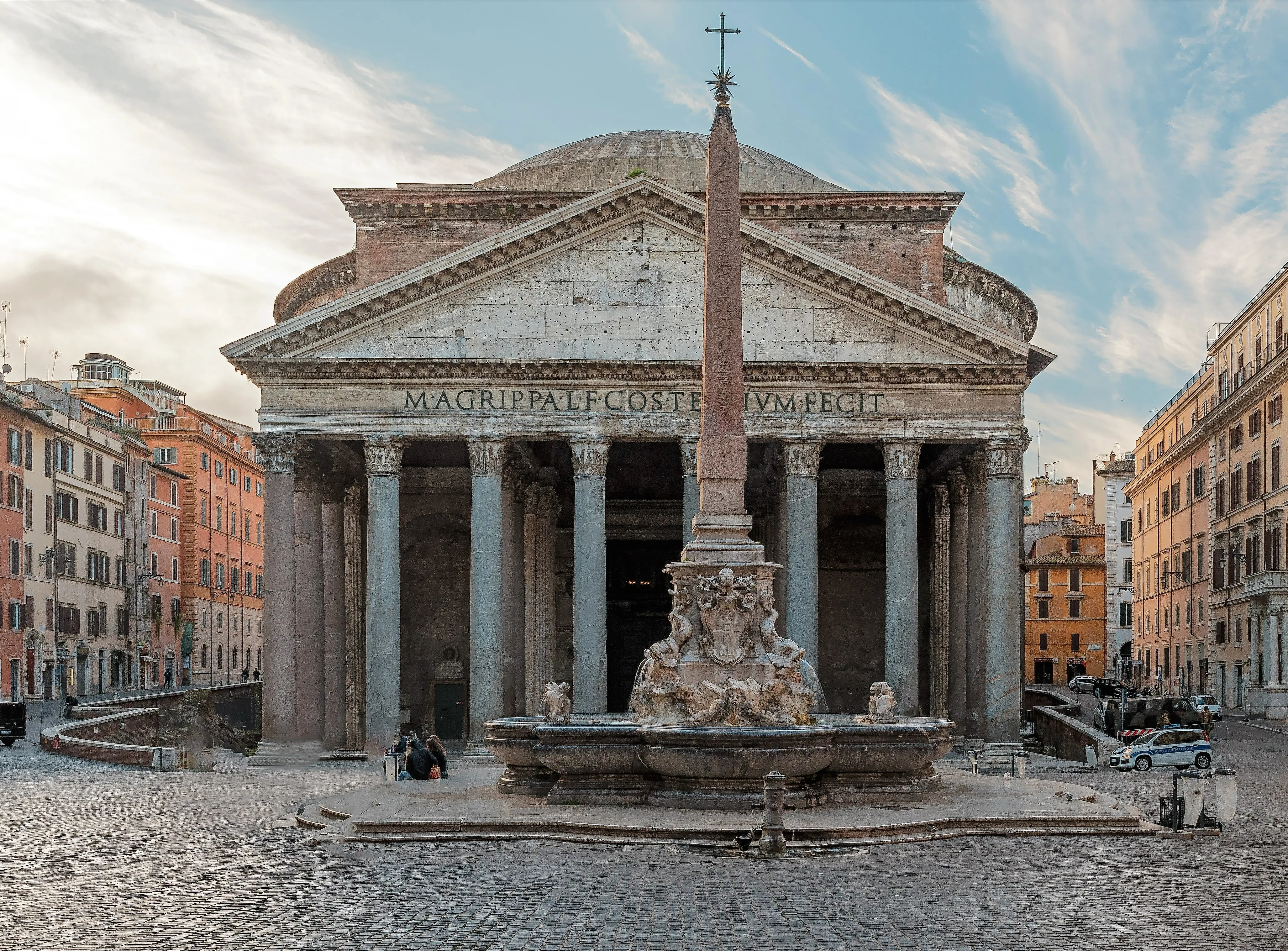
Pantheon, High Empire: Hadrian 125 CE
Was a temple to all the gods
Design: 1 sphere can perfectly fit inside
dome made from concrete, coffers used to cut weight of dome (also for decorative reasons)
Perfect # used to make design
only source of light is the hole in the dome (oculus)
niches originally held statues of deities (now christian)

Decursio, pedestal of Column of Antoninus Pius. High Empire 161 CE
Decursio: ritual circling of military pyre
Has multiple ground lines
Begins shift away from classical/naturalistic art
more abstracted sense of space
transitional piece from high empire to late empire

Painted Portrait of Septimius Severus and Family, Egypt. Late Empire 200 CE (tempera on wood)
Example of damnatio memoriae: roman decree of condemning those who ran afoul according to senate; memorials demolished and names released from public
Caracalla makes senate pass this about his brother who he had killed so that he could be the sole emperor

Battle of Romans and Barbarians (Ludovisi Vattle Sarcophagus) Late Empire 250-260 BCE (marble)
There is an increasing interest in mystery religions & needing the bodies after death
leads to a transition in burial practices (people were normally cremated)
Depicts a battle between Roman soldiers and Barbarians (non-Romans)
Push against naturalism, everything is infront and figures are stacked on one-another (super busy)
very very high relief

Arch of Constantine, Late Empire: Constantine 312-315 CE
Celebrates Constantine’s defeat of Maxentius (co emperor)
Has engaged Corinthian columns, with a mix of artistic styles
also took sculpture from other monuments (spulia) usually from well liked emperors
did this so that he would be associated with the good (propaganda)
adjusted the faces of taken sculpture so that it would look more like him
elements from Trajan, Hadrian, Marcus Aurelius
Constantines art is not as naturalistic, people are stocky and stiff and high stylized

Dura-Europos, Syria. Late Antiquity before 256 CE
Wall Painting of Baptistery: was a Christian meeting house, held baptisms
wall art depicts miracles of Christ (walking on water, making someone walk again, and adam and eve)
Wall Paintings of Synagogue: covered in narrative scenes from Old Testament (jewish bible)
went against the 2nd commandment about iconography

The Good Shepherd, story of Jonah. Catacomb of Saints Peter and Marcellinus. Late Antiquity early 4th century
At center of image is the good shepherd (thought to be Christian symbolism)
Biblical scenes, mostly of Jonah, surrounds central image (him getting ate by whale, beings spat out, relaxing)
thought to be foreshadowing for Christ
Orant figures seen praying between images of Jonah
There is also Roman personifications of seasons (mix)

Santa Maria Antiqua Sarcophagus, Late Antiquity 270 CE (marble)
Made before Christianity was legalized
Depicts Jonah, a philosopher, and orant
Central figures faces aren’t carved
due to these sarcophagi being massed produced such that families can have their faces carved into it
its was also ambiguous enough that multiple religions could use it