BIO HEAD & NECK: anatomy of the skull
 Call Kai
 Learn
 Practice Test
 Spaced Repetition
 Match
 Flashcards
 Knowt Play
1/56

There's no tags or description
Looks like no tags are added yet.
57 Terms
How many bones does the human skull have?
22 (or 29 including inner ear bones and hyoid)
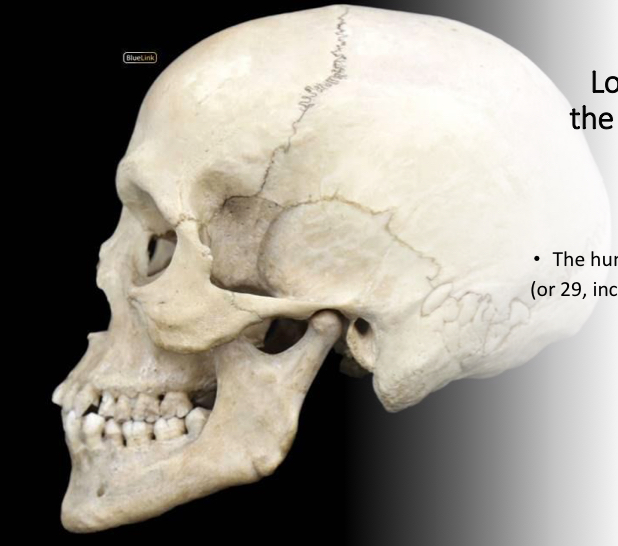
What are the 2 main parts of the skull?
Neurocranium: holds brain
Viscerocranium: bones of face

Name the bones of the neurocranium
Frontal
Parietal
Temporal
Sphenoid
Ethmoid
Occipital

Name the bones of the viscerocranium
Nasal
Palatine
lacrimal
zygomatic
maxillae
inferior nasal conchae
vomer
mandible

What are the main joints of the skull?
Sutures: fibrous immovable joints that connect the bones of the skull
Temporomandibular joint: connects mandible to the skull

What are the 3 sutures of the skull?
Coronal: between frontal and parietal bones
sagittal: between 2 parietal bones
lambdoid: between parietal and occipital bone

What are the two sutures of the hard palate?
Median suture: connects horizontal plates of palatine and maxillary bone
Transverse suture: Connects palatine process of maxillary bone to palatine bone

NEUROCRANIUM BONES

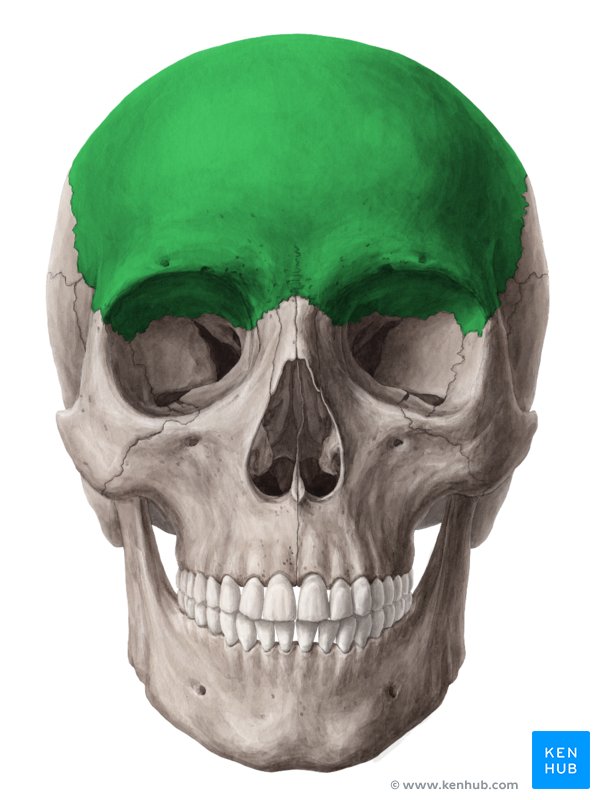
What is the function of the frontal bone?
Creates the smooth curvature of the forehead;
protects the frontal lobe of the brain.
Contributes to formation of the orbits.
What does the frontal bone articulate with?
1. Nasal bone
2. Maxilla
3. Lacrimal bone
4. Ethmoid bone
5. Zygomatic bone
6. Sphenoid bone
7. Parietal bones (coronal suture)


what is the function of the parietal bone?
Protects the brain😼
what are the articulations of the parietal bone?
Frontal (coronal suture)
2. Sphenoid
3. Temporal
4. Occipital (lambdoid suture)

Temporal bone functions?
Protects the brain.
Helps form middle and inner ear.
Is part of the temporomandibular joint(TMJ)

What are the articulations of the temporal bone?
1. Zygomatic
2. Sphenoid
3. Parietal
4. Occipital
5. Mandibular (TMJ)

What are the important landmarks of the temporal bone?
1.Squamous plate
2. Zygomatic process
3. Mastoid process-0teromastoid
4. Styloid process
5. External acoustic meatus (ear canal)-tympanic part

What are the 5 openings found in the temporal bone?
1. Carotid canal: internal carotid artery
2. Foramen laserum: internal carotid artery
3. Stylomastoid foramen: Facial nerve (V||)
4. Jugular foramen: Internal jugular vein ,Glossopharyngeal( IX), Vagus (X), Spinal accessory, (XI)
5. Internal acoustic meatus: Facial nerve (V||)
Occipital bone articulations
1. Parietal
2. Temporal
3. Sphenoid
4. Atlas (cervical vertebra 1)


Which bone is the foramen magnum found on?
Occipital bone
What is the function of the frontal bone?
The passage of the central nervous system through the skull connecting the brain with the spinal cord

Ethmoid bone functions
Helps form the medial orbital walls, nasal septum, roof and lateral walls of nasal cavity.
contains ethmoid sinuses

Articulations of the ethmoid bone
Frontal
2. Sphenoid
3. Palatine
4. Lacrimal (in the orbits area)
5. Maxillary
6. Vomer ( in the nasal cavity)

Sphenoid bone functions
Helps form the orbits, nasal cavity, and infratemporal fossa

articulations of the sphenoid bone
1. Frontal
2. Parietal
3. Temporal
4. Zygomatic
5. Ethmoid
6. Palatine(not seen on the picture)
7. Maxilla

What are the important landmarks of the sphenoid bone?
Lesser wing and Greater wing
Body
Pterygoid process: lateral and medial plate

What foramen are found on the sphenoid bone?
Optic canal: optic nerve
Superior orbital fissure: Ophthalmic nerve (V1)
Foramen ovale: mandibular nerve (V3)
4, Foramen rotundum: Maxillary nerve (V2)
Foramen spinosum: Middle meningeal artery

Nasal bone functions
Helps form nasal cavity

Nasal bone articulations include
1. Frontal
2. Maxillary

Lacrimal (tears) bone functions
Helps form orbit medial wall, nasal cavity.
Smallest bone of skull

Lacrimal bone articulations
1. Frontal
2. Ethmoid
3. Maxillary
4. Inferior nasal conchae

Zygomatic bone functions
A quadrangular bone that helps form the skeletal framework of the orbit and cheeks

Articulations of the zygomatic bone
1. Temporal
2. Maxillary
3. Frontal
4. Sphenoid

Vomer function
A bone of the nasal cavity
helps form the nasal septum

Articulations of the vomer
1. Sphenoid
2. Ethmoid
3. Palatine
4. Maxilla

inferior nasal concha function
Part of nasal cavity

Articulations of the inferior nasal concha
1. Maxilla
2. Ethmoid
3. Lacrimal
4. Palatine

Summary table for neurocranium

BONES OF THE ORAL CAVITY
Palatine bone
maxillary bone
mandibular bone
Palatine bone
A paired bone between the maxillar and pterygoid process of sphenoid bone

Palatine bone articulations?
1. Maxilla(oral cavity)
2. Sphenoid(Nasal cavity)
3. Ethmoid(Nasal cavity/orbits)
4. Inferior nasal concha(Nasal cavity)
5. Vomer(Nasal cavity)

What plates are the palatine bone composed of?
The horizontal and perpendicular plates which connect to form the L shape of palatine bone

What cavities do the palatine bone form?
Oral cavity: horizontal plates
Nasal cavity: both plates
Orbits: superior part of perpendicular plate

What is the greater palatine foramen?
Small opening on horizontal plate of palatine bone which carries the greater palatine nerve.

What is the lesser palatine canal ?
A canal that runs vertically through the palatine bone.
it carries the lesser palatine vessels and nerves.
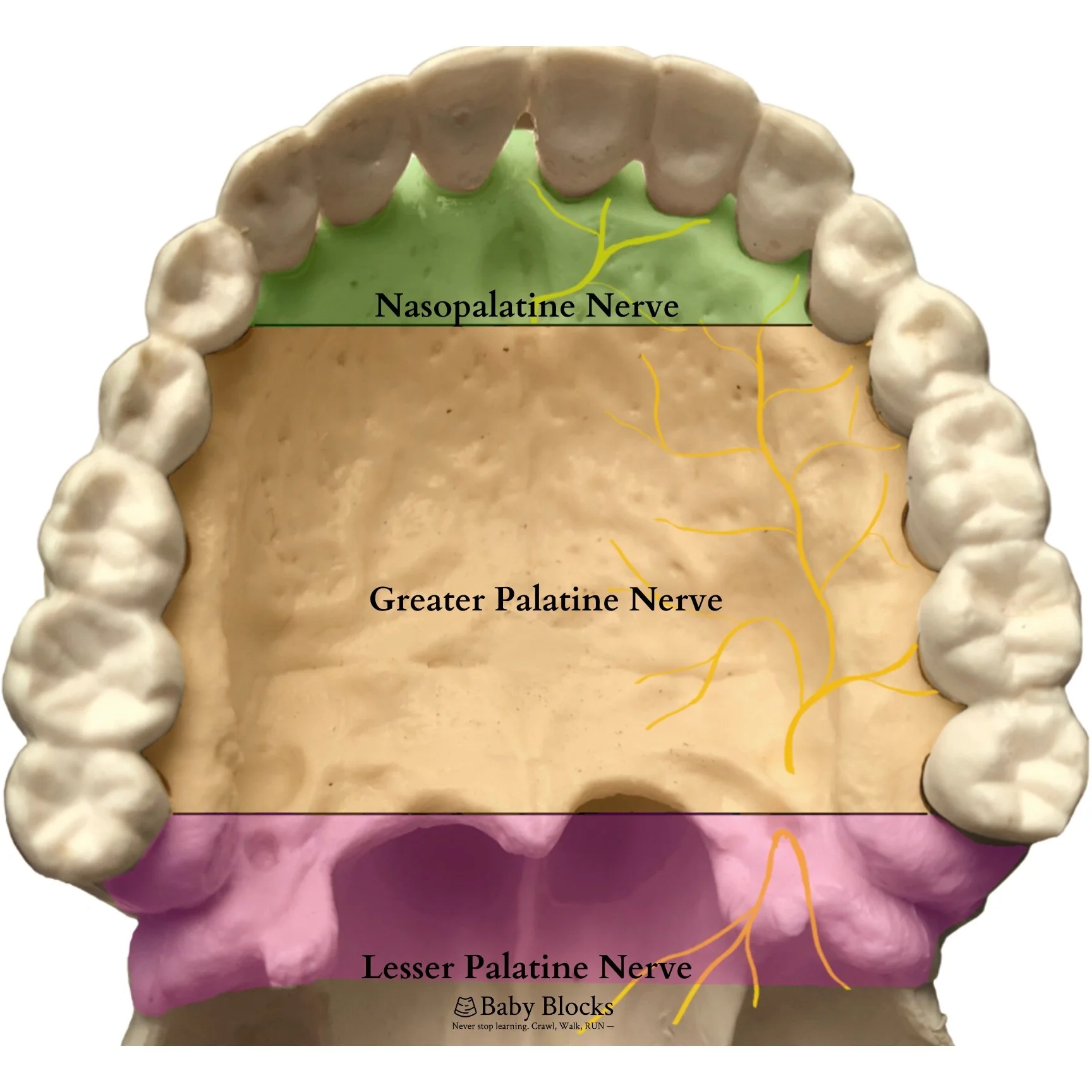
What does the greater palatine nerve block numb?
The maxillary premolars and molars

Maxilla function
The upper jaw of the viscerocranium
Helps form the orbit, nose, and hard palate
Holds upper teeth, helps with mastication and communication

What are the landmarks of the maxilla?
Body
frontal process
zygomatic process
palatine process
alveolar process

What is an important foramen found in the maxilla and what does it contain?
Nasopalatine foramen (incisive foramen)
Contains the nasopalatine nerve (sensory) and sphenopalatine artery
Supplies the palatal structure around the maxillary anterior teeth.

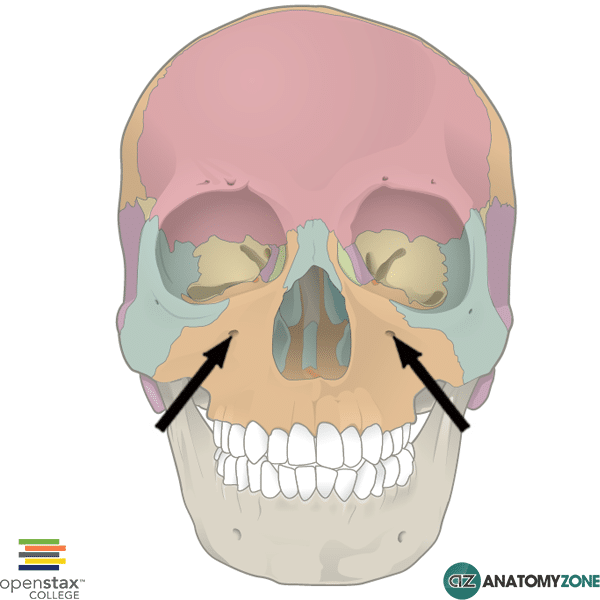
What is the foramen found superior on the maxilla?
The infraorbital foramen,
Carries the infraorbital nerves and artery.

What are the articulations of the maxilla?
1.Frontal(anterior skull)
2.Nasal(anterior skull)
3.Lacrimal(orbits, anterior skull)
4.Zygomatic(Anterior skull)
5.Ethmoid(Nasal cavity-sagittal)
6. Inferior nasal concha(sagittal)
7.Palatine (oral cavity-sagittal, inferior)
8.Sphenoid(sagittal)
9.Vomer
Mandible function
moveable singular bone that’s responsible for mastication and speech.
also used for breathing.