PODA Exam 2 - Biochemistry and Medicinal Chemistry
 Call Kai
 Learn
 Practice Test
 Spaced Repetition
 Match
 Flashcards
 Knowt Play
1/124

There's no tags or description
Looks like no tags are added yet.
125 Terms

What is the amino acid?
Glycine (gly, G)

What is this amino acid?
Alanine (ala, A)

What is this amino acid?
Proline (pro, P)
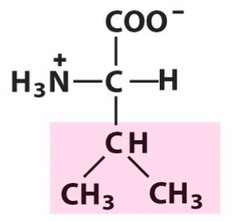
What is this amino acid?
Valine (val, V)

What is this amino acid?
Leucine (leu, L)

What is this amino acid?
Isoleucine (ile, I)
What are the 6 aliphatic amino acids?
-Glycine
-Alanine
-Proline
-Valine
-Leucine
-Isoleucine
What are the 3 aromatic amino acids?
-Phenylalanine (nonpolar)
-Tyrosine (more polar)
-Tryptophan (more polar)

What is this amino acid?
Phenylalanine (phe, F)

What is this amino acid?
Tyrosine (tyr, Y)

What is this amino acid?
Tryptophan (trp, W)
What 2 amino acids have negatively charged (acidic) R groups?
-Aspartate
-Glutamate

What is this amino acid?
Aspartate (asp, D)

What is this amino acid?
Glutamate (glu, E)
What 3 amino acids have positively charged (basic) R groups?
-Arginine
-Lysine
-Histidine

What is this amino acid?
Arginine (arg, R)

What is this amino acid?
Lysine (lys, K)

What is this amino acid?
Histidine (his, H)
What are the 4 amino acids with polar, uncharged R groups?
-Asparagine
-Glutamine
-Serine
-Threonine

What is this amino acid?
Asparagine (asn, N)

What is this amino acid?
Glutamine (gln, Q)

What is this amino acid?
Serine (ser, S)

What is this amino acid?
Threonine (thr, T)
What are the 2 amino acids with sulfur-containing R groups?
-Methionine
-Cysteine

What is this amino acid?
Methionine (met, M)

What is this amino acid?
Cysteine (cys, C)

What is the pKa of an amino group?
9.5

What is the pKa of a carboxylic acid group?
2
If the pH is below the pKa, the molecule is ____
protonated
If the pH is above the pKa, the molecule is ___
deprotonated
Asp and Glu side chains are deprotonated at physiological pH, meaning they have a ___ charge.
negative
Arg and Lys side chains are protonated at physiological pH, meaning they have a ___ charge.
positive
What is the pKa of aspartate?
3.9 (will be deprotonated at physiological pH)
What is the pKa of glutamate?
4.1 (will be deprotonated at physiological pH)
What is the pKa of histidine?
6.0 (will be neutral at physiological pH)
What is the pKa of cysteine?
8.4 (will be protonated at physiological pH)
What is the pKa of tyrosine?
10.5 (will be protonated at physiological pH)
What is the pKa of lysine?
10.5 (will be protonated at physiological pH)
What is the pKa of arginine?
13.8 (will be protonated at physiological pH)
What charge would you expect on valine when it is placed in a solution with a pH of 1.0?
+1

Bacteria occurring in the human microbiome use the compound cadaverine (shown) to buffer the pH of their environment. Cadaverine is synthesized in bacteria from the amino acid ___.
Lys
Kinases can phosphorylate amino acid side chains in proteins that contain hydroxyl groups to regulate the activity of these proteins. Thus, the protein amino acid residues that can be phosphorylated by kinases are ____.
Ser, Tyr, Thr
In the blood (pH=7.4), the side chain of His would be present in what form?
neutral

Hepatic esterase converts the prodrug oseltamivir to the active antiviral drug oseltamivir carboxylate. Hepatic esterase is classified as what?
Hydrolase
The bacterial enzyme DNA gyrase is the target of fluoroquinoline antibacterial drugs such as ciprofloxacin. In the process of acting on its substrate, DNA gyrase forms a covalent intermediate through nucleophilic attack on the DNA backbone. Which amino acid found in DNA gyrase forms this covalent enzyme-DNA complex?
Tyr
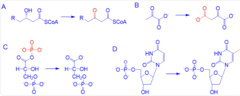
Which of these reactions uses NAD+as a cofactor?
A
Changes in the substrate concentration have the greatest influence on the velocity of an enzymatic reaction where?
at the substrate concentrations below the Km
You are attempting to design a new drug candidate that inhibits Enzyme X. Using all available information about the mechanism of this enzyme to design an inhibitor with similar properties to the transition state, what type of inhibitor are you hoping to make and how will you know if you are successful?
A competitive inhibitor, monitor kinetic data with and without the inhibitor and look for a change in the Km
Glycogen phosphorylase can exist in either the inactive (T) form or the active (R) form. In the switch from the T to R form, what happens?
a conformational change in glycogen phosphorylase must occur
What is Km?
the substrate concentration at Vmax/2
When [S] is much greater than the Km of the enzyme, what does this mean?
the enzyme is nearly saturated
You have discovered an antibacterial compound that is a close structural analog of a substrate of an enzyme that plays a role in bacterial cell wall synthesis. This binding of this compound reduces overall enzyme activity, but activity can be restored at higher substrate concentrations. This compound does not bind to the enzyme through a covalent bond and does not alter the structure of the enzyme. Which of the following best describes this antibacterial compound?
It is a competitive inhibitor
Carboxypeptidase is an enzyme that removes amino acid residues one at a time from the C-terminus of peptides. This enzyme is monomeric (consists of a single subunit) and the two essential amino acids for catalysis are Arg145 and Glu270. If these two amino acids were in one continuous α-helix, Arg145 and Glu270 would be 188 Å (Ångstroms) apart. How can these two amino acids function to catalyze a reaction that takes place within the space of a few Ångstroms?
The carboxypeptidase enzyme folds into a tertiary structure that permits the Arg145 and Glu270 residues to be in close proximity.

Consider the enzyme carboxypeptidase that removes amino acid residues one at a time from the C-terminus of peptides. The two essential amino acids for catalysis are Arg145 and Glu270. As shown in the diagram below, the latter amino acid is involved in activating a water molecule for attack on the peptide bond via base catalysis. Based on this diagram, what is the role of Arg145?
It promotes binding of the substrate by forming an ionic interaction with its C-terminal carboxylate

The graph below shows the enzyme kinetics of hexokinase 1 (expressed in red blood cells) and glucokinase (expressed in the liver). Which of the following correctly describes the behavior of these enzymes after an overnight fast when the blood glucose concentration is approximately 5 mM and soon after a meal when the blood glucose concentration is approximately 10 mM?
The velocity of the reaction catalyzed by glucokinase will rise significantly as the blood glucose levels increase from 5 mM to 10 mM, while the velocity of the reaction catalyzed by hexokinase 1 will remain essentially the same.

Diisopropylphosphofluoridate (DIPF) reacts with the active site serine of chymotrypsin as indicated below. Predict the effect on the kinetics of the enzymatic reaction catalyzed by chymotrypsin.
In the presence of DIPF, the Km of chymotrypsin would be unchanged but the Vmax would decrease compared to the reaction in the absence of DIPF
The enzyme aspartate transcarbamoylase (ATCase) catalyzes the initial step that is unique to pyrimidine biosynthesis. The nucleotide CTP, which is an end product of pyrimidine biosynthesis, regulates the activity of ATCase by binding the enzyme when pyrimidine levels are high and inhibits the synthesis of the product of the ATCase enzyme. When pyrimidine levels are low, CTP dissociates from ATCase and the rate of the ATCase reaction increases. Which statement best describes the action of CTP on ATCase?
CTP is an allosteric inhibitor of ATCase
Integral membrane proteins are held within the plasma membrane by
hydrophobic interactions between nonpolar amino acid side chains of the membrane protein and hydrophobic acyl chains of the membrane
Ouabain is structurally similar to digoxin. This compound inhibits the Na+ K+ ATPase pump, resulting in
an increase in cytoplasmic Na+ concentration, ultimately increasing the strength of heart muscle contractions
True or False: chemical messengers that bind to intracellular receptors are bound to carrier proteins in the blood
True
Which signal transduction pathway step would be blocked if you used molecular biology techniques in the lab to create a tyrosine kinase receptor in which all the Tyr residues that are usually phosphorylated on the receptor were converted to Phe residues?
Binding of signaling proteins to continue the signal transduction pathway
True or False: GPCRs contain 7 transmembrane domains
True
Select all that are true about heterotrimeric G proteins
I. are comprised of three subunits, Gα, Gβ, and Gγ II. act as transcription factors
III. can stimulate adenylate cyclase activity IV. are anchored to the cytoplasmic side of the membrane
I, III, IV

Which of the following molecules would be most likely to enter the cell via simple diffusion across the cell membrane?
A
The GLUT1 transporter functions via....
facilitated transport
Give the endogenous ligand and the substance that enters the cell when this endogenous ligand binds to the nicotinic acetylcholine receptor
acetylcholine, Na+
Normal or physiological serum Na+ levels are around 140 mM whereas K+ levels are 3.5 to 5.0 mM. Intracellular concentrations are reversed with a high K+ level and much lower Na+ level. This ion imbalance is accomplished by the _______, which is a protein that carries out _________.
Na+ K+ ATPase, primary active transport
A similarity between receptor tyrosine kinases and G-protein coupled receptors is that
both are plasma membrane receptors
In pseudohypoparathyroidism, the target organ is not responsive to parathyroid hormone. One mutation that causes pseudohypoparathyroidism occurs in a gene that codes for a Gsα in certain cells. What type of receptor is the parathyroid hormone receptor?
a GPCR
This question also deals with pseudohypoparathyroidism, in which the target organ is not responsive to parathyroid hormone. This mutation that causes pseudohypoparathyroidism
decreases synthesis of cAMP in response to parathyroid hormone
True or False: oxygen is more electronegative than nitrogen
True

Which structure is a pyridine?
B

What is the stereochemistry or lacosamide?
R
Cis and trans isomers are examples of what?
diasteriomers
Is a carboxylic acid more acidic or less acidic than a phenol?
more acidic
Which amino acid side chain can act a hydrogen bond donor?
threonine
A functional group is 50% ionized when which condition is satisfied?
pH=pKa
Which functional group do we consider to be neutral under all physiologically relevant conditions?
aliphatic alcohol
True or False: the endogenous ligand binds the orthosteric site
True
An agonist drug for a particular receptor does what?
mimics the action of the endogenous ligand
A kinase catalyzes the chemical reaction of adding a phosphate group to a substrate. Based on that definition, what word best describes a kinase?
enzyme
A more lipophilic compound would...
have a higher LogP value

Using the Table of pi values, what is the estimated LogP of this compound?
3.21
What is one thing that is favorable in Lipinski's Rules?
number of hydrogen bond donors less than or equal to five
True or False: Based on the Table of Solubilizing Powers, 1-octanol will be soluble in water
False
What is a "soft spot"?
a site on a molecule that is prone to metabolism
True or False: Medicinal chemists can use fluorine to block a site of metabolism
True
What is a common reason to employ a carrier-linked prodrug?
to make a polar compound more easily absorbed
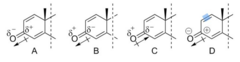
A portion of the structure of dexamethasone is shown below. What is the best representation of the dipole and electron distribution?
A
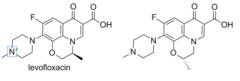
Levofloxacin and another structure are shown below. What is the relationship between them?
they are constitutional isomers

Electron delocalization has an important influence on the properties of which of the following?
A, C and D

Lisinopril contains which functional groups?
Primary amine, secondary amine, amide, and carboxylic acid
Which functional group(s) could undergo covalent bond formation with a cysteine?
Alkenes adjacent to a carbonyl, and alkyl halides
Which amino acids would would interact favorably with an ionized amine through ionic forces?
Aspartate and Glutamate
A ligand which elicits efficacy equivalent to the endogenous ligand is called
a full agonist
True or False: an uncompetitive antagonist would typically bind at an allosteric site but only when the endogenous ligand is bound
True
What is true for a potentiator?
The concentration-response curve for an agonist shifts left in the presence of a potentiator
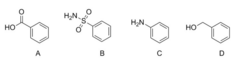
Which compound(s) would likely be ionized at pH 12?
A and B

Which compound would exist in mostly ionized form at pH 7?
A and B

Using our standard value for the pKa of a carboxylic acid, what best describes the ionization state of valproic acid at pH 4?
Approximately 10% ionized