Crim 210 "quiz"
 Call Kai
 Learn
 Practice Test
 Spaced Repetition
 Match
 Flashcards
 Knowt Play
1/53

There's no tags or description
Looks like no tags are added yet.
54 Terms
Middle age perspective on youth.
Children born evil, roman catholicism, church had hegemonic power.
Cultural hegemony
Implies dominance of one social group and its ideologies over other social groups.
Reformation perspective on youth (14th-16th)
Decline of church power (philosophy), Puritan doctrine (children born evil), disobedient children beat to fix. Gutenberg advance knowledge
Age of discovery (16th-17th)
Poverty rampant, change from Agrarian (feudalism pyramid), to Mercantilism (gov), Hobbes (children born evil)
Enlightenment (18th century) and 3 perspectives of children crime
New philosophy from trade, human dignity, conceptions of childhood humane.
1. Children born evil 2. Children born neutral 3. Children born with sense of morality (jean)
History in Canada/ Agrarian Societies.
First euro settlers, children new freedom ex: fur trade, parents death. People lived in small towns
Industrial societies (1867-1960s)
production based nuclear family, need for skills. Children brought to work, crime more visible with long work days and children’s freedom
Church had little direct influence
Early responses to youth crime plus funny latin words.
first no difference, children treated as mini adults.
Patria Protestas: father has absolute control
parens patriea: king or state as father, court takes responsibility if needed
Canada's view of cause of crime (Agrarian/Industrial)
A: Fur trade, children too much freedom
I: poverty, homelessness, lack of family, minor property offence, formation of ethno centric gangs.
Initial legislation
During 1800's parliament passed law, children under 7 unable to do crime, 7-13: incapable through prima facie, but diff for special cases.14+ responsible for crime.
Removing youth from community
House of refugee: Quakers, family centered to institutions, idea adults corrupting,
Cabrini-Green: Neighborhood in Chicago, started as Italian shanties became home to 15'000 African Americans
Reformatories: Youth taught skills, intervention by state, (family cause of crime), catholic immigrants vs protestants. New immigrants most vulnerable to poverty
Responding to Youth crime+ Canada's
Youth advocates: policies to address poverty, focus on problems of youth
Law and Order: Youth out of control, policies to get tough
Followed England, common law (under 7 culpable etc.)
Child saving movement
traditional values and hard work, John Kelso: pioneer, saved through reform. may have unfairly penalized youth. Failed to distinguish neglected and deliquent.
General Defs.
Theory is a set of interconnected statements, set of hypothesis about a phen, specify constructs, causal mechanism: explanation, not just prediction, Parsimony (simplicity)
Macro/structural and Micro/processual
MS: why might crime rates be higher in PEI than Van, rate to compare different populations
MP: looking at individuals.
Classical school (18th century)
People rational exercising free will,
Cesare Beccaria: focused on due process, Jeremy Bentham: proportionality of punishment.
Positivist (19th century)
Only that which is observable through scientific method is knowable,
Cesare: argued criminals and non criminals were at different stages of evolutionary development. (phrenology)
Henry Goddard: influential in eugenics
Franz Gall and Cesare Lombroso (bio), mark of cain
F: phrenology: shape of skull can be used to predict criminality, inaccurate as could be part of non-bio factors.
C: emphasis on phrenology, identify atavistic man: evolutionary throwback.
M: coming from church, have specific mark, Lombroso's search
bio theories were pretty sexist and racist.
Sheldon's somatotypes
Ectomorphy: skinny and withdrawn (no crime)
Endomorph: obtuse and outgoing (outgoing)
Mesomorph: Muscular and aggressive (crime), could be based on testosterone imbalance, prison workouts.
Family studies + twin studies +adoption
criminality more common in some families, examine whether criminal behavior is present in MZ (identical) and DZ (fraternal) twins, adoption help deal with shared env issue.
Freud's Psychodynamic theory
The id: seeks immediate pleasure (instinct), Ego: reality oriented thinking Superego: our conscience and out internalizing of society's standards
Blaming family, also studied genital stuff ew!
Bandura, Classical conditioning, Kohlberg
Bandura: Social learning: mediated by factors observational learning
, moral disengagement: in specific situations people think ethical concerns do not affect them.
Skinner: neutral and unconditional stimulus, aversive conditioning ( exposure to good thing with unpleasant stimulus)
Kohlberg: Children pass through moral stages, experience.
Sociological criminal theories
Merton: Anomie and strain
Modes of adaptation: innovation (accept culture ,not goals ex: theft), conformity, ritualism (boring job), retreatism (substance abuse), rebellion (alt methods)
Sociological criminal theories pt.2
Shaw and Mckay: social disorganization (residential mobility), concentric zone theory (transitional zone)
Sutherland: differential association (people see crime rewarding peers)
Classical and economic school perspectives
routine activity: motivated offender, suitable target, absence of capable guardian, crime NEEDS these to happen
bounded rationality: less adept at making rational choices.
rational choice theory: maximize pleasure minimize pain
Jon Veneables and Ron thomson
the two jits who murdered a little boy, then one of them grew up to be a pedo!
Contemporary sociological theories
Hirschi social bond: attachment, commitment, involvement, belief
social learning theory: bonds with delinquent people will motivate you for deliquency
Gotfredson and Hirschi's general theory of crime.
one concept explains all crime: low self control, develops 8-10 from parents not supervising. (marshmellow test)
Operant conditioning
also focus on celerity (swiftness) certainty (probability your punished or reinforced), severity (making sure reward or punishment is proportional)
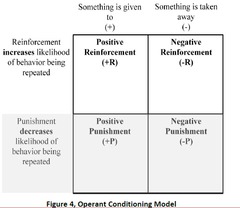
Akers social learning, Differential reinforcement
A: learn by doing, learn by watching, strength of deviancy is determined by amount ,frequency, probability.
primary models: family, peers, media
D: whether someone commits crime depends on whether individual has been reinforced for similar behavior in past
Motiffs dual taxonmy
two trajectories: Adolescent limited: social mimicry of peers to commit crimes then decline after
Life course persitent: show antisocial behaviour then commiting crimes
Limitations: AL: doesn’t seem to stop offending in adulthood. No support in lit that it’s just two groups for criminals (usually 4-6)
coercion develeopmental theory
parenting primarily responsible for all types of offending trajectories, aggressive behavior learned in house. Temparement may elicit coercive parenting.
Life course theories
4 pillars: historical context (war), linked lives (network), risk factors are age graded, human agency
theories of female offending
1960s: role theory (in house less opportunity to commit crime)
Sociological: oppression of girls, economic marginazation theory (as women become more equal)
Psychological: experience of abuse, personal interpersonal
sources of info on crime
media: difference b/t US and Canadians (US for profit) most easily accesible
official stats: police rate of arrest, courts, correctional institutions most reliable
Researcher: victimization survey, self-report surveys most valid
Validity and Reliblity
V: how well are you measuring what you propose to measure ex: dark figure
R: extent to which recorded results can be replicated, official data is good at this ex: telescoping problem though
Official reports and telescoping
victimization surveys: addresses the dark figure of crime, reporting bias (telescoping), victimless crime (weapons possesion not reported).
, UCR focus on seriousness, self report
t: right event, wrong time period
Describing crime trends
age crime curve: number of crimes commited, decline after 18.(not all criminals follow) crime severity index: youth overrepresented in property offense.
Confirmed facts of youth offending
1 in 5 crimes in Canada are committed by youth, small minority of youth account for majority of youth crime, adults commiting more crime
Different offenses of youth
Boys: break and enter, mischeif, violent charge occur later.
indigenous youth 25% in court populations (usually substance abuse, violence),
girls theft under 5000 most common, violent charge occur early.
under 12 not legally responsible, 90% are male 13% under 7
Deliquent careers
1. boys begin career early 2. boys longer career 3. boys more likely to offend at adulthood.
Importance of youth criminal justice act
before more youth charged then diverted from crime, now diverted is increasing while less youth are charged. also steady deacrease of crime overall.
Youth as victims of crime
1. youth commit violence usually on other youth 2. likely know each other 3.boys victims of assault, girls sa 4.boys have higher violence victimization rates 5. dating violence more likely to be reported by boys
Victorian Morality (industrial society)
Children on street begging and stealing viewed as strays due to lack of employment, children had moral problem they thought. Crime more visible (urbanization)
Social reform in latter 19th century/early 20th
Start of social welfare movement, prior no welfare safety net, rely on private charity. Improved working conditions. new legislation: limit severity of criminal law.
Mens rea in context of youth
Guilty mind, if youth can have mens rea, does that meant they have culpability when they commit crimes.
Comparing classical and positivist
Classical: free will, hedonistic, emphasis on offence, punishment/rule of law
Positivist: determinism, multiple causes, emphasis on offender, rehab.
both could be macro or micro theories
Limitation of twin studies
Low base rate of violent behavior, type 2 error (false negative), different gender also factor
Shared environments more homogenous for MZ
techniques of neutralization
all based on feelings of the offender
denial of responsibility, condemnation (sense of unfairness), appeal to higher loyalties (rule of law had to be ignored), denial of injury, denial of victim (victim is wrong)
Developmental theory
The pillars: whithin individual change, risk factors, criminal behavior is not static (dynamic), transitions of criminal career (age crime curve)
Coercion theory trajectories
Early group can develop more disruptive peer relations, lower self esteem that perpetuates offending.
Integrated theories
Kaplan (self-derogation): actions motivated by goal to improve self-esteem integrates: social learning, control, strain
Elliot, Huizinga, Ageton: Integrated theory
Strain, social bonding, social learning.
Thornberry et al: Interactional theory, integrates: social bonding and social learning theory. Social class, race and community and neighborhood characteristics.
Self-report studies
Asking participants about their involvement in different types of crime, deals with problem of dark figure and victimless. Participants less likely to report more serious crimes.
Sampson and Laub age graded theory of self control. Key turning points.
Adult offenders benefit from: military involvement, housing, marriage, children and employment