Entomology Midterm (Lab)
 Call Kai
 Learn
 Practice Test
 Spaced Repetition
 Match
 Flashcards
 Knowt Play
1/41

Earn XP
Description and Tags
Families/Orders & Specific Taxonomic Traits
42 Terms
Arachnida
Class including entirely terrestrial chelicerates. Almost universally predatory/parasitic, 100,000+ described species (very successful.)
Scorpiones
Order including scorpions. Most ancient terrestrial arthropods. Nocturnal predators, have chelate pedipalps, and a stinging apparatus on the posterior of the opisthoma. Prefer warmer climates. Also have ventral pectines (weird little gill/hole things) for chemo-mechanoreception.

Opiliones
Order including harvestmen. Omnivores, ingest solid foods (only arachnids to do so), very closely related to acari (ticks.) Cephalothorax is fused to the abdomen and have repugnatorial glands to produce repellents.

Pseudoscorpionida
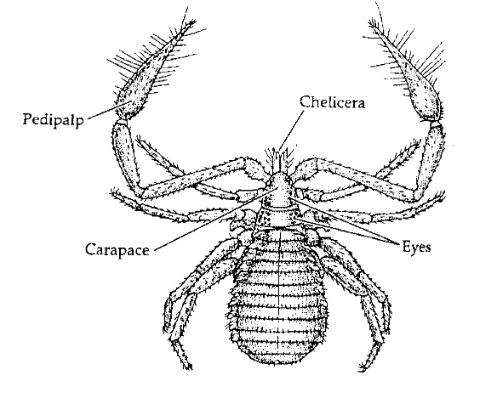
Order including pseudoscorpions. Weird little scorpion things with no tail. Easy to identify. Also have poison glands in their pedipalps.
Solifugae
Order including camel spiders. Day-active, decent sized, extremely fast runners, lack poison but have extremely large chelicerae used for chewing. Also have malleoli (clusters of hair) present on posterior limbs.

Amblypygi
Order including cave spiders. Extremely long front legs with pedipalps being raptorial for prey capture. Lack poison.

Uropygi
Order including vinegaroons. Large chelate pedipalps, front legs elongate and are used as feelers. Also have a repugnatorial gland near the anus which produces stuff that is high in acetic acid.

Araneae
Order including spiders. Very successful (around 50,000 species), exclusively predatory (some are social), chelicerae are fanged and used to inject prey with paralyzing and/or digestive enzymes. Male pedipalps allow for sperm transfer. Can also produce silk- all spiders spin silk at some point in their life history, but only ~10% make orb webs.

Acari
Order including mites and ticks. Currently ~30,000 species (will eventually exceed spiders), have adapted to almost all environments- order contains the ONLY herbivorous arachnids. Body division is either reduced or lost.

Myriapoda
Includes two classes; chilopoda (centipedes) and diplopoda (millipedes). Centipedes are predatory, envenom prey using toxicognaths (modified appendages from the first body segment), and each centipede body segment has only ONE pair of legs. Millipedes are herbivorous/detritivores and roll up in balls/douse themselves in poison for defense. They have pores all over their body to secrete it (repugnatorial glands.) Each millipede body segment has TWO pairs of legs.
Crustaceomorpha
Massive subphylum that is basically the insect analog for the oceans. Almost entirely marine (besides isopods/crayfish), and has several extant classes. All crustaceans are recognized by the following characteristics: 5 pairs of head appendages, 1 set of mandibles, 2 pairs of antennae; otherwise they tend to vary.
Isopoda
Order including isopods. ~5000 species are terrestrial (wood lice, pillbugs, sowbugs, etc.) Exhibit adaptations to prevent desiccation (water loss) and respire via appendage-derived pleopodal lungs.
Decapoda
Order containing crabs, shrimp, lobsters, and crayfish.
Collembola
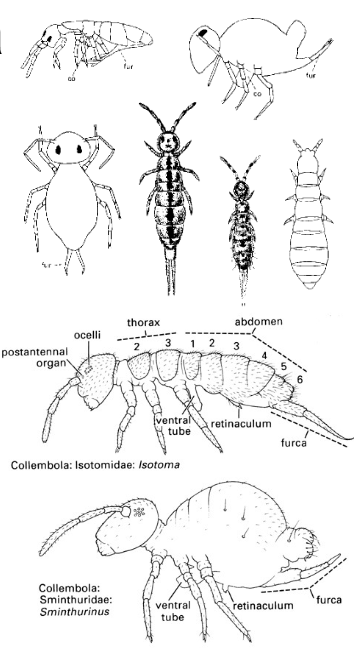
Order including springtails and snowfleas. Ametabolous (babies are small versions of the adults) and epimorphic with entognathous mouthparts. Some characteristics include small size (~2-12 mm long), eyepatches (lateral ocelli), furca (tail thing) and retinaculum, collophore (for adhesion and osmoregulation), and long, multisegmented (4-6) antennae.
Protura
Order including proturans. Ametabolous, anamorphic (segments added during development). Entognathous mouthparts. Somewhat diverse (~800 species). Some characteristics include small size (<2 mm long), they’re unpigmented, have a fusiform body with a conical head, no eyes or antennae, and forelegs used for sensory function.

Diplura
Order including diplurans. Ametabolous, epimorphic, entognathous mouthparts. Somewhat diverse (8-9 families, 1000 species). Like moist areas. Characteristics include small-medium size (2-50 mm long), filiform or forceps-like cerci, are mostly unpigmented, lack eyes, and have long, multisegmented antennae.

Archaeognatha
Order including bristletails. Ametabolous, ectognathous mouthparts. Only two families with ~500 species. Minor crop pests. Characteristics include 6-25 mm in length, large compound eyes, long antennae, a humped thorax, styli (the tail things at the end of the abdomen), paired segmented cerci/medallion caudal filament, and monocondylic mandibles.

Zygentoma
Order including silverfish. Ametabolous, ectognathous mouthparts, 5 families with 600 species. Live in moist areas. Characteristics include being 5-30 mm long, being dorsoventrally flattened, lacking (or having reduced) compound eyes, have long antennae, styli, paired segmented cerci and median caudal filament, and SOME produce cellulase. Also have dicondylic mandibles.

Orthoptera
Order including grasshoppers, crickets, and katydids. Hemimetabolous (no pupal stage), chewing mouthparts, ~30 families and 20,000 species. Characteristics include a straight tegmen (narrow and parchment-like in texture), broad hindwings (membranous and fan-like), saltatorial hindlegs, well-developed cerci, and most males have sound-producing organs. Tympana on first abdominal segment or on the tibia, and are 4-75 mm in length.
Phasmatodea
Order including stick insects. Hemimetabolous, chewing mouthparts, ~3000 species. Characteristics include reduced wings (or absent). Some tropical species have elaborate ones that look like leaves. Also have long and slender OR leaf-like. Have short cerci, and are 15-180 mm in length.
Grylloblattodea
Order including rock crawlers. Simple metamorphosis, not very diverse (1 family, around 35 species), like cold and high elevated areas. Characteristics include being nocturnal, being detritivores, being wingless, and being 15-30 mm in length.
Mantophasmatodea
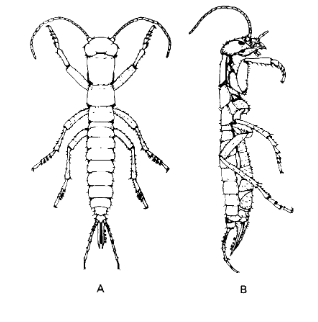
Order including heel walkers. Hemimetabolous, chewing mouthparts, extremely undiverse (3 families with 16 species). Characteristics include being described VERY recently (2001), being 2-3 cm in length, having chewing mouthparts, and they’re wingless.

Mantodea
Order including mantids. Hemimetabolous, chewing mouthparts, diverse (2500 species). Characteristics include a freely moveable head, elongate prothorax, tegmina like orthoptera, hindwings like orthoptera, raptorial forelegs, and well-developed cerci. Also 50-100 mm in length.
Blattodea
Order including both cockroaches and termites. Cockroaches are hemimetabolous, have chewing mouthparts, and 8 families with 3500 species. Characteristics include omnivorism/nocturnalism, a head concealed from a pronotum, long antennae, tegmina/hind wings similar to orthoptera, cursorial legs, well-developed cerci, and are 1-50 mm in length. Termites are hemimetabolous, have chewing mouthparts, and have 2600 species. Characteristics include eusocialism, a caste system, short cerci, both pairs of wings being similar in size/texture, and are less than 20 mm in length.


Psocodea
Order including booklice/barklice/psocids as well as regular lice. The former are hemimetabolous, have chewing mouthparts, and have 6000 species. Their characteristics include being 1-10 mm long, having long, thin antennae, a small pronotum, no cerci, a bulging face with large compound eyes, and most barklice have wings but most booklice do not. When present, wings are held roof-like. The latter are hemimetabolous, have chewing and piercing/sucking mouthparts, and 5000 species. Their characteristics include being dorsoventrally flattened, absent or reduced eyes, sometimes have fused thoracic segments, well developed legs with strong claws for grasping hair/fur, and lay eggs on hair or feathers of hosts.

Thysanoptera
Order including thrips. Holometabolous (complete metamorphosis), piercing/sucking mouthparts, and 6000 species. Characteristics include fringe wings, haplo-diploidity, and the ability to vector plant viruses in some species.

Hemiptera
Order including true bugs. Paurometabolous (nymphs resemble adults, no pupa), piercing/sucking mouthparts, and incredibly diverse (~100,000 species). Many are also vectors of animal diseases and plant pests. Characteristics include mouths developed into a beak (arising from the anterior of the head), a hemelytra, wings being held flat over the body at rest, and being 3-65 mm in length.

Dermaptera
Earwigs
Plecoptera
Stoneflies.
Odonata
Dragonflies/damselflies
Ephemeroptera
Mayflies
Embioptera
Webspinners
Zoraptera
Zorapterans
Neuroptera
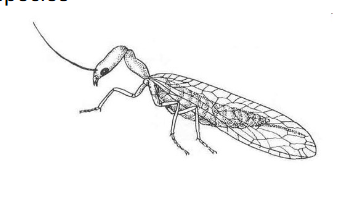
Lacewings, owlflies, and antlions (including their larvae). All have vented/membranous wings, long and thin antennae, cross-veined wings across leading edge, large, separated eyes, and wings are held roof-life at rest.
Strepsiptera
Twisted wing parasites. Females have no appendages; they protrude from the host abdomen and males are winged. Forewings are club-like and hindwings are large and membranous, also twisted at the ends.
Coleoptera
Beetles.
Diptera
Flies.
Mecoptera
Scorpionflies. Long narrow wings, have a long snout. Males have a scorpion-like tail.
Siphonaptera
Fleas.
Trichoptera
Caddisflies. The larvae are big and grubby, long and slender antennae, wings are membranous and hairy, also held roof-like. Larvae are aquatic with abdominal filamentous gills and terminal hooks.