NURS 210 EXAM 4 (health promotion)
 Call Kai
 Learn
 Practice Test
 Spaced Repetition
 Match
 Flashcards
 Knowt Play
1/40

There's no tags or description
Looks like no tags are added yet.
41 Terms
health promotion
- process of enabling people to increase control over and improve their health
- actions taken by nurses, health care workers, others
- EX: nurse teaches client about benefits of healthy diet and regular exercise to achieve weight loss
wellness
a positive state of health
disease prevention
- Specific, population-based and individual-based interventions for primary and secondary (early detection) prevention, aiming to minimize the burden of diseases and associated risk factors.
- measures taken to limit exposure or effects of illness or disease.
- EX: immunizations and hand hygiene.
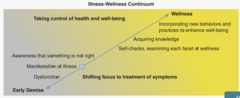
Illness-wellness continuum
- developed by John W. Travis
- right side reveals high level of health and wellness, left side low level of illness and health, including death
- middle is neutral.
health promotion and government
- government can implement policies and fund science-based strategies
- tax on harmful products (tobacco tax)
- policies require safety equipment in workplace
- establish parks and trails
- U.S. and Healthy People legislation and objectives
health education
- learning experiences that are designed to improve health of an individual or community through increased knowledge or by influencing attitudes.
health promotion by health care provider
- education on reducing the incidence of heart disease
-
Healthy People Initiative
- improve overall health of Americans
-
A nurse is preparing to give a presentation to a group of clients in the community about Healthy People. The nurse knows that which of the following options should be included?
Goals and objectives for healthy habits and lifestyle changes based on data from past 10 years
self-care
-clients can implement to promote their own health and well-being
Self-care foundation has identified 7 pillars or principles that can be utilized to improve individuals health.
1. knowledge and health literacy
2. metal well-being and self-awareness
3. physical activity
4. healthy eating
5. risk avoidance (vaccinations, safe sex, avoid tobacco use)
6. good hygiene (hand washing, dental hygiene)
7. rational and responsible use of products and services, including prescription and nonprescription mends, preventative health services vitamins and supplements
health outcomes
result of health promotion and disease prevention measures. individuals are empowered to make healthier decisions to reduce likelihood of developing disease and disability through health promotion and disease prevention programs
factors affecting health status

risk factors
a condition that increases the likelihood of developing a disease or altered health condition
modifiable risk factors
behaviors and actions that can affect a client's risk for developing a disease.
3 modifiable risk factors for development of majority of chronic diseases
- unhealthy and excessive diet
- lack of physical exercise
- use of tobacco products
non modifiable risk factors
- risk factor that cannot be changed
- age, gender, ethnicity/race, family history

environmental factors
- air quality (asthma, respiratory infections, cigarette smoke)
- drinking water (waterborne diseases)
- lead-based paints (learning disabilities, speech, language, hearing difficulties, growth delays)
- presence of roaches, mice, rats
socioeconomic factors
- higher rates of stroke, heart disease, diabetes, chronic diseases
- increase stress, anxiety, depression
- less access to healthcare
- increased percent of modifiable risk factors
health literacy
- limited health literacy can impact client's ability to follow through with treatment interventions, and decreased understanding
cultural beliefs
- learned, cared, transmitted values, beliefs, norms, and life ways of particular group that guides their thinking, decisions, and actions in a patterned way.
- could impact client's adherence to recommended medication plan
- nurse should identify own biases and prejudices
- clients who receive care that aligns with cultural beliefs more likely to follow recommended treatment regimens
family dynamics
- PFCC (Patent -and-family -centered care)
- who is a part of the family and involved in care planning and decisions
primary prevention
- act of intervening before negative health effects occur
- decreasing risk for development of medical conditions
- vaccinations, changing risky behaviors like tobacco use, safe sex practices, seatbelt when driving

secondary prevention
- reduce impact of disease or injury, and limit disability
- early screening to detect diseases before complications
- screening tests: BP for hypertension, blood cholesterol levels, cancer, PAP smears, colonoscopies

Tertiary prevention
- controlling effects of health issue that is already occurred and on restoring individual to optimal functioning
- response to acute or chronic health problem
- education, self-care
- support groups for alcoholism
- PT for functional impairment

quaternary prevention
- protecting clients from excessive use of medical interventions that can cause more harm than good.
- a client who has no risk factors and no symptoms may not benefit from treatment.
In the scenario, the nurse identifies that the client's blood pressure is elevated. Which of the following actions should the nurse take? (Select all that apply.)
- Ask the client about a family history of high blood pressure.
- Refer the client for a follow-up with their primary care provider.
- Identify if the client has risk factors for heart disease.
- Discuss a heart-healthy lifestyle with the client.
- Provide the client with information about high blood pressure.
A nurse is caring for a client who reports an improved diet, exercising 30 min a day 5 days a week, and an overall sense of improved health. The nurse should identify that the client is describing a positive state f health known as which of the following?
wellness
The Joint Commission is conducting a site visit at a facility and will be assessing client records for compliance with standards. Which of the following should the nurse be able to discuss with TJC surveyors?
Facility policies that address administration of medications
Magnet Program
- identifies client care excellence
- identifies innovations in professional practice
- identifies organizations with quality outcomes
Pathway to Excellence
- identifies a supportive practice environment
- identifies contributions that affect nurses' well-being
- identifies a shared-governance structure
social determinants of health (SDOH)
Factors that impact health other than health care services, including location, environment, genetics, income, relationships, and gender.
physical determinants of health activity
- built environment, safe roads
- built environment (well-maintained buildings)
- exposure to pollutants
- natural environment (climate weather)
social determinants of health
- education
- social community
- health and healthcare

skilled nursing facility (SNF)
Sometimes referred to as a nursing home or long-term care, may provide for short term rehabilitation care such as occupational and physical therapy as well as oversight for activities of daily living.
SNFs also may be able to provide limited therapies such as intravenous fluids, wound care, and respiratory care treatments.
long-term care hospital (LTCH)
A facility that specializes in providing care for stable clients who require a lengthy period of treatment such as for severe burns, trauma, or ventilation needs.
Assisted living
Provides services for clients who are mostly independent in their living but who choose to live in a community setting for assistance with some part of their daily life—for example, with meals, medication management, laundry, housekeeping, or transportation.
Hospice Care
Services provided to clients when it is determined the client has less than six months to live. The goal is comfort and support services for the client and family, not curative.
The care team continues to support the family for a period of time, even after the client has passed.
Palliative care (supportive care)
- not same as hospice
- Services provided to clients to promote comfort while in the last stages of life. Services can be received during active treatment. A treatment approach that is focused on the management of symptoms of chronic or life-threatening illnesses while maintaining the highest level of quality of life possible for the client.
respite care
Allows the client to be cared for apart from the caregiver, to allow the caregiver a break from the responsibilities of client care for a short time for vacations to travel or to simply stay at home without caring for the client.
The respite care benefit can be very beneficial for caregivers if they are aware of it.
Home care