Kingdom Plantae Vocabulary Flashcards (Lab 2)
 Call Kai
 Learn
Learn Practice Test
 Spaced Repetition
 Match
Match Flashcards
 Knowt Play
1/40

Earn XP
Description and Tags
Vocabulary practice flashcards generated from the Kingdom Plantae lecture notes and microscopic specimen slides.
41 Terms
Cuticle
A waxy covering on plant leaves and stems that slows down water loss.
General Characteristics of Plants
Key features include being eukaryotic, multicellular, and photosynthetic autotrophs with cell walls made of cellulose and storing glucose as starch. They contain chlorophylls a and b, carotenoids, and xanthophylls, exhibit alternation of generations, and feature walled spores produced in sporangia, multicellular gametangia, and apical meristems.
Stomata
Microscopic openings in leaf surfaces that regulate gas exchange and transpiration.
Xylem
Vascular tissue in plants that transports water and dissolved minerals upward from roots; contains specialized water-conducting cells called tracheids.
Phloem
Vascular tissue in plants responsible for transporting photosynthetic products, such as sugars, throughout the plant.
Lignin
A complex organic polymer deposited in the secondary cell walls of tracheophytes (vascular plants) that provides structural support and rigidity.
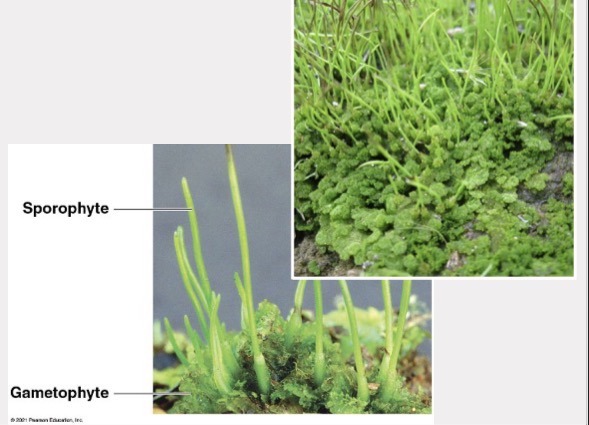
Sporophyte
The diploid (2N) phase in the plant life cycle that produces haploid spores through meiosis (ex: vascular plants).
Gametophyte
The haploid (1N) phase in the plant life cycle that produces gametes through mitosis (ex: non vascular plants).
Bryophytes
Non-vascular, spore-bearing land plants (including mosses, liverworts, and hornworts) that grow in moist environments characterized by a gametophyte-dominant life cycle and flagellated sperm.
Homosporous
Describing plants (ex: Byrophytes) that produce a single type of spore, which typically develops into a bisexual gametophyte capable of producing both eggs and sperm.
Heterosporous
Describing plants (ex: Higher Traceophytes) that produce two distinct types of spores: larger megaspores that develop into female gametophytes and smaller microspores that develop into male gametophytes.
Archegonium (Marchantia)*
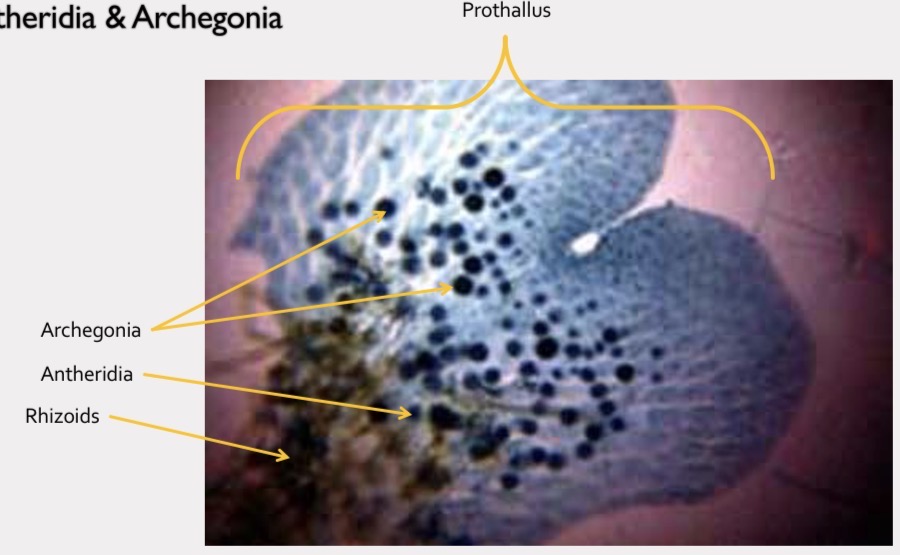
The multicellular female gametangium in plants that produces and retains the egg cell.

Antheridium (Marchantia)*
The multicellular male gametangium in lower plants that produces flagellated sperm cells.

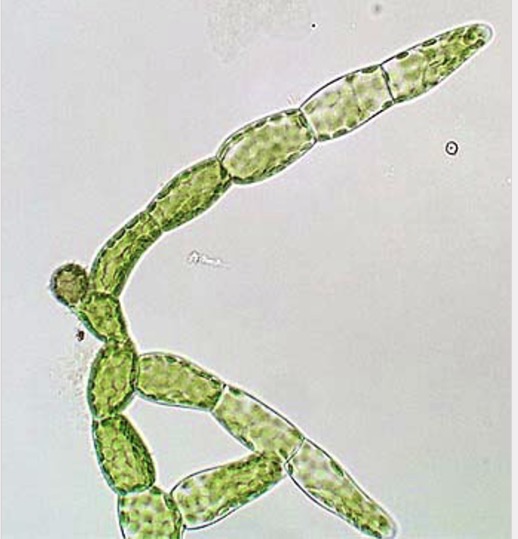
Protonema*
A branched, thread-like chain of cells formed during the early development of a moss gametophyte following spore germination.
Operculum*
The lid or cap covering the opening of a moss spore capsule, which falls off to allow spore release.

Peristome*
A ring of tooth-like structures around the mouth of a moss spore capsule that opens and closes in response to humidity to regulate spore dispersal.
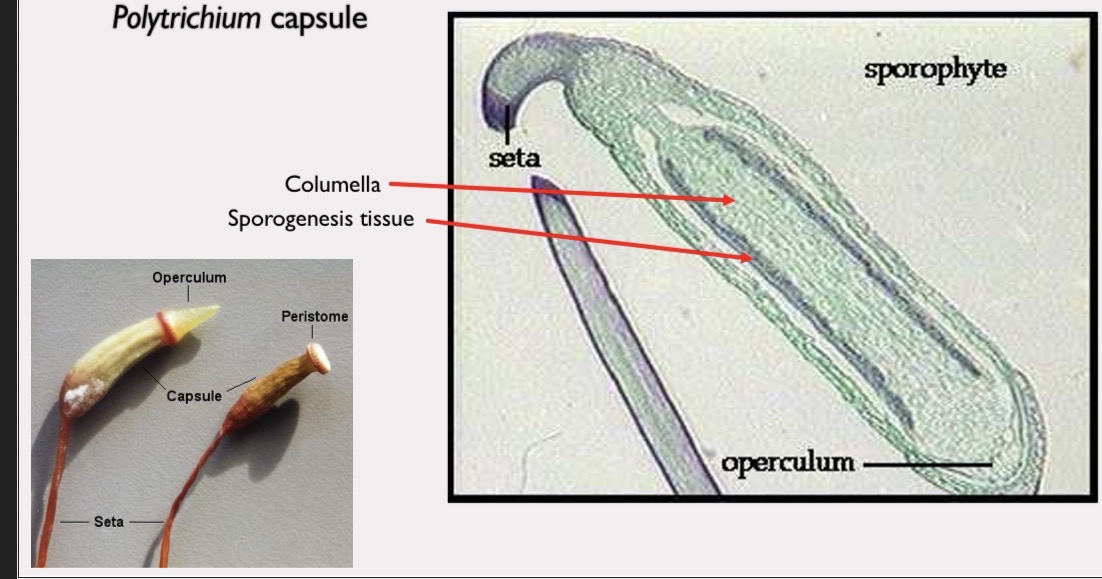
Seta*
The elongated stalk of a bryophyte sporophyte that elevates the capsule above the gametophyte for spore dispersal.
Sphagnum Leaf
A moss leaf structure adapted for water retention, composed of a network of small photosynthetic cells and large dead hyaline cells.

Gemmae
Small, cup-like asexual reproductive structures produced on the thallus of liverworts.
Phylum Bryophyta
The phylum of non-vascular plants comprising the true mosses, featuring sexually reproducing gametophytes and spore-producing sporophyte stalks.
Phylum Hepatophyta
The phylum of non-vascular plants comprising liverworts, primitive land plants with flattened leafy thalli that reproduce sexually or asexually via gemmae.

Phylum Anthocerophyta
The phylum of non-vascular plants comprising hornworts, characterized by long, pointed spike-like sporophytes.
Phylum Lycophyta
The phylum of seedless vascular plants comprising club mosses and ground pines, characterized by true leaves, horizontal rhizomes, flagellated sperm, and a gametophyte dependent on the development of symbiotic fungi.

Phylum Pterophyta/Monilophyta
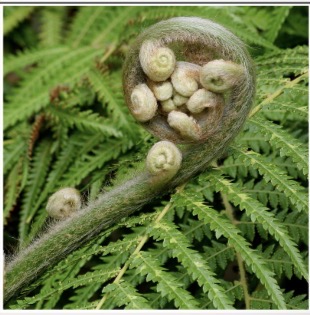
The phylum of seedless vascular plants that includes ferns, horsetails (Equisetum), and whisk ferns. They contain sori.
Sori
Clusters of sporangia located on the undersides of fern fronds that produce and release spores.
Rhizome
A horizontal, underground stem produced by many ferns and lycophytes that gives rise to shoots and roots.
Prothallus
The small, heart-shaped, free-living gametophyte stage of a fern bearing both archegonia and antheridia.
Gymnosperms (“naked seed”)
Vascular seed-bearing plants whose seeds are naked (not enclosed in an ovary) and whose female gametophytes develop within ovulate cones and the male gametophytes are inside of the pollen cone.

Angiosperms (“flowering plants”)
Vascular seed-bearing plants (Phylum Anthophyta) characterized by flowers, double fertilization, and seeds enclosed within a protective ovary or fruit.

Phylum Coniferophyta
The largest gymnosperm phylum, including pines, firs, cedars, and spruces, characterized by needle-like leaves and woody cones.

Phylum Cycadophyta
A phylum of gymnosperms commonly called cycads (e.g., Sago Palm) that physically resemble palm trees but produce large cones.

Phylum Ginkgophyta
(LIKELY TO BE ON QUIZ)
A gymnosperm phylum represented by a single extant species, Ginkgo biloba, which features fan-shaped deciduous leaves.

Phylum Gnetophyta
A phylum of gymnosperms including Ephedra and Welwitschia; Ephedra is the plant source of the alkaloid ephedrine.

Ephedrine*
A compound extracted from Ephedra (Phylum Gnetophyta) used medicinally as a decongestant and formerly as a weight-loss supplement.
Class Monocotyledonae
A class of angiosperms (monocots) characterized by embryos with a single cotyledon (e.g., wheat, corn, lilies, orchids).

Class Dicotyledonae
A class of angiosperms (dicots / eudicots) characterized by embryos with two cotyledons (e.g., sunflowers, magnolias, maples).

Pine Pollen Grain*
The male gametophyte of a pine tree, typically possessing air sacs (wings) to aid in wind dispersal.

Pinus Megastobilus*
The female ovulate cone of a pine tree that houses megasporophylls bearing ovules.
Flower Anatomy
The structural arrangement of a flower, consisting of sterile parts (sepals forming the calyx, petals forming the corolla) and fertile reproductive organs (stamens with anthers/filaments, carpels with stigma/style/ovary).

Double Fertilization
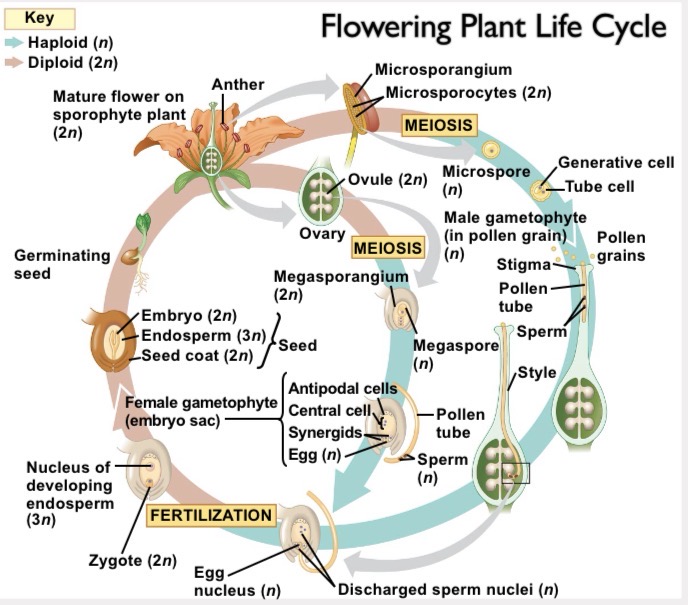
A unique angiosperm process in which one sperm nucleus fertilizes the egg to form a diploid (2N) zygote, while a second sperm nucleus fuses with the central cell nuclei to form triploid (3N) endosperm.
Steps of the Flowering Plant Life Cycle
1. Spore production: Sporophyte microsporocytes and megasporocytes undergo meiosis to produce haploid microspores and megaspores. 2. Gametophyte development: Microspores develop into pollen grains (male gametophyte) and megaspores develop into an embryo sac (female gametophyte). 3. Pollination: Pollen lands on the stigma and extends a pollen tube through the style to the ovary. 4. Double fertilization: One sperm nucleus fertilizes the egg to form a diploid zygote (), and a second sperm nucleus fuses with the central cell to form triploid endosperm (). 5. Seed development and germination: The zygote forms an embryo within a seed, which germinates and grows into a mature sporophyte ().