Art History Exam #2 Transmission of Buddhism and East Asian Art
 Call Kai
 Learn
 Practice Test
 Spaced Repetition
 Match
 Flashcards
 Knowt Play
1/11

There's no tags or description
Looks like no tags are added yet.
12 Terms
Icon
An image of a religious figure or subject used for worship or contemplation
Pagoda
A tall East Asian Buddhist structure that contains sacred relics
Pradakshina
The ritual act of walking around a sacred place in hinduism, Buddhism or Jainism
Mudra
A symbolic hand gesture used in Hinduism and Buddhism
Mandorla
A full body halo surrounds the entire body of a sacred figure in religious art
Esoteric Buddhism
A branch of Buddhism that involves secret teachings that can only be learned through an advanced teacher
Mandala
Spiritual diagram made up of circles and squares representing the universe
Calligraphy
Decorative handwriting
Pensive Bodhisattva, probably
Maitreya (Korean Mireuk)
Three Kingdoms period, early seventh century. Korea Boddhisatva, seated in a pensive pose finger touching cheek contemplating something. Calm bright expression, elegant jewelry , indicating his staus as a bohhistava. Gilt bronze, Future Buddha Mireuk in Korean society.

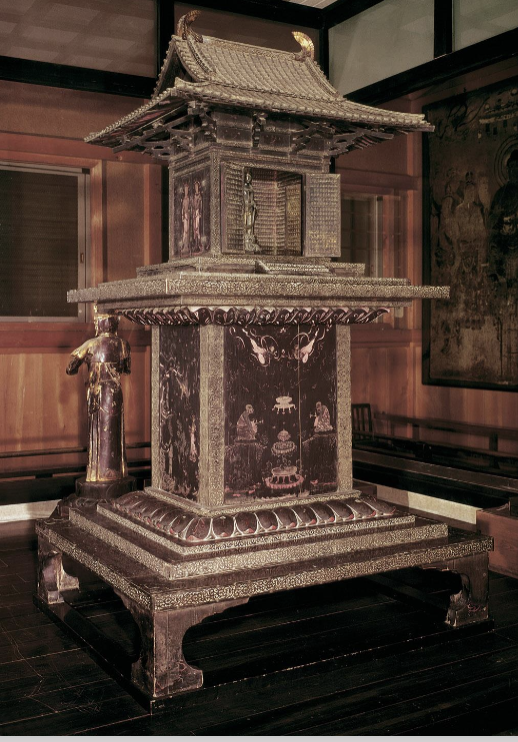
Tamamushi Shrine
Hōryūji, Nara Prefecture, Japan, Asuka period, c. 650. Cypress and camphor wood, with lacquer. Early Buddhism in Japan: the Hungry Tigress Jataka emphasizes compassion, sacrifice, and devotion. Asuka period early Buddhism.
olossal Vairochana and Attendants, Fengxian si (“Temple of Honoring Ancestors”)
Cave 19, Longmen, Luoyang, Henan province, China. Tang dynasty, 660–76. Limestone Vairocana Buddha the cosic buddha in Mahayana buddhism. Tang dynasty golden age of Chinese civilization, pilgrimage and devotional site. Symbolizes the unity of religious authority and imperial power while vaircona embodies the universal wisdom and comic presence of the buddha.

Illustration from the “Oak Tree (Kashiwagi)” chapter from The Tale of Genji
Late Heian period, twelfth century. Handscroll, ink and color on paper.
