ch 13 acellular microbes
 Call Kai
 Learn
 Practice Test
 Spaced Repetition
 Match
 Flashcards
 Knowt Play
1/32

There's no tags or description
Looks like no tags are added yet.
33 Terms
viruses range from
10-300 nm
Virus charteritics:
Every living cell will have DNA as their genetic materic, but viruses can have either DNA OR RNA
CANNOT replicate w/o a host cell
CANNOT divide by binary fission, mitosis, or meiosis
CANNOT make their own energy (steal it from host cell)
CANNOT make their own protein or genetic material (steal from host cell)
can viruses replicate w/o a host cell
no
viruses divide by binary fission, mitosis, or meiosis
false
viruses can make their own energy
false (steal it from host cell)
Viruses cannot make their own protein or genetic material (steal from host cell)
true
Characteristics of a typical virus:
Consists of a genome of either RNA or DNA
Genetic material surrounded by a capsid or protein coat
Composed of small protein units called capsomeres
Some viruses have an outer envelope
May also have a tail, sheat, and tail fibers
What is
A viruses that infects bacteria
2 types
Virulet bacteriophage
Temperate bacteriophage
Bacteriophage
What is being described
Causes lytic cycle
5 steps:
Viral attatchment
Penetration
Inject host DNA
Biosynthesis
Assembly
Release
Virulent bacteriophage:
Whats being described
Dont immediately begin lytic cycle
Their DNA remains embedded in bacterial cell chromosome
Temperate bacteriophage
Common examples pathogenic bacteria a result of lysogenic conversions`
Corynebacterium diphtheriae produces the toxin of diphtheria only when it is infected by the phage β.
Vibrio cholerae is a non-toxic strain that can become toxic,
producing cholera toxin, when it is infected with the phage CTXφ.Shigella dysenteriae which produces dysentery has toxins that fall into
two major groups, Stx1 and Stx2 coded by phage genes.Streptococcus pyogenes produce a pyrogenic exotoxin, obtained by lysogenic conversion
Certain strains of Clostridium botulinum which causes botulism, obtain the genes for toxin production from the phages

What kind of virus being described
Species Specific
Attach to specific binding sites on cells
This affects what species and which cell type is infected
Multiplication of animal viruses (6 steps)
Attatchment
Penentratiopn
Uncoating
Biosythesis
Assembly
Release
animal viruses

Multiplication and inheritance processes of the retroviridae
image of inheritance processes of the retroviridae
what is being described
Genetic info is single-stranded RNA
Have a special enzyme called reverse transcriptase
This enzyme makes DNA from RNA
Integrate their newly formed double stranded DNA into the host cell
example= HIV
retrovirus
extra info abt bacteria and animal cells
Bacterias have lysogens
Animal cells have provirus= integrated into your dna
Viruses that cause cancer
Ex: human papillomarviruses (HPV- wart viruses) causes differeent tpes of cancers
Ex: head neck throat cancer in men and cervical cancer and other types of cancers of the genital tract
Karposi sarcoma- caused by human herpesvirus 8
Oncogenic viruses:
Latent viral infections and persisitent viral infections
Latent virus remains in asymtomatic host for long periods
May reactivate due to changes in immunity
Cold sores
, shingles (can kill you)
A persistent viral infection occurs gradually over a long period; is generally fatal
Subactuate sclerosing panencephalitis (miseals virus)
What kind of virus
remains in asymtomatic host for long periods
May reactivate due to changes in immunity
Cold sores
, shingles (can kill you)
latent virus
What is being described
occurs gradually over a long period; is generally fatal
Subactuate sclerosing panencephalitis (miseals virus)
persistent viral infection

A viral one step growth curve:
Eclipse period: no virus particles in any infected cell, no viruses detected
What is being described
Interefere with the phases of viral multiplication
May disrupt a binding site
May disrupt an enzyme or protein
May interfere with the synthesis of viral parts like DNA, RNA, or protein synthesis
Antiviral agents
What is being described
Tissue is treated with enzmtes to separate the cells
Cells are suspended in culture medium
Normal cells or primary cells grouw in a monolayer across the glass or plastic container. Transformed cells or continuous cell cultured do no grown in a monolayer
cell cultures
What is being described
An attenuated virus is weakened, less vigorous virus
A vaccine against a viral disease can be made from an attenuated, less virulent strain of the virus
Attenuated virus is capable of stimulating an immune response and creating immunity but not causing illness
Inactivated viruses
mRNA vaccines
vaccines
What is a
weakened, less vigorous virus
attenuated virus
Wnat is against a viral disease can be made from an attenuated, less virulent strain of the virus
vaccine
Attenuated virus is capable of…
stimulating an immune response and creating immunity but not causing illness
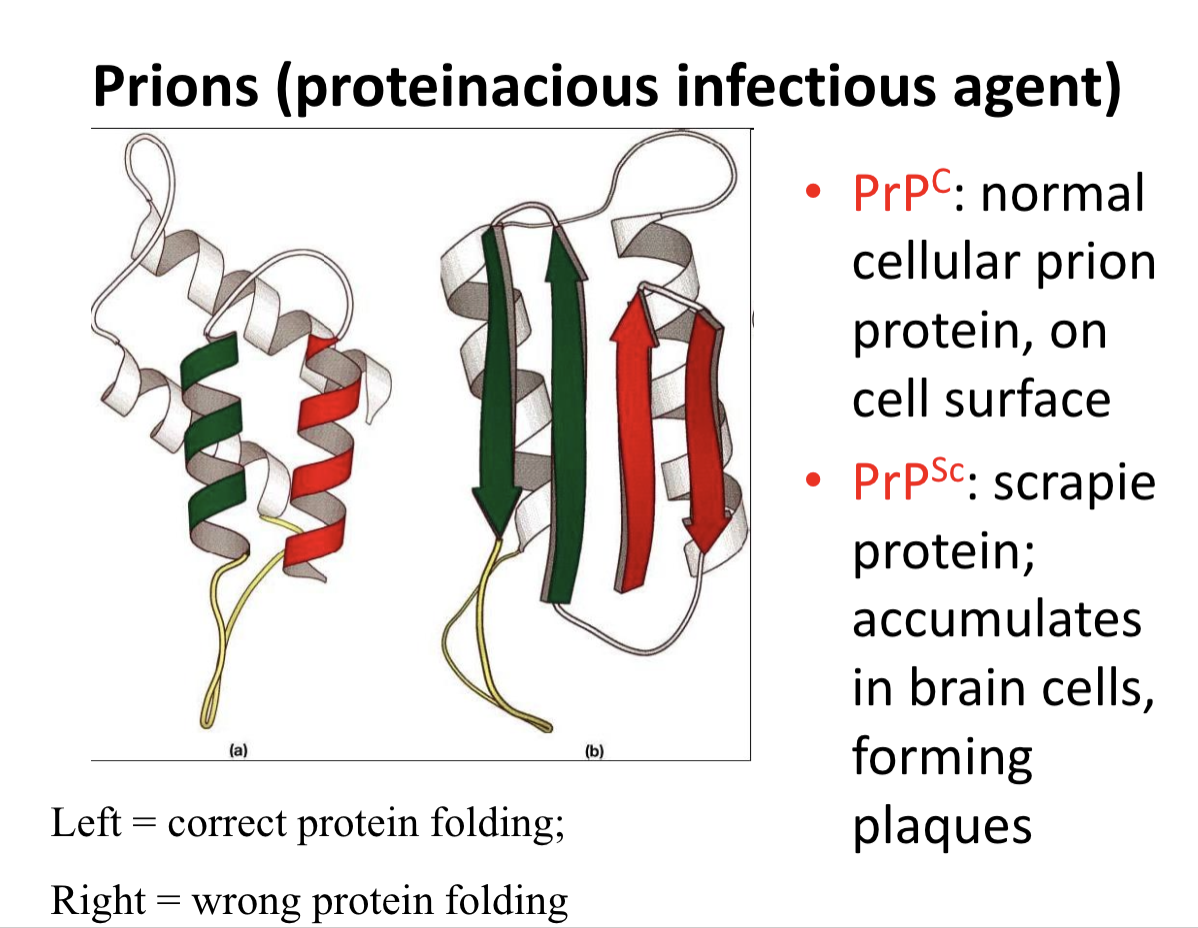
Whats being described
Proteinaceous infectious agents
PrPc: normal cellular protein, on cell surface
PrPsc: scrapie protein; accumulates in brain cells, forming plaques
Can cause fatal familial insomnia
prions
normal cellular protein, on cell surface
PrPc
scrapie protein; accumulates in brain cells, forming plaques
PrPsc:
What are ..
Small infectious proteins
Cause fatal neurological diseases in animals
Cause fatal spongiform encephalopathties
Brain becomes riddled with holes
(think of spogebob, how he has holes)
prions
Prion animal infecrtions
Sheep infected with scrapie
Deer infected with “chronic wasting disease”
Bovine spogiform encephalopathy, “mad cow disease”
Prion human infections:
Kuru
Creutzfeldt-jakob disease
Fatal familial insomnia
Can contract from eating prion contaminated beef