lab 8 plant structure
 Call Kai
 Learn
 Practice Test
 Spaced Repetition
 Match
 Flashcards
 Knowt Play
1/48

There's no tags or description
Looks like no tags are added yet.
49 Terms

label the plant
a- apical bud
b- axillary bud
c- stem
d- flower
e- leaf blade
f- petiolle
leaf( blade+ petiole)
large surface area for photosynthesis
stem
supports leaves and flowers, moves water and sugars between roots and shoots
flowers
reproductive structures
bud
undeveloped tissue that grows into leaves
apical- tip/apex
axillary- means “armpit”
shoots
photosynthesis and reproduction
roots
absorb water and nutrients from the soil, sotre food
domestication
humans domesticated crops from wild animals
plant growth
plants have indeterminate growth(growth throughout life)
apical meristems→ primary growth
growth in lengths, occurs at tips of stems and roots
pattern of plant growth
cells divide, enlarge, and then specialize
function of root cap
protection
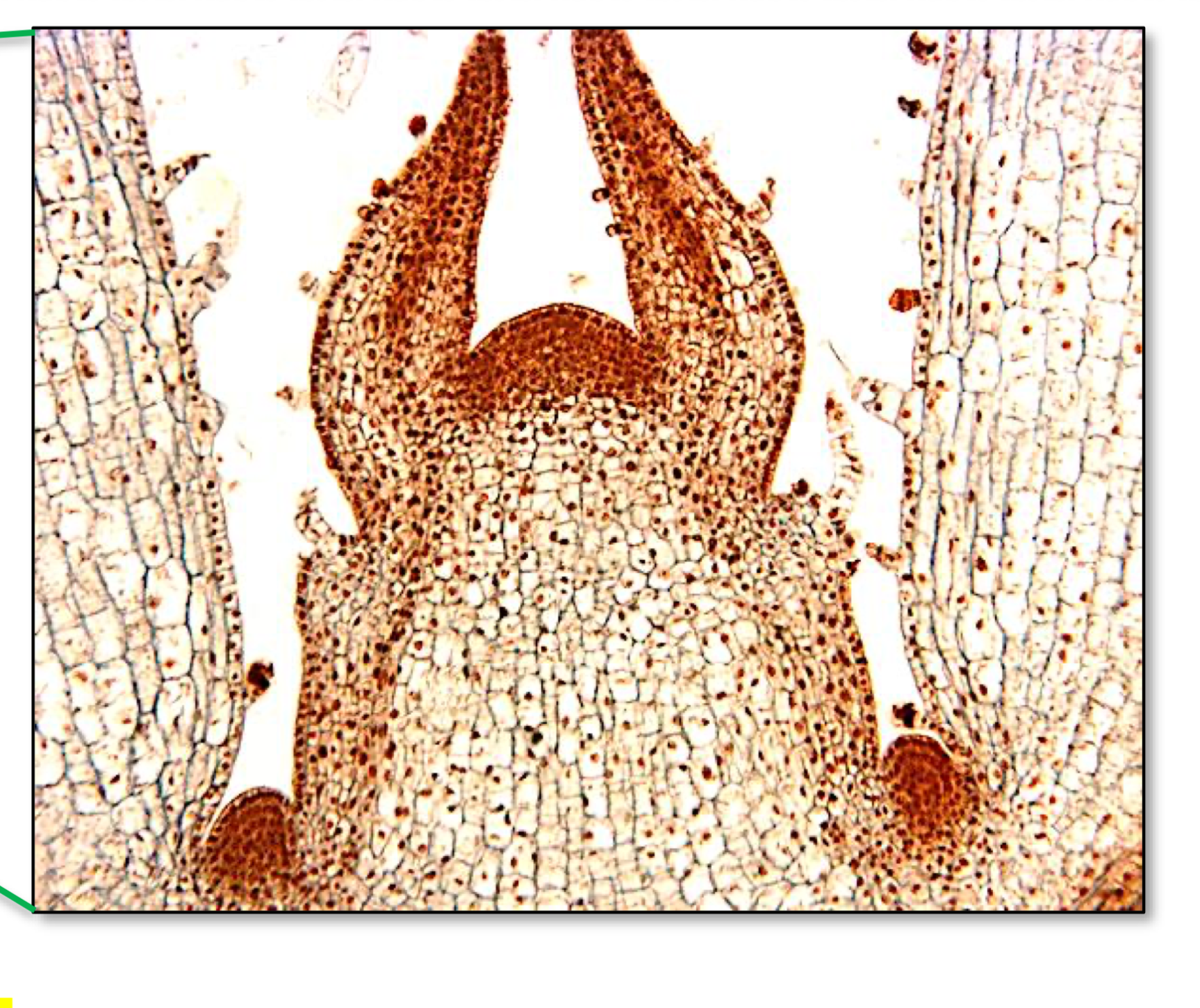
what is this
coleus stem tip

label the coleus
a- leaf primordia
b- apical meristem
c- bud primordia

plant cell walls
major component of cellulose
primary cell wall
all plant cells
thin, expands during growth of cell
secondary cell wall
only some cells
inside primary cell wall
thick- multiple layers of cellulose and lignin
strong and rigid
central vacuole
organelle inside plants
stores water
simple tissues
parenchyma cells
collenchyma cells
sclerenchyma cells( sclerids and fibers)
parenchyma cells
simple tissue
storage and photosynthesis
cell is ALIVE
have large vacuoles
thin primary cell wall
collenchyma
simple tissue
unevenly thick cell walls
function is flexible suppport of growing stems and leaves
sclrenchyma
simple tissue
thick secondary cell wall
cell is DEAD
2 SHAPES
sclereids- short and irregular (fruits, nuts)
fibers elongated(stems)

complex tissue
dermal system (parenchyma cells and guard cells)
vascular system (xylem and phloem)
ground system (parenchyma, sclerenchyma, collenchyma)
3 complex tissue systems
based on function and position
dermal
vascular
ground
dermal
complex tissue
forms outer protective covering
single layer, called epidermis
parenchyma is main cell type of tissue

label syringa leaf
a- stoma
b- guard cells
c- parenchyma

vascular
complex tissue
2 types: xylem- dead at maturity, larger
phloem- alive at maturity, smaller

ground
made of parenchyma

what is this
celery

label
a- parenchyma
b- vascular bundles
c- collenchyma

what is this
potato
leucoplasts
what is this
pear

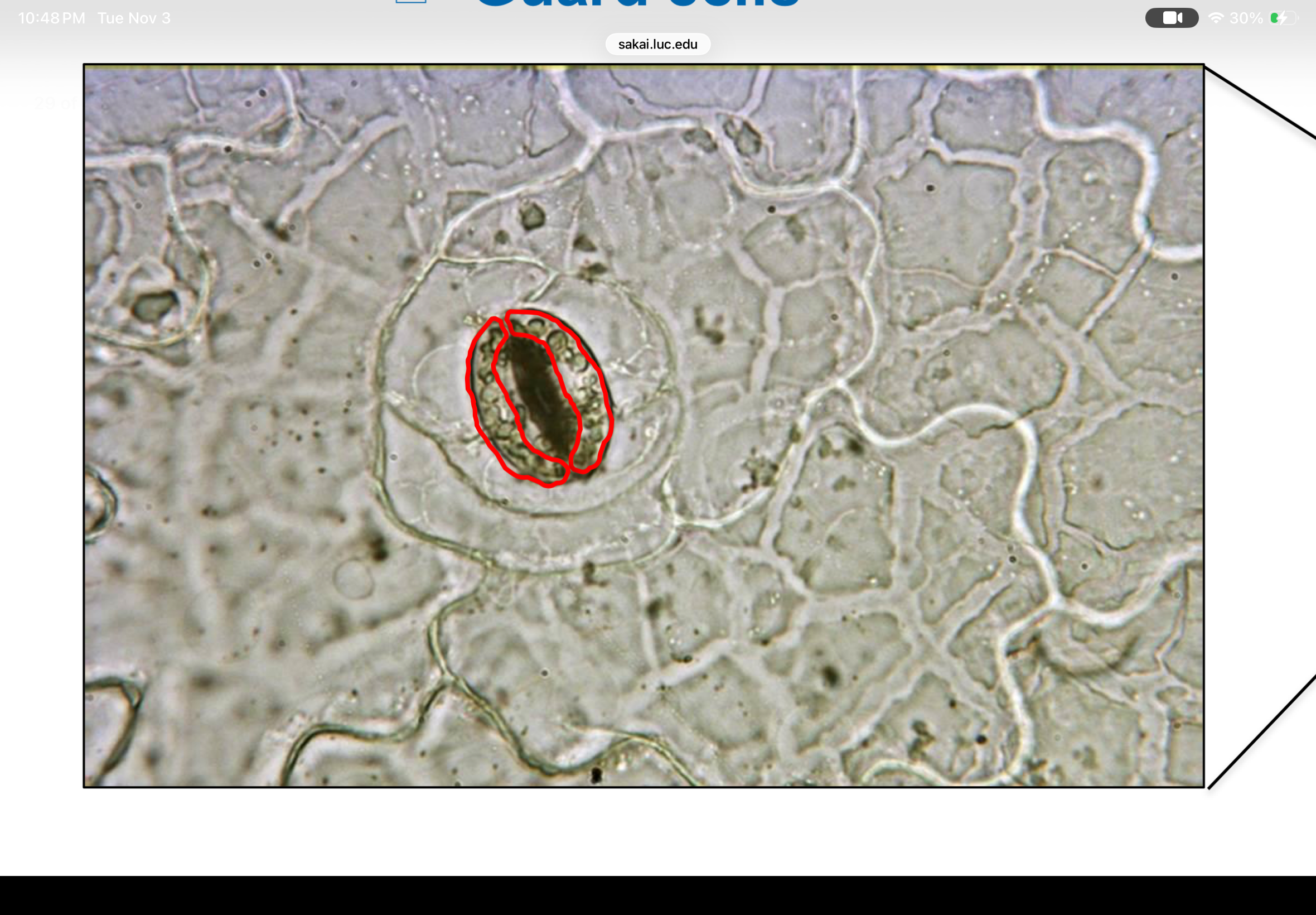
what is this
leaf epidermis

monocots vs diacots
m- 1 cotyledon, vascular bundles scattered
d- 2 cotyledon, vasuclar bundles in a ring


what is this
dicot root

dicot root
a- epidermis
b- phloem
c- endodermis
d- ground
e- xylem

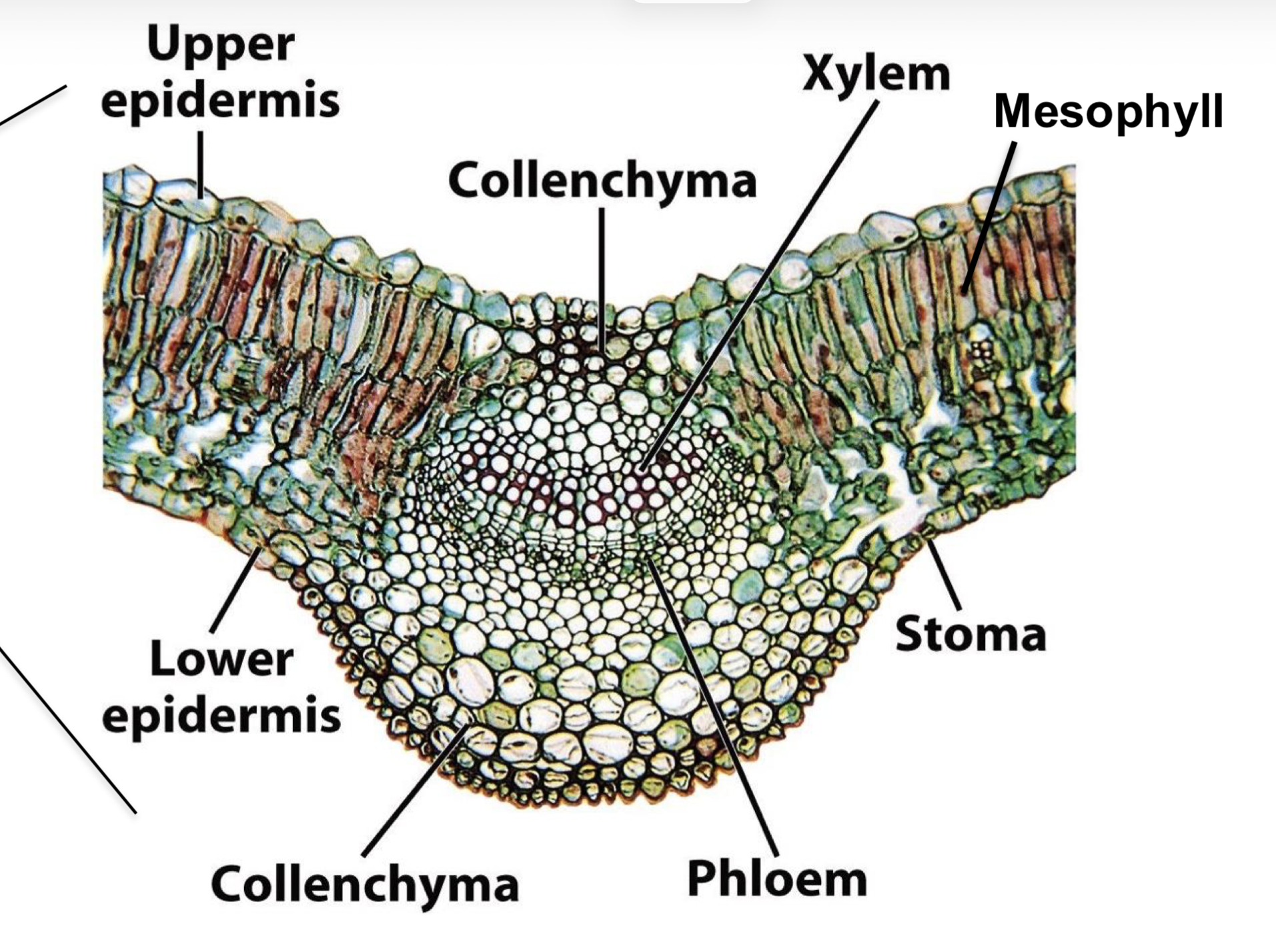
what is this
dicot leaf

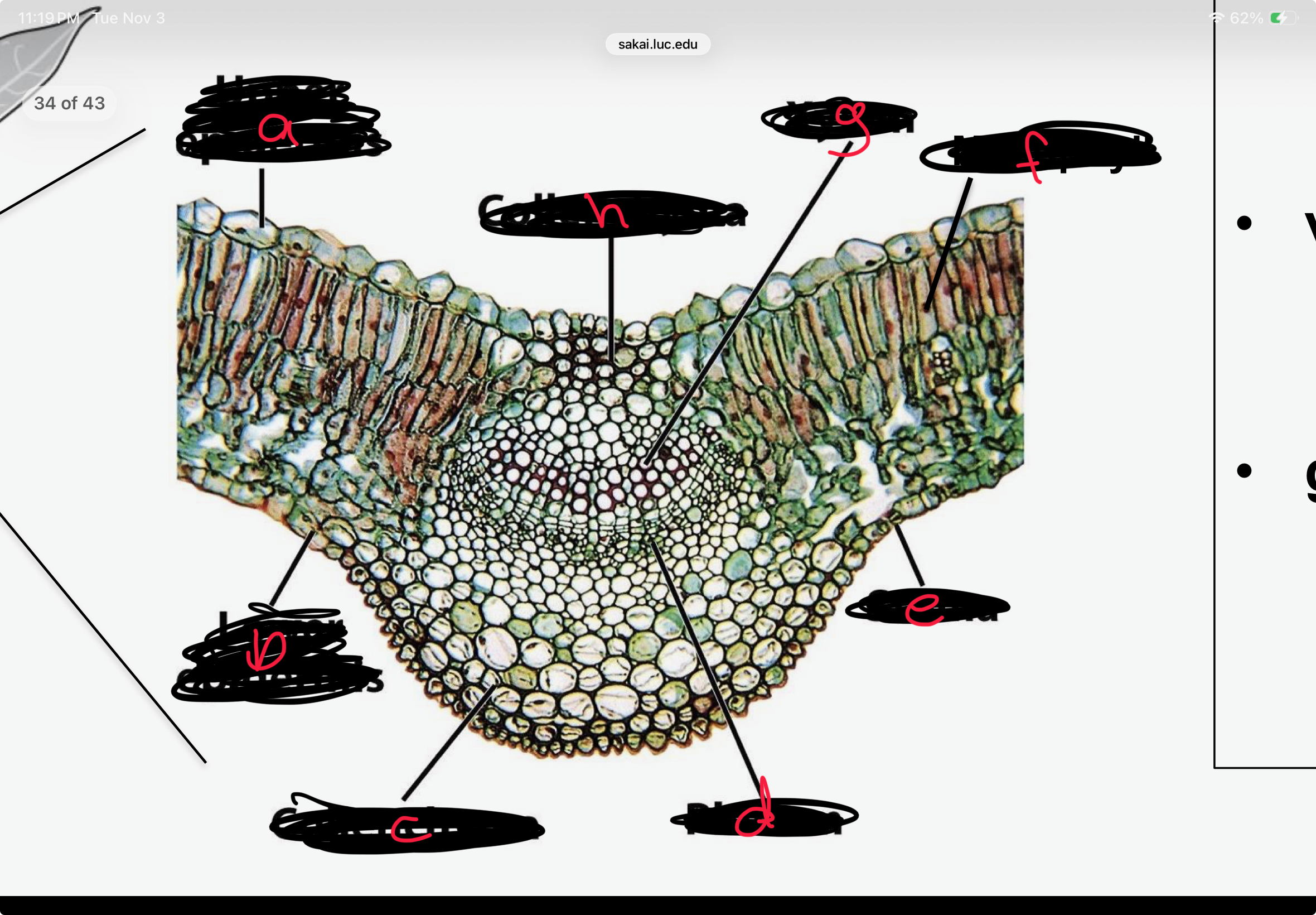
label dicot leaf
a,b- epidermis
c,h- collenchyma
d- phloem
e- stoma, with guard cells
f- mesophyll
g- xylem

what is this
dicot stem


label this
a- vascular bundle
b- xylem
c- phloem
d- sclenchyma


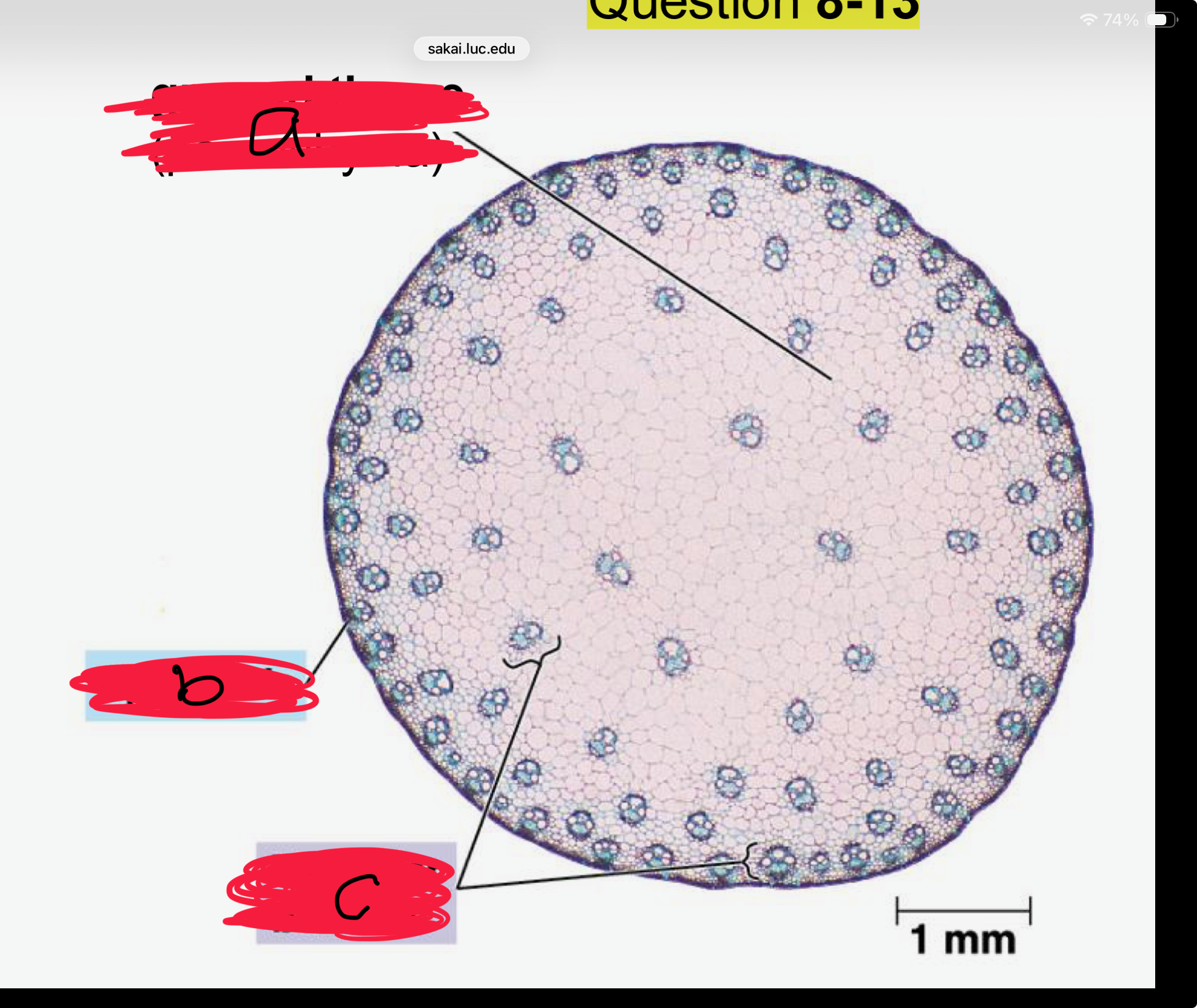
what is this
monocot stem
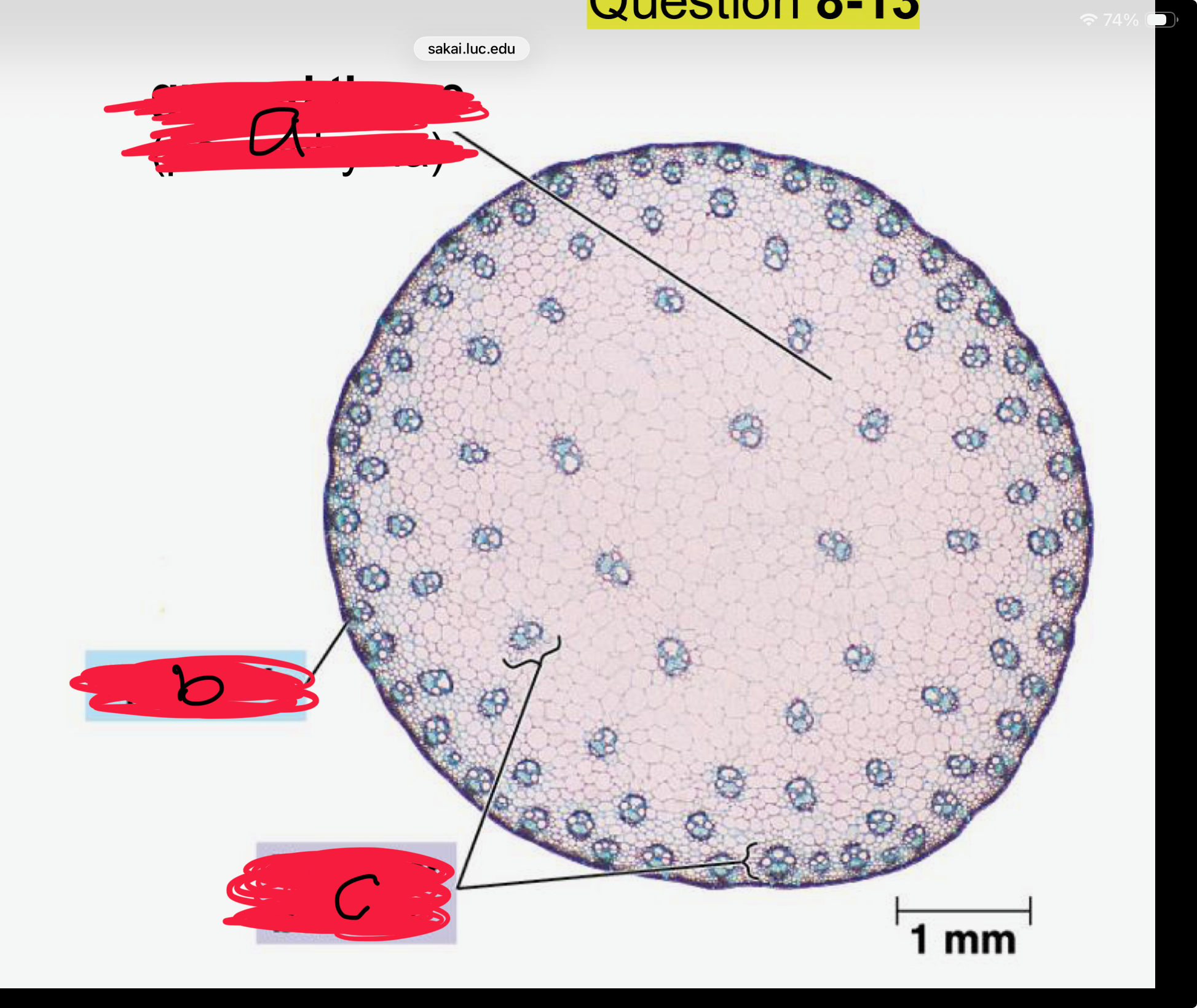
label this
a-ground tissue
b- epidermis
c- vascular bundles
growth rings
result from growth foo xylem at different times of year
spring wood=larger diameter cells
summer wood= smaller diameter cells
- there is no fall or winter because there is a lack of water to make new xylem
what foods are roots?
sweet potato, carrots
stems
potato, broccoli
what foods are leaves
onions
what foods are petioles
cellery
what foods are flowers
peas
what foods are buds?
brussel sprouts, cabbage, broccoli
fruits
peanuts