microbio lab quiz 3
 Call Kai
 Learn
 Practice Test
 Spaced Repetition
 Match
 Flashcards
 Knowt Play
1/49

There's no tags or description
Looks like no tags are added yet.
50 Terms
Prokaryotes live everywhere in…
on animal (skin)
in animal (gastrointestinal track)
Ice sheet
hot spring
etc
Names rules apply to
both already know and newly discovered organism
LPSN include
taxonomic range, phylum, kingdom, division, domain
rank of class, subclass, order, suborder, tribe, subtribe, family, subfamily, genus, sub genus, species, subspecies
comparison of genes via
sequence that haven’t change throughout revolution
conserved DNA
rRNA
auto-
create it own carbon source (inorganic)
hetero-
use enviroment for carbon sources (organic)
photo-
use light as energy souces
chemo-
use carbon as energy sources
PCR
laboratory procedure use heat stable enzyme and thermal cycler to copy and amplify specific strand of DNA
biofilm
thin, complex layer of bacteria settling on surface
biofilm often made of variety of different species
sometime only 1 bacterial species
biofilm consist of
dense matric of polysaccharides, proteins, DNA, inorganic components, channels for nutrient transportation
quorum sensing
cell use signal to communicate in biofilm
planktonic cells
single cells
biofilm can help the cell
resistant to antibiotic
hide from host immune defend
what types of bacteria can do biofilm
both gram negative and gram positive, (some fungi can too)
why it is hard to grown organism in lab?
required special nutrient, growth conditions, long period of time
selective media example
PIA (Pseudomonas Isolation Agar)
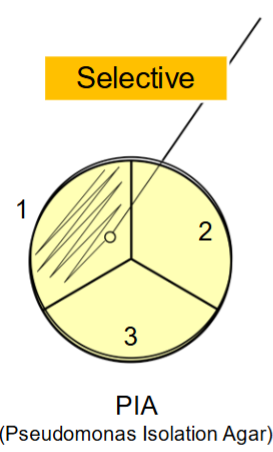
selective media is use for
provide select growth for target organism while inhibit the growth of undesired.
how to select media inhibit the growth of undesired organism?
omitting certain nutrient
adding compound to medium (dye, antibiotic)
differential media example
starch agar
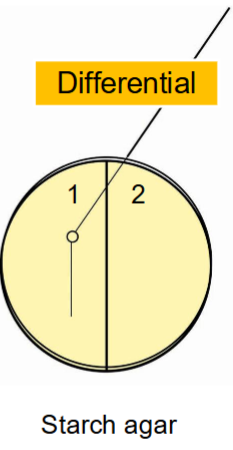
differential media is use for
allow variety of bacteria to growth but enable visually distinguish among different type
ways to distinguish types on differential media
starch present- show metabolism use of starch for carbon sources
pH indicator - show acid production if color change
Selective-differential media example
MacConkey agar plate

selective-differential media is use for
both selective and differential properties
PIA
contain board-spectrum antimicrobial agent inhibits growth of everything but Pseudomonas strains
starch agar
can it use starch (amylose) as carbon & energy sources
iodine added - clear area around colonies = have alpha-amylase, able to use starch
growth of organism on starch agar is ____
NOT indicative of starch utilization- need to add iodine
MacConkey agar
select for gram-negative enteric organism
bile salt + crystal violet in medium = inhibit grown of gram-positive
differentiate lactose-fermenting enteric (coliform)
neutral red pH in medium = produce acid - bright pink colonies - coliform
enterics
in warm blood, facultative (live w/ or w/out oxy), gram-neg, rods shape
escherichia
in human intestine
salmonella
in meat
serratia
nosocomial (hospital-acquired) inflection
alpha-amylase
catalyze breakdown of starch
secreted extracellularly
active outside of cell
Heat-fixing is skipped when staining a biofilm because
extreme heat destroys the natural 3D architecture of the extracellular polymeric substance
vegetative cell
actively growing, metabolically active bacterial cell that divides and carries out normal life functions
endospore
tough, non-reproductive structure formed as a survival mechanism against harsh conditions
handle extreme heat & UV radiation
Symbiosis
diff organism live close/interact with each other
can be permanent or transient (not required to be together to survive)
communalistic
mutualistic
parasitic
commensalism
no host damage nor benefit
infection at birth/early in life
mutualism
both benefit
start out as commensalism
parasitism
host damage
at any time in life
opportunistic pathogen
start as normal, no harm but then change into harm
E.coli is normal microbiota in GI track, but is parasitic in urinary bladder
normal microbiota can be both
commensalism and mutualism
pathogens
parasites
nodules
plant-root structure that bacteria in, help with nitrogen cycle, improve soil fertility
bacteroid
swollen, distorted bacteria cell in plant cell
bacteriophages or phages
bacteria infected by viruse
lytic cycle
attachment
penetration
biosynthesis - use host tool
maturation - assemble virions
release - host cell lysed
PFU
plaque-forming units
original concentration of phage formula
#PFU / (volume plated * total dilution)