3.2.1 Growth
 Call Kai
 Learn
 Practice Test
 Spaced Repetition
 Match
 Flashcards
 Knowt Play
1/19

There's no tags or description
Looks like no tags are added yet.
20 Terms
What are some reasons to grow?
Economies of scale - as a business grows, it can reduce its average costs by spreading fixed costs across more units of output
Increased market power - a la larger business may have more control over customers and suppliers, it can influence prices or force suppliers to offer better terms, such as longer trade credit periods
Increased market share and brand recognition - growth allows a firm to reach more customers and become better known, leads to higher sales and increased customer loyalty, customers are familiar with and trust the brand
Increased profitability - as a business grows, it can spread its fixed costs over a larger volume of output, lowers average cost per unit and increases it as profit margin, a larger business may also gain greater bargaining power with suppliers, negotiating lower prices or bulk discounts
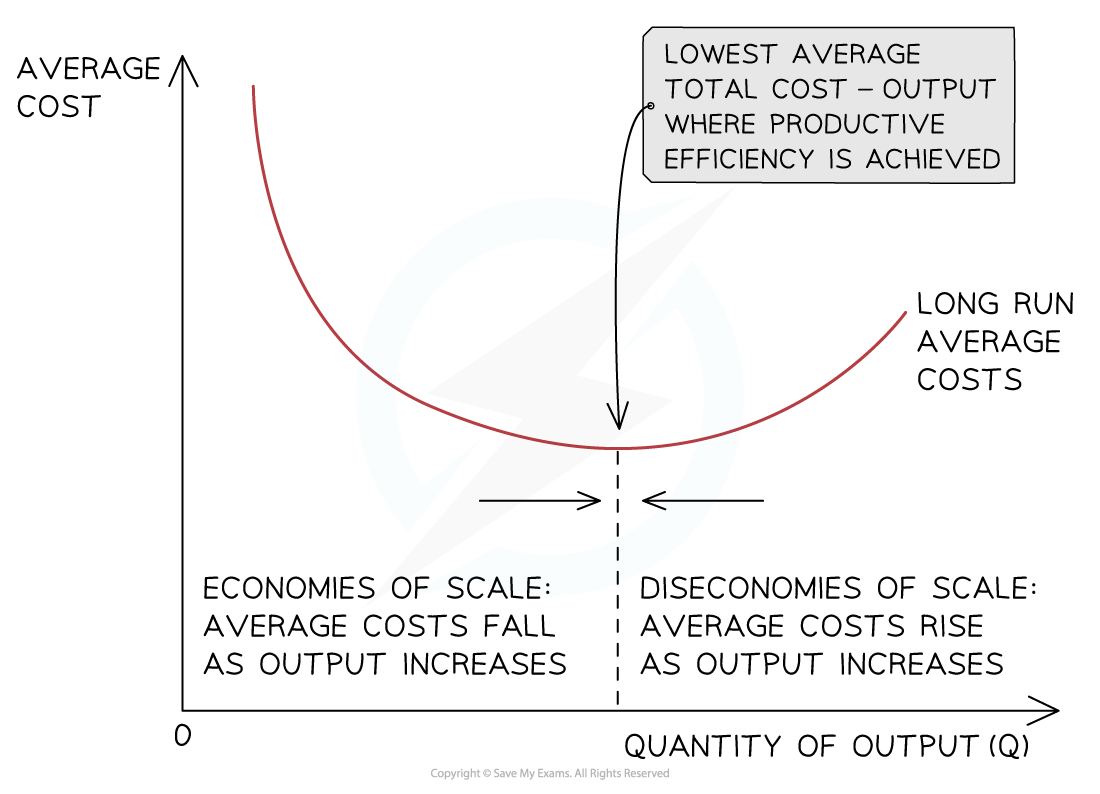
Explain economies / diseconomies of scale
As a business grows, it can increase its scale of output, generating efficiencies that lower its average costs of production
These efficiencies are called economies of scale
EOS help large firms to lower their costs of production beyond what small firms can achieve
As a firm continues increasing its scale of output, it will reach a point where its average costs will start to increase
The reasons for the increase in the average costs are called diseconomies of scale
What is internal economies of scale?
Internal economies of scale occur as a result of the growth in the scale of production within the business
What are the different types of internal economies of scale?
Financial economies
Managerial economies
Marketing economies
Purchasing economies
Technical economies
Risk-bearing economies
What are financial economies?
Large firms often receive lower interest rates on loans than smaller firms, as they are perceived as less risky
A cheaper loan lower the costs per unit
What are managerial economies?
Occur when large firms can employ specialist managers who are more efficient at certain tasks, and this efficiency lowers the average costs
Managers in small firms often have to fulfil multiple roles and are less specialised
What are marketing economies?
Large firms spread the cost of advertising over a larger volume number of scales, and this reduces average costs
Firms can also reuse marketing materials in different geographical regions, which further lowers average costs
What are purchasing economies?
Occur when large firms buy raw materials in greater volumes and receive a bulk purchase discount, which lowers average costs
What are technical economies?
Occur as a firm can use its machinery at a higher level of capacity due to the increased output
This spreads the costs of the machinery over more units, lowering average costs
What are risk-bearing economies?
Occur when a firm can spread the risk of failure by diversifying its product range
A lower incidence of failure can reduce average costs
What are external economies of scale?
External economies of scale occur when there is an increase in the size of the industry in which the firm operates
What are the different sources of external economies of scale?
Geographic cluster
Transport links
Skilled labour
Favourable legislation
How is a geographic cluster a source of external economies of scale?
As an industry grows, ancillary firms move closer to major manufacturers to cut costs and generate more business
For example, car manufacturers in Sunderland rely on the soft ice of over 2,500 ancillary firms
How are transport links a source of external economies of scale?
Improved transport links develop around growing industries to help get people To work and improve the transport logistics
How is skilled labour a source of external economies of scale?
An increase in skilled labour can lower the cost of skilled labour, thereby lowering average costs
The larger the geographic cluster, the larger the pool of skilled labour
How is favourable legislation a source of external economies of scale?
Changes to laws affecting businesses can generate significant reduction in average costs
Governments support certain industries to achieve important economic objectives
What are some problems that come with growth?
Diseconomies of scale
Internal communication
Overtrading
How is diseconomies of scale a problem arising from growth?
This occurs when a company grows too large, making it difficult to manage and control its operations
It may face challenges in coordinating its various departments, managing its workforce or maintaining quality control
The cost per unit increases as a result of these inefficiencies
How is internal communication a problem arising from growth?
Rapid growth may strain communication channels or result in miscommunication, causing conflicting priorities and a lack of coordination
This may result in delays, errors and missed opportunities, as well as impact on employee morale
How is overtrading a problem arising from growth?
This occurs when a company takes on more business than it can handle, leading to a strain on its resources or an inability to meet its financial obligations
This may cause cash flow problems or decreased customer satisfaction
E.g a company that expands too quickly may struggle to hire and train enough staff to handle increased demand, leading to a backlog of orders and dissatisfied customers