chem nuclear+atom test
 Call Kai
 Learn
 Practice Test
 Spaced Repetition
 Match
 Flashcards
 Knowt Play
1/51

Earn XP
Description and Tags
hell yessss
52 Terms
Dalton’s Theory
elements= tiny particles called atoms
atoms=rearranged
same element atoms=identical; different elements differ

JJ Thompson
discovered electron by cathode Ray Tube
plum-pudding model

Ernest Rutherford
discovered atom= mostly empty space & has nucleus ring using Gold Foil Experiment

James Chadwick
discovered the neutron and believed that the nucleus contained both protons and neutrons

Neil’s Bohr
electrons arranged in levels and orbit the nucleus like the solar system

Erwin Schrodinger
electrons behave like waves & particles
electrons=not in an orbit, but a specific place that can be calculated
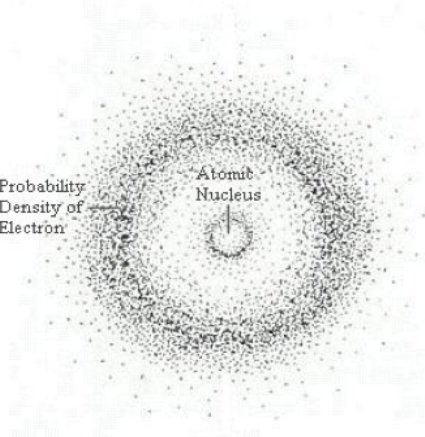
atom
smallest piece of an element that still retains the property of that element
proton
located in the nucleus
positive charge
mass: 1.67× 10⁻²⁴g
symbol: p⁺
neutron
located in the nucleus
neutral charge
mass: 1.67×10⁻²⁴g (same as proton)
symbol: h⁰
electron
outside the nucleus in the electron cloud
negative
9.11×10⁻²⁸g
symbol: e⁻
nuclear symbol
mass number on top
atomic number on bottom
atomic number
found on the periodic table on top of the element
how many protons are in the atom
the number of p⁺=e⁻ if the atom is neutral
mass number
(g) rounded from the atomic mass (for now)
protons + neutrons
finding the compositions
protons=atomic number=electrons (in a neutral atom)
neutron= mass# (round to whole) -atomic#
Periodic Table

periods
horizontal rows
properties of elements change as you move across a period & generally repeat in each period
properties of metals
high electrical conductivity
high luster when clean
high melting/boiling points
properties of metalloids
have properties of both metals + nonmetals
found along the stair step starting at group 3A
groups/families
elements have similar properties in a group/family
identified by a number and letter or just a number
Alkali Metals
group 1A
Very reactive metals esp. with air and water (ex. Hydrogen)
Alkaline Earth Metals
group 2A
very reactive, but not as reactive as alkali metals
Transition Metals
group B
not very reactive metals
Inner Transition Metals
found below the main body of the periodic table
rare Earth metals
Halogens
group 7A
most reactive nonmetals
Noble Gases
group 8
does not react with anything
Isotopes
atoms with the same # of protons +electrons (usually) but different # of neutrons
have different mass #s
Measuring Mass of Atom
atomic mass unit (AMU)
mass of a proton/neutron (1.67×10⁻²⁴g)
1/12 of a carbon-12 atom
atomic mass vs mass number
Atomic Mass: weighted average of all isotopes of each atom (PT)
takes into account that there is not an even number of each isotope on Earth
Mass Number: Number of protons + neutrons of a specific isotope
Ions
an atom or molecule that has a positive/negative charge
how to calculate # electrons
protons - electrons = charge
Nuclear chemistry
a field of chemistry that deals with the nucleus of the atom changing
use of radioactive substance
radioisotope
unstable isotope
radiation
the penetrarting rays and particles emitted by a radioactive source
radioactive decay
the process when radioisotopes lose energy energy by emitting radiation
Alpha Radiation
alpha particle emitted
helium nucleus
stopped by a piece of paper (low penetrating power)
2⁺ charge
⁴₂He
Beta Radiation
neutron turns into a proton (stays in nucleus) and an electron (is emitted)
⁰₋₁e
Beta Particle
electron
stopped by wood/aluminum foil (medium penetration)
1- charge
Gamma Radiation
γ (cursive Y)
high energy electromagnetic wave
Gamma ray
like an x-ray with more energy
stopped by lead or concrete
no charge
accompanied by alpha/beta in problems, unless said otherwise
stability
of nuclei depends on neutron to proton ratio
of nucleus is not stable, it will radioactively decay
small atoms
atomic# = 20 or lower
stable if neutrons/protons = 1
medium atoms
atomic # = 21-82
stable if neutrons/protons ≈ 1.5
large atoms
atomic # = 83 and above
never stable
type of decay
atomic # = bigger than 80 = alpha decay (could deviate)
anything below = beta decay
transmutation reaction
the conversion of an atom from one element to an atom of another element
transuranium elements
all element w/atomic # of 92 and above
all go through transmutation
half-life
the time it takes for ½ of the nuclei of a radioisotope to decay to products
after 1 half-life, half of the substance remains 1 gram after 1 half-life decays to 0.5 krams
fastness of decay depends on the atom
the more stable the atom, the higher the half-life
fission
splitting of nucleus into smaller fragments

2 Ways Fission Reactions are Controlled
Neutron Moderation: a moderator slowing down the neutrons to be slow enough to react with another nucleus
like a speed bump
water and carbon usually used
Neutron Absorption: decreases the number of neutrons
like a sponge
rods made of cadmium are put in reactor
Fission - Nuclear Waste
High level spent fuel rods
holding pool for ~10 years and then buried
contains left over fuel and products
low level plant building
buried in the ground
Geiger Counter
gas filled metal tube
gas is ionized when alpha + beta radiation passes through

scintillation counter
uses a specially coated phosphor surface to detect radiation
a light flashes when radiation hits the surface → light flashing registered by machine
alpha, beta, gamma
film badge
a badge with a piece of photographic film a person wear
amount of fogginess measure = amount of radiation a person has been exposed to
detects beta and gamma radiation
fusion
nuclei combine to form a single nucleus of greater size
lots more energy than fission +no harmful nuclear waste produced
requires very high temps (40,000,000C) to start → to reach this temp is more energy input than we get output
