EMT M6 - L2 - Respiratory Infections - (Quiz 3)
 Call Kai
 Learn
 Practice Test
 Spaced Repetition
 Match
 Flashcards
 Knowt Play
1/55

There's no tags or description
Looks like no tags are added yet.
56 Terms
What would an upper airway infection be?
your mouth
your nose
your throat
What would an lower airway infection be?
your lower trachea
your lungs
your bronchi
What do Upper or Lower Airway Infections do?
They are common causes of dyspnea, which is generally due to some form of obstruction or impairment in gas exchange.
They usually
If you suspect Upper or Lower Airway Infections what should you do?
Make sure that you are wearing the appropriate PPE.
Place a surgical mask over patients who are coughing or sneezing if they don’t need supplemental oxygen and can tolerate it
What are some Common Respiratory Infections?
• Common cold
• Acute Bronchitis
• Pneumonia
• Influenza
• Severe acute respiratory syndrome (SARS)
• Tuberculosis
• Epiglottitis
• Croup
• Diphtheria
• Pertussis
• Respiratory Syncytial Virus (RSV)
***** It is not your job to diagnose a patient with a specific infection, but you know understand these different conditions and know what to look out for so you can petter protect yourself and care for your patient.
What is the common cold?
A viral infection that most commonly presents with nasal obstruction, rhinorrhea (a runny nose), and sneezing.
What is rhinorrhea?
A runny nose
Symptoms of the common cold?
– Cough
– Sore throat
– Malaise
– Runny Nose
– Fever in children
– Sneezing
– Nasal obstruction
How long can the common cold last?
Symptoms persist for 3-10 days in most patients, but may last as long as two weeks.
What is malaise?
A general feeling of discomfort, illness, or unease where the exact cause is hard to identify
What does the - itis suffix usually mean?
Inflammation
What is Acute Bronchitis?
Inflammation of bronchi due that is generally caused by a viral infection
What are the symptoms of Acute Bronchitis?
– Wheezing or rhonchi
– Cough lasting more than five days and mild dyspnea (Cough usually lasts from 10-20 days)
– Purulent sputum (off-white, green, or yellow in color)
– Chest wall tenderness due to muscle strain from coughing
Fever, chills, fatigue, and other constitutional symptoms are unusual in acute bronchitis
What is Pneumonia?
Infection of the lung that impairs gas exchange by damaging lung tissue.
Typically starts as a viral or bacterial upper respiratory tract infection that movies into the lower respiratory tract
For what populations is Pneumonia life threatening?
For infants, young children, patients over 65, and patients with compromised immune systems or other comorbidities.
Why is Pneumonia acquired during a hospital stay or from a health-care facility is often more difficult to treat?
Because bacteria causing infection may be more resistant to antibiotics.
How else can Pneumonia develop?
If food, drink, vomit, or other substances are aspirated into the lungs.
What are the common signs and symptoms of Pneumonia?
– Cough
– Fever
– Dyspnea
– Sputum (watery or purulent)
– Sharp, stabbing, pleuritic chest pain
– Tachypnea
– Tachycardia
– Shaking chills
– Crackles, wheezing, or diminished breath sounds
– Lethargy, fatigue, weakness
– Elderly patients may also present with altered mental status
What is influenza?
An infectious disease caused by the influenza virus, spread through respiratory droplets from coughing and sneezing.
What can influenza cause?
Life threatening complications such as pneumonia in the elderly and very young. Also exacerbates problems such as asthma and heart failure.
Common signs and symptoms of Influenza?
– Fever w/ chills, shivering
– Cough
– Nasal congestion
– Runny nose
– Sneezing
– Body aches
– Fatigue
– Headache
– Vomiting and diarrhea (typically in children
Can influenza lead to a pandemic?
Yes occasionally.
Most recent pandemic was influenza A/H1N1 in 2009
What should you do during flu season to protect yourself and others?
Wash hands frequently during flu season, wear appropriate PPE, and obtain yearly flu vaccine.
Equipment and ambulance should also be cleaned frequently because virus can live for several days on surfaces.
How does Severe Acute Respiratory Syndrome (SARS) spread?
Spread commonly via person to person contact and respiratory droplets/ Airborne transmission may be possible as well.
Severe Acute Respiratory Syndrome (SARS) symptoms and sings?
Presents initially with flu-like symptoms:
fever,
headache,
muscle pain
Progresses to:
cough,
dyspnea,
potentially respiratory failure
***** Mortality higher in older populations
What is Tuberculosis (TB)?
Infection caused by Myobacterium tuberculosis that most commonly affects the lungs but can also be found in other areas of body like the kidneys, bones, meninges (lining of brain and spinal cord).
Do TB symptoms appear immediatly?
No.
Most TB infections are latent, and lie dormant for years without causing symptoms or being infectious to other people.
• Some latent infections will progress to active TB, (more likely if the immune system is weakened)
• Multi-drug resistant TB, which does not respond to the common antibiotics used for treatment, is becoming more prevalent
How is TB spread?
Via aerosolized droplets when patients with active TB cough, sneeze, speak, or spit.
Symptoms of active pulmonary TB?
– Chronic cough with productive or blood tinged sputum
– Fever
– Night sweats
– Weight loss
What PPE should you wear when interacting with suspected TB?
– HEPA respirator or N95 mask
– Gloves
– Eye protection
Which patients should you be wary of? (TB)
– Come from countries with high TB prevalence or have close contact with individuals from those countries
– Come into contact with individuals with active TB
What is Epiglottitis?
Inflammation of the epiglottis and adjacent airway structures caused by viral, bacterial, or fungal infection,

What is the Epigottis?
The flap of tissue positioned right over your airway opening so that when you swallow food it goes down your esophagus and not your trachea.
When this becomes inflamed, it can obstruct the airway.
Why is Epiglottitis a emergency?
It can progress to a life-threatening airway obstruction.
Is usually more prevalent in children, but can also affect adults.
Signs of Epiglottitis?
Hallmark signs:
– Dysphagia (difficulty swallowing)
– Drooling
– Distress
Other common signs:
– Tripod or sniffing position
– Dyspnea
– Stridor
– Muffled or hoarse voice
– Sore throat
– Fever
– Cough
***** Onset is typically abrupt and rapid, with symptoms developing in hours.
During treatment of Epiglottitis, what should you avoid doing?
Avoid placing anything in the mouth during treatment, as this could result in a complete airway obstruction.
What is Croup?
Infection of the upper airway that is most common in young children.
– Usually caused by a viral infection
– Most prevalent in children between 6-36 months, and is rare in children over 6 y/o
Croup signs and symptoms?
barking cough,
inspiratory stridor,
hoarseness
Symptoms of croup are usually mild, but a small minority of patients will have upper airway obstruction and severe respiratory distress
What is Diphtheria?
Bacterial infection that is spread through the air or by direct contact between people, and causes formation of diphtheritic membrane lining the pharynx that can cause of airway obstruction.
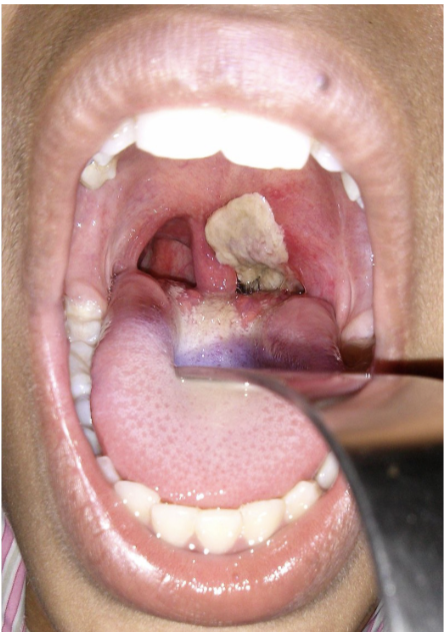
How is Diphtheria spread?
Through the air or by direct contact between people.
What are the common signs and symptoms of Diphtheria?
Fever,
chills,
fatigue,
sore throat,
cough,
stridor,
hoarseness,
swollen neck
What is Pertussis also known as?
Whooping Cough
What is Pertussis (Whooping Cough)?
Highly contagious airborne bacterial infection.
Caused high infant mortality (due to complications like pneumonia) prior to development of pertussis vaccine
Incidence of pertussis is on rise due to increasing rates of infection in older children and adults
Is really really contagious
Pertussis characteristics?
“Whooping cough”
Synonym similar to the common cold:
– Cough
– Sore throat
– Malaise
– Runny Nose
– Fever in children
– Sneezing
– Nasal obstruction
What is Respiratory Syncytial Virus (RSV)?
A common cause of airway infections in infants and young children that is highly contagious, spread through droplets when patient coughs or sneezes.
How is Respiratory Syncytial Virus (RSV) spread?
Spread through droplets when patient coughs or sneezes
Symptoms of Respiratory Syncytial Virus (RSV)?
fever,
cough,
signs of respiratory distress
tachypnea,
retractions,
wheezing,
crackles
***** Patients may also refuse liquids and become dehydrated
What can Respiratory Syncytial Virus (RSV) lead to?
Bronchiolitis (inflammation of small airways) and pneumonia in children < 1 y/o
Premature infants and children with suppressed immune systems are at risk of serious infections that may affect the lungs and the heart
In infants, may also cause apnea
What is apnea?
A temporary pause in breathing that lasts for at least 10 seconds.
When you listen to the lungs, what do crackles indicate?
Fluid in the lungs.
When you listen to the lungs, what does wheezing indicate?
That the airway is inflamed and closing up.
When caring for patients with an upper and/or lower airway infection, are EMTs expected to make a diagnosis?
No.
What are an EMT’s responsibilities when it comes to approaching to airway infections?
Recognize signs of airway obstruction and respiratory distress.
Provide appropriate supportive care:
– Maintain open airway
– Provide supplemental oxygen and ventilatory assistance as necessary
– Place patient in position of comfort
– Call ALS when needed
When should we call ALS?
For patients who are exhibiting airway obstruction, respiratory distress/failure/arrest, or dehydration.
What can help improve airway infections if available?
Humidified oxygen
Chronic Obstructive Pulmonary Disease (COPD) vs. Acute Bronchitis?
Acute bronchitis is a short-term, temporary inflammation of the bronchial tubes usually caused by a viral infection, whereas Chronic Obstructive Pulmonary Disease (COPD) is a long-term, progressive lung disease—and chronic bronchitis (a type of COPD) is diagnosed when symptoms persist for months or years.