Lab 2 (Root pathogen/decay fungi) - Only latin names
 Call Kai
 Learn
 Practice Test
 Spaced Repetition
 Match
 Flashcards
 Knowt Play
1/16

There's no tags or description
Looks like no tags are added yet.
17 Terms

Armillaria solidipes (causes white rot)
Heterobasidion annosum (causes white rot)

Onnia tomentosa (causes white rot)

Phellinus sulphurascens

Phaeolus hispidoides (causes brown cubical rot)

Ophiostoma wageneri (causes black stain root disease, does not cause wood decay or rootrot)

Echinodontium tinctorium (brown rot, creates stringy brown rot)

Laricifomes officinalis (Causes cubical brown rot, affects heartwood)

Fomitopsis mounceae (causes cubical brown rot)

Ganoderma applanatum (Causes white spongy/soft rot)

Gloephyllum sepiarium (Causes brown cubical rot)

Laetiporus sulphureus (Causes brown cubical rot)

Phellinus pini (Causes white pitted rot)

Phellinus tremulae (White spongy/soft rot)

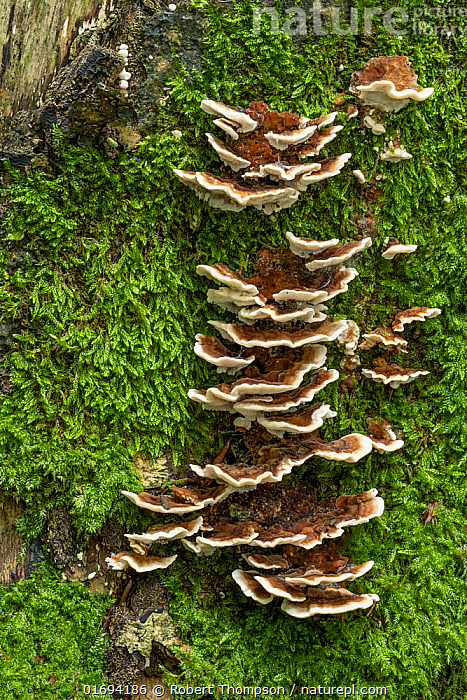
Trametes versicolor (White spongy/softrot, affects sapwood)
Brown rot (What types of trees does it affect, substrates, appearance, decayed wood, speed of decay?)
Affects conifers
Affects cellulose and hemicellulose substrates
Looks dry, powdery, brown decay, with cracks and cubes
Drastically reduces wood strength
has rapid speed of decay because it is chemically mediated
White rot (What types of trees does it affect, substrates, appearance, decayed wood, speed of decay?)
Affects conifers and broadleaf trees
Affects lignin, cellulose, and hemicellulose substrates
Is fibrous, stringy, is often white, selective delignification (conifers) or simultaneous rot (broadleaf trees)
Retains strength early on, white rot a portion of it’s structural strength n the early stages of decay
Has a slow speed of decay (because it is enzymatically mediated)