Chapter 6 - The Cell
 Call Kai
 Learn
 Practice Test
 Spaced Repetition
 Match
 Flashcards
 Knowt Play
1/35

There's no tags or description
Looks like no tags are added yet.
Name | Mastery | Learn | Test | Matching | Spaced | Call with Kai | Chat |
|---|
No analytics yet
Send a link to your students to track their progress
36 Terms
What do both prokaryotic and eukaryotic cells have?
plasma membrane, cytoplasm, DNA, ribosomes
What type of cells have organelles?
What are the levels of organization from smallest to biggest?
atoms, molecules, organelle, cell, tissue, organ, organ system, organism
All living things possess levels of:
organization
Cell
smallest living port
the simplest collection of matter that can live
cell structure is correlated to cellular function
an organism can be unicellular, or multicellular
Robert hook
cells are very small; they were not discovered until microscopes were invented in the mid-seventeenth century
in 1616, Robert hook examined cells on a piece of cork
Anton van leevenhoek observed unicellular organisms
advanced in microscopy led to cell theory
Principles of cell theory
a cell is the most basic unit of life
all living things are composed of cells
all cells come from pre-existing cells
Are ribosomes considered living?
no; they can’t produce to make more
Prokaryotic cells
bacteria
first cells on earth
simpler, smaller
have no nucleus
DNA is found in the nucleoid
no membrane around the ribosomes
has cell membrane
some have cell walls and flagella
the cell walls are not made up of cellulose
made up of peptidoglycan
do not have an endoplasmic reticulum because they are one cell big

Peptidoglycan
mesh-like macromolecule that forms the cell wall surrounding the cytoplasmic membrane of almost all bacteria
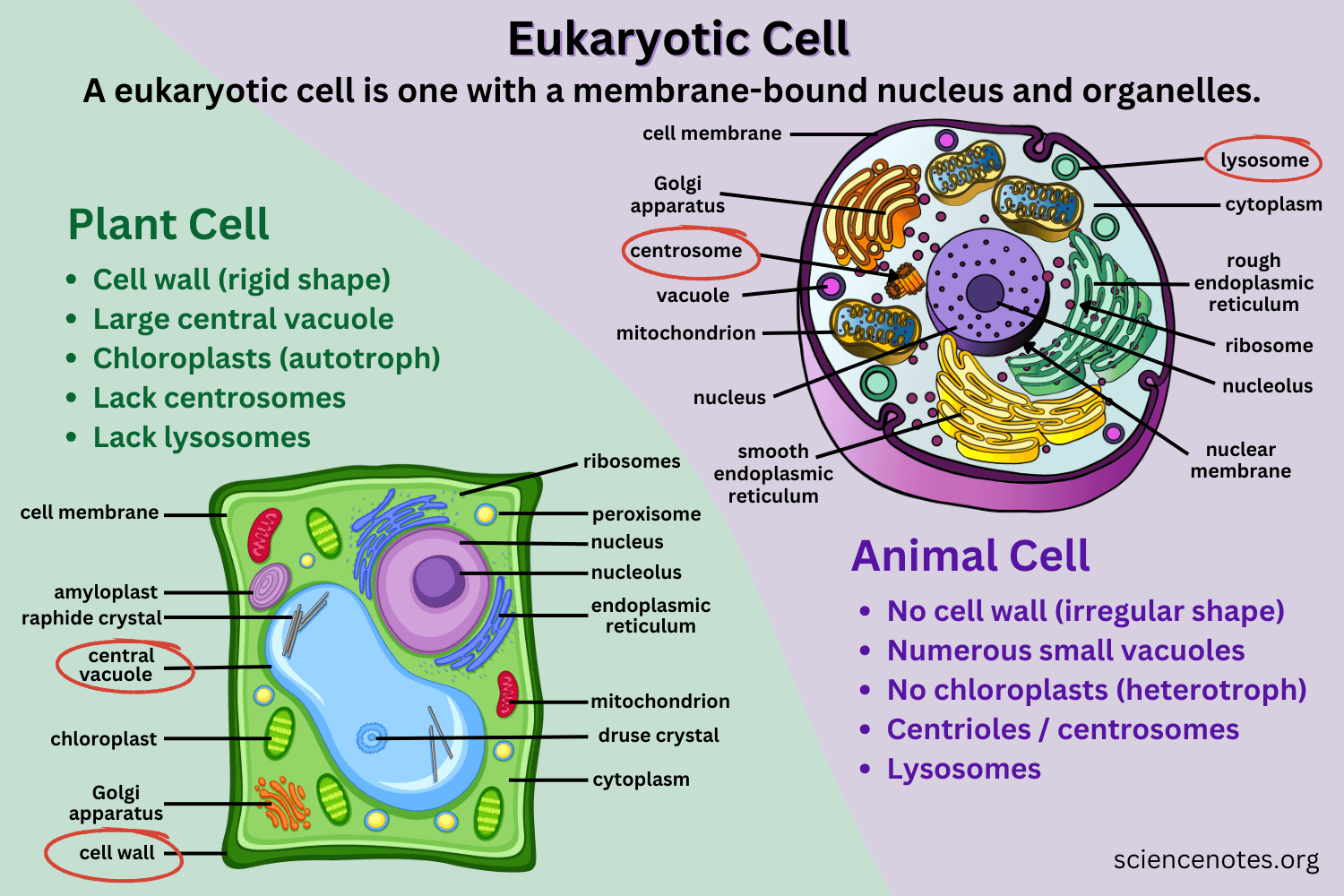
Eukaryotic cells
first cells of this that appeared were unicellular
larger than prokaryotes
surrounded by cell membrane (double membrane)
DNA is found in the nucleus
has many membrane bounded organelles
plant and animal cells
nucleus is made up of the same material as the cell membrane; it has a double layer
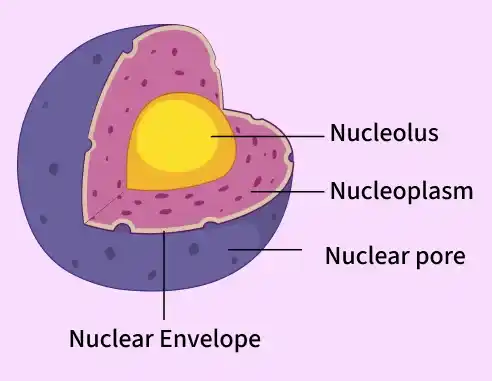
Nucleus
contains DNA
chromatin is the complex of DNA
nucleolus is a dark region where ribosomal DNA is produced
ribosomal RNA is used to make ribosomes
ribosomes can be found floating around in the cytoplasm or they can found on the rough endoplasmic reticulum

Nucleolus
primary site for the assembly and production for ribosomal DNA
Where can ribosome be found in a eukaryotic cell?
floating in the cytoplasm or on the rough endoplasmic reticulum
Does the smooth endoplasmic reticulum contain ribosomes?
no

Ribosomes
site of protein synthesis
can be found in floating freely in the cell (cytoplasm) or in the rough endoplasmic reticulum
Ribosomal RNA
forms the primary structural and catalytic core of ribosomes
Endoplasmic reticulum
contains continuous channels throughout the cell; has smooth and rough

Rough endoplasmic reticulum
has ribosomes
proteins are made here and can be transported out of the cell

Smooth endoplasmic reticulum
synthesis of lipids and hormones
does not contain ribosomes
ex. glands
cells in ovaries and testes are rich in ____ for their role in production of steroid s3x hormones
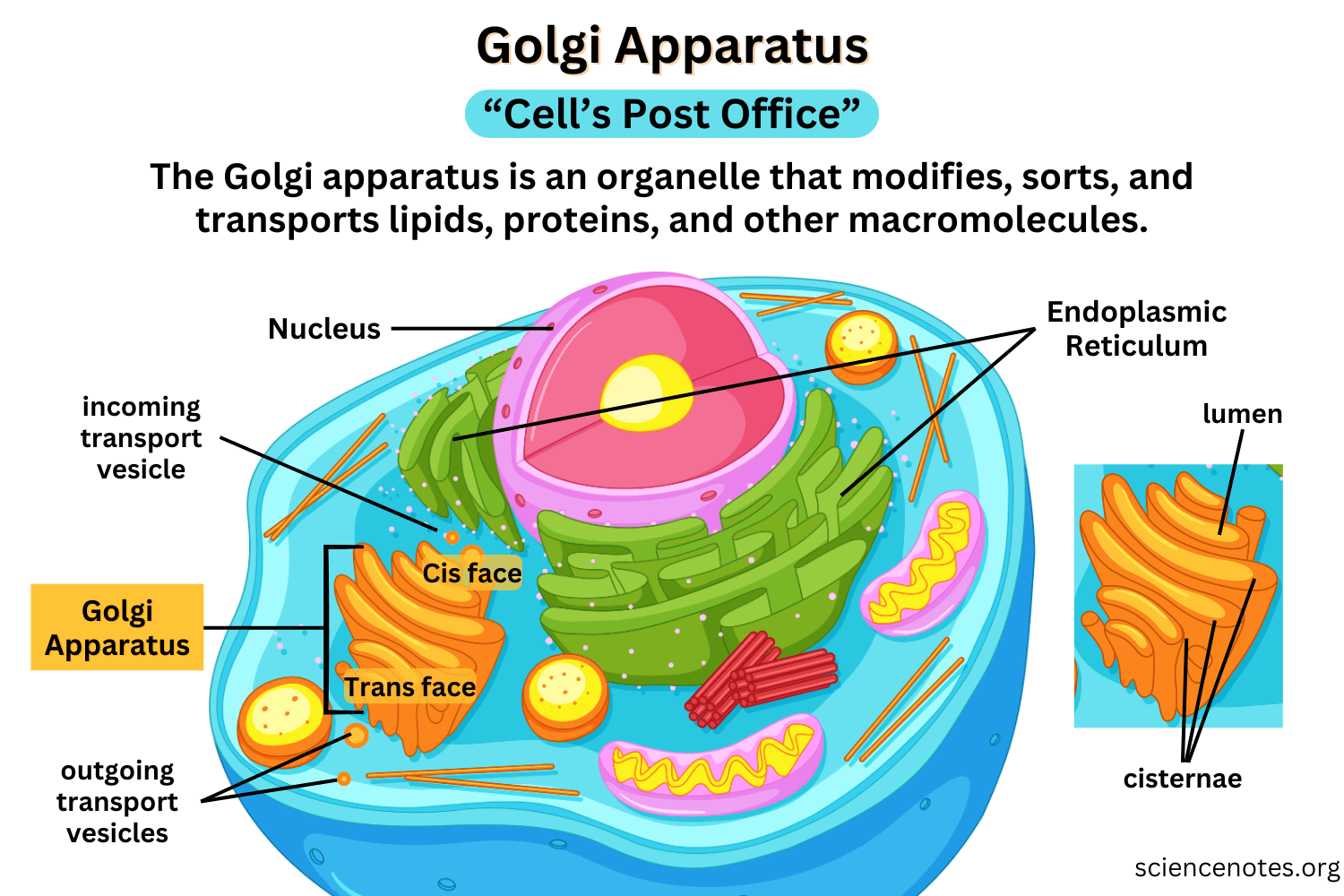
Golgi apparatus
flattened sacs
modify shape of protein and package proteins and lipids into vesicles which carry products to plasma membrane
cis face - side where the proteins enter
trans face - side where the protein leave
Cis face
side where the proteins enter in Golgi apparatus
Trans face
side where the proteins leave in Golgi apparatus

Lysosomes
only found in animal cells
cells cleanup crew
contains digestive enzymes that break down old organelles, large particles
low plt
white blood cells that destroy bacteria
when a cell does phagocytosis, it forms a food vacuole
a ____ fuses with the food vacuole and digests the molecules
also use enzymes to recycle the cells own organelles and macromolecules by autophagy
Phagocytosis
the cellular process where a cell uses its cell membrane to engulf and digest large particles (cell eating); forms a food vacuole

Mitochondria
cellular respiration takes place to make ATP
our muscle cells are making and using 10 million ATP per second in one cell
ATP (adenosine triphosphate) is the main energy source used by cells
contains their own DNA
predicted that it was free living and lived on their own millions of years ago
have a double membrane
reproduce similar to prokaryotes to make more ___
All living things need to make:
ATP
Endosymbiosis/Endosymbiotic Theory
a smaller prokaryotic cell (mitochondria) was taken in by a large prokaryotic cell and this was beneficial to both cells leading to a cell with organelles (eukaryotic cells)
mitochondrial DNA comes from the mother
the mother gives the child the first organelles in the egg cell
rather than being broken down by digestive enzymes, the engulfed prokaryotes provided their hosts with advantages from their special metabolic activities

Cell wall
found in plants, fungi, some bacteria
found in plant cells only
outside plasma membrane and supports the cell
plants are made up of cellulose
fungi is made up of chitin
bacteria is made up of peptidoglycan

Central vacuole
stores water
plant cell only
gives the plant cell support when filled with water
turgor pressure
Turgor pressure
the internal hydrostatic force exerted by water inside a cell that pushes the plasma membrane against the rigid cell wall
Chloroplasts
found in plant cells
does photosynthesis to make glucose
contains chlorophyll and other pigments
has a double membrane and their own DNA
believed that it lived on their own before
Centrioles
animal cells only
are found by the nucleus and help the chromosomes (DNA) move during cell division
made up of microtubules
Cytoskeleton
a dense network of protein fibers the supports the organelles
made up of microfilaments
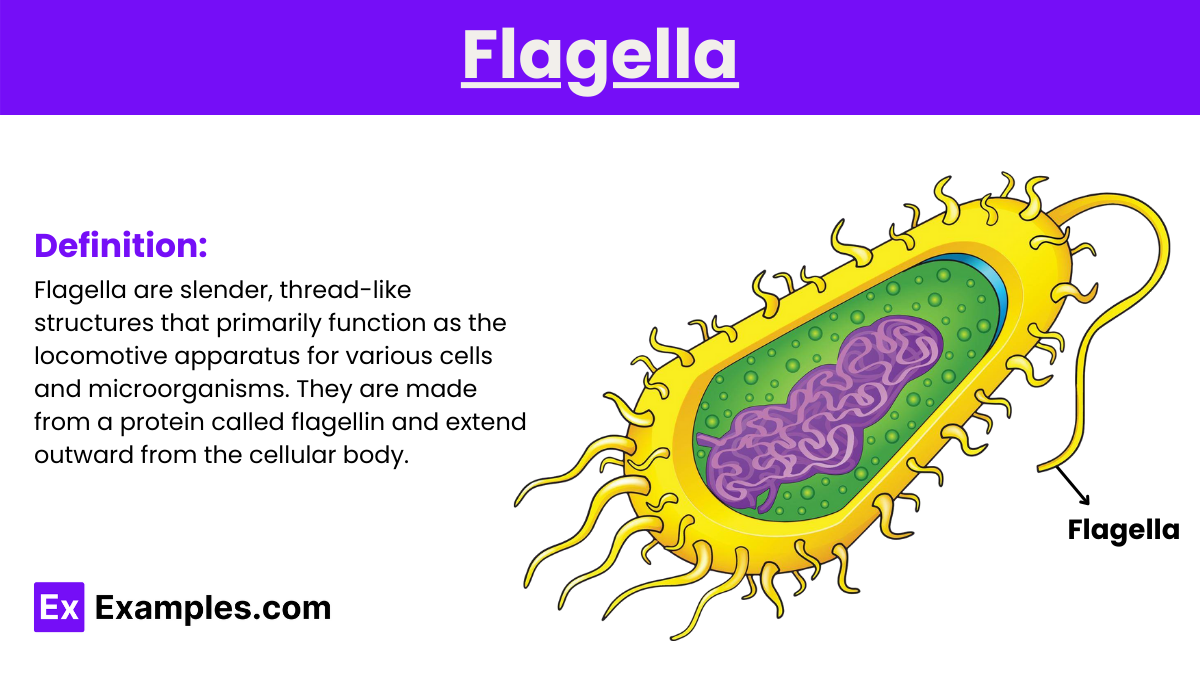
Flagella
long, singular appendages used for locomotion through liquid environments
made up of microtubules (for eukaryotic)
ex. human sperm

Cilia
short, numerous appendages that enable cell movement and generate currents
made up of microtubules
located in nasal cavity; filters an swarms air
located in fallopian tubes