EARTH 444 Pt 2: Wetlands
 Call Kai
 Learn
 Practice Test
 Spaced Repetition
 Match
 Flashcards
 Knowt Play
1/80

There's no tags or description
Looks like no tags are added yet.
81 Terms
community vs ecosystem
organisms of diff species interacting
community PLUS abiotic and physical processes
producers (autotrophs)
fix CO₂ into organic matter using external energy; CO2 + H2O + energy → CH2O + O2
consumers (heterotrophs)
obtain chemical energy by consuming organic matter; CH2O + O2 → CO2 + H2O + energy
chemoautotrophs
energy from chemicals, oxidize inorganic Fe, NH, S to obtain energy for CO2 fixation
about 10% of energy passes up to next trophic level
lost through respiration or detrital pathways
GPP & NPP
total C fixed through photosynthesis
NPP = GPP - Ra (autotroph respiration)
NPP is FLUX rate of new producer biomass production supporting consumers, decomposers, and growth
NPP vs carbon storage
FLUX (g/m2/yr) versus stock (g/m2)
lower NPP can still have more biomass
turnover time
standing biomass/NPP in years
most to least productive wetlands
marshes and swamps
marine coastal
bogs
BUT npp can vary a lot even in the same wetland type
controls on NPP in wetlands
light, temp, nutrients, hydroperiod, salinity, and biotic interactions
net carbon accumulation =
NPP (new plant biomass) - carbon losses (decomp, resp, methane production, export, disturbance)
why bogs accumulate so much C
modest inputs (nutrient limited), super small losses due to acid and lack of oxygen, sustained over LONG time periods
richness vs evenness
# of species
how many individuals in each species
SDI combines the two
controls on biodiversity in wetlands
hydropattern, heterogeneity (more microhabitats = more niches), connectivity (access and resource movement), disturbances (mosaic or simplification)
competition alters biodiversity by
reducing it due to resource limitation
high nutrients (some uptake and grow more quickly), invasive species, changes to herbivore and predator populations, low heterogeneity
greater biomass can reduce species richness
dominant plants may shade or outcompete smaller species
hydroperiod and biodiversity
influences survival and establishment, favours flood-dominant, some may germinate in dry periods, same seedbank can have diff communities depending on water
floodplain wetlands
low water = isolated ponds and channel (hetero but lack of dispersal)
flood pulse = increased connectivity but resources change
recession = separate again changing habitats and communities
create connectivity AND heterogeneity
interspecific effects
competition, predation, herbivory, and mutualism
top down vs bottom up
predators limit grazers, pressure falls, plants benefit
nutrients and light influence how quickly plants regenerate after grazing
cascade = effect of consumers that propagates across trophic levels

how beavers change wetlands
dam construction changes hydroperiod
creates heterogeneity
community responds, changing food and behaviour
ecosystem functions, carbon sediment and nutrient dynamics change
pond succession

traditional view vs modern of succession
progress through predicted sequence to climax community
depends on feedbacks, forces, disturbance, and history, may be stable or shift or go crazy pathways
auto vs allogenic succession
driven by organisms (plant litter)
external forces (changes in water source)

why might restoring hydrology and replanting not be enough?
soils and nutrients change, species may be gone, comp may favour other communities, hydropattern may have changed
vascular plants
xylem and phloem to move water and sugar around
non-vascular plant
no vasculature → shorter bc need capillary force of water
mosses
for vascular plants
overwatering is bad bc need O2 to roots
obligate and facultative wetland plants
can ONLY survive in wetlands (cattails, sedges, rushes)
can do either (red maple)
types of plant adaptations to wetland
structural, physiological, whole-plant
structural adaptations of plants
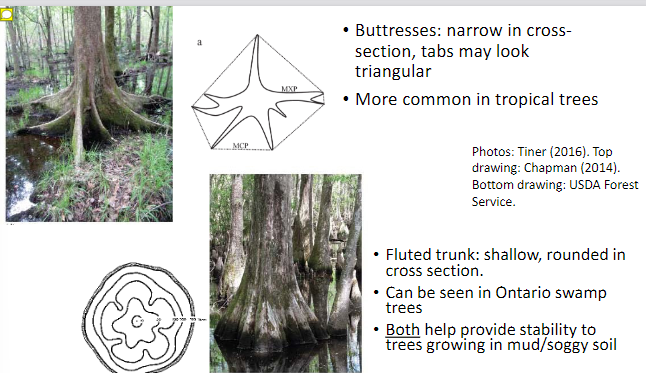
aerenchyma air spaces for gas flow to roots, adventitious roots above anoxic zone (trees and grasses), stem hypertrophy (swelling on lower stem bc low density), rapid stem elongation, shallow root systems, prop roots, lenticels, pneumatophores (cypress knees)
stem hypertrophy: buttress vs fluted
lenticels
porous tissue on roots or stems, allow air into plant’s
aerenchyma
• Common on many tree trunks (not just wetland plants)
• Especially high density on some mangrove prop roots, some other wetland trees
physiological adaptations (change function)
pressurized gas flow, rhizosphere oxygenation, sulfide avoidance, anaerobic respiration
plant anaerobic respiration
pyruvate → acetaldehyde → ethanol
also need to make ADH bc ac and eth are toxic!
lower energy yield, not a long-term solution
plant sulfide avoidance and removal
HS- toxic to plants, common in pH>7
detox to SO42- in cells, create other S compounds, or change metabolic tolerance
rhizosphere oxygenation
due to pressurized gas flow, O2 gets pumped into soil, may lead to oxidation
pressurized gas flow (e.g. broad leafed cattail)
move pressurized gas between leaves and roots using aerenchyma, good for flowering and in deep water
happens bc temperature diff underground vs on leaves, open and close stomata

whole plant strategies
timing of seeds, buoyant seeds, vivipary (germinate on plant), persistent seeds, resistant tubers
functional groups/forms
emergent, submerged, free-floating, floating (rooted)
sedges, rushes, and grasses
edges (triangle in cross-section)
rushes (round)
grasses (segmented stem w nodes)
phragmites
tall, salt-tolerant grass. 3x biomass underground than above. outcompetes natives and makes dense thickets bad for wildlife. high ET
purple loosestrife
was invasive but then we released european beetles and they ate it
point vs non-point
sewage, mine, landfill
runoff from agriculture or sw
conventional WWTP vs treatment wetlands
energy and infrastructure intensive
land intensive, mostly for secondary treatment/tertiary polishing
natural treatment wetlands vs constructed
just add water, mostly banned
multiple types
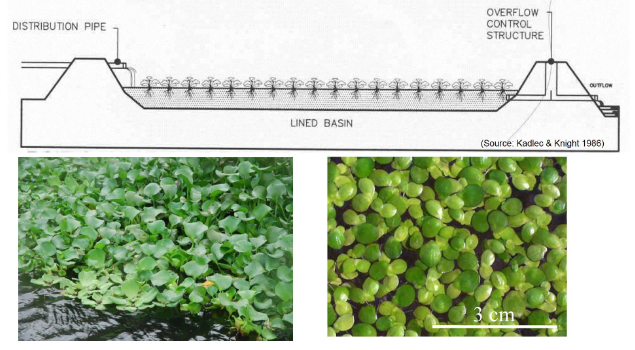
surface flow constructed wetland
shallow basin, emergent plants, soil/gravel/sand
flow horizontal to outlet
shallow makes so much vegetation for filtering
looks nice and makes habitat
subsurface flow constructed wetland
water through porous sand/gravel w wetland vegetation and dry surface
lots of microbes in substrate to breakdown pollutants
OM, nutrients, pathogens
free-water/floating treatment wetlands
municipal applications of treatment wetlands
remove organic matter, sediment, and nutrients (polishing)
treatment wetlands for mine drainage
low pH and high metal and sulfate concentrations
remove iron and sulfate from water column, often anaerobic
urban stormwater treatment wetlands
seasonal, sporadic, and variable in quality
can easily be overwhelmed
wetland river diversion/treatment
pass rivers through adjacent wetlands to reduce nutrient input (like mississippi river delta)
BOD (biochemical oxygen demand)
amount of DO needed by organisms to oxidize OM at temp over time.
typical influents to treatment wetlands
tss (>.45 um suspended), N, P, metals, pathogens
TSS removal mechanisms
sedimentation and filtration
soluble organics removal
(an)aerobic microbial degradation
N removal mechanisms
• Ammonification followed by microbial nitrification
• Denitrification
• Plant uptake
• Matrix adsorption
• Ammonia volatilization
P removal mechanisms
Matrix sorption and plant uptake
metal removal mechanisms
• Adsorption and cation exchange
• Complexation
• Precipitation
• Plant uptake
• Microbial oxidation/reduction
pathogen removal mechanisms
• Sedimentation
• Filtration
• Natural die-off
• Predation
• UV irradiation
• Release of antimicrobial compounds from macrophyte

P mass balance question
considerations in treatment wetland design
objectives and influent
hydrology
basin morphology
chemical loading and performance
soil, substrate, vegetation
site constraints and long-term operation


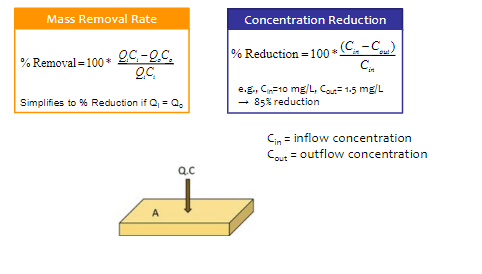
mass removal and concentration reduction
If out = in (steady) thgen mass removed = concentration reduction
But if in DNE out, then they'll be different
hydraulic loading rate (HLR) q=Q/A (L/t)
larger loading rate treats more water per area—but can reduce contact time and removal efficiency. In constructed wetlands, HLR indicates how much water the system can handle without causing issues like clogging or overloading.
Allowed to be faster in subsurface bc more reactive and more contact w sediment

HLR problem
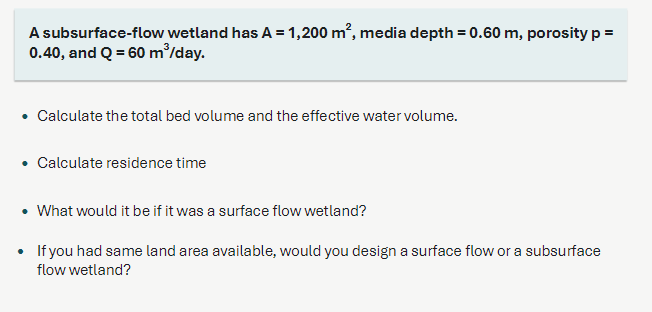
nominal detention time/HRT
average time water remains within a treatment system.
A longer residence time usually allows for more effective treatment processes, as it gives contaminants or nutrients more time to settle, degrade, or be processed biologically.
Identifying the correct residence time is crucial in designing wetlands to ensure the desired level of water quality improvement
residence time problem
nominal detention time DNE actual residence time
Ideally it would all flow through right but hydraulic short circuiting may happen and mess things up so not all water gets same contact time
basin morphology design
want slow uniform flow through wetland to stop stagnation and short-circuiting. low slope w mixed depths for habitat, settling, contact, and rxns
cells connected in series
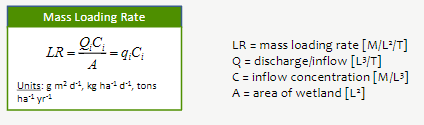
mass-loading rate
amount of a contaminant being introduced to a water body or treatment process
varies between chemicals and wetland type

retention problem
k-C* model
[contaminant] decreases exponentially w distance through wetland
kA is areal rate constant (m/yr) and C* is what concentration approaches (residual concentration g/m3)

k-C* problem
substrates for treatment wetlands
liner = clay to stop water loss
topsoil in surface-flow for plants
sub-surface use sand/gravel
limestone absorbs P better than silicate
Fe and Al in soil good for P sorption
vegetation in treatment wetlands
who cares about diversity
contaminant tolerant plants (cattails, duckweed) in surface and nutrient-tolerant in subsurface (reed, rushes)
flow rate management in treatment wetlands
high water kills plants
surface flow ~30 cm depth
deeper water has more sediment settling but more anoxic
high flow erodes sediment and washes out plants
wildlife management in treatment
increase flow, decrease veg density, and add predators of mosquitoes
add fences to stop beavers, carp, etc that mess w vegetation
pathogen management in treatment
enter from air, wildlife, sewage
live in water or soil
concern for recreation
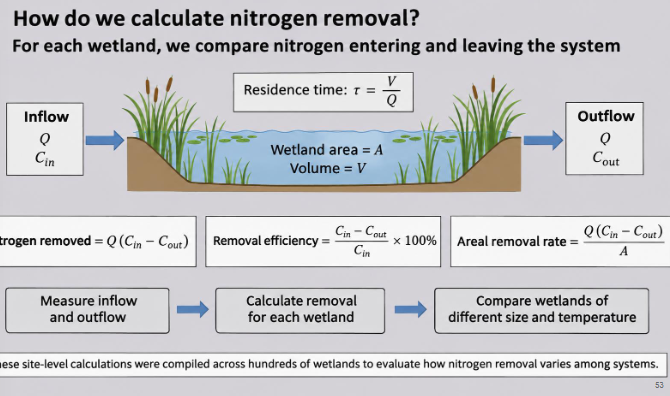
N removal eqns
smaller wetlands have faster denitrification bc more surface area to volume
decrease N in rivers
better to have wetlands in places w high N but more expensive
how wetlands can be P sources
models may not account for release. Unregulated restored/created wetlands can easily become P sources
