M10 Hepatobiliary Conditions
 Call Kai
 Learn
 Practice Test
 Spaced Repetition
 Match
 Flashcards
 Knowt Play
1/29

There's no tags or description
Looks like no tags are added yet.
30 Terms
hepatobiliary disorders
jaundice, portal hypertension, ascites, esophageal varices, hepatic encephalopathy, hepatitis, cirrhosis, cholecystitis, cholelithiasis
functions of liver
hormone regulation → balances insulin/glucose
ammonia conversion → converts ammonia to urea
nutrient metabolism → processes carbs, proteins, fats
storage → stores vitamins (A, D, E, K), minerals
bile production → aids fat digestion
immune support → filters bacteria and old blood cells
detoxification → filters drugs, alcohol, toxins
protein synthesis → produces albumin and clotting factors**
cholesterol management → synthesizes/regulates cholesterol
liver lab values
LFTs (liver fxn tests)
- ALT, AST, ALP, GGT
- albumin
- PT/INR
- bilirubin
hepatic dysfunction
liver not able to adequately perform its normal functions, can be acute/chronic, chronic liver disease is 12th leading cause of death in young/middle-aged adults → 40% of those are d/t alcohol abuse
hepatic dysfunction causes
infection, cirrhosis, liver failure secondary to alcohol abuse, fatty liver disease, MASLD (metabolic dysfunction-associated steatotic liver disease)
hepatic dysfunction manifestations
jaundice, ascites, edema, N/V, loss of appetite, wt loss, encephalopathy, hand tremors (asterixis), easy bruising, spider angiomas, hyperlipidemia
bilirubin
yellow-orange pigment produced during the normal breakdown of Hb from old/recycled RBCs
normal bilirubin pathway
RBC dies → ~120 days is normal lifespan, Hgb is released, Hgb→heme
spleen/tissues break down heme → heme→unconjugated bilirubin, fat-soluble, can’t be excreted yet
liver conjugates bilirubin → liver binds bilirubin w/ glucuronic acid, water-soluble, now ready to excrete
excreted into bile → bile carries conjugated bilirubin into GI tract, gives stool its brown color
small amt excreted in urine → tiny amt of urobilinogen reabsorbed, excreted by kidneys, normal pale yellow urine
jaundice
yellowing of the skin/mucous membranes/sclera caused by a build-up of bilirubin in the blood (hyperbilirubinemia)
- RBCs die → excess/liver fails, bilirubin released faster than liver can handle
- liver not functioning → can’t conjugate/excrete bilirubin normally
- bilirubin builds up → accumulates in blood, deposits in tissues
- JAUNDICE → bilirubin deposits in skin/eyes
jaundice manifestations
yellow eyes/skin, dark/tea-colored urine, light/clay stools, pruritus, fatigue/malaise
N/V/anorexia → common w/ hepatic causes
fever/chills → signals infection/inflammation (hepatitis, cholangitis)
RUQ abd pain → gallstones, cholecystitis, hepatomegaly
easy bruising/bleeding → liver not making clotting factors (increased PT/INR)
hepato-/splenomegaly → congestion
confusion/cognitive ∆ → early hepatic encephalopathy
jaundice signs in darker skin
yellowing of sclera/mucous membranes/nail beds, dark urine, pale/clay-colored stools
pre-hepatic jaundice
aka hemolytic jaundice, problem occurs before liver, unconjugated bilirubin increased
cause → excess RBC destruction overwhelms liver’s ability to process bilirubin
examples → hemolytic anemia, sickle cell disease, transfusion rxns, malaria
hepatic jaundice
aka hepatocellular jaundice, problem w/in liver, both conjugated/unconjugated bilirubin increased
cause → damaged liver cells can’t conjugate/excrete bilirubin properly
examples → hepatitis, cirrhosis, drug-induced liver injury, alcohol-related liver disease
post-hepatic jaundice
aka obstructive/cholestatic jaundice, problem after liver in bile drainage, conjugated bilirubin increased
cause → bile duct blockage prevents bilirubin from reaching intestines
examples → gallstones, pancreatic cancer, bile duct strictures, cholangitis
portal hypertension
increased pressure throughout portal venous system, caused by obstructed blood flow through damaged liver, prevents blood from being detoxified
cause → cirrhosis, other liver diseases
diagnosis → imaging (u/s, CT, MRI)
portal vein
vessel through which blood from digestive organs enters the liver
portal hypertension assessment
caput medusae → dilated, tortuous veins radiating outward from umbilicus
ascites → fluid moves from BV into abd cavity
varices → abnormally dilated collateral vessels in esophagus/stomach
hepatic encephalopathy → toxins which have bypassed liver affect brain fxn
ascites
fluid moves from blood vessels into abdominal cavity, albumin shifts into peritoneal cavity pulling fluid w/ it
portal HTN obstructs venous blood flow, decreased synthesis of albumin causes decreasing serum oncotic P, vasodilation of splanchnic circulation, decreased circulating volume triggers RAAS
ascites manifestations
increased abdominal girth, rapid wt gain, SOB, percussion (fluid wave, shifting dullness), umbilical eversion, peripheral edema, early satiety, decreased appetite
ascites nursing interventions
daily wt
daily abdominal girth measurements
albumin infusions
elevate HOB for breathing comfort
monitor fluid/electrolyte balance, I&O
2g Na diet (improve food taste w/ spices/lemon juice, careful w/ high K salt substitutes)
administer diuretics (spironolactone)
prepare for potential paracentesis
transjugular intrahepatic portosystemic shunt
aka TIPS; cannula threaded through portal vein by transjugular route, expandable shunt placed btw portal circulation and hepatic vein
decreases P in portal vein by bypassing liver and draining into hepatic vein, monitor for hepatic encephalopathy post-op
esophageal varices
dilated/tortuous veins found in lower esophagus/stomach caused by portal HTN (elevated P in veins that drain into portal system, back up of blood into collateral circulation), prone to rupture which is often source of massive hemorrhage
present in 30% w/ compensated cirrhosis, 60% w/ decompensated cirrhosis
espohageal varices manifestations
asymptomatic until bleeding (bleeding occurs d/t thinning out of BV and they become fragile, vessels can rupture d/t straining/irritating food), hematemesis, melena, general deterioration in mental/physical status
esophageal varices management
administer beta blockers to prevent bleed
if bleeding, administer vasoactive drugs (octreotide) & prep for endoscopy
endoscopic variceal ligation (EVL banding) preferred
RARE → Sengstaken-Blakemore tube as balloon tamponade (temporary, last resort)
NRSG → maintain NPO status until gag reflex returns, monitor for bleeding, administer H2 blockers/PPI
hepatic encephalopathy
accumulation of ammonia and other toxic metabolites in blood, can be life-threatening
hepatic encephalopathy causes
hepatic insufficiency → inability to detoxify toxic by-products of metabolism
portosystemic shunting → collateral (extra) vessels develop allowing elements of portal blood (w/ toxic substances) to enter systemic circulation
hepatic encephalopathy manifestations
elevated ammonia levels, mental changes, motor disturbances, constructional apraxia, asterixis, fetor hepaticus (musty odor on breath), confusion, stuporous, seizures, abnormal EEG
hepatic encephalopathy stages
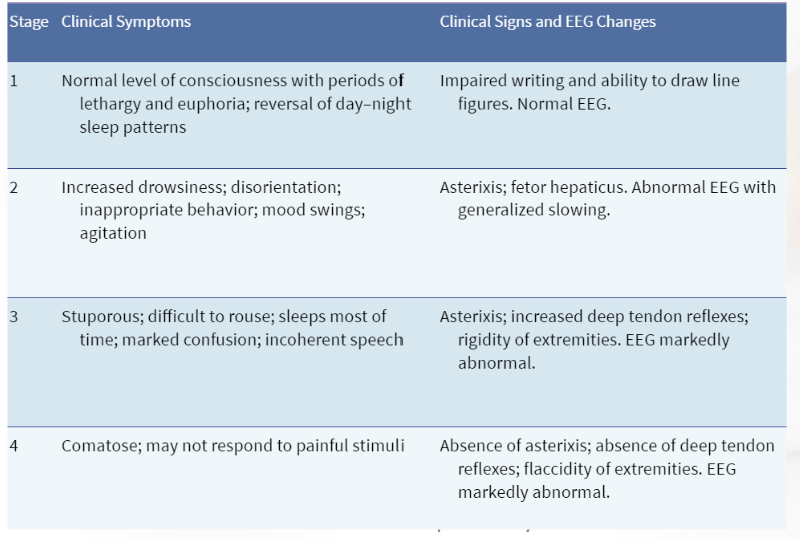
hepatic encephalopathy management
eliminate precipitating cause (e.g., prevent/treat GI bleeding)
lactulose to reduce serum ammonia levels (PO/PR) → aim for 3-5 loose BMs/day and clear mental status
oral antibiotics (Rifaximin)
discontinue sedatives, analgesics, tranquilizers
monitor/treat complications/infection
hepatic encephalopathy nursing interventions
frequent neuro checks → monitor LOC, safety
closely monitor respiratory status
v/s q4h → monitor for bleeding/infection
administer lactulose
serial daily ammonia levels & electrolytes
I&O’s, daily wt
moderate protein intake
monitor therapeutic response
enteral feeding if needed