vertebral and thoracic bones
 Call Kai
 Learn
 Practice Test
 Spaced Repetition
 Match
 Flashcards
 Knowt Play
1/33

There's no tags or description
Looks like no tags are added yet.
34 Terms

cervical region

thoracic region

lumbar region

Vertebra from the mid-cervical region

vertebra from the mid-thoracic region

vertebra from mid-lumbar region

body of vertebrae. The body is the weight bearing portion of the
vertebra and is the anterior-most part of the vertebra.

intervertebral disc. cartilage pads that sit on top of the vertebral bodies. They
help stabilize the vertebrae, and act to absorb shock

intervertebral disc

transverse process, muscles and ligaments attach there

transverse foramina

superior articular process and facet
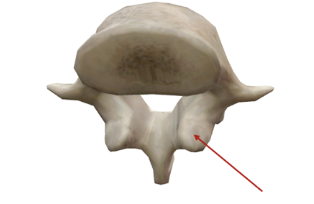
inferior articular process and facet

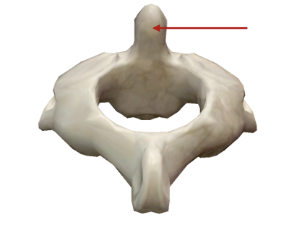
spinous process ( superior view cervical vertebrae) , bony projection that marks the posterior-most aspect of the vertebra. Muscles and ligaments attach here

spinous process (lateral view of thoracic vertebrae)

spinous process ( lateral view of a lumbar vertebrae)

vertebral foreman/ vertebral canal, The spinal cord begins at the base of the
brain and exits the skull through the foramen magnum. It travels through the vertebral canal (made from successive vertebral foramina
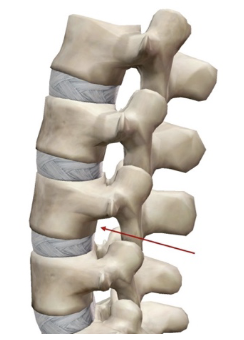
intervertebral foreman , allow for the passage of spinal nerves continuous with the spinal cord.

C1 (atlas)

C2 (axis)

sacrum

coccyx

C1 (atlas) does not have a body nor a spinous process; instead it appears as a ring
C2 has a process called the “dens” or “odontoid process”

sacrum, vertebral bodies are fused

auricular/ articular surface, surfaces on the superolateral aspects of the
sacrum that articulate with the pelvis to form the “sacroiliac joints”

anterior and posterior sacral foramina. openings for nerves

sacral canal, continuation of vertebral canal

coccyx, 4 fused vertebrae

sternum (manubrium, body, xiphoid process)

rib 1

rib 11

ribs 5 (2-10 similar)

rib 12