medical parasitoloty: Kyle's stuff for test 2
 Call Kai
 Learn
Learn Practice Test
 Spaced Repetition
 Match
Match Flashcards
 Knowt Play
1/117

There's no tags or description
Looks like no tags are added yet.
Name | Mastery | Learn | Test | Matching | Spaced | Call with Kai | Chat |
|---|
No analytics yet
Send a link to your students to track their progress
118 Terms
Kinetoplastids
a DNA-containing domain located within the single mitochondrion and associated w/ the flagellar base
possessed by flagellated protozoa
Kinetoplastids are transmitted by
blood-sucking antropods
kinetoplastids live in the
circulatory system and tissue fluids; some invade cells
two medically important kinetoplastidas
Leishmania spp
Trypanosomes
T. brucei
T. cruzi
life cycle stages of kinetoplastida
trypomastigote
epimastigote
promastigote
amastigote
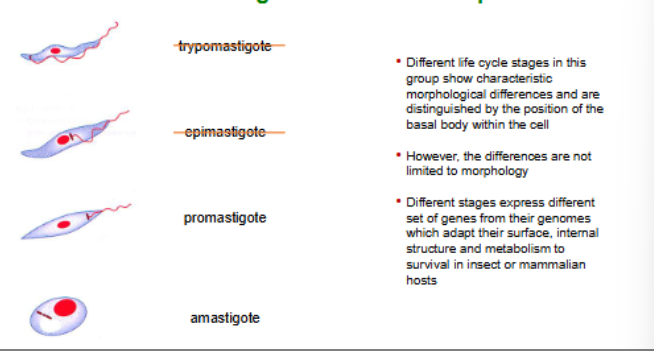
Leishmania is transmitted by ___ ___ + facts about them
sand flies (Phlebotomidae)
are minute diptera
more closely related to mosquitoes
only mosquito nets w/ fin meshwork hold them off
often breed in rodent burrows
can also transmit Bartonella bacilliformis and Pappataci virus
3 complexes of Leishmaniasis
Visceral: Leishmania donovani, infantum, chagasi
Cutaneous: Leishmania tropica, major, aethipica
Mucocutaneous: Leishmania brazieliensis, mexicana, amazonensis
Old World Leishmaniasis
found in Africa, Asia, Middle East, the Mediterranean, and India
close contact of humans and domestic animals = optimal conditions for sand flies and leishmania transmission
urban environment: human to human
rural areas: Leishmaniasis = zoonosis
infection in dogs frequent in the Mediterranean
New World Leishmaniasis
From Parasites in Central and South America
infected while working or hunting in forest
wild animals including rodents, monkeys, and sloths = reservoir for parasite
sylvatic
transmission pattern within population of wild animals that result in occasional infection of humans
Leishmania parasites are ___ and ___
promastigotes and amastigotes
parasite lives in ____ ____ of sandflies as ___ ___.
in mammalian host parasites multiply as ___ ___
digestive tract; extracellular promastigote;
intracellular amastigotes
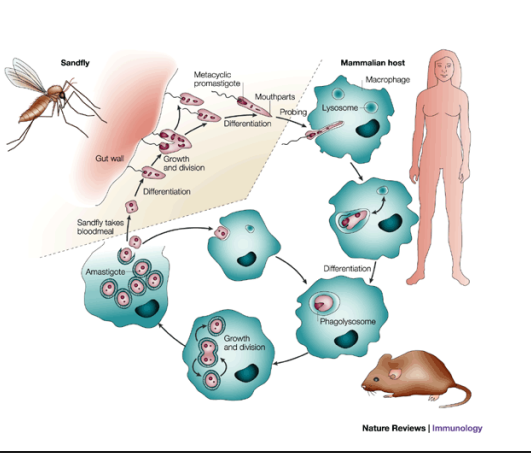
Promastigote vs amastigote pics

Leishmania infects and thrives in
macrophages
within mammalian host leishmania infects macrophages and replicates as intracellular
amastigote
macrophages are ‘professonial’
phagocytic cells
parasite invades host cell passively by triggering phagocytosis
phagocytosed pathogens are targeted to the ___ and destroyed
lysosome
phagosome usually fuses w/ primary lysosomes to form secondary lysosome
in secondary lysosomes, pathogens are killed and digested by the action of lytic enzymes in an acidic environment produced by membrane proton pumps
generation of oxygen radicals also induce killing

Leishmania enter macrophage by
phagocytosis
several intracellular pathogens have found waves to escape killing such as
Trypansoma cruzi -- induces phagocytosis but then escapes into the cytoplasm
Toxoplasma -- active invasion, parasitophorous vacuole is never part of the endocytic pathway
Mycobacterium tuberculosis -- induce phagocytosis and block lysosomal maturation
How do leishmania survive?
don’t seem to care
Amastigotes thrive in what looks like fully matured lysosome w/ acidic pH and abundant lysosomal hydrolases
Amastigotes rapidly divide and will infect new macrophages after rupture of host cell
dense surface coat covering Leishmania seems to protect parasite from action of lytic enzymes
however, w/ help of T cells, macrophages can be stimulated to kill the parasite
promastigotes considered part of the ___ phase of Leishmania because
extracellular
have not yet developed intracellular amastigotes
after entering the human host during blood meal of female sandfly, Leishmania promastigotes must first evade
complement-mediated lysis in the bloodstream until engulfed by macrophage
binding of complement can
destroy pathogens but also tags them for phagocytosis
complement is a component of the
immune system meant to lyse pathogens
how do Leishmania stimulate the complement process
by binding elements of complement system to surface
after parasite inoculation into skin, ~90% of parasites are killed by the
comoplement system
parasites use __ __ to be ingested by Mo via complement receptor (CR3)
C3 opsonization
Parasite internalization is a ___process; later on, MΦ are capable of restimulating CD4+ T cells via MHC class __.
silent; II
____, in contrast, are activated upon infection, present Leishmania antigen in the MHC class I/II pathways and promote T cell priming.
Dendritic cells

a __ response is required for parasite control and healing
TH1
Stimulation with different cytokines leads to the development of two types of T-cells specialized for different immune responses
Th1 and Th2 strongly ____ each other
downregulate
non healing Leishmania infections are characterized by strong ___ respnse
TH2
healing infections are characterized by
Th1
parasite seems to manipulate this
balance of Th1 and Th2

3 syndromes associated w/ Leishmania infection in humans
Visceral, Cutaneous, and Mucocutaneous
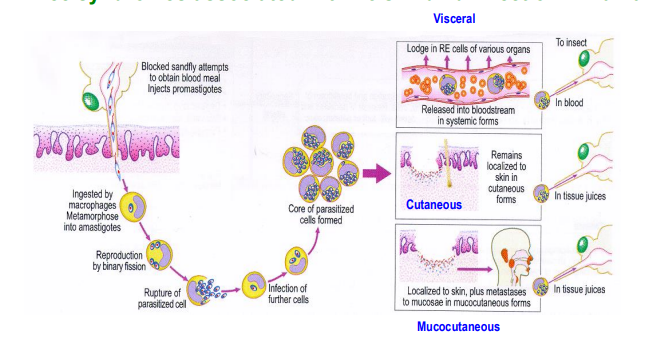
Visceral Leishmaniasis or Kala Azar
darkening of skin on extremities and abdomen; common symptom of indian form
what is Kala azar caused by
L. donovani complex
systemic infection of reticulo-endothelial cells (mostly macrophages) in multiple internal organs and the blood
weeks to months incubation period
lead symptom of Kala Azar
Abdominal swelling due to hepato- and splenomegaly
high fever (oscillates w/ peak every second day)
progressive weight loss (cachexia)
mortality of untreated disease 75-95%
post kala-azar dermal leishmaniasis
sequel visceral leishmaniasis = may manifest years after successful treatment and resolution
dermal lesions may contain parasites in great numbers
Cutaneous Leishmaniasis (Old world oriental sore)
usually self-limiting
Old world oriental sore (Cutaneous) caused by
L. tropica complex (similar disease in new world caused by L. mexicana)
chronic but self-limiting dry ulceration at site of bite
ulceration starts months after infection
parasites NOT found outside of lesions
granuloma formed = healing leaving depressed scar
nearly absolute resistance to reinfection
inoculation to vaccination long been practiced

Espundia or Mucocutaneous Leishmaniasis
cause by L. braziliensis
~20% of infected patients develop ulcers of oral and nasal mucosa
progression of ulceration = slow but steady; ultimately destroying ALL soft parts of nose, lips, and soft palate
death can occur via secondary bacterial infection

Diagnosis
demonstration of parasites in blood or lymph (kala azar) or scrapings of ulcer (cutaneous versions)
Serological tests for visceral
treatment for visceral Leishmaniasis
India: amphotericin B in its various liposomal prep
East Africa: antimonials (sodium stibogluconate and paromomycin)
Miltefosine = first oral treatment for disease; better tolerated
reduced hospitalization costs and outpatient distrubtion = option
disadvantages = evidence of reduced efficacy after decade of use and it is teratogenic
Cutaneous treatment
amphotericin B (liposome formulation = better tolerated but more expensive)
available drugs = significant side affects and resistance
__ co-infection further complicates treatment
HIV
paramomycin
new hope for better treatment
an old off-patent antibiotic which shows promising activity in studies by One World Health
Intravenous injection = significant cure in Kala-azar patients in India
developed drug for kala-azar together w/ Indian drug maker
infected macrophages taken up w/ blood meal and amastigotes released by digestion transform into
procyclic promastigotes; attach to midgut epithelium
Attached promastigotes divide rapidly
are procyclics infective to mammals?
no
metacyclic (infective) promastigotes
cease replication, detach, and pass forward into the pharynx and regurgitate into bite site

parasite interactions w/ sand fly midgut
promastigotes attach and detach to midgut endothelium
Attachment helps remain in insect gut when blood meal passed
later, need to detach to move to pharynx and proboscis for infection

how do they detach?
Lipophoshoglycans (LPGs)
LPGs role in Leishmania pathogenesis
LPG = dominant molecule on surface of Leishmania
not a protein but glycolipid
anchored in membrane by lipid to which long chain of hydrophilis sugar-phosphate repeats are attached
structure of LPG changes over life cycle to adapt
LPG = pathogenesis factor in mammalian host and important for life cycle within sandfly

LPG structural modifications during sand fly cycle
modified during developmental process of metacyclogenesis (stop replication and begin to pre-adjust to mammalian host)
LPG metacyclics has 2-3 times number of repeat units
side chains w/ terminal galactose = downregulated; remaining galactose residues = capped w/ another terminal sugar (arabinopyranose)

only LPG from ___ attaches to midgut
procyclics
phosphoglycans isolated from procyclics and metacyclics were labeled w/ a dye
opened sandfly midguts were incubated w/ PG from procyclics (A/B) and metacyclics (C/D) and detected w/ antibody
only procyclic phosphoglycan binds to midgut
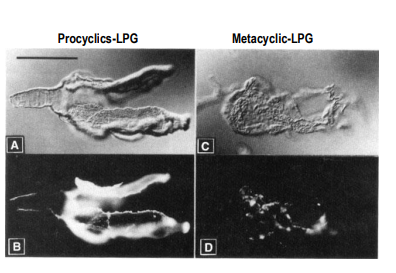
PG binds to the ___ of sandfly midgut epithelium
microvilli
LPG binds to a species specific ___ in sandfly midgut
galectin
gene for abundantly expressed galactose binding protein or lectin (galectin) was indentified in sandfly sequencing project
specific antibody against the galectin reacts w/ midgut of sandfly species from which it was isolated
high resolution microscopy shows that protein (red) is found on luminal side of midgut

Modification of LPG modulate
interaction of parasite and midgut galectin

Which form of leishmaniasis is characterized by skin sores and lesions?
A) Visceral leishmaniasis B) Cutaneous leishmaniasis C) Mucocutaneous leishmaniasis D) Dermal leishmaniasis
B, C, D
What is the causative agent of visceral leishmaniasis?
A) Leishmania tropica B) Leishmania braziliensis C) Leishmania donovani D) Leishmania major
C
Which of the following is a common symptom of visceral leishmaniasis?
A) Fever B) Skin lesions C) Oral ulcers D) All of the above
A
Leishmaniasis is primarily found in which of the following regions?
A) North America B) Sub-Saharan Africa C) South Asia D) All of the above
D
True or False: Leishmaniasis can be transmitted through direct contact with infected individuals.
False
True or False: The treatment for leishmaniasis includes antimonial drugs.
False
True or False: Cutaneous leishmaniasis can sometimes resolve on its own without treatment.
True
True or False: The sandfly is most active during the daytime.
False
Describe the lifecycle of Leishmania and the role of its vector.
sandflies
What are the main methods used for diagnosing leishmaniasis?
demonstration of parasites in blood or lymph (kala azar) or in scrapings of ulcer (cutaneous)
surgical (visceral)
Discuss the public health strategies that can help prevent leishmaniasis transmission?
fine knotted nets
ammphotericin B (india)
antimonials (east afirca)
Miltefosine (oral)
Paramomycin
Which immune cell type is primarily responsible for controlling Leishmania infection?
a) B cells b) CD4+ T cells c) Neutrophils d) Eosinophils
B
Which of the following is a key mechanism by which Leishmania evades the host immune response?
a) Inducing apoptosis in macrophages b) Producing antibodies c) Inhibiting Th2 responses d) Upregulating MHC class II molecules
A, C, D
Leishmania exists in which morphological form(s)?
a) Epimastigote b) Amastigote c) Metacyclic Promastigote d) Trypomastigote
B, C
Protozoa
one-celled animal-like protists (Eukaryota)
have a true nucleus w/ chromosomes enclosed by a membranous envelope
ubiquitous throughout aqueous environments and the soil
some are parasitic and responsible or serious disease.
some protozoa form ___ for
cysts; protection against harsh conditions, to survive extreme temperatures or harmful chemicals or lack of food, water, or oxygen
cyst is usually important for transmission
Protozoan Flagellates
Giardia
Trichomonas
Trypansomes
Amebas
Entamoeba
NAegleria
Acanthamoeba
Balamuthia
Protozoan Apicomplexa
Toxoplasma
Plasmodium
Babesia
Theileria
Cryptosporidium
Cyclospora
Entamoeba, Giardia, Trichomonas: common characteristics
early-diverging eukaryotes
extracellular parasites (do not invade host cells)
adhere to plasma membrane of host cells
contact-dependent cytotoxicity
mechanical damage to host tissues
asexual reproduction and division within host by binary fission
facultative anaerobes: carbohydrate metabolism is anaerobic
LACK MITOCHONDRIA or have underdeveloped one
all are killed via treatment w/ METRONIDAZOLE (selective for anaerobic cells)
diseases w/ flagellates
Giardia Lamblia: Giardiasis (diarrhea/dysentery) (most frequent cause of non-bacterial diarrhea)
Entamoeba histolytica: Amebiasis (diarrhea/Liver Abscess)
Trichomonas vaginalis: Trichomoniasis (Vaginitis)
who first observed Giardia
van Leeuwenhoek when examining his own feces
who named Giardia
Vilem Lambi : (1859) observed G. intestinalis in stools of children w/ diarrhea
not confirmed as a pathogen until the late 1970s
Giardiasis: infection w/ Giardia duodenalis
G. intestinales & G. lamblia also used
can parasitize the intestinal tract of wide range of vertebrates including humans
‘Beaver fever’
trophozoite and cyst forms
disease prevalent in children at daycare
domestic dogs and certain wild animals serve as hosts
Transmission predominantly by ingestion of food or water contaminated w/ cysts

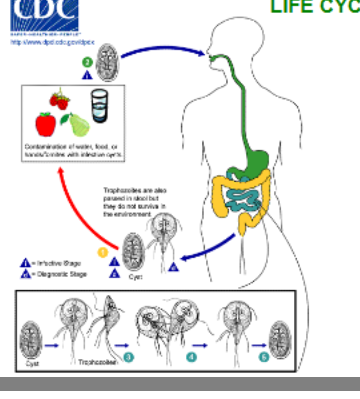
Life cycle of Giardiasis
only ONE host; direct life cycle
cysts ingested and in small intestine, excystation release trophozoites (each cyst = two trophozoites)
trophozoites multiple by longitudinal binary fission, remaining in lumen of proximal small bowel where they can be free or attached to mucosa by ventral sucking disk
encystation occurs as parasites transit toward colon
cyst is stage most commonly found in non-diarrheal feces
Giardiasis clinical symptoms
incubation period: 1-2 weeks; majority of ppl asymptomatic
diarrhea w/ loose, fool-smelling stools
flatulence
abdominal cramps and bloating
nausea, anorexia
malaise
weight loss
prolonged symptoms
malabsorption
Giardiasis pathogenesis
many show no evidence of disease
mechanism not well defined
colonizes upper small intestine; attachment to intestinal epithelial cells may cause inflammation. Lymphocytic infiltration
Malabsorption: interfere w/ absorption of nutrients like fats and some vitamins
villous blunting
no tissue invasion-high number of trophozoites present in duodenal crypts
Giardiasis diagnosis
identification of cysts or trophozoites in feces
detection of giardia antigens in feces (ELISA test)
molecular methods (PCR)
giardiasis treatment
Metronidazole: not FDA approved but used
tinidazole: not approved in US
Furazolidone: approved by FDA
paromomycin: used for pregnant women
Nitazoxanide: approved for giardiasis and cryptosporidiosis in children
Giardia transmission and epidemiology
resistant cyst responsible for transmission
cysts survive several months in cold water
reservoir-human
infectious dose: 10-25 cysts (feces, defective piping, flies, soiled hands)
—
worldwide distribution
common in areas w/ poor sanitation
seasonal peak during late summer
prevalence: 2-5% in indust. countries; 20-30% in developing
risk groups: travelers, campers, children in daycares and homosexual men
cell biology of Giardia: The Trophozoite
active metabolizing, motile form, lives in upper two-thirds of small intestine
12 - 15 um long, shaped like pear
2 nuclei: equal DNA content
both transcriptionally active
both divide at same time
4 pairs of flagella = 8 flagella
ventral adhesive disc
reproduction by binary fission-asexual rep

Encystation
as trophozoite travels to lower levels of SI on way to colon gets exposed to biliary components, which trigger the encystation process

giardia cyst
after cyst formation the parasite undergoes 1 round of nuclear division w/o cytokinesis = 4 nuclei located at anterior end
flagella and adhesive disk = lost; but axonemes (Ax) and median bodies (MB) persist
cysts are oval shaped, and measure 11-14 um in lenth and 6-10 um wide
have well-defined wall (CW) often set apart from cytoplasm of parasite
cysts passed w/ feces and can survive up to 3 months

Giardia Mitosome
organelle of mitochondria origin found in ‘amitochondrial’ eukaryotes
found in Entamoeba histolytica, giardia and some microsporidia
suggests that amitochondriates harbored mitochondria and are not lineages that evolved before acquisition of mitochondria
mitochondrial origin of mitosome supported by
presence of 2 membranes
localization of iron sulfur cluster assembly machinery in these organelles
targeting of proteins into mitosome by an N-terminal leader sequences
FeS cluster assembly activity identified in mitosome-rich cell fraction
Giardia metabolism
G. lambila: aerotolerant anaerobe
remnant mitochondria or mitosome
tricarboxylic acid and cytochrome system is absent
parasite uses glucose and stores glycogen
pyruvate ferredoxin oxidoreductase (uses a ferredoxin and converts pyruvate to acetyl CoA)
can produce H under strict anoxic conditions
plasma membrane of Giardia trophozoite is covered by
Variant Specific Protein (VSP) for antigenic switching
200-300 different VSP genes
coupled to encystation/excystation
encystation: ‘old’ VSP expression
excystation: ‘new’ VSP on surface
what may explain common occurrence of repeated Giardia infections
differentiation-associated switching of antigens
evidence of VSP during encystation/excystation

Trichomonas vaginalis
cause of trichomoniasis
common cause of vaginitis
found in urogenital tract
extracellular: adheres to epithelium
trophozoite
transmission by direct contact: sexually transmitted
Life cycle of Trichomonas vaginalis
microaerophilic and resides on the epithelium of urogenital tract where it replicates by binary fission
does not survive well in external environment
transmitted among humans, only known host
cysts??

cysts form of Trichomonas vaginalis??
recent report of ‘cyst like structures’ (CLS)
formation includes:
rapid induction under acidic conditios
developed in stationary phase culture
survive osmotic lysis of trophozoites
survive treatment w/ detergent
chitin-containing outer covering