Exam 4: Drugs and Brain Disorders
 Call Kai
 Learn
 Practice Test
 Spaced Repetition
 Match
 Flashcards
 Knowt Play
1/149

There's no tags or description
Looks like no tags are added yet.
150 Terms
What is anxiety?
An emotion characterized by apprehension and somatic symptoms of tension in which an individual anticipates impending danger, catastrophe, or misfortune. The body often mobilizes itself to meet the perceived threat: muscles become tense, breathing is faster, and the heart beats more rapidly.
Anxiety vs fear
Anxiety may be distinguished from fear both conceptually and physiologically, although the two terms are often used interchangeably. Anxiety is considered a future-oriented, long-acting response broadly focused on a diffuse threat, whereas fear is an appropriate, present- oriented, and short-lived response to a clearly identifiable and specific threat.
Good vs Bad Anxiety
Good: Adaptive anxiety is a healthy, functional response that protects you, sharpens your focus, and motivates you to prepare for challenges or avoid real danger. Useful for survival (flight vs flight) to enable you to cope with impending emergencies, or if it is temporary + proportionate + performance-enhancing + action-oriented it can help you do better
Bad: Chronic, persistent, disproportionate, debilitating, physics/mentally exhausting anxiety impairs daily life. Damages performances → failures → more reasons to be anxious → escalating stair pattern → anxiety disorder/depression/SUD/other comorbidities may develop
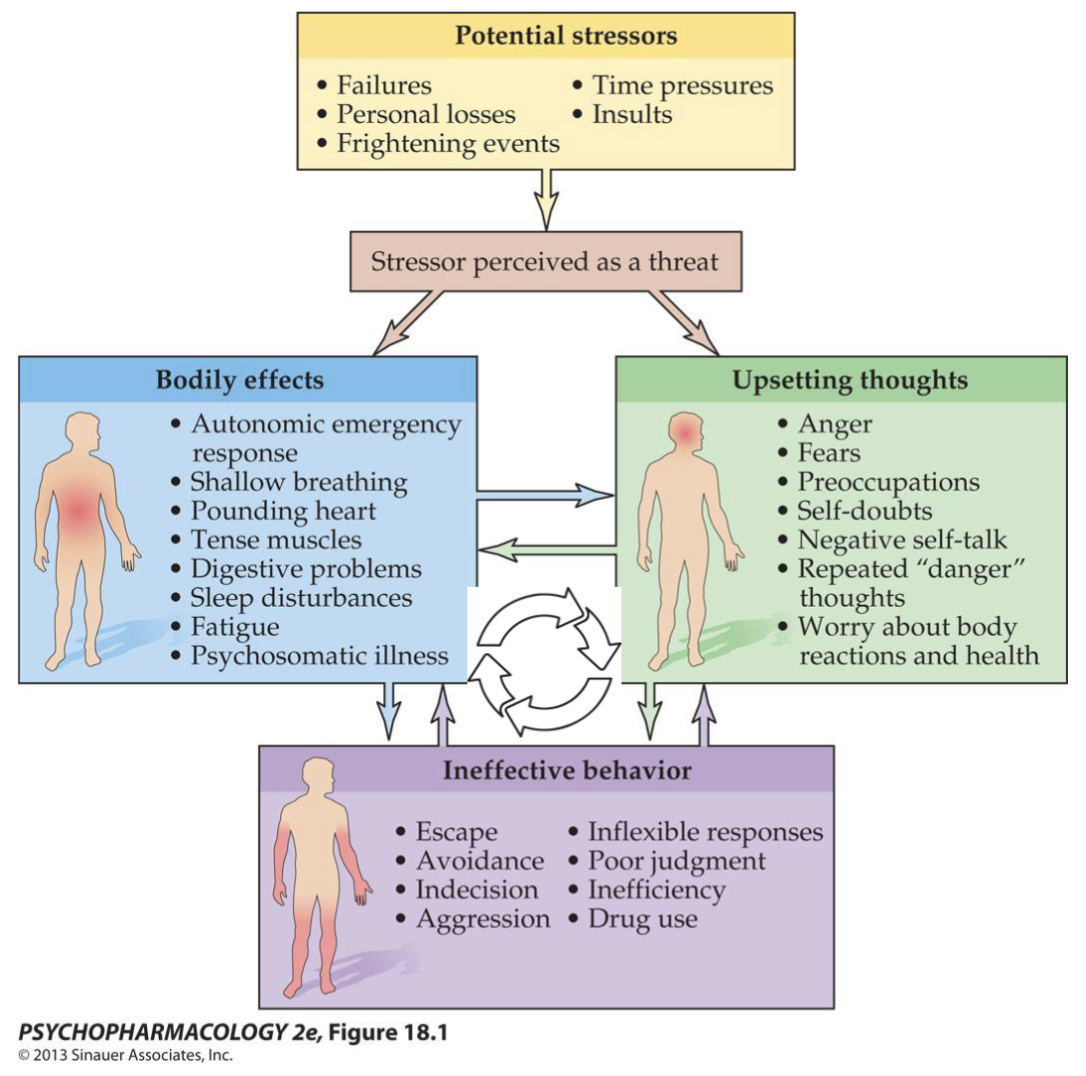
3 Component Model of Anxiety
Physiology: Feelings aspect. Rapid heart rate, shallow breathing, shaking, sense of dread, apprehension, dizziness, muscle tension.
Emotions/thoughts: Cognitive aspect. Overestimation of danger, underestimating ability to cope, catastrophizing, etc. = cognitive distortions
Behaviour: Action aspect. What you do in response to anxiety, which usually includes avoidance (which in turn makes anxiety worse since the situation worsens by avoiding it) or safety-seeking actions.
Neurobiology of Anxiety Disorders
Amygdala: Major component of the emotion-processing circuits. Highly processed sensory/cognitive information from the sensory thalamus (sensory CS/US input which is fast) → sensory and association cortices (PFC/insular cortex; regulatory and evaluative input) → hippocampus. Processing is done by microcircuit processes and the outputs go to a variety of CNS regions to coordinate complex emotional/physiological responses.

Roles of the Extended Amygdala in Anxiety
1. Regulation of fear/anxiety: Processed by distinct amygdala (cluster of different nuclei that can be removed) circuits
2. Formation of emotional memories: Conditioned emotional responses like conditioned fear — environmental stimulus ← aversive stimulus (conditioned vs unconditioned stimulus aka CS vs US)
3. Consolidation of emotional memories: Via reciprocal connections w/ the hippocampus
4. Cognitive control of emotions: Via cortical inputs. Amygdala-PFC connections are important for cognitive control over emotional responses. Anxiety disorders could arise from an imbalance of emotion-generating centers and higher cortical control over them.

NTs regulating Anxiety (list them)
1. Corticotropin-releasing factor (CRF)
2. Norepinephrine (NE)
3. GABA
4. Glutamate
5. Dopamine
6. Serotonin (5-HT)

What is CRF and how does CRF regulate anxiety?
What it is:A neuropeptide. Centrally it mediates both anxiety/ANS responses. CRF released from the hypothalamus during stress → ACTH release via anterior pituitary → glucocorticoids (adrenal cortex) = negative feedback to the brain.
Pro-anxiety: Increases anxiety in animals in multiple anxiety tests + stressful stimuli causes the release of CRF in the amygdala.
CRF1 (corticotropin-releasing factor) Antagonists
Some inhibitors of CRF receptors can help decrease anxiety, like Verucerfont (selective small-molecule antagonist of the CRF type 1 receptor; more resistant to degredation by first pass metabolism). In humans, verucerfont attenuated fear responses: fMRI BOLD signal in response to images of fearful faces.
In rodent models, pretreatment with verucerfont blocked anxiety-like behavior: Stress-induced anxiety, conditioned fear, or stress-induced relapse to alcohol seeking. BUT — …several large clinical trials failed to show the efficacy of CRFR1 antagonists in the treatment of anxiety and depression.
NE role in Anxiety
Adrenergic projection from LC →Amy (and reciprocal GABAergic back)
Increased firing of the LC neurons in response to novel stimuli that signal threat (also reward)
Electrical stimulation of the LC or administration of the α2-autoreceptor antagonist Yohimbine (increases NE release) induces alerting and fear responses.
Humans - yohimbine can produce panic attacks in patients with panic disorder or PTSD.
Clonidine, an α2-autoreceptor agonist, has anti-anxiety effects.
Catapres is mainly used for CV issues but might be used off-label for anxiety, panic disorder, or PTSD.
Beta Blockers for Acute Anxiety (NE + Anxiety)
What are they: The majority of β-adrenergic receptors are located in the periphery. Beta-blockers - calm the physiological signs of acute stress (cardio - BP, HR; motor – shaking; other – sweating). Mainly for situational/performance anxiety.
For anxiety disorders: Some β-adrenergic receptors are found in the brain (e.g. hippocampus) Giving beta-blockers right after a severe trauma may block traumatic memories (in PTSD) by preventing memory consolidation + blocking plasticity necessary for consolidation of fear memories.
Propanolol: A non-selective Beta-adrenergic antagonist originally developed as a CV medication for tachycardia, hypertensions, etc.
GABA’s role in Anxiety
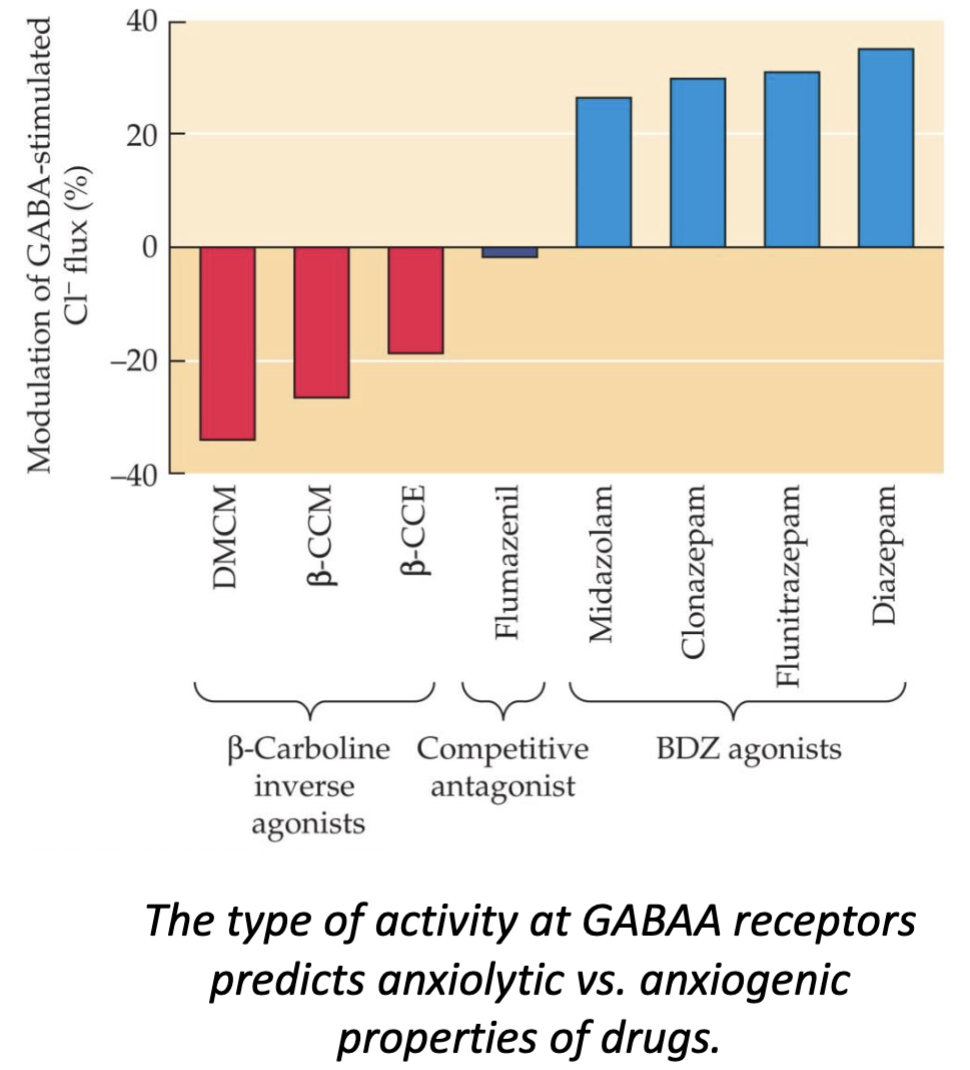
Evidence for being anti-anxiety: BZDs and barbituates reduce anxiety by acting as PAMs on GABAa receptors + inverse GABAa agonists trigger extreme anxiety/panic attacks. GABAa receptors have high concentrations in the frontal cortex and amygdala. Reduced # of GABAa receptors in patients w/ panic disorder vs healthy controls.
Animals vs humans: In animals, differences in “native” anxiety correlate w/ GABAa receptor binding density in anxiety-related brain circuits. In humans, PET scans of patients w/ GAD and panic disorder shower less GABAa receptor binding in the CNS like those in the frontal lobes.
Glutamate’s role w/ anxiety
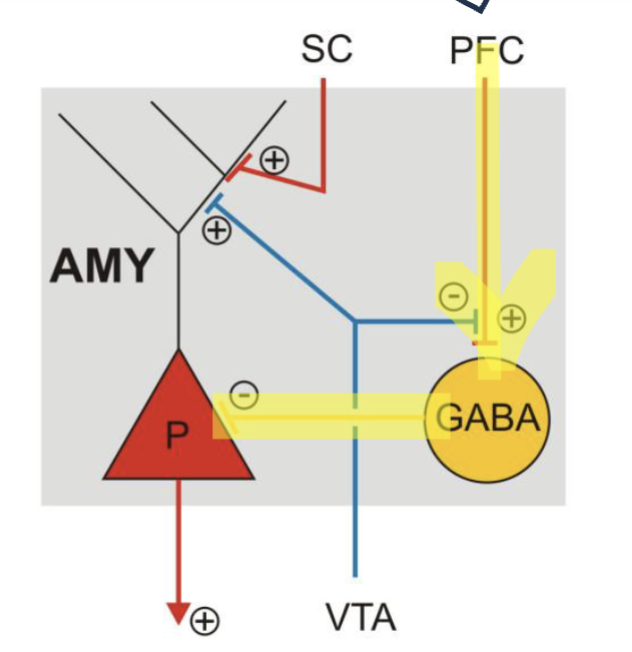
Role: Top-down regulation
Mechanism/PW: Glutamatergic projections from the PFC provide "top-down" control over amygdala activity to suppress excessive amygdala output and thereby inhibit anxiety, fear, and stress-related responses. Also, this input counteracts glutamatergic afferents from sensory cortices (SC) that terminate directly on Amy pyramidal cells.
Anxiety + Dopamine
Role: Modulatory
Mechanism/PW: Significant DA projections from the VTA to the mPFC and limbic regions, including the amygdala. Increased DA release into the amygdala during stress. Intra-amygdala injection of D1 receptor agonists is anxiogenic (antagonists are anxiolytic). DA presynaptically inhibits PFC input but enhances sensory cortical input via a postsynaptic mechanism = DA permits expression of anxiety!!!
How is Anxiety impacted by Serotonin?
Impact: Anti-anxiety (w/ exceptions). Globally enhancing 5-HT function by blocking the reuptake transporter like SSRIs or stimulating 5-HT1A receptors (w/ buspirone, for example) = anxiety reduction.
Mechanism: Not clear. Might dampen LC neuron firing. In the amygdala 5-HT1A is anxiolytic by 5-HT2c are anxiogenic.
Other neurobiological factors in Anxiety Disorders
Genes & environment interact to determine the tendency to express anxiety, such as behavioral inhibition in young children being associated with CRF gene polymorphism → more likely to develop social phobias and panic disorder by adolescence OR environmentally, early exposure to stress (prenatal, early postnatal, early life) = higher risk of developing anxiety disorders later in life
5 Main types of Anxiety disorders
1. Generalized Anxiety Disorder
2. Panic disorder
3. Phobias
4. PTSD
5. OCD
Elaborate on GAD
Individuals show signs of constant worry and continuously predict, anticipate, or imagine dreadful events.
Life is generally stressful; even minor events provoke worry.
The chronic anxiety reduces the individual’s performance on many tasks and decreases pleasure.
Elaborate on Panic Disorder
Acute fear reaction (panic attack) to non-threatening stimulus, accompanied by strong arousal of the sympathetic ANS.
Triggers: environmental cues (reminds stressful events, places of previous panic attacks), unexpected occurrence
Panic disorder - individual experiences both panic attacks and anticipatory anxiety over the possibility of having an attack ina place that is not safe. Anxiety associated with being in an “unsafe” place leads to agoraphobia, a fear of public places, and subsequent avoidance of many common situations (e.g., leaving home).
What is a phobia and how is it treated?
What it is: Persistent fear of an object or situation where an individual commits to great effort (disproportional to the actual danger posed) to avoid situation and often recognizes that fear is irrational.
Treatment: Most phobias are treatable by behavioral desensitization. Start by presenting the fear-inducing stimulus in gradual increments, while learning how to relax/confront the fear during the exposure, or level it up by going exposure therapy in a virtual reality setting.
Elaborate on PTSD
Symptoms: Experience of severely traumatic events (e.g. during war, natural disasters, etc.) - fear but also a sense of helplessness and horror. Nightmares and flashbacks about the event (for years). Sleep disturbances, irritability, avoidance of stimuli associated with the trauma, numbing of emotional responses for many years. Higher probability of suicide attempts, substance abuse and addiction, depression, etc.
Susceptibility: Individual (genetic?) susceptibility: after the trauma, only a portion of individuals develop PTSD, about 10-15%
Elaborate on OCD
Symptoms: Recurring, persistent, intrusive thoughts (obsessions)…of contamination, violence, sex, or religion that the individual often tries to resist - cause feelings of anxiety, guilt, and shame. Related to uncontrolled motor disorder (OCD is sometimes seen in Tourette’s and Parkinson’s). Repetitive actions are behaviors that are “wired in” and are not adequately inhibited by the cerebral cortex.
Compulsions: Compulsions are repetitive rituals to relieve the tremendous anxiety generated by obsessive thoughts
What is a Sedative-Hypnotic Anxiolytic?
Sedatives calm anxiety/reduces excitement (in lower doses) but a hypnotic will induce and maintain sleep in higher doses. They belong to the CNS depressant drug group.
Barbituates vs BZDs drug examples + Characteristics as anxiolytics
Both: Sedative-hypnotic drugs that are also medical anxiolytics that enhance GABAa receptor functions. So-called Z-drugs ike Ambien (zolpidem), Lunesta (eszopiclone), and Sonata (zaleplon) are sedative hypnotics that work by enhancing GABAA receptor function but are not BDZs and are not used as anxiolytics; they are used as sleep aids.
Barbituates: For example, sodium amytal, phenobarbital, pentobarbital.
BZDs: For example, Xanax (alprazolam), Valium (diazepam), Ativan (lorazepam), Klonopin (clonazepam)
Barbituates — Side effects, current usage, effects of repeated use
Barbiturates: The oldest sedative-hypnotics (sodium amytal, Amobarbital - 1923 Germany)
Significant side effects: They induce (REM-less) sleep, cognitive deficits (mental clouding), metabolic tolerance, risk of respiratory depression, physical dependence, abuse potential.
Current usage: now mostly replaced by BDZs in the treatment of anxiety disorders or used in surgical anesthesia, epilepsy control, etc.
Effects of repeated use: Produces tolerance to anxiolytic effects → need higher doses for the same effect. Respiratory depression doesn’t show tolerance so the margin of safety (therapeutic index) is smaller.

Barbituates Mechanism of Action
Bind to the barbiturate site (not the GABA site) = PAM for GABAA receptors and are more potent than BZDs. Increase the duration of channel opening + can open the channel at higher concentrations where they start to act like agonists.

Mechanism of BZDs as Sedative-Hypnotic Anxiolytics
Up to 15 approved in the US and 35 globally for many different uses. Bind to the BZD but NOT the GABA site = PAMs at GABAa receptors. Increases frequency of channel openings but cannot open the channel alone. Because they don’t start acting like an agonist the way barbiturates do, they’re safer.

Sedative-Hypnotics PK/PD
Onset of action: Determined by lipid solubility like BBB permeability. Most oral sedative-hypnotics are lipophilic, allowing rapid absorption and fast entry into the CNS.
Duration of action: Can be changed to be XR depending on route of administration, adding other compounds, etc. There’s some short and some long-acting compounds.
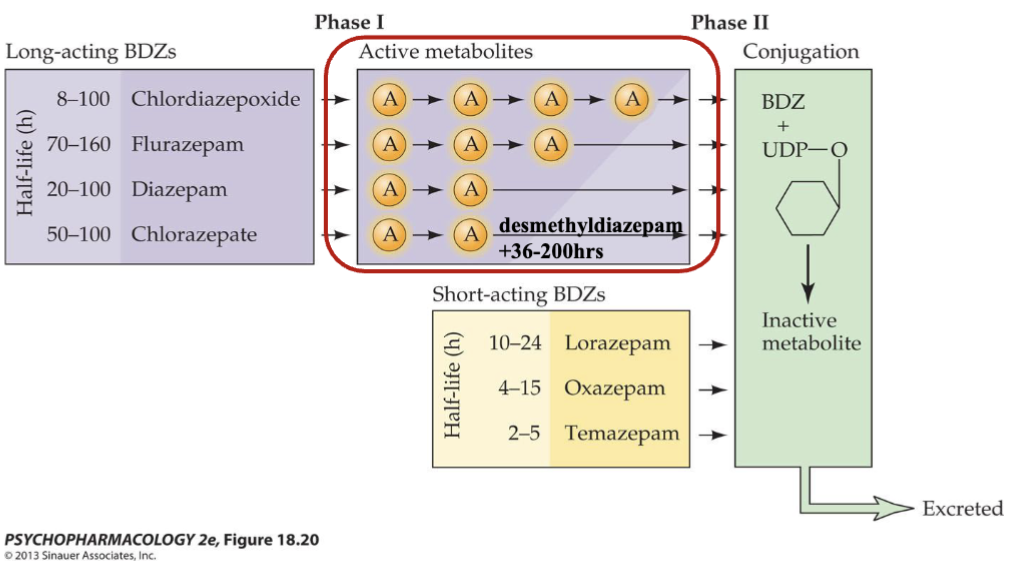
Characteristics/Clinical uses of BZDs beyond Anxiolytics
BZDs cannot be used for deep anesthesia, but are useful for pre-surgical anesthesia, dental work, and other procedures, to relax the patient (Versed, ~3hrs half-life).
Longer-acting BZDs are useful hypnotics to aid sleep. Rohypnol is not legal in the U.S., other countries as a sleep aid; it has become known as a “date rape” drug, especially when combined with alcohol (disinhibition + amnesia).
Also used as muscle relaxants and anticonvulsants; prevent alcohol withdrawal symptoms.
Safety of BZDs
BDZs have a high therapeutic index (Ti) and are considerably safer than barbiturates. At very high doses (alone), they can produce sedation, disorientation, cognitive impairment, and anterograde amnesia, but severe respiratory depression is uncommon. Respiratory depression can occur when combined with other CNS depressants (synergism). Risk of serious or fatal OD (:
Atypical Anxiolytics
Buspirone: Not chemically or pharmacologically related to any sedative-hypnotic drug + different mechanism of action. Originally developed as an antipsychotic but was ineffective → then was found to be useful for anxiolytic impacts and was approved for GAD in 1968. 5-HT1A (inhibitory Gi-coupled) autoreceptor full agonist but a partial agonist at postsynaptic 5-HT1A receptors. Has other effects at D2Rs, etc.
Notes: Many other medications, some approved, others used off-label, to treat anxiety disorders (inconsistent or low-quality evidence). CBD, some anticonvulsants (Gabapentin), antihistamines (hydroxyzine), atypical antipsychotics (quetiapine), MAO inhibitors, beta-blockers…
What other drugs can be used as Anxiolytics?
Antidepressants: Can treat both anxiety + depression (often comorbid) w/ fewer side effects. Not considered habit-forming or prone to abuse. Unfortunately, though — delayed response time of 4-6 wks + paradoxical worsening of symptoms during the few weeks. For example, Sertraline (Zoloft) and Escitalopram (Lexapro) are commonly used for this.
Others: Many other medications, some approved, others used off-label, to treat anxiety disorders (inconsistent or low-quality evidence) CBD, some anticonvulsants (Gabapentin), antihistamines (hydroxyzine), atypical antipsychotics (quetiapine), MAO inhibitors, beta-blockers…
Munguba et al Reading: What is the main goal of the study?
Determine which specific mGluR2-expressing inputs to the BLA mediate the anxiolytic effects of mGluR2 activation, and whether different projections contribute to different dimensions of anxiety. (See graph!)
The study used optical approaches to work out how presynaptic mGluR2 in the basolateral amygdala (BLA) controls anxiety-related behavior in mice.
It compared two mGluR2-rich inputs to the BLA, from the ventromedial prefrontal cortex (vmPFC, which suppresses the BLA’s activity and has computed information) and the posterior insular cortex (pIC, which houses more sensory information).
The headline results: presynaptic inhibition of vmPFC-BLA connections, but not pIC-BLA, gave a long-lasting decrease in spatial avoidance. Inhibiting pIC-BLA connections instead reduced social avoidance and novelty-induced hypophagia without impairing working memory.
The second aim was to establish projection-targeted photopharmacology as a way to map where a drug acts.

Munguba et al Reading: What type of anxiety tests and anxiety parameters are utilized in this study?
OFT: Open field test, spatial avoidance and exploration of novel environments, tracks time spent in the center area (indicative of less anxiety)/entries to the center area and overall distance traveled
EPM: The elevated plus maze measures spatial avoidance/fear of open, elevated spaces by tracking the time spent in the open vs closed arms
NSF: Novelty-suppressed feeding measures novelty-induced hypophagia (conflict between hunger and fear of open, novel spaces) by measuring their latency to feed (time taken for food-deprived mice to initiate eating in a novel arena)
SIT: Social interaction tests measure social avoidance vs sociability by measuring the rodents' social exploration and iinteraction time with a novel mouse
FUAT: The fox urine avoidance test measures a rodents' innate predator-odor fearing and the subsequent exploratory avoidance by measuring how much they explore after being exposed to the predator scent (fox urine)
Munguba et al Reading: What is the photopharmacology methodology used in this study?
Genetic Targeting (SNAP-mGluR2): Researchers genetically express a SNAP-tagged version of mGluR2 (SNAP-mGluR2) on the surface of targeted neurons in specific circuits—such as projections from the ventromedial prefrontal cortex (vmPFC) or posterior insular cortex (pIC) to the basolateral amygdala (BLA).
Covalent Tethering (BGAG12,400): A photoswitchable ligand called BGAG12,400 covalently attaches ("tethers") to the SNAP tag on the receptor.
Reversible Light Switching:
• 385 nm light switches the tethered ligand to photoactivate mGluR2.
• 525 nm light reverses the activation.
Circuit Specificity: Combining genetic receptor tagging with localized light delivery restricts receptor activation to defined projections and time windows, avoiding broad activation across all mGluR2-expressing circuits.Using a ligand that is manipulated by light which allows you to specifically target receptors and circuitry with a temporal aspect as well.

Munguba et al Reading: Can circuit-specific inhibition of mGluR2 reduce anxiety without producing cognitive side effects?
Yes, but only in the pIC→BLA circuit. The study's strongest translational finding is that vmPFC→BLA mGluR2 activation produced reduced spatial avoidance (long-lasting) BUT impaired working memory in the Y-maze.
pIC→BLA mGluR2 activation produced:
increased social interaction
reduced social avoidance
reduced novelty-induced hypophagia
increased exploratory behavior
no impairment in Y-maze working memory performance
In mice, the pIC-BLA circuit looks like a yes for social avoidance and feeding behaviors. Presynaptic inhibition of pIC-BLA connections decreased social avoidance and novelty-induced hypophagia without impairing working memory. The press coverage says the anxiety-reducing effect in the other circuit came with a working memory deficit, which Levitz suggested may underlie cognitive impairment from typical anxiety drugs. The coverage doesn’t name the circuit, but it is presumably vmPFC-BLA.

Munguba et al Reading: What are the biggest methodological or data limitations discussed by the authors, and which limitations were not addressed?
Artificial construct, not an endogenous receptor: SNAP-mGluR2 is not an endogenous receptor. Projection activation was artificial.
Limited to some projections: They focused on vmPFC and pIC inputs. - Other cortical and subcortical BLA afferents may also mediate mGluR2 effects.
Anxiety models were largely acute in otherwise healthy rodents. It did not test chronic stress, trait-anxiety models, or PTSD models.
No disease-state animals. Thus, translational relevance to clinical anxiety disorders remains uncertain.
Sex differences largely unexplored although initial LY37 experiments included females, most mechanistic studies were conducted primarily in males.
The possibility of sex-dependent circuit organization is not addressed
Clinical feasibility The paper suggests projection-specific drug targeting may be therapeutically useful, but provides no realistic strategy for selectively targeting pIC→BLA synapses in humans.
What are the two main types of affective disorders?
MDD: Major depressive disorder aka major depression, clinical depression, or unipolar depression. Recurring episodes of dysphoria with negative thinking.
BD: Bipolar disorder, which consists of mood swings from depression to mania.
Characteristics of affective disorders
Characteristics: According to the DSM-5, you must have 5+ symptoms in the same 2-week period, symptoms cause significant distress/impairment in important areas of functioning, symptoms aren’t attributable to physiological effects of a substance or other medical conditions, symptoms aren’t better explained by the schizophrenia spectrum or other psychotic disorders, and no history of manic or hypomanic-like episodes. Altered sleep rhythms are among the most common and persistent symptoms in MDD where sleep onset is delayed and REM periods get shorter as the night goes on (instead of longer). Sleep deprivation that is intentional or associated w/ events like jet lag or late-night studying can trigger an episode of mania in BD.
NOT an affective disorder: Having the occasional blues or being a little down, reactive/situational depression (unless symptoms are disproportionate to the event or significantly prolonged), which serves as an exclusion for clinical diagnosis.

BD vs MDD mood swings
Bipolarity is a swing from mania to dysphoria, whereas depression only has the downward swings. See graph!

Clinical Progression Model (for depression)
It is a progressive disorder, meaning it starts out as not qualifying as a disorder until things worsen and it eventually becomes one. See graph!

Affective Disorder Risk Factors
Comorbidity: Overlaps exist with anxiety (usually social anxiety that precedes depression), alcohol dependence, and depression for BD.
Gender: Risks for depression are slightly higher in women.
Genes/environment: The likelihood that the other twin also develops a mood disorder is 65% for monozygotic/identical twins but only 20% for dizygotic/fraternal twins. Intense environmental stress and anxiety often precede depressive episodes. Altered patterns of stress/hormone levels are found in depressed patients quite often. Early life traumas can alter the set point for the HPA axis, making it permanently over-responsive and increasing risk for later depression, anxiety disorders, and alcohol abuse.

Endocrine differences (affective disorder risk factors)
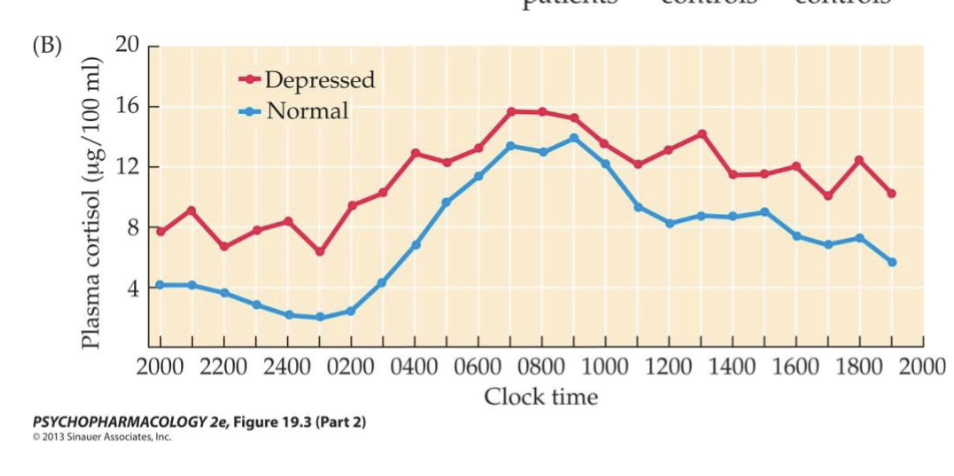
1. Most consistent neuroendocrine abnormality in depressed patients is an abnormal secretion of cortisol (it is much higher in depressed patients even compared to both psychiatric and normal controls)
2. Depressed patients have an abnormal circadian rhythm in cortisol secretion (see graph)
Animal models of depression (list the types)
Hormonal models
Early maternal separation
Chronic unpredictable stress
Social isolation stress
Chronic social defeat
Learned helplessness
Olfactory bulbectomy
Neuroinflammation model
Sleep deprivation tests for animal models of BD
Rats kept on a small platform surrounded by water for 72hrs so they don’t sleep because once they sleep the water/possibility of drowning wakes them up. Then they return to a home-cage but remains awake for about 30 minutes and demonstrates manic-like symptoms including insomnia, hyperactivity, irritability, aggressiveness, hypersexuality, and stereotypical behaviors.
FST — Forced Swim Test
Rodents swim in a cylinder from which there is no escape. After initial attempts to escape, the animal assumes a posture reflecting a sense of futility (behavioural despair); immobility is reduced by antidepressants.

TST — Tail Suspension Test
Rodents are suspended by the tail inside a chamber and the duration of their escape-oriented struggling versus passive immobility is recorded. Immobility is reduced by antidepressants

Validity of Affective Disorder Animal Models
Validity types:
Face validity: The similarity between what is observed in the animal model and what is observed in humans/patients (similarity of behavioral signs and symptoms).
Construct validity: This is about etiology, e.g. is there a strong correlation in neural mechanisms between the animal model and patients with a disorder?
Predictive validity: How well an animal model can predict known/unknown aspects of the disease in humans (e.g., therapeutic outcomes).
Conclusions of validity: An appropriate animal model of human depression should, as much as possible, meet the following criteria:
Strong phenomenological similarities and similar pathophysiology (face validity)
Comparable etiology (construct validity)
Common treatments (predictive validity)

Monoamine Hypothesis of Depression (origins + supporting evidence)
Origins: Reserpine is aVMAT blocker that depletes catecholamines from peripheral sympathetic nerve endings = sympatholytic agent that lowers blood pressure.
Alkaloid isolated in 1952 from the root of Rauvolfia serpentina (Indian snakeroot) had been used for centuries in India for the treatment of schizophrenia, snake bites, etc.
Instrumental in discovering the role of dopamine in PD. Dr. Arvid Carlsson (who later got a Nobel Prize) observed that the akinetic state induced by reserpine in rodents (catalepsy) which was then alleviated by L‐DOPA (precursor to dopamine).
Used to be the first line of treatment for hypertension, but psychiatric complications including sadness, fatigue, and suicidal ideation in hypertension patients treated with R.
Supporting Evidence: A lot more evidence from reserpine!
R-induced a depression-like state in patients; antihypertensive us declined.
R-induced depressive and anhedonic-like behaviors in experimental animals
R-induced symptoms disappear after discontinuation
Reduction of DA, NE, and 5-HT levels, as well as depression-like states, could be reduced by monoamine oxidase inhibitors (MAOi)
Manic-like activity produced by amphetamine and cocaine is correlated with enhanced release or blocked uptake of monoamines.
Serotonin Hypothesis of Depression
Origins: From the monoamine hypothesis, people began to hone in on specifically serotonin.
Supporting Evidence:
Rats w/ depleted 5-HT are irritable, aggressive, and overly sensitive to pain; altered patterns of eating and satiety.
Low 5-HIAA (5-HT metabolite indicative of decreased function of 5-HT neurons) has been found postmortem in brains of suicide victims and in the CSF of depressed patients.
Low blood level of Trp (5-HT precursor) - another measure of serotonergic function frequently found in depressed patients.
Genetic variations in the SERT gene (short/long allele): Reduced levels and function of SERT in some cases of depression. Only in association with increased stressful life events.
Receptors - 5-HT2: Increased density of postsynaptic 5-HT2 receptors – in unmedicated individuals with mood disorders (compensatory response to low serotonergic activity). Chronic antidepressant treatment leads to a fairly consistent downregulation of 5-HT2 receptors.
Experiment: Tryptophan depletion challenge: subjects consume a tryptophan-deficient amino acid cocktail that transiently reduces 5- HT levels in the brain by 70-80 %. What happens?
a) Non-medicated depression patients in remission = ?
b) Individuals with family history of depression = ?
c) Healthy subjects = ?
a) Relapse of depressive symptoms because even though they are medication-free and feeling well, these individuals experience a temporary return of clinically significant low mood and depressive symptoms that resolve once normal tryptophan levels return.
b) Depressed mood because never-depressed people with a positive family history (first-degree relatives with depression) experience noticeable, subclinical drops in mood, indicating an inherited vulnerability in their serotonergic system.
c) Small changes in mood but not depression without a personal or familial history of depression show little to no change in mood, demonstrating that acutely lowering serotonin alone is not enough to cause depression in a resilient brain.
PET Brain Imaging in Affective Disorders
Increased metabolic activity in the OFC and amygdala in depressed patients. Correlates w/ severity of depression and returns to normal after treatment by antidepressants. Might be due to an effort to control unpleaseant thoughts/events (top-down).
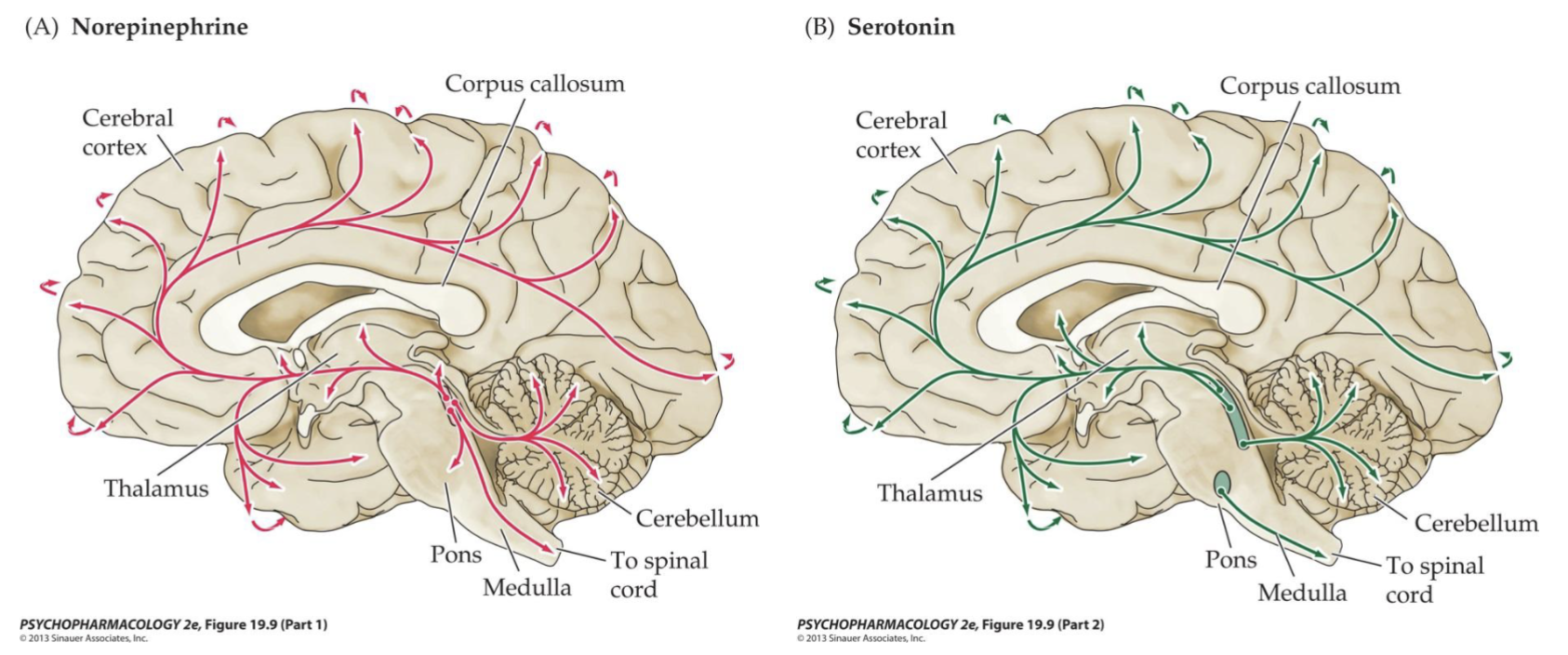
Serotonin-Norepinephrine Hypothesis of Depression
Origins:
Supporting Evidence:
Dysregulated functional interactions between NE and 5-HT systems
Common antidepressants downregulate 5-HT2 & beta-adrenergic receptors
5-HT agonists can stimulate the NE system, causing downregulation of beta-adrenergic receptors
Glucocorticoid hypothesis of depression
Origins: Stress-related neuroendocrine abnormalities in depression. Might be related to plasticity, which takes time, which is why some treatments could take a while.
Supporting evidence: Depressed patients have abnormally high CRF secretion and GC levels. Glucocorticoid levels remain high, hippocampal neurons are damaged and no longer respond (loss of negative feedback inhibition over HPA). Damage: A) decreased dendritic branches and spines in the PFC and hippocampus. B) Formation of new hippocampal cells (neurogenesis) is inhibited. (McEwen)

Issues w/ All Current Affective Disorder Therapies (effectiveness, the patient to patient basis, and administration)
Effectiveness: Clinical trials show that not one specific drug is more effective than any other, and there is no way to predict which patient will respond to a particular drug.
Patient to patient basis: Each patient must undergo trials to find a drug that optimally balances effectiveness and side effects.
Administration: All (except ketamine) require chronic administration, suggesting that the clinical effect depends on compensatory changes in function that require time to develop.
What is the course of MDD?
See graph!

MAOis as an Affective Disorder Treatment
Mechanism of action: See graph!
Details: 1950’s iporoniazid is a MAOi that had been used in tuberculosis treatment. Side effects can include the following:
Minor: Changes in BP, sleep disturbances, overeating → weight gain
Major: Drug interactions w/ NE-enhancing drugs like cold meds, anti-asthma drugs, amphetamines, etc.
Inhibition of MAO in the liver: MAO normally deaminates tyramine, a naturally occurring amine, by-product of fermentation in cheeses, certain meats, pickled products, and other foods → elevated tyramine releases NE = dangerous increases in blood pressure (tyramine pressor response, hemorrhage, death; rare). MAOi also inhibit P450 (augmented effects of drugs e.g., barbiturates, alcohol)

TCAs as an Affective Disorder Treatment
What it is: Tricyclic antidepressants, named for their 3-ring structure. Mixed SERT and NET effects but they are inhibitors.
Side Effects: Many, which include the following:
Histamine receptor blockade causes sedation and fatigue that limit the drugs’ usefulness.
Anticholinergic effects include dry mouth, constipation, urine retention, dizziness, confusion, impaired memory, and blurred vision.
α1 blockade, coupled with NE reuptake blockade, leads to potentially dangerous cardiovascular effects, including orthostatic hypotension, tachycardia, and arrhythmias.
Overdose causes cardiovascular depression, delirium, convulsions, respiratory depression, and coma.
Heart arrhythmias may produce cardiac arrest.
TCAs have a low therapeutic index: fatalities occur at approximately 10x the normal dose.
Second-generation ___ are designed to be more ___ and thus have ___ side effectors
Antidepressants; selective; fewer
SSRI Side Effects
Serotonin Syndrome: Potentially-life threatening effects when combined w/ other serotonergic agonists/drugs that interfere w/ metabolism of SSRIs. Symptoms include severe agitation, disorientation, ataxia, muscle spasms, fever, shivering, elevated BP/HR.
Physical dependence: Withdrawal symptoms may last multiple weeks.
Third-generation antidepressants
What it is: Currently in the development/testing stages. Lot’s of focus on CRF receptor antagonists because they arget the brain's stress response directly (CRF = hormone/neuropeptide that triggers the HPA axis during stress) and excess levels of it are linked to depression. Also some work done on 3-rd generation antidepressants like NMDA receptor antagonists such as ketamine because they act rapidly instead of taking weeks (like traditional antidepressants) and they promote rapid synaptic growth.
Miller, Raison 2023: “Despite the massive investment by funding agencies as well as the pharmaceutical industry in the development of drugs to block CRF (and other HPA axis hormones including cortisol), they failed to exhibit any meaningful efficacy in clinical trials for major depression, anxiety disorders, or PTSD…”
Ketamine mechanism of action
K reverses the spine synapse deficits via a burst of glutamate, via disinhibition of GABAergic interneurons. Increase in AMPA via BDNF-TrkB-mTORC1 signaling, increases synthesis of synaptic proteins required for new spine formation. The antidepressant response to a single dose of ketamine persists for approximately 7d in humans and rodents before relapse. The new spines induced by ketamine also remain for a similar length of time, and the loss of spines could be related to relapse and reversal of antidepressant responses.

Lithium Carbonate as an Affective Disorder Treatment
Benefits: Most effective medication for BD. Eliminates or reduces manic episodes without causing depression or producing sedation; no effect on healthy individuals It is particularly effective in reducing suicide in BD.
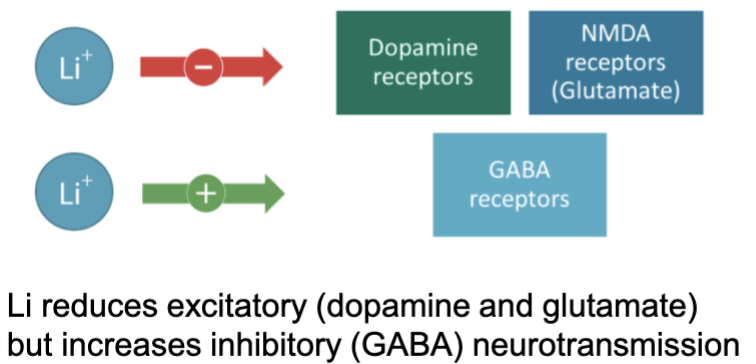
Mechanism: Not entirely clear, but some theories do exist. Elevates brain tryptophan, 5-HT, and 5-HIAA (the 5-HT metabolite) and increases 5-HT release. Reduces catecholamine activity, enhancing reuptake and reducing release. Moderation of DA/Glu vs GABA? Since it is an ion, it likely has a multitude of effects.
Carbamazepine: A medication used for epilepsy and neuropathic pain, also as a second-line gent in BD. Mechanism – sodium channel blocker
Drinking water + Lithium (?)
Studies of drinking water in. Texas found: inverse correlation between suicide rates and lithium (Dawson et al., 1972; Schrauzer and Shrestha, 1990; Hudak, 2016; Fajardo et al., 2018); a max. concentration of 700 μg/L.
Meta-studies from studies in nine countries on three continents (Ishii and Terao, 2018; Brown et al., 2018; Barjasteh-Askari et al., 2020) - note health effects related to lithium in drinking water that include inverse relations with depression, mortality from Alzheimer's, suicide rates, and violent crime rates; with a max. concentration of 219 μg/L.

What was the impact of the first ever antipsychotic medication Thorazine?
It helped a lot of patients be treated from places that were not a hospital. However, people still remained “locked up” (like from the article “locked up, but where?” which showed that there was a dip in both prison/jail and mental hospital occupancy for a while but then as mental hospital occupancy decreased, it increased for prisons/jails) so they weren’t 100% effective societally for the time being.
Compare the mechanisms of action, therapeutic uses, advantages, and limitations of anxiolytic medications, including benzodiazepines, barbiturates, buspirone, SSRIs, β-adrenergic antagonists, and other commonly prescribed treatments.
BZDs: Benzodiazepines bind to an allosteric site on GABA-A receptors to increase the frequency of chloride channel opening, thereby potentiating inhibitory GABAergic neurotransmission. They are used clinically for the short-term relief of acute severe anxiety, panic attacks, acute agitation, alcohol withdrawal, status epilepticus, and procedural sedation. Their primary advantages are a rapid onset of action (within minutes to hours), high efficacy for acute distress, and broad utility in emergencies, whereas their major limitations include high potential for tolerance, physical dependence, misuse, severe withdrawal, sedation, psychomotor impairment, and life-threatening respiratory depression when combined with alcohol or opioids.
Barbituates: Barbiturates bind to a distinct allosteric site on GABA-A receptors to prolong the duration of chloride channel opening—and directly activate the receptor at high doses—producing widespread central nervous system depression. Because of safety concerns, they are rarely used for anxiety today and are instead reserved for refractory status epilepticus, anesthesia induction, and select refractory withdrawal protocols. While they offer potent, rapid sedation and strong anticonvulsant effects, they are severely limited by a narrow therapeutic index with a high risk of fatal respiratory arrest in overdose, severe physical dependence, life-threatening withdrawal, and potent induction of hepatic CYP450 enzymes that causes numerous drug interactions.
Buspirone: Buspirone acts primarily as a partial agonist at serotonin 5-HT1A receptors (with weak affinity for dopamine D2 receptors) to modulate serotonergic tone without affecting GABA receptors. It is used for the long-term management of generalized anxiety disorder (GAD) and as an augmenting agent in major depressive disorder. Its key advantages are the absence of sedation, cognitive impairment, muscle relaxation, abuse potential, physical dependence, and withdrawal symptoms, though it is limited by a 2–4 week delayed onset of action, ineffectiveness for acute panic attacks or immediate anxiety relief, and the need for multiple daily doses.
SSRIs: Selective serotonin reuptake inhibitors (SSRIs) block the presynaptic serotonin transporter (SERT) to increase synaptic serotonin concentrations, triggering downstream receptor desensitization and neuroplasticity over time. They serve as first-line, long-term treatments for generalized anxiety disorder, panic disorder, social anxiety disorder, obsessive-compulsive disorder (OCD), post-traumatic stress disorder (PTSD), and comorbid depression. Their main advantages include being non-addictive, safe for chronic maintenance, broadly effective across anxiety and mood conditions, and low in overdose lethality, whereas their limitations include a delayed therapeutic onset of 4–6 weeks, potential initial jitteriness or worsened anxiety during the first 1–2 weeks, sexual dysfunction, gastrointestinal side effects, and discontinuation syndrome if stopped abruptly.
β-adrenergic antagonists: Beta-adrenergic antagonists (beta-blockers, such as propranolol) competitively block peripheral—and, for lipophilic agents, central—beta-1 and beta-2 adrenergic receptors to blunt sympathetic nervous system responses to norepinephrine and epinephrine. They are primarily used on an as-needed basis for situational or performance anxiety (such as public speaking) to control physical autonomic symptoms like tachycardia, tremor, and sweating. Their advantages include rapid relief of somatic symptoms without causing cognitive clouding, sedation, or dependence, but they are limited by their inability to relieve the psychological or cognitive worry of chronic anxiety disorders, side effects such as hypotension, fatigue, and dizziness, and contraindications in asthma, severe bronchospasm, and bradycardia.
Others: Other commonly prescribed anxiolytics include SNRIs (such as venlafaxine and duloxetine), gabapentinoids (pregabalin and gabapentin), and hydroxyzine. SNRIs inhibit both serotonin and norepinephrine reuptake for non-addictive, first-line chronic management of GAD, panic, and social anxiety, though they carry discontinuation symptoms and dose-dependent blood pressure increases; gabapentinoids bind alpha-2-delta subunits on voltage-gated calcium channels to reduce excitatory neurotransmitter release, offering faster relief for GAD than SSRIs without sexual side effects, but are limited by sedation, dizziness, and some misuse potential; and hydroxyzine blocks central histamine H1 receptors to provide rapid, non-habit-forming relief for acute anxiety and insomnia, though it causes marked drowsiness and anticholinergic side effects.
Focus on benzodiazepines, barbiturates, and serotonergic anxiolytics (e.g., buspirone and SSRIs) with respect to their mechanisms of action, onset of therapeutic effects, clinical uses, efficacy, adverse effects, abuse liability, and overall safety profiles in the treatment of anxiety disorders.
BENZODIAZEPINES (e.g., Lorazepam, Alprazolam, Diazepam)
Mechanism: Bind GABA-A receptors to increase the frequency of chloride channel opening (requires endogenous GABA).
Onset: Fast (minutes to hours).
Clinical Use and Efficacy: High efficacy for acute anxiety, panic attacks, and short-term bridging; limited long-term due to tolerance.
Adverse Effects: Sedation, memory impairment, ataxia, falls, and synergistic respiratory depression with opioids or alcohol.
Abuse and Safety: Moderate-to-high abuse and dependence risk with severe withdrawal (including seizures); safer than barbiturates in monotherapy overdose, but dangerous when combined with other depressants.
BARBITURATES (e.g., Phenobarbital, Secobarbital)
Mechanism: Bind GABA-A receptors to increase the duration of chloride channel opening (directly open channels at high doses).
Onset: Fast (minutes to hours).
Clinical Use and Efficacy: Clinically obsolete for anxiety; restricted mainly to refractory seizures, anesthesia, and severe intracranial pressure.
Adverse Effects: Profound sedation, respiratory and cardiovascular collapse, and strong hepatic CYP450 enzyme induction (many drug interactions).
Abuse and Safety: High abuse and dependence risk, life-threatening withdrawal, and a narrow therapeutic index with high fatal overdose risk.
SEROTONERGIC ANXIOLYTICS (SSRIs and Buspirone)
Mechanism: SSRIs block serotonin reuptake (SERT); buspirone is a 5-HT1A partial agonist.
Onset: Delayed (2 to 6 weeks for full therapeutic effect).
Clinical Use and Efficacy: SSRIs are first-line for chronic anxiety (GAD, panic disorder, social anxiety); buspirone is used for GAD (ineffective for panic).
Adverse Effects: SSRIs cause GI upset, initial jitteriness, and sexual dysfunction; buspirone causes dizziness, headache, and nausea.
Abuse and Safety: Zero abuse liability, no sedation or respiratory depression, and a wide therapeutic index (SSRIs require gradual tapering to avoid discontinuation symptoms).
Interpret experimental and clinical evidence linking alterations in serotonin, norepinephrine, dopamine, cortisol, and neurotrophic signaling to depressive symptoms and vulnerability to mood disorders.
Serotonin: Reduced serotonergic transmission—evidenced by acute tryptophan depletion studies triggering transient depressive relapse in vulnerable individuals and altered 5-HT receptor/transporter binding in neuroimaging—is linked to depressed mood, anxiety, impulsivity, and emotional dysregulation.
Norepinephrine: Dysregulated noradrenergic signaling—demonstrated by catecholamine depletion studies, altered alpha-2 adrenergic receptor sensitivity, and the clinical efficacy of norepinephrine reuptake inhibitors—contributes to fatigue, impaired concentration, psychomotor retardation, and diminished stress resilience.
Dopamine: Blunted mesolimbic dopaminergic signaling—supported by neuroimaging showing reduced striatal dopamine transporter/receptor binding and reward-processing deficits—is closely tied to anhedonia, amotivation, and reduced anticipatory pleasure.
Cortisol: Hyperactivity of the hypothalamic-pituitary-adrenal (HPA) axis—shown through elevated basal cortisol, impaired dexamethasone suppression, and chronic stress models—drives neuroendocrine vulnerability, cognitive impairment, and sleep/appetite disturbances in depression.
Neurotrophic signaling: Decreased brain-derived neurotrophic factor (BDNF) expression and impaired TrkB receptor signaling—observed in postmortem brain tissue, reduced serum BDNF levels, and stress-induced hippocampal atrophy—compromise synaptic plasticity and neurogenesis, heightening vulnerability to recurrent mood episodes.
Explain and compare the pharmacological treatment of bipolar disorder, including the therapeutic actions of lithium and other mood stabilizers, and their effects on serotonergic, dopaminergic, glutamatergic, and GABAergic neurotransmission
Lithium: Lithium is a cornerstone treatment for acute mania, long-term maintenance, and suicide risk reduction, though it has a narrow therapeutic window requiring blood-level monitoring and carries renal, thyroid, and tremor risks. At the neurotransmitter level, lithium enhances serotonergic transmission by boosting serotonin synthesis, release, and receptor sensitivity (such as 5-HT1B), which supports mood stabilization and anti-aggressive effects. It dampens hyperactive dopaminergic signaling by inhibiting depolarization-evoked dopamine release and downstream G-protein/intracellular cascades rather than directly blocking receptors, helping curb mania. For excitatory and inhibitory balance, lithium reduces excessive glutamatergic activity by increasing synaptic glutamate reuptake and downregulating NMDA receptor activity, while simultaneously enhancing GABAergic inhibitory tone by promoting GABA release and receptor function.
Others: Other mood stabilizers—primarily anticonvulsants like valproate, lamotrigine, and carbamazepine—offer distinct clinical profiles: valproate and carbamazepine excel in acute mania and mixed episodes, whereas lamotrigine is preferred for maintenance and preventing bipolar depression without causing significant sedation or weight gain. Their neurotransmitter actions differ markedly from lithium's broad intracellular modulation. Valproate and carbamazepine strongly potentiate GABAergic neurotransmission by increasing GABA synthesis, inhibiting GABA breakdown, or enhancing GABA-A receptor activity to calm neuronal hyperexcitability. Conversely, lamotrigine (and to a lesser extent carbamazepine) inhibits voltage-gated sodium channels to suppress excessive presynaptic glutamatergic release, reducing excitotoxicity and depressive relapse. Compared to lithium or atypical antipsychotics, anticonvulsant mood stabilizers have weaker direct effects on dopaminergic and serotonergic systems, though valproate and carbamazepine can indirectly dampen dopamine turnover during mania and modestly modulate serotonin levels to support affective stability.
Describe the neurobiological mechanisms underlying the rapid antidepressant effects of ketamine, including NMDA receptor antagonism, glutamatergic signaling, BDNF release, synaptic plasticity, and mTOR-mediated synaptogenesis.
[FINISH HERE]
What is the most common phobia? Expand on it.
The most common is social phobia, which is an extreme fear of being evaluated or criticized by others. Sufferers tend to avoid most interpersonal situations or, if unavoidable, suffer extreme anxiety, which may take the form of a panic attack.
MDD vs BD Brain Scans show …
MDD: Hyperactivity in the default mode network (linked to self-referential thought/persistent rumination), hypoconnectivity to the central executive network (dorsolateral prefrontal/parietal areas = executive control deficits) and diminished activation in the ventral striatum + ventromedial PFC (correlated w/ anhedonia).
BD: Disrupted communication w/ the fronto-limbic dysregulation (emotional regulation) and limbic structures like the amygdala and hippocampus (emotional reactivity), structural/functional shifts in loops related to mood oscillations cause cyclign in manic/hypomanic and depressive episodes, plus structural progression like increased white matter/glial changes associated w/ multiple-episode progression compared to the first.
Hormonal models of animal depression
Dysregulation of the hypothalamic–pituitary–adrenal (HPA) axis = chronic administration of corticosterone. Researchers administer glucocorticoids—such as corticosterone in rodents—or alter glucocorticoid receptor activity to recreate overactive or dysregulated hypothalamic-pituitary-adrenal (HPA) axis signaling linked to severe or stress-related depression.
Early maternal separation (animal model of depression)
Subjecting pups to between 3 and 6 h of maternal separation during the first postnatal weeks. This produces significant levels of stress in the offspring, generating long-lasting consequences. Breaks the stress-response brake, stunts brain growth, leads to NT imbalance, and early neglect changes how how stress-related genes are expressed without altering the DNA sequence itself, explaining why childhood trauma creates a lifelong vulnerability to depression.
Chronic unpredictable stress (animal models of depression)
Exposing animals to a rotating, random schedule of mild stressors over several weeks to simulate the cumulative toll and stress on mood. Tested with sucrose preference test, tail suspension, forced swim, and their body weight/food intake/grooming conditions/sleep patterns/exploratory activity is also measured. CUS alters the HPA’s signaling, neuroinflammation, and brain circuits involved in mood/reward.
Social isolation stress (animal models of depression)
Isolating animals in for weeks, usually during adolescence. Tested via tail suspension and forced swim (longer periods of immobility), reduced sucrose preferences in the sucrose preference test (measures anhedonia), and less exploratory behaviour in open field or social interaction tests. Can be used to see if antidepressant treatments reverse the biological changes that ensue (changes in monoamine NTS and the HPA axis) to see if those pharmacological treatments work.
Chronic social defeat (animal model of depression)
Exposing an animal to an aggressive and dominant conspecific, which generally attacks and defeats it. A test subject could be placed into the cage of an aggressor for daily sessions and after their physical defeat will be subjected to ongoing stress w/o physical attacks due to a divider and will be paired with a different aggressor each day so it' can’t habituate to a single opponent. Then measures social avoidance (time spent near a novel aggressor behind a mesh enclosure vs cage corners), anhedonia (reduced reward sensitivity in sucrose preference tests), and shows reduced exploratory activity in anxiety tests. Female subjects have low aggressiveness and difficult to induce confrontations.
Learned helplessness (animal models of depression)
Is based on inescapable, uncontrollable acute exposure to an aversive stimulus (usually foot shocks). Over time they LEARN to be HELPLESS because of this and even in the situation where they are in control of the situation and can make a safe escape, often will not due to their past history.
Olfactory bulbectomy (animal models of depression)
In rodents, the olfactory system forms part of the limbic system; bilateral surgical removal of OB triggers a set of behavioral, neuroendocrine, and physiological changes that mimics human depression. Studies rodents afterwards in open-field activity (usually increased when in a novel, bright area instead of lethargy), learning/memory deficits (impaired performance on passive avoidance, novel object recognition, and maze tests), and stress/reward changes (heightened stress sensitivity, reduced preference for sweet rewards, etc,)
Neuroinflammation model (animal models of depression)
The relationship between depression and inflammation has been well established. Lipopolysaccharide (LPS) injection triggers immune activation and measures resulting depressive-like behaviours + molecular brain changes and responses to treatments. This is better since animals cannot report feelings like sadness or hopelessness, scientists rely on observable behavioral proxies alongside biological markers.
Animal models of BD (overall tend to be limited)
Elevated plus maze, open-field test, light-dark box test, and marble-burying test for anxiety-like behaviours. To study depressive-like behaviours you can give them tail suspension, forced swimming, and sucrose preference assays (measures anhedonia - an inability to experience pleasure from activities usually found enjoyable - since normal mice would prefer the sucrose whilst anhedonic mice have decreased preference.
The Lobotomist Documentary: What was the original rationale and intended goal of the lobotomy procedure?
Rationale/Goal: The original rationale for lobotomies was to relieve overwhelming emotional agitation and allow institutionalized patients to return home to normal lives. Especially in a time where mental health treatment wasn’t fully understood/was still in development, this was initially seen as a massive breakthrough before it became clear how terrible the results were for many patients. Wanted to empty asylums, streamline access (transorbital ice pick method was under 30 minutes), and to restore their daily function w/o simply sedating them.
Procedure: For example, Elle Ionesco (housewife, mother) who presented as aloof and with suicidal tendencies visited Dr. Freeman and never mentioned suicide again after the transorbital lobotomy w/ electroconducive shock therapy → unconsciousness → ice pick under the eyelids and wiggle around in the brain. The goal was to fix neural pathways (improperly wired circuits between the frontal lobes and deeper brain structures) and to interrupt emotional feedback (by severing white matter fibers) based on observations of primates and other injuries in humans at the time.
The Lobotomist Documentary: Which psychiatric disorders or diagnoses were most commonly treated with lobotomy?
Diagnoses/disorders: Agitated depression, schizophrenia, dementia, aggressive/violent behaviour, extreme anxiety/OCD, and psychosis
How it would be treated: A lot of procedures at the time were things we’d consider unethical today. For example, shock therapy which could subdue a patient for some time. There was also physical restraints, hydrotherapy (ice baths but worse), and psychoanalysis (talk therapy; but it was not effective at the time).
The Lobotomist Documentary: What were the short-term consequences of the procedure for patients?
Short term: Placidness (calmer expressions, no more intense anxiety, etc), severe black eyes/headaches, brain hemorrhages killed some patients, rapid discharge from institutions (which was a main goal), and early relapse.
Reduced agitation and emotional distress: Many patients became calmer and less anxious, which was initially interpreted as a therapeutic benefit.
Temporary improvement in disruptive behaviors: Some individuals showed reductions in aggression, hallucination-related distress, obsessive symptoms, or severe agitation.
Surgical complications: As with other brain surgeries of the era, patients faced risks of infection, hemorrhage, seizures, and occasionally death.
Acute cognitive and emotional changes: Confusion, lethargy, disorientation, and impaired concentration were commonly observed after the procedure.
The Lobotomist Documentary: Many of the conditions treated with lobotomy can now be managed with modern psychiatric medications. For them, find:
a) Two medications currently used to treat these conditions (FDA-approved). = Name them (2 pts)
b) For the two chosen meds, describe the primary mechanisms of action (What is the target? What type of ligand is it? What are the consequences for neurotransmitter levels?). = Write a short paragraph, 1/4 page max. (4 pts)
c) How these treatments compare with historical approaches such as lobotomy. = Write a short paragraph comparing efficacy and safety, 1/4 page max. (4 pts)
Shizophrenia: First-generation antipsychotic called Thorazine that ended the era of lobotomies. FDA approved today for schizophrenia and bipolar mania. Chlorpromazine (Thorazine) is a competitive antagonist at postsynaptic D2 receptors in the mesolimbic pathway to increase DA neurotransmission to reduce hallucinations, delusions, and severe agitation. Also has sedative effects due to acting as a 5-HT2A and alpha1-adrenergic receptors. When introduced, it achieved an effect without damaging brain structure which made is safer than lobotomies despite it's own safety issues (low BP, movement disorders, etc.). Reversible effects and dose-adjustable. Olanzapine (Zyprexa) and Haloperidol (Haldol) work in similar manners with Olanzapine being a blocker at D2 and 5-HT2A receptors and Haloperidol being a competitive antagonist of D2 receptors.
MDD: Sertraline (Zoloft) and Bupropion (Wellbutrin) are used for MDD. Setraline is an SSRI and allosteric inhibitor that targetings SERT to prevent reabsorption of it into the presynaptic neuron. Raises concentrations in the cleft to enhance mood regulation. Bupropion is a NDRI at DAT and NET. Blocking these transporters prevents neurotransmitter clearance from the synapse, increasing extracellular dopamine and norepinephrine levels to improve energy, focus, and mood. Modern antidepressants restore mood, motivation, and emotional resilience by boosting monoamine signaling, allowing patients to experience a full, healthy range of emotions. Lobotomy relieved depressive agitation only by destroying the neural circuits required to feel deep emotion at all, replacing despair with permanent emotional flatness and lack of drive. Safety-wise, antidepressants are non-invasive, adjustable, and reversible, whereas lobotomy carried high surgical mortality and irreversible loss of self.
Bipolar disorder: Lithium and Valproate (Depakote) are used. Lithium acts as an intracellular enzyme inhibitor targeting inositol monophosphatase (IMPase) and glycogen synthase kinase-3 beta (GSK-3β) while modulating neuronal ion transport. Through these targets, lithium dampens excessive excitatory glutamate signaling and boosts inhibitory GABA neurotransmission, stabilizing neuronal firing across mood circuits. Valproate functions as an enzyme inhibitor targeting GABA transaminase and succinic semialdehyde dehydrogenase, while also blocking voltage-gated sodium channels. By preventing GABA breakdown and slowing rapid neuronal firing, valproate elevates brain GABA levels to calm acute manic episodes. Mood stabilizers prevent both manic highs and depressive lows by regulating neuronal excitability, enabling individuals to maintain stable relationships and independence. Lobotomy could not prevent mood episodes and instead reduced volatile patients to a docile, childlike state unable to care for themselves. Regarding safety, although lithium and valproate require routine blood monitoring to prevent toxicity, their effects are reversible and safe under medical care, unlike the permanent neurological destruction caused by psychosurgery.
Intellectual disability: Currently used medications are Risperidone (Risperdal) and Aripiprazole (Abilify). Risperidone acts as a receptor antagonist targeting dopamine D2 and serotonin 5-HT2A receptors. By dampening hyperactive dopaminergic signaling in the mesolimbic pathway and modulating prefrontal serotonin activity, it reduces severe impulsivity, agitation, and self-injurious behavior. Aripiprazole acts as a partial agonist at dopamine D2 and serotonin 5-HT1A receptors, alongside antagonism at 5-HT2A receptors. As a partial agonist, it stabilizes neurotransmitter activity—lowering excessive dopamine signaling during severe agitation while preserving baseline dopamine function in cortical regions needed for learning and emotional regulation. Modern care combines individualized educational and behavioral support with targeted medications that calm severe agitation while preserving and encouraging cognitive development. Historically, doctors lobotomized individuals with intellectual disabilities to make them easier to institutionalize—which in Rosemary Kennedy's case catastrophically destroyed her remaining ability to walk, speak, or care for herself. In terms of safety, modern medications are non-destructive, dose-adjustable, and reversible, whereas lobotomy inflicted permanent, devastating brain damage.
Phases of Drug Development
Discovery: Target finding and designing the drug in a laboratory
Preclinical: Toxicity tests on animals including PK/PD, ADME, and compound selection
Phase: Overlapping PK/PD, ADME, and compound selection tests with preclinical studies but this time in 10-15 human patients over 14-18 months
Phase 1a/1b: Safety trials, mean-average dose, and food effect trials in 20-100 healthy patients over 1-2 years (but may include some patients)
Phase 2a/2b: Finding safety and doses for in-patients then efficacy assessments in 50-300 patients over 2 years
Phase 3: Efficacy, side effects, and comparisons to existing treatments in 300-3,000 patients over 1-4 years
Phase 4 Post-market surveillance (once released)

Preclinical vs Clinical research
Preclinical research: A highly controlled, laboratory‐based process focused on safety and mechanism. Often tested on animals first, such as rodents (mice).
Clinical research: Systematic testing in human subjects to confirm safety, determine dosing, and ultimately demonstrate efficacy for regulatory approval.
Importance of the Thalamus in lobotomy and signal processing
The thalamus acts as the brain’s central hub for filtering, integrating, and routing sensory, motor, and emotional signals to the cerebral cortex, and severing its white-matter connections to the prefrontal cortex was the primary anatomical goal of a lobotomy.
What surgeries similar to lobotomies do we do today?
Stereotactic radiosurgery as a last resort for severe, treatment-refractory OCD. It is minimally invasive and ablative. A study of 5 patients who underwent bilateral anterior capsulotomy with Gamma Knife radiosurgery for refractory OCD revealed that 4 patients demonstrated marked clinical improvement, and the remaining patient demonstrated mild clinical improvement. (reductions in Yale–Brown OC Scale scores).

Therapeutic outcomes + Ethical/societal consequences of Lobotomies
Mixed therapeutic outcomes: While some patients experienced lasting relief from severe psychiatric symptoms, many showed little improvement or experienced significant declines in quality of life.
Ethical and societal consequences: Recognition of these adverse effects eventually led to widespread criticism of the procedure and its replacement by antipsychotic medications such as chlorpromazine and improved psychiatric care
Positive vs negative symptoms definition (in psychology)
Positive: Overt symptoms that should not be present.
Negative: Lack of characteristics that should be present
Which NEUROPATHOLOGY is commonly found in SZ? (select all that apply)
1. Amyloid-β plaque deposition throughout the cortex
2. Enlarged lateral ventricles and reduced cortical gray matter
3. Disorganized hippocampal architecture and altered hippocampal connectivity
4. Degeneration of dopaminergic neurons in the substantia nigra
5. Reduced prefrontal cortex activity (hypofrontality) during cognitive tasks
The correct answers are: 2, 3, and 5.
4 is characteristic of parkinson’s disease and 1 is not related to SZ.
Which of these TREATMENTS are effective for SZ? (select all that apply)
1. Clozapine, a dopamine and serotonin receptor antagonist
2. Fluoxetine, a selective serotonin reuptake inhibitor (SSRI)
3. Diazepam, a GABA-A receptor PAM
4. Haloperidol, a dopamine D₂ receptor antagonist
5. Methylphenidate, a dopamine and norepinephrine reuptake inhibitor
The correct answers are 1 and 4. Both block dopamine (D₂) receptors, which directly treats core schizophrenia symptoms like hallucinations and delusions.
Diagnostic Criteria for Shizophrenia
A. Characteristic symptoms: Two (or more) of the following, each present for a significant portion of time during a 1-month period (or less if successfully treated):
Delusions
Hallucinations
Disorganized speech (e.g., frequent derailment or incoherence
Grossly disorganized or catatonic behavior
Negative symptoms, i.e., affective flattening, alogia (poverty of speech), or avolition (lack of motivation)
B. Social/occupational dysfunction: For a significant portion of the time since the onset of the disturbance, one or more major areas of functioning such as work, interpersonal relations, or self-care are markedly below the level achieved prior to the onset. People are frequently withdrawn and preoccupied; extreme apathy and an inability to initiate activities; no interest in everyday activities e.g. personal hygiene
C. Duration: Continuous signs of the disturbance persist for at least 6 months.
D. Schizoaffective and Mood Disorder exclusion: Schizoaffective Disorder and Mood Disorder With Psychotic Features have been ruled out
Shizophrenia subtypes
These types are no longer used and diagnosis now depends on current symptoms are overall duration. The types used to consist of:
Paranoid Type: Delusions without disorganized speech or catatonic behaviour
Disorganized Type: Disorganized speech, thinking, and behaviour (may or may not have inappropiate emotional responses)
Catatonic Type: Pronounced movement/behavioural disturbances (near-immobility to excessive activity)
Undifferentiated Type: Meets criteria for SZ but doesn’t have the characteristics of the other types
Residual Type: Schizophreniform disorder, schizoaffective disorder, and delusional disorder are closely related to schizophrenia
___% SZs experience ___ hallucinations: “voices”
75; auditory
Delusions of persecution in SZ
Bizarre delusions of persecution- others are spying on or planning to harm the individual; thoughts are broadcast from one’s head to the world, or that thoughts are imposed from an outside source, such as outer space.
Symptom Clusters in SZ
Positive: Delusions, hallucinations, bizarre behaviour, disorganized thoughts
Negative: Decline in normal function, reduces speech, flattened affect, loss of motivation, social withdrawal, and anhedonia. Might have later onset and will respond well to conventional antipsychotics that block D2 receptors. Resistant to antipsychotic drugs. Patients tend to show early onset and a long course of progressive deterioration.
Cognitive: Impaired working memory, executive functioning, and attention. Resistant to antipsychotic drugs. Patients tend to show early onset and a long course of progressive deterioration.
SZ an be somewhat ___ but not ___ or ___ and impacts ___% of the world population.
Controlled; cured; prevented; 1
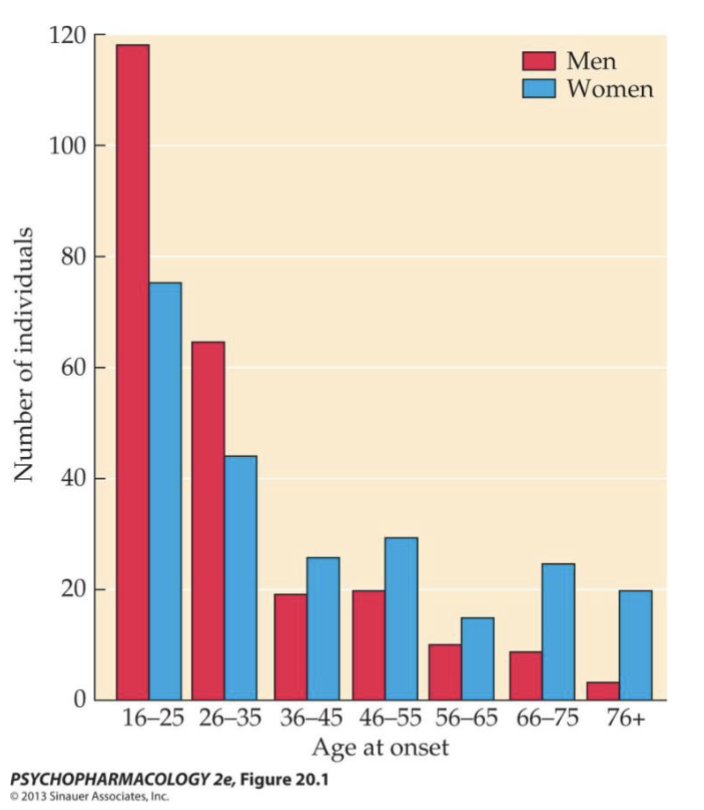
SZ Age of Onset + Genetic component.
Age of Onset: Symptoms most often begin during the late teenage years and early twenties
Genetic Component: The risk of having SZ varies according to how many genes one shares w/ someone who has the disorder, in which many genes are likely involved.