BIOCH 200
 Call Kai
 Learn
Learn Practice Test
 Spaced Repetition
 Match
Match Flashcards
 Knowt Play
1/79

There's no tags or description
Looks like no tags are added yet.
Name | Mastery | Learn | Test | Matching | Spaced | Call with Kai | Chat |
|---|
No analytics yet
Send a link to your students to track their progress
80 Terms
Biochemistry
The scientific discipline that seeks to explain life at the molecular level.
Most Common Elements
(H)Hydrogen
(C)Carbon
(N)Nitrogen
(O)Oxygen
(P)Phosphorus
(S)Sulfur
Essential Ions
(Na)Sodium
(Mg)Magnesium
(Cl)Chlorine
(K)Potassium
(Ca)Calcium
Trace Elements
(B)Boron
(F)Fluorine
(Al)Aluminum
(Si)Silicon
(V)Vanadium
(Cr)Chromium
(Mn)Manganese
(Fe)Iron
(Co)Cobalt
(Ni)Nickel
(Cu)Copper
(Zn)Zinc
(Ga)Gallium
(As)Arsenic
(Se)Selenium
(Mo)Molybdenum
(Sn)Tin
(I)Iodine
Major Classes Of Biomolecules
Amino Acids
Carbohydrates
Nucleotides
Lipids
Directionality
All covalent bonds are in the same orientation
Hydrogen Bonds
Non-covalent bonds where a hydrogen is shared between two electronegative atoms
Hydrogen Bond Donor
Strongly electronegative atom covalently attached to the hydrogen
Hydrogen Bond Acceptor
Electronegative atom with an appropriate (hybridized) lone pair
Water H-Bond Stucture
~3 per molecule
2A:2D
H3O+ H-Bond Structure
4 per molecule
1A:3D
Van der Waals Interactions
Dipole-dipole interactions
London dispersion forces
Dipole-Dipole Interactions
Between polar non-charged groups
London Dispersion Forces
Between nonpolar molecules
Bond Strength
Covalent > Ionic > Hydrogen > Van der Waals
The Hydrophobic Effect
Non-polar compounds tend to associate with each other in aqueous environments
Amphiphilic/Amphipathic
Structures that have both non-polar and polar regions
Nucleotide
Phosphate
Sugar
Nitrogen-containing aromatic base

Cytosine

Thymine

Adenine

Guanine

Uracil
Thymine and Uracil H-Bond Structure
6 per molecule
4A:2D
Nucleoside
Base
Sugar
Adenine + Ribose
Adenosine
Adenine + Deoxyribose
Deoxyadenosine
Guanine + Ribose
Guanosine
Guanine + Deoxyribose
Deoxyguanosine
Cytosine + Ribose
Cytidine
Cytosine + Deoxyribose
Deoxycytidine
Thymine + Deoxyribose
Deoxythymidine
Uracil + Ribose
Uridine
Nucleic Acids
Polymers of nucleotides linked by phosphodiester bonds
Phosphoester
Link carbons to phosphate groups
Phosphodiester
Link two carbon atoms to one phosphate group
Phosphoanhydride
Link two phosphates to each other
A260nm/A280nm for Pure DNA
1.95
Zwitterion
A neutral ion with an equal number of positive and negative charges

Alanine
Ala
Aliphatic
Hydrophobic

Valine
Val
Aliphatic
Highly hydrophobic
Branched

Leucine
Leu
Aliphatic
Highly hydrophobic
Branched

Isoleucine
Ile
Aliphatic
Highly hydrophobic
Branched

Phenylalanine
Phe
Aromatic
Highly hydrophobic

Tryptophan
Trp
Aromatic - heterocyclic
HydrophobiC

Methionine
Met
Aliphatic
Hydrophobic
Sulfur-containing - thioether

Proline
Pro
Aliphatic - distinctively cyclic
Hydrophobic

Glycine
Gly
Achiral
Weakly Polar
Very small - flexible

Serine
Ser
Polar - uncharged
Contains hydroxyl group

Threonine
Thr
Polar - uncharged
Contains hydroxyl group

Tyrosine
Tyr
Weakly polar - uncharged
Aromatic
Contains hydroxyl
pKa 10.5

Cysteine
Cys
Polar - uncharged
Sulfur containing - thiol group
pKa 8.5
Cystine
Disulfide bond between two cysteine sidechains
Occurs in oxidizing environments

Asparagine
Asn
Amide containing
Polar
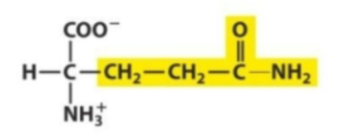
Glutamine
Gln
Amide containing
Polar - noncharged

Histidine
His
Can be acidic or basic at pH 7
Polar - charged/uncharged
pKa 6.0
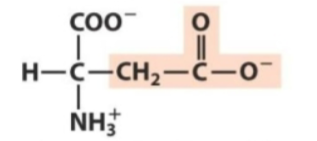
Aspartate
Asp
Negatively charged at pH 7
Very polar
pKa 4.0
Aspartic Acid
Aspartate at pH 1

Glutamate
Glu
Negatively charged at pH 7
Very polar
pKa 4.0
Glutamic Acid
Glutamate at pH 1

Lysine
Lys
Positively charged at pH 7
Contains amino group
Very polar
pKa 10.0

Arginine
Arg
Positively charged at pH 7
Very polar
pKa 12.5
Peptide/Oligopeptide
Larger number of amino acids
Often synthetic
Polypeptide
Long chain of amino acids
Usually natural
Protein
Large polypeptide(s) with a biological function
Primary Structure
Sequence of amino acids in a polypeptide
Secondary Structure
Local folding of the polypeptide backbone
Tertiary Structure
Arrangement of all atoms in a single polypeptide
Fibrous Proteins
Insoluble
Long protein filaments
Structural or connective
Globular Proteins
Soluble
Compact structures with nonpolar cores and polar surfaces
Ion Pairs/Salt Bridges
Electrostatic interactions between closely-positioned formal charged groups
Disulfide Bonds/Bridges
Covalent bonds between closely-positioned cysteines
Domain
Polypeptide segment folded into a single structural unit with a hydrophobic core
Motif
Region of polypeptide with a recognizable 3D shape
Prosthetic Group
Non-peptide component that is permanently incorporated into a protein
Provide structure and functional chemical groups
Heat breaks
H-bonds
Hydrophobic interactions
Changes in pH Break
Salt bridges
H-bonds
Salt Breaks
Salt bridges
Ion pairs
Detergents Break
Hydrophobic interactions
Quaternary Structure
Proteins comprised of more than one polypeptide chain (subunit)