Chapter 2: nomenclature
 Call Kai
 Learn
 Practice Test
 Spaced Repetition
 Match
 Flashcards
 Knowt Play
1/11

There's no tags or description
Looks like no tags are added yet.
12 Terms
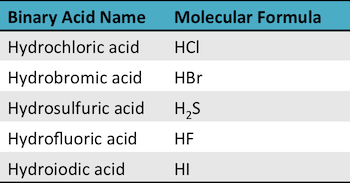
binary acids
Hydrogen + 1 non-metal
hydro + nonmetal root + ic acid
terenary compounds
3+ different elements
name cation first then anion
don’t change polyatomic ion name
use roman numerals

oxyacids
Hydrogen + oxygen + one other element
omit “hydro”
“ate” endings → “ic acid”
“ite” endings → “ous acid”

atomic mass
the weighted average of all naturally occuring isotopes of an element
m1a1 + m2a2 + m3a3 etc…
mass number
the mass of one specific isotope of an element
protons + neutrons
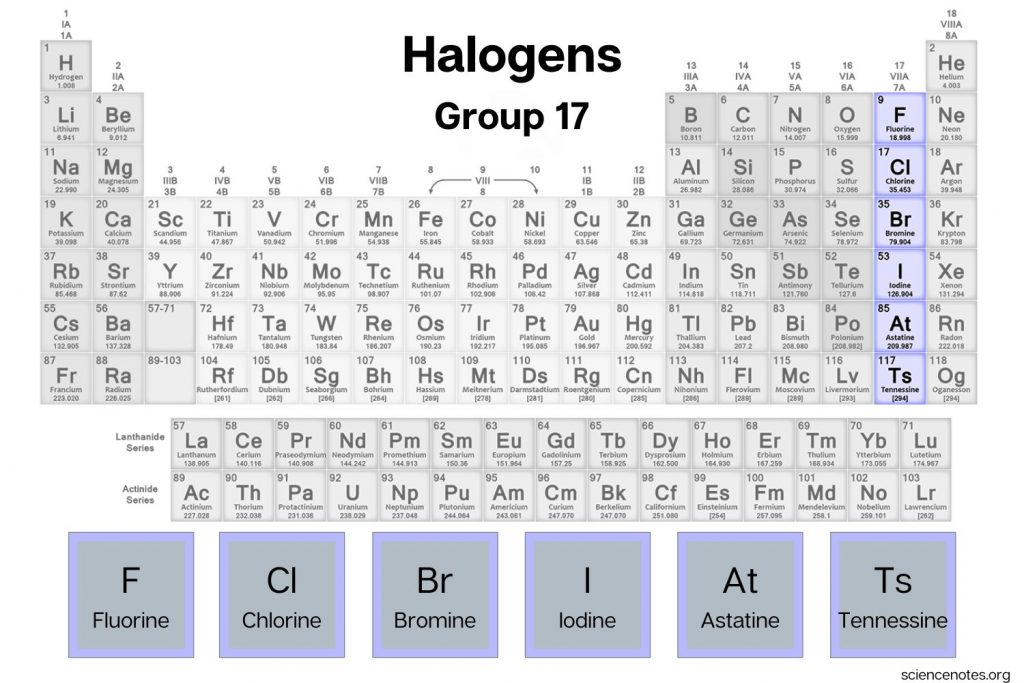
halogens
group 17 on the periodic table
react easily with other elements
readily available in nature
organic vs inorganic chemistry
organic: compounds containing carbon-hydrogen bonds
inorganic: compounds that don’t have c-h bonds (salts, minerals, metals, acids)
electronegativity
how strongly an atom attracts electrons towards itself when it is bonded with another atom
sometimes one atom attracts the shared electrons in a bond more strongly and pulls it

electron sharing in ionic bonds
electrons are transferred between two elements, forming oppositely charged ions that attract
ex: Na loses an electrons to become + (10 electrons now) → Cl gains that electrons to become - (18 electrons now)
they do this to become stable, and have an equivalent # of electrons to the nearest noble gas
electron sharing in covalent bonds
atoms share pairs of electrons to fill shells

nonpolar covalent bond
equal sharing/attraction of electrons
no positive or negative end forms
ex: H2. they are the same element so share equally
polar covalent bond
uneuqal sharing/attraction of elements, one element has higher electronegativity than another
creates partial charges
ex: HCl. Cl has higher electronegativity than H so it becomes slightly more negative