Post partum dx in cattle
 Call Kai
 Learn
 Practice Test
 Spaced Repetition
 Match
 Flashcards
 Knowt Play
1/53

There's no tags or description
Looks like no tags are added yet.
54 Terms
How long does involution take post calving?
3-4 wks
What has to happen between calving and successful establishment of next pregnancy?
Involution
Restoration of endometrium
cotyledons (foetal side) sloughs off —> due to bacterial activity
maternal side shrinks & flattens
Resumption of ovarian cyclicity
Insemination
Fertilisation —> conception in timely manner
Maintenance of pregnancy
Calve again
In what scenarios does resumption of cyclicity / commencement of luteal activity (CLA) need to occur?
Puberty
Onset of seasonal breeding (N/A in cows —> applies to sheep)
Recovery from -ve energy balance (not enough food to support themselves)
Post parturition
What stimulates the first follicular wave 2 wks post partum?
FSH
subsequen events vary between dairy & beef sucklers (or cows w/ ill health / -ve energy balance —> must be healthy to support subsequent follicular waves)
Explain the normal ovarian function post partum
Low progesterone & oestrogen after calving
FSH surge incr within 3-5d @ 7-10d intervals
1st post partum follicle wave & 1st dominant follicle
Dominant follicle ovulates if sufficient oestradiol (E2) or LH surge → ovulation
What is the capacity for E2 secretion from the dominant follicle dependent on?
Size of dom follicle
LH pulse frequency (nutrition, health)
IGF-I bioavailability (nutrition)
What are the options for oestus detection?
Visual observation —> insemination to occur @ correct time for oestrus to be seen
Tail-head markers (stickers / chalk)
Activity meters
Progesterone monitoring
Ext technician
Bull / teaser bull
What are the factors that ensure successful insemination?
Correct timing
AI carried out correctly —> correct semen storage & handling, correct insemination technique
Or use natural service (bull) —> pheromones aid detection
What are the stages of early embryonic development?
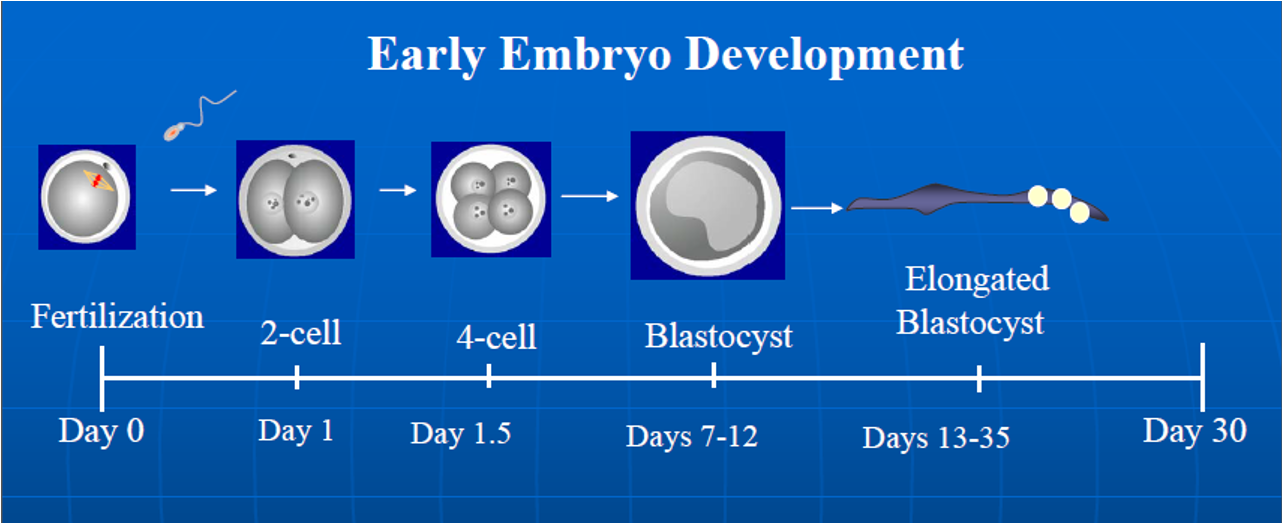
preg implants in middle third of gravid horn, ipsilateral to ovulated ovary
embryo signals presence by elongating & secreting interferon tau
localisation of embryo useful when scanning horns for PD —> amniotic vesicle on same said as CL
What are the physiological events that occur after insemination in cattle?
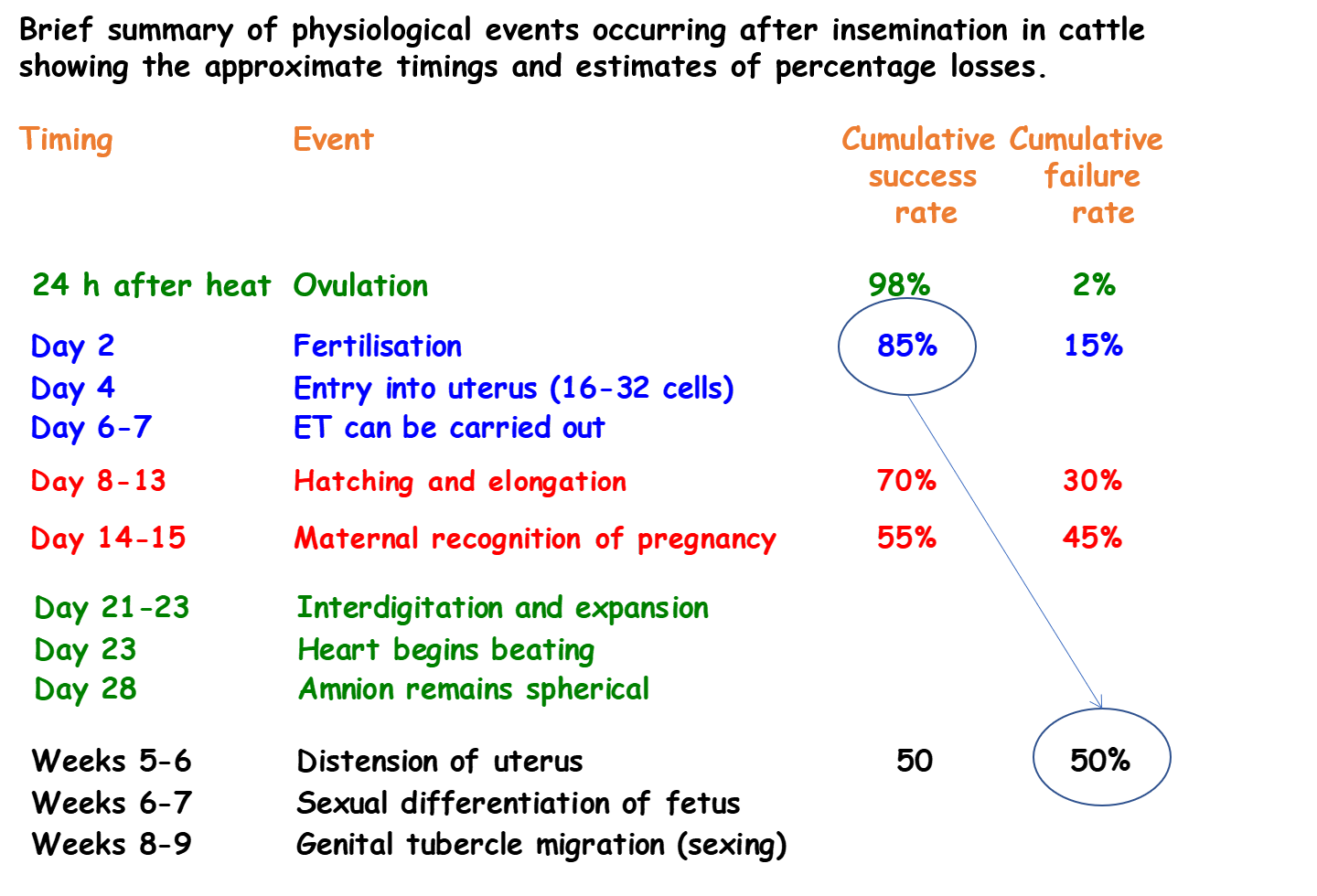
List some reasons for failure of fertilisation and embryonic loss
Failure of fertilisation
AI technique/timing
Oocyte quality/health —> poss poorly developed embryos incapable of cross-talking w/ endometrial ep. cells
Uterine environment
Infectious agents (e.g. BVD,BHV1,Lepto, Campylobacter) → embryo death due to undernourishment
Metabolic status of dam /Nutrition of the dam
Pre & post calving
nutritional imbalanc of fermentable metabolised energy & rumen undegradeable dietary protein (state of -ve energy balance of dam)
Genetic abnormality of embryo
List some of the problems seen after calving
Retained Foetal Membranes
Metritis / Endometritis
Cystic ovarian disease
Failure to resume ovarian cyclicity = non-buller/ NSB/ ONO
(or failure of detection?)
Return to oestrus (on time or not on time)
Insufficient IFT production -> fails to implant -> Embryonic death (early/late)
If not multiples of 3 week could be early embryonic death
Abortion
When are retained foetal membranes a concern?
Most release foetal placenta during first 24hrs —> after that may be of concern:
Decr. milk yield & increases time for involution & return to oestrus (on time or not on time)
insuff interferon production → fails to implant → embryonic death (early / late)
Can lead to metritis / endometritis, cystic ovarian dx or failure to resume ovarian cyclicity
non-buller / not-seen bulling/ oestrus not observed
Cows tolerate retention of foetal placenta better than horses
What are the infections of the uterus?
Metritis
Endometritis
Pyometra
What are the consequences of uterine infections?
Damage the uterus
Suppress hypothalamic GnRH and pituitary LH secretion
Have localised effects on ovarian function
What are the main pathogens associated with uterine infections?
E.coli (Gram -ve)
Truperella pyogenes (Gram +ve)
Dichelobacter nodosus (Gram -ve)
Fusobacterium necrophorum (Gram -ve)
Bovine herpesvirus 4 (BoHV4)
What are the main risk factors for uterine bacterial infections?
Multiparous
Dystocia
Milk fever
Abortion
Induction
Twins
Retained foetal membranes
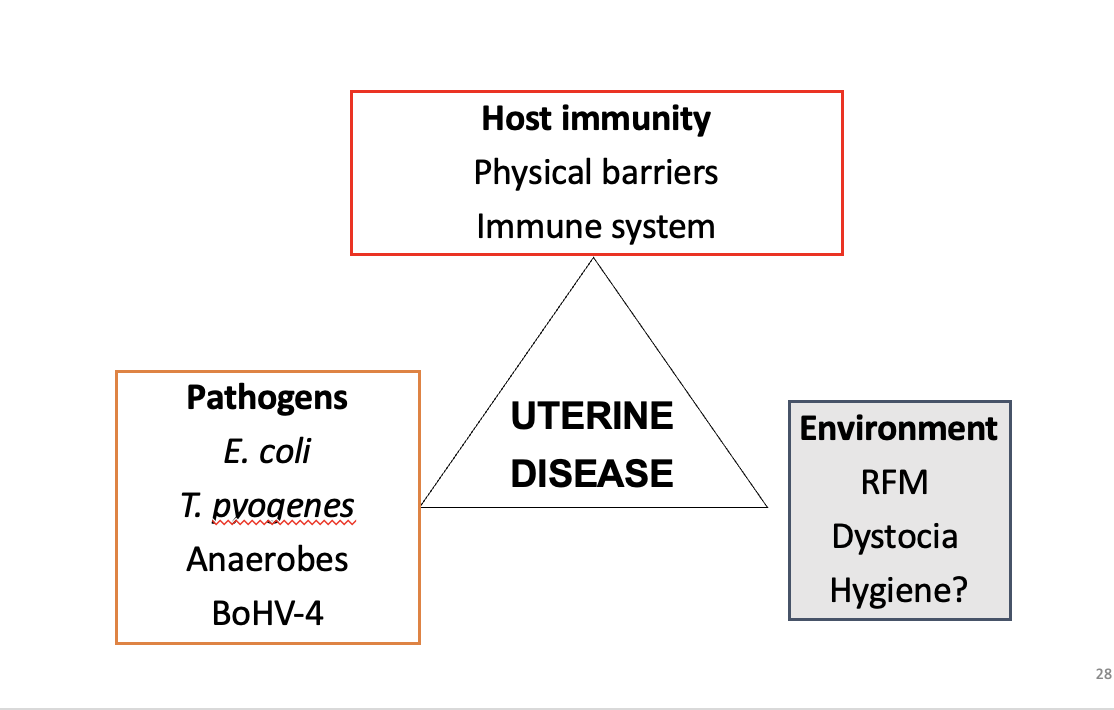
How does incidence of vulval discharge change with no. of calvings per quarter & parity no.?

List some additional risks of uterine bacterial infections
Reduced dry matter intake in dry period
Negative energy balance after calving
Milk fever / Vitamin D
Vitamin E / Selenium
Vitamin A
Iodine
Zinc?
Copper?
Define metritis
Abnormally enlarged uterus & purulent uterine discharge detectable in the vagina within 21d after parturition
(>21d post partum = endometritis —> ~ half of those that have metritis will develop endometritis)
What are the grades of metritis?
Grade 1 —> enlarged uterus & purulent discharge but no pyrexia/illness
Grade 2 —> puerperal metritis —> overt systemic ilness (decr milk yield, fever >39.5°C, reduced appetite)
Grade 3 —> 'toxaemic metritis' —> signs of toxaemia (cold extremities, dullness)
Define pyometra
Accum of purulent material within uterine lumen in presence of a CL & a closed cervix. → no discharge on vaginal exam & in dioestrus state
What is the diagnosis for pyometra?
Enlarged uterus
CL
Ultrasound for pus (appears as snowstorm visually)

^^^ R = snowy effect in lumen (abnormal)
How do you treat pyometra?
PGF2a → luteolysis to get rid of progesterone dominance → opens cervix enough to release pus
Define clinical endometritis?
Presence of a purulent uterine discharge detectable in the vagina 21d or more post partum
Or
Muco-purulent discharge detectable in the vagina after 26 days post partum
What are the uterine discharge scores for endometritis?
0 = clear or translucent;
1 = flecks of white or off-white pus
2 = <50 mL exudate containing < 50% white or off-white material
3 = >50 mL exudate containing purulent material, usually white or yellow, but occasionally bloody
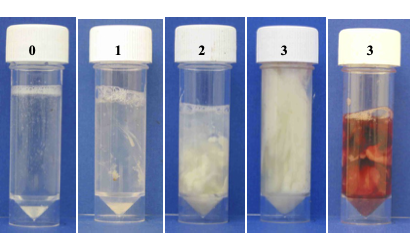
objective way to decide to treat & able to monitor over time
(cf metritis has bad odour)
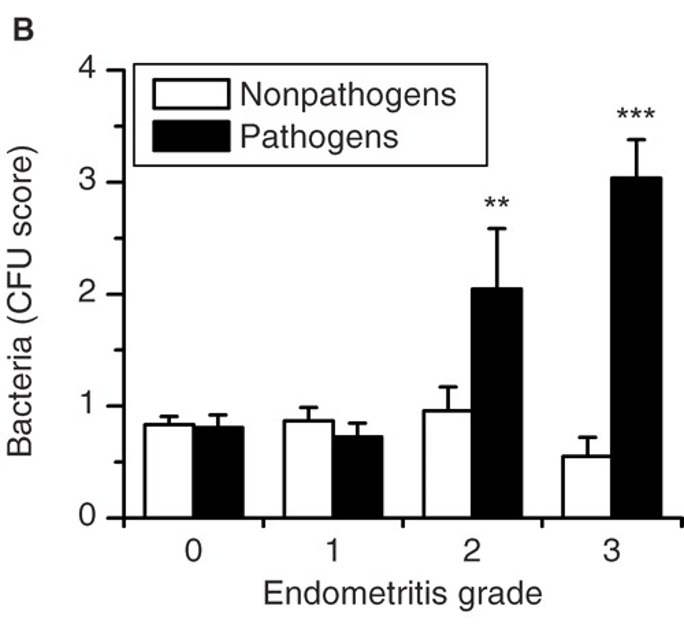
What is the difference in pathogen presence in the different grades of endometritis?
Describe the tx success
Grades 2 & 3 have more pathogens present than grade 1
worse the grade, the worse the prog (more difficult to treat)
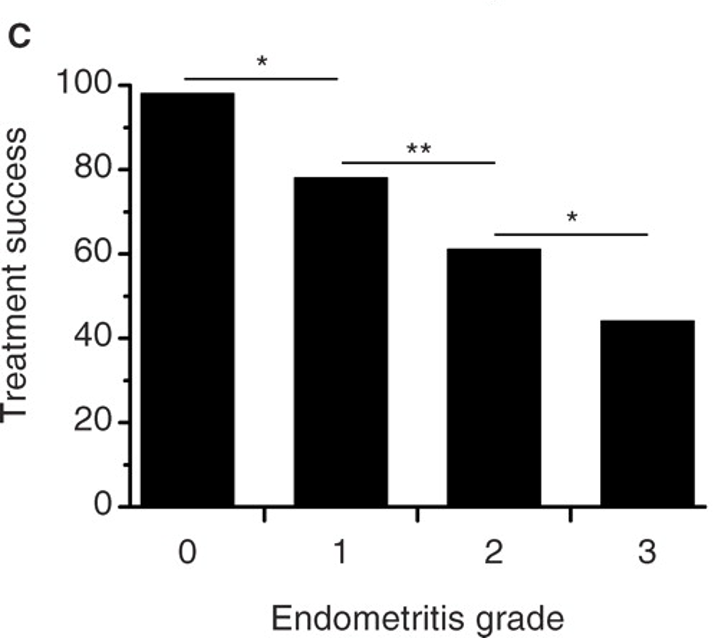
risk of culling incr, risk of not being able to breed again incr.
How is neutrophil count related to uterine fluid?
Thick uterine fluid → incr. neutrophil count (infection present)

What types of uterine fluid are being shown on these ultrasounds?
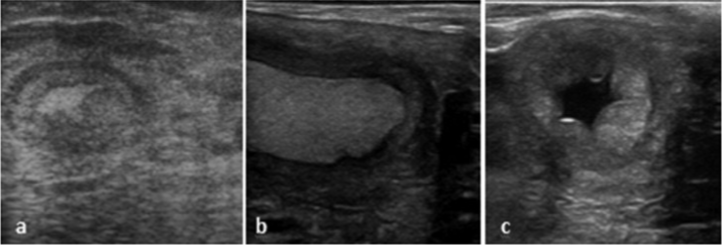
a = lumen full of pus
b = clear pyometra
c = anechogenic —> bulling slime, pregnancy
^^^ bulling slime indicated when lumen heavily invaginated
(normal fluid = black i.e. in centre of lumen of c)
What is this condition? How can you treat it?
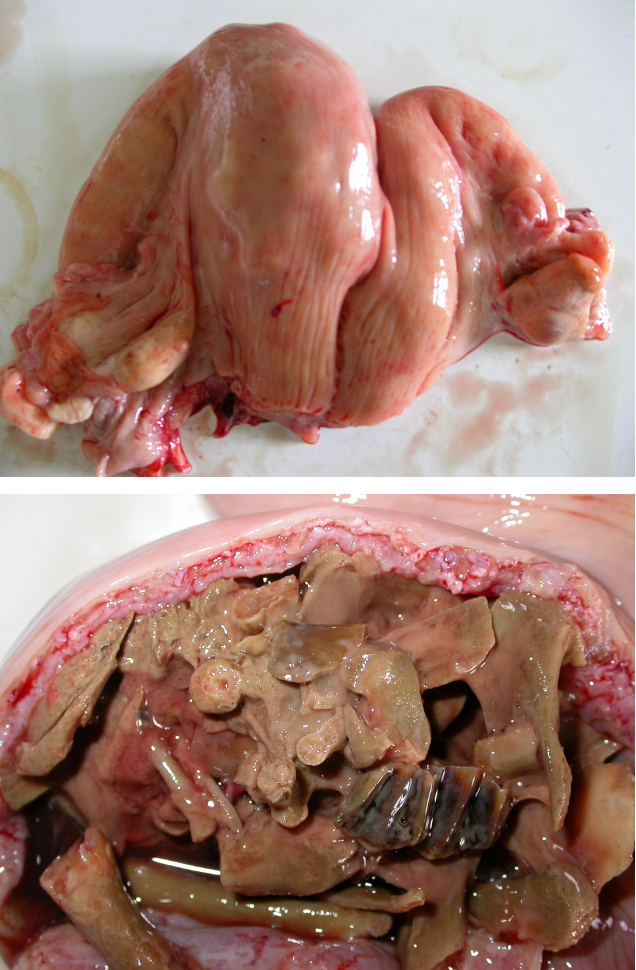
Mummified foetus —> would have showed up as enlarged; white & dense material on scan
Not treatable —> causes non-breeder cow → send to cull
If v. valuable can try PGF & flush out + IVF
What should be the avg. calving to conception interval (days from calving to pregnancy) be?
What factors affect this interval?
~80d
Interval between calves (calving to calving interval) incr. based on:

lowered yield, late lactation, decr profit over time
How does uterine infection affect ovarian function?
Follicular size & CL smaller
smaller CL = produces less progesterone
Oestrus detection harder —> less oestradiol produced

How do you diagnose sub clinical endometrirtis?
Microscopy of immune cells when flushed w/ saline or cytobrush
not necessarily any bacteria cultured
tx same as clinical
What are the risks for sub clinical endometritis?
-ve energy balance / Ketosis
Metritis
What is cystic ovarian dx described as?
Presence of large follicle-like structure on one of the ovaries, having a diameter of 2.5cm or greater that persists for at least 10d, in the absence of luteal tissue
Structure arises from follicle which fails to ovulate → pathological expression of oestrus
What are the two types of cystic ovarian dx?
Follicular (more common)
Luteal
What are the symptoms of cystic ovarian disease (COD)?
Very variable
Can go from anoestrus to nymphomania (coming into oestrus too early for too long & intense signs)
When do you not treat COD?
Not treated if < 30d in milk
What are the factors associated with COD?
High milk production
-ve energy balance & ketosis; raised non-esterised fatty acids
Higher parity
Twinning & periparturient problems
Excess BCS @ drying off
Genetic predisposition
What is a follicular cyst?
Arises from a follicle that fails to ovulate (so anything that interferes with GnRH & LH production will inhibit ovulation e.g lameness, -ve energy balance, mastitis, illness!)
It grows
May produce oestradiol for first half of life then stop, can only produce oestradiol if has been exposed to progesterone from CL beforehand
Oestradiol → irregular/ excessive oestrus behaviour
If there is both a follicular cyst & a CL what does this mean?
If CL is active >2cm present at same time on either ovary = dominant structure
FC hormonally inactive
CL rules & any tx will be directed at CL
What are the features of a follicular cyst?
>2.5 cm diameter
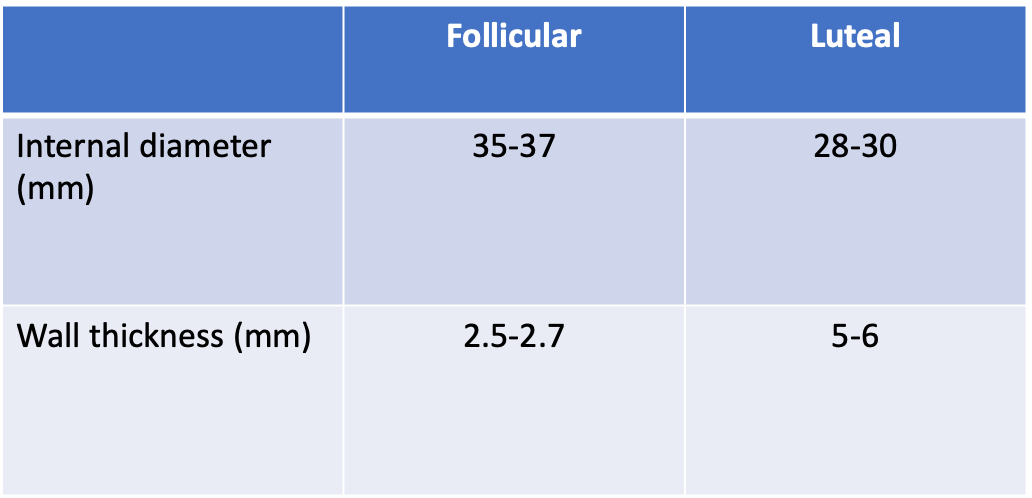
Thin wall <3mm
Fluid filled
Internal diameter >25mm
Duration = >10d
2 examinations needed to define
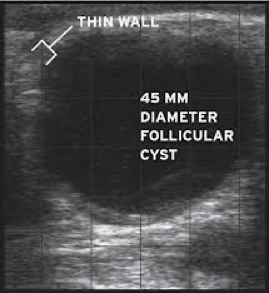
What does this scan show?
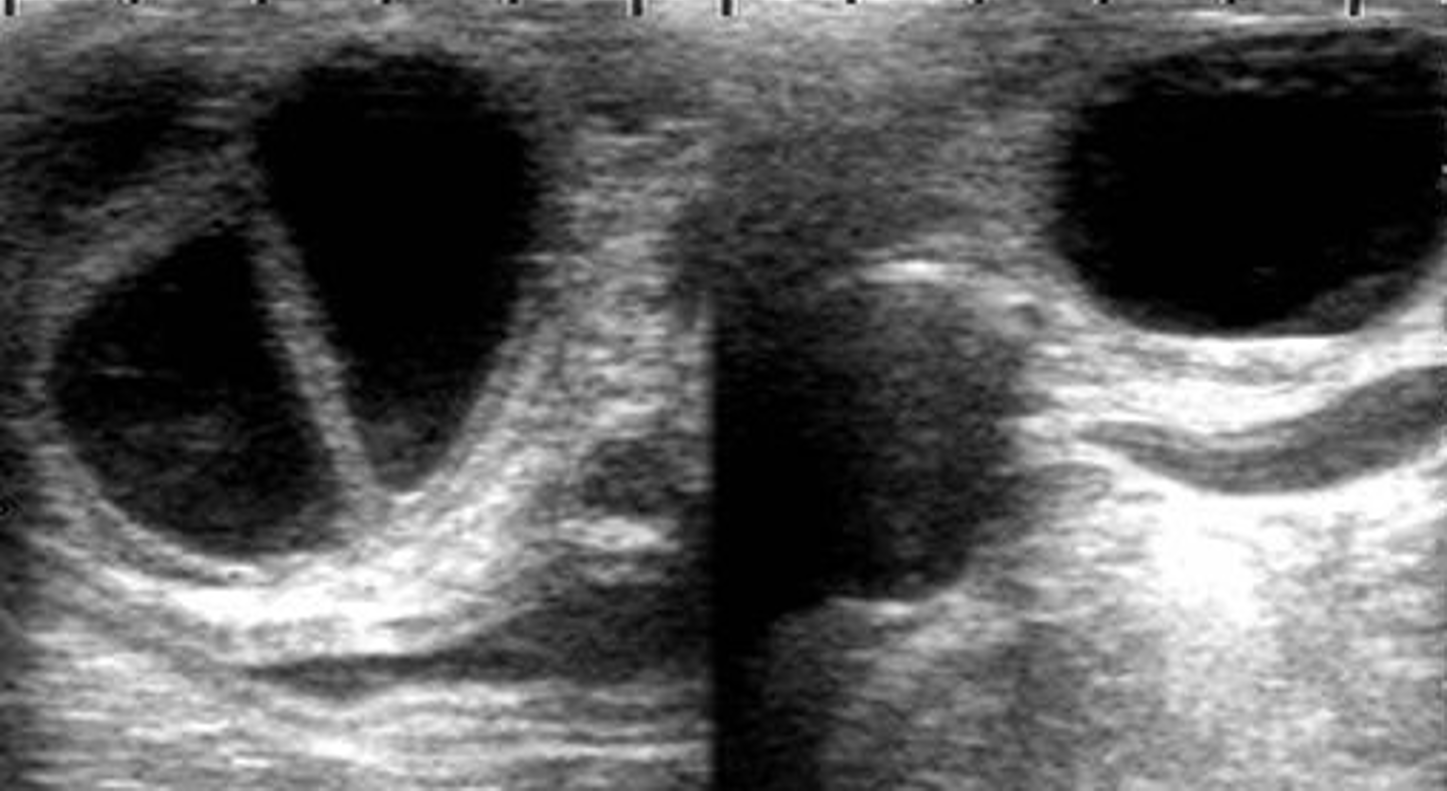
Non-ovulated follicles / cysts

Describe the hormone profile of this follicular cyst
Lots of oestrodiol produced in first half of lifecycle then stops because dom follicle takes over —> natural cyclicity can make it self-limiting (cures)
Other follicles cannot develop during oestrogenic phase
Prolonged oestrogen inhibits LH surge
When would you not need to treat a follicular cyst?
When you can identify other follicles developing as they will dominate over the follicle eventually
What are the features of a luteal cyst?
Luteinised follicular cyst
> 25mm external diameter
Thick wall > 3mm (indicates progesterone production)
Fluid filled lacuna
Duration =10 days
What is happening to this cyst?
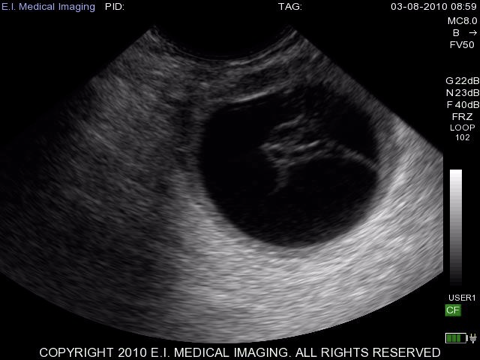
Cyst undergoing luteinisation
Contains trabeculae
How can you differentiate between a CL or luteal cyst
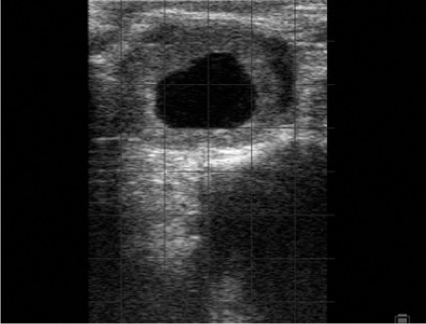
Essentially treat the same w/ prostaglandin so doesn't really matter
Thick wall, lacuna
Luteal cyst produces progesterone (same behaviour as CL)
What are the ways of diagnosing a cyst?
Palpation
U/S
Milk progesterone (luteal cyst will produce progesterone, follicular cyst won’t)

Compare the wall dimensions of a follicular vs luteal cyst?
What are these showing
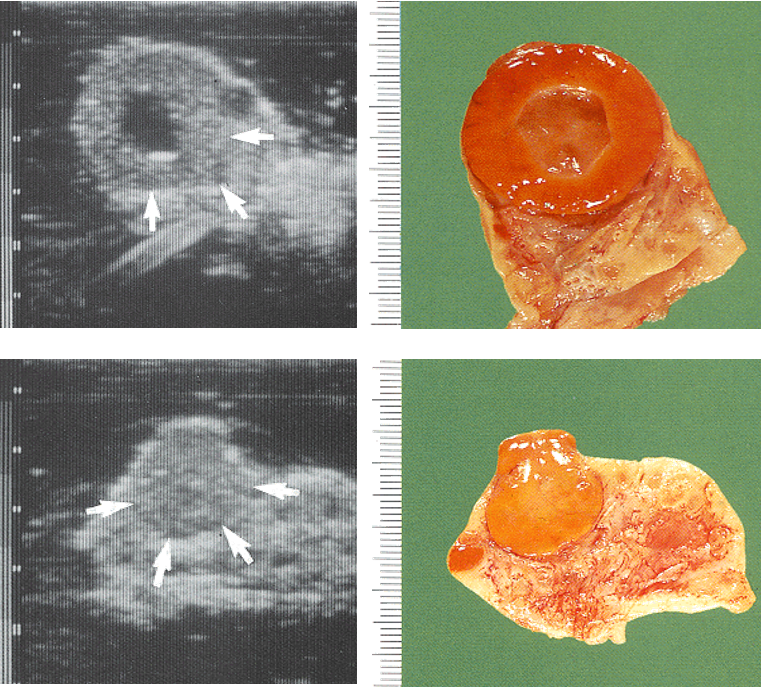
CL —> one with (top) and one without lacuna (bottom)
What are the tx options for follicular cysts?
Burst
GnRH
Progesterone (PRID/CIDR)
for ~wk
GnRH & LH surges stimulated once removed
Aspirate (if large enough) —> take away some of vol
pick up per-rectum & poke w/ needle trans vaginally
Leave alone —> may settle on own if follicles begin to grow / dom CL developing
Check response to tx @ next farm visit / go back specifically to see this cow
If cow comes into heat after tx i.e. “cyst” may have ovulated → do not inseminate (oocyte is old & infertile) → wait for next oestrus
What are the tx options for a luteal cyst?
Prostaglandin
What should you do if you are not sure about a cyst (unsure if FC or LC)?
Progesterone device