Approach to Suspected Toxicities in Small Animals
 Call Kai
 Learn
 Practice Test
 Spaced Repetition
 Match
 Flashcards
 Knowt Play
1/36

There's no tags or description
Looks like no tags are added yet.
37 Terms
What are the management goals for poisonings?

During phone triage for a potential toxicity, what information is most critical?
Dose ingested
Timing
Concurrent disease
Weight of the pet
How do you go about preventing further absorption of the poison?

Describe the process of topical decontamination.
Prevent grooming (Self and others)
Clip and Bathe
Prevent hypothermia
Describe the process of ocular decontamination.
Corticosteroids - contraindicated with ulcer

What percent of stomach volume does emesis yield?
When is emesis contraindicated?

What medications are used to induce emesis in dogs?
What about the reversal?
Apomorphine (dogs)
SC (also IV or via conjunctiva)
Acts via the dopamine receptors
Ropinirole (dogs) (video)
• Eye drops
• Similar mechanism to apomorphine
Selective for dopamine D2-type receptors
Hydrogen Peroxide (3%) (dogs)
• 1-2ml/kg PO (max 50ml/dog)
• North America
• Mild gastric irritation
• Cats - more SEs and less effective
Reversal
Naloxone reverses CNS effects and respiratory depression (but not tachycarda/hypotension) - does not reverse emesis
Maropitant or metoclopramide (Dopamine antagonist - in theory works better but 24hr window) (emesis)
What medications are used to induce emesis in cats?
What about the reversal?
Dexmedetomidine/medetomidine/xylazine (cats) (video)
Alpha-2 agonist
7mcg/kg IM
Sedation and cardiorespiratory depression
Atipamezole to reverse
Can also spin on chair to help induce emesis - controversial but effective and benefits to welfare may outweigh negative conotation
Describe how gastric lavage is performed.
Lavage once placed - use warm water, ensure to kink when removing

How is activated charcoal used to decontaminate?
Activated charcoal - adsorbent
Warn owners will turn faeces black
+/- cathartic (Substance increasing gut transit time) - only use once or might end up with electrolyte abnormalities
Avoid if aspiration risk
**Min. 2h between charcoal and oral meds
What is enterohepatic recirculation?
The cyclical journey of chemical compounds, such as bile acids and certain drugs, from the liver into the small intestine, back through the portal vein, and back to the liver. (Video)
What therapies are used to aid in removal of the toxin?
Intravenous Fluids
Increase renal elimination
Maintain renal blood flow
Hypotension
GI loss
Intravenous Lipid Emulsion
Mechanism - lipid sink (Draws in lipid soluble toxins which are partitioned) - prevents them from accumulating in organs or tissue
Also provides energy source for myocardial cells
What toxins are intravenous lipid emulsions suitable for?
What adverse reactions can occur?

Describe paracetamol toxicities.
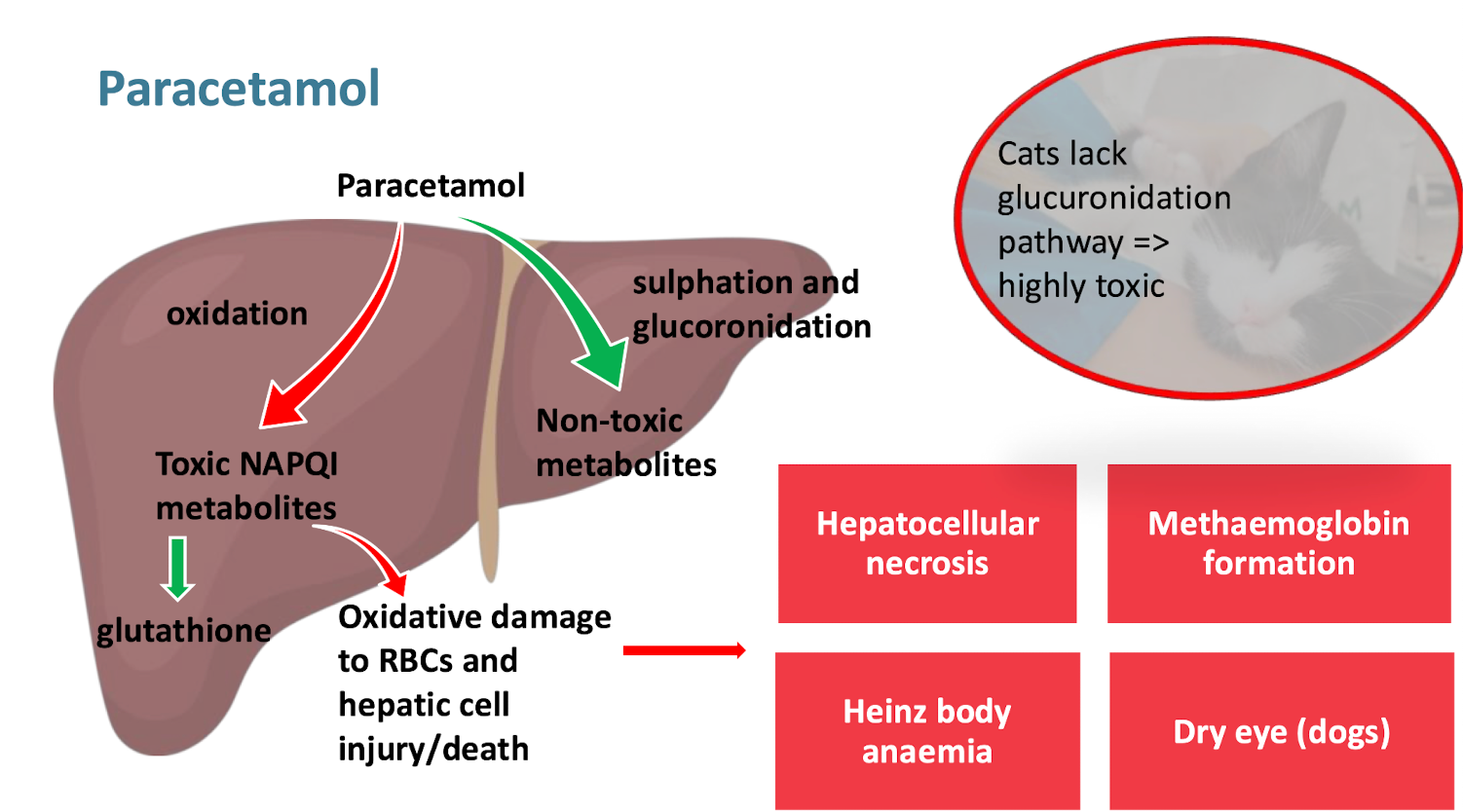
What are the toxicity clinical signs of paracetamol toxicity?
<24h
Cyanosis/muddy brown mucus membranes
Tachycardia, tachypnoea
Lethargy
Facial/paw oedema
Vomiting
Anaemia
>24h
Liver failure
Icterus
Seizures/coma
Renal failure (rare)
Haematuria/ haemoglobinuria

What is the treatment for paracetamol toxicity?
• Cats: any dose
• Dogs >50-100mg/kg
General
Emetics
Adsorbents
IVFT
Oxygen
Blood products
Antidotes (video)
N-acetylcysteine
Restores Glutathione: Paracetamol breaks down into a toxic chemical (NAPQI) that destroys the liver. NAC acts as a building block to replenish glutathione, a vital compound that neutralizes this poison.
S-AME
Cellular Health: It supports liver function by helping produce glutathione (a strong antioxidant)
Silymarin
Ascorbic acid (vit C)
Cimetidine (dogs)?
Methylene blue?

Describe the mechanism behind metaldehyde toxicity.
Rapid onset - Highly toxic - Treat for >2mg/kg
Pellets are radiopaque, can see on X-ray
Describe clinical signs associated with metaldehyde toxicity.
Early Gl signs
Vomiting
Diarrhoea
Hypersalivation
"Shake and bake"
Hyperaesthesia
Tremors
Seizures
Hyperthermia
Mydriasis
Death can occur due to respiratory arrest, MODS and DIC**
How is metaldehyde toxicity treated?
General
Emetics?
Gastric lavage?
Activated charcoal
IVFT
Oxygen
Manual cooling
Seizure control
Benzodiazepines
Propofol
Methocarbamol (Muscle relaxant)
**Tend to see gradual recovery after 48hrs
Describe the mechanism of rodenticide toxicity.
Anticoagulants & Cholecalciferol

Describe clinical signs associated with anticoagulant rodenticide toxicity.

How is anticoagulant rodenticide toxicity diagnosed?
Prolonged Prothrombin Time (PT) first (from 36h)
Prolonged APTT (from 72h)
Platelets - normal or decreased (only in later stages)
PIVKA - proteins induced by vitamin K antagonism
Anaemia
How is anticoagulant rodenticide toxicity treated?
Lethal Dose50 - LD50 is the amount of a substance required to kill 50% of a tested population, usually measured in milligrams of the substance per kilogram of body weight.

If an animal presents symptomatically for anticoagulant rodenticide, what will treatment involve?
Symptomatic - can no longer decontaminate
Provide oxygen, transfusion (Plasma ± RBCs)
Vitamin K1
What risk does a cat have of getting anticoagulant rodenticide poisoning indirectly from hunting mice or rats?
Cats do not have a high risk from one mouse, but repeated or chronic exposure does put the at risk
Describe the mechanism of ethylene glycol (Anti-freeze) toxicity,
Causes hypocalcemia because metabolite binds calcium
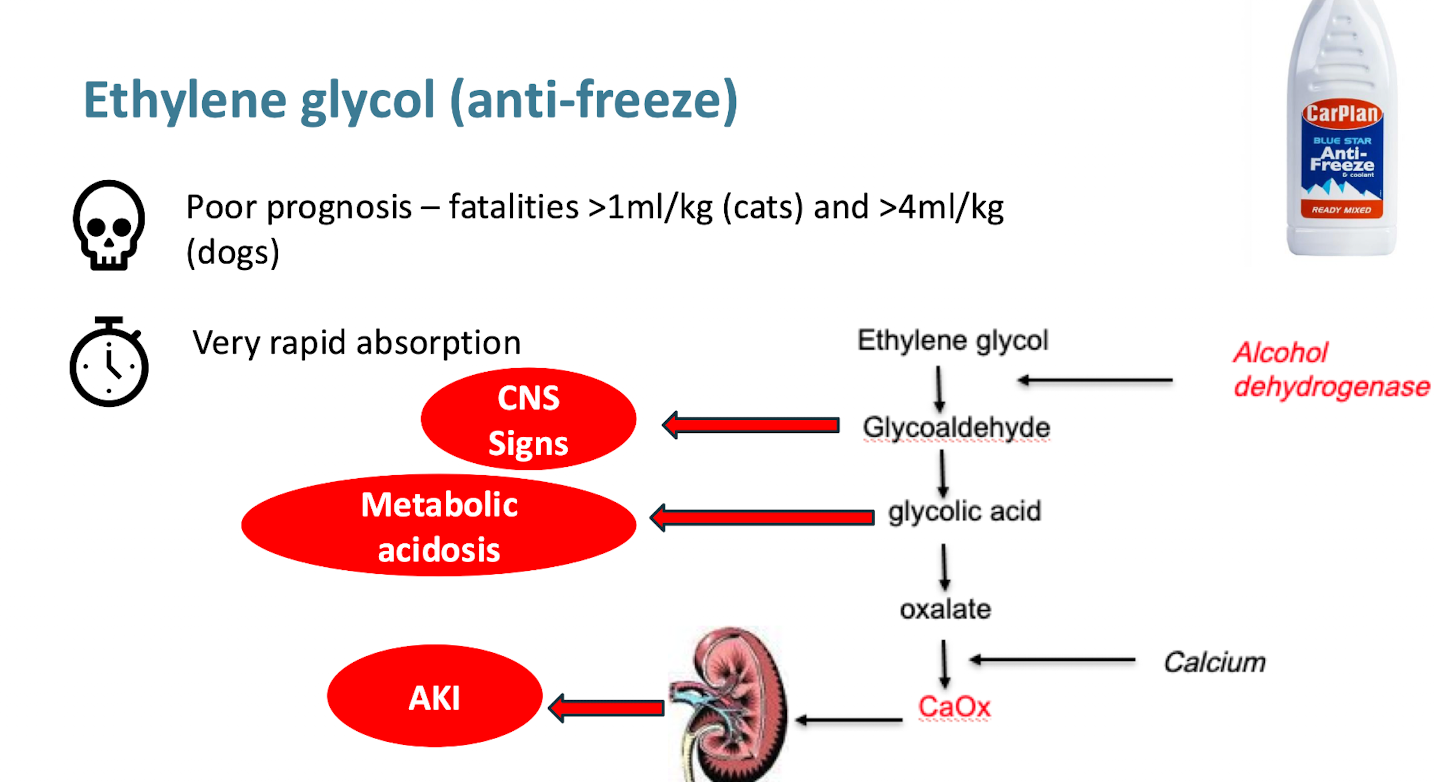
Describe clinical signs associated with ethylene glycol (Anti-freeze) toxicity.
More chronic changes are consistent with acute kidney injury
Can perform ethylene glycol test - not always 100% acurate

Describe the diagnostic features of ethylene glycol.

What is treatment for ethylene glycol toxicity?
(video)

What are the side effects and treatment for ethylene glycol prognosis?

Describe the mechanism of theobromine toxicity.
Chocolate

What decides what type of treatment is needed for chocolate toxicity?

What is the treatment used for theobromine toxicity?

Describe the mechanism of toxicity for Xylitol.
Causes insulin release
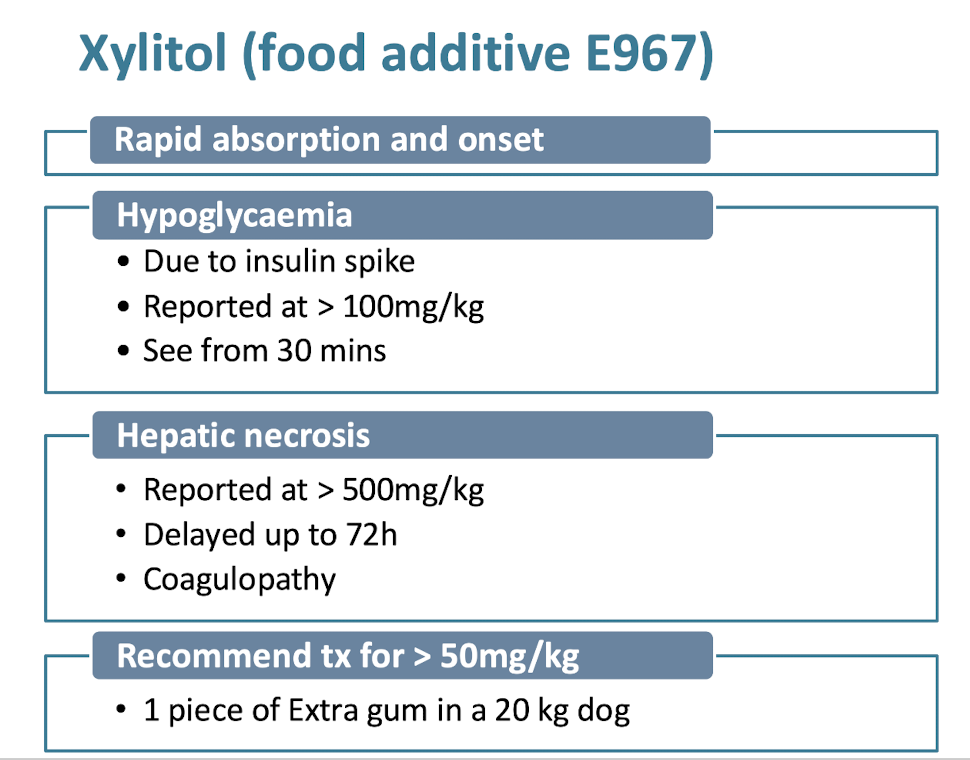
Describe the treatment and monitoring of Xylitol toxicity.

Describe the toxicity mechanism for raisins/grapes.

Describe treatment and monitoring used for grape ingestion/toxicity.
AKI - acute kidney injury
