Skulls, Skins, Natural History - Carnivora, Monotremata, Didelphimorphia
 Call Kai
 Learn
 Practice Test
 Spaced Repetition
 Match
 Flashcards
 Knowt Play
1/66

There's no tags or description
Looks like no tags are added yet.
67 Terms

elongated rostrum
edentulous
Monotremata, Tachyglossidae, Tachyglossus aculeatus
insectivorous (primarily ants and termites)
uses dens, burrows, and natural shelters
lays eggs
Tachyglossus aculeatus

very distinct and prominent sagittal crest
polyprotodont
Didelphimorphia, Didelphidae, Dedelphis virginiana

Didelphis virginiana
scavengers but also eats berries, insects, and eggs
nocturnal
no hibernation
rarely carry rabies due to low body temperatures
dens in hollow logs/trees, abandoned burrows, rock crevices, brush/wood piles
Didelphis virginiana

prominent sagittal crest,
large, c-shaped mandibular fossa
large braincase relative to body size
carnassial pair common
Carnivora

flat skull, reduced rostrum
101-129 mm length
Carnivora, Mustelidae, Lontra (Lutra) canadensis
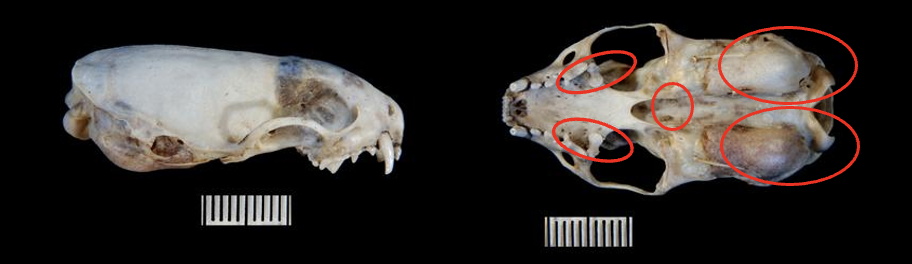
34-53 mm
3 upper premolars
auditory bullae nearly twice as long as wide
posterior edge of palantines rounded and extend beyond M1
Carnivora, Mustelidae, Neogale (Mustela) frenata

<36 mm
3 upper premolars
auditory bullae nearly twice as long as wide
posterior edge of palantines rounded and extend beyond M1
Carnivora, Mustelidae, Mustela erminea

>54 mm
3 upper premolars
auditory bullae nearly twice as long as wide
posterior edge of palantines rounded and extend beyond M1
Carnivora, Mustelidae, Neogale (Mustela) vison

4 upper premolars
auditory bullae elongated but not twice as long
Carnivora, Mustelidae, Martes americana

4 upper premolars
auditory bulla not elongated
skull at least 99 mm in length
Carnivora, Mustelidae, Pekania pennanit

flat skull
reduced rostrum
>125 mm length
Carnivora, Mustelidae, Enhydra lutris

M1 squarish
palate does not extend appreciably beyond M1
Carnivora, Mephitidae
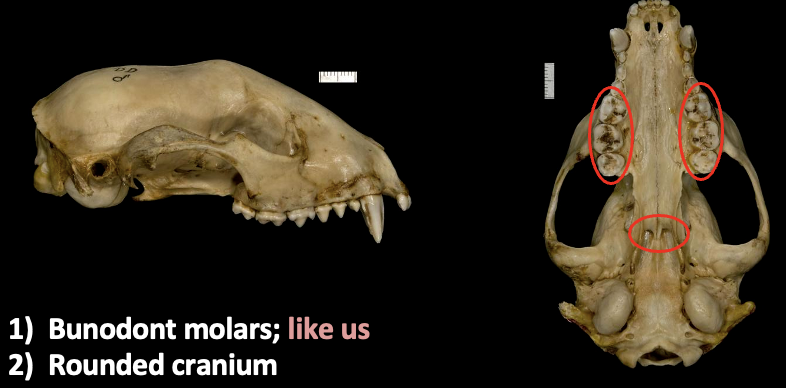
bunodont molars
rounded cranium
poorly-developed carnassials
palate terminated posteriorly to molars
Carnivora, Procyonidae, Procyon lotor

broad, powerful rostrum
2 upper molars
3 lower molars
diameter of upper canines >12 mm
Carnivora, Canidae, Canis lupus

2 upper molars
3 lower molars
long, narrow rostrum
diamater of upper canines <12 mm
Carnivora, Canidae, Canis latrans

temporal ridges form a “V”
sagittal crest not as well-developed
Carnivora, Canidae, Vulpes vulpes
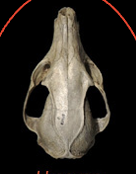
temporal ridges form a “U”
sagittal crest not as well-developed
Carnivora, Canidae, Urocyon cinereoargenteus

digitigrade
claws retract, used for attacking prey
shearing molars and well-developed carnassials
short rostrum with 1-2 lower molars
Felidae

2 upper premolars
much smaller than Puma
Carnivora, Felidae, Lynx rufus
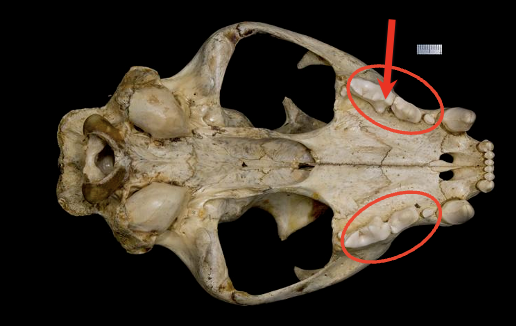
3 upper premolars - have carnassial form, third has anterior cusp for crushing bone
Carnivora, Felidae, Puma concolor

large claws
massive rostrum
poorly developed carnassials
crushing cheek teeth
Carnivora, Ursidae, Ursus americanus

relatively large skull with large nasal opening
Carnivora, Phocidae, Phoca vitulina

Neogale (Mustela) frenata
can kill 4x its mass
start hunting when ~7 weeks old
sexual size dimorphism (males 1.5x size of females)
seasonal molts at higher latitudes
most widespread mustelid in North America
Neogale (Mustela) frenata
exhibits seasonal molts and cryptic coloration
4-5 year cycles with voles and lemmings at northern latitudes
sometimes use rodent burrows as dens, circumpolar distribution
Mustela erminea

Neogale (Mustela; Neovison) vison
semi-aquatic, preying on fish, crayfish and frogs
historically an economically important furbearer (currently, most fur comes from individuals raised on fur farms, trapping still legal in 47 states)
dens in abandoned beaver/muskrat lodges
Neogale (Mustela; Neovison) vison
one of the largest geographic distributions of any mammal
smallest extant carnivore (average mass ~55g)
seasonal molts at higher latitudes
Mustela nivalis

Martes americana
old-growth confierous and mixed forest specialist (deforestation has restricted range)
variety of vocalizations (huffs, chuckles, and shouts)
economically-important furbearer (trapping still primary cause of mortality in some populations)
den on ground but are often found in trees
Martes americana
large tracts of forested and semi-forested landscapes, with a preference for mature forests that have a high canopy and dense undergrowth
variety of vocalizations (low growls, grunts, hisses, snarls, chortle)
economically-important furbearer (trapping still primary cause of mortality in some populations
den in hollow logs, cavities in trees, rock crevices, and brush piles
Pekania pennanit
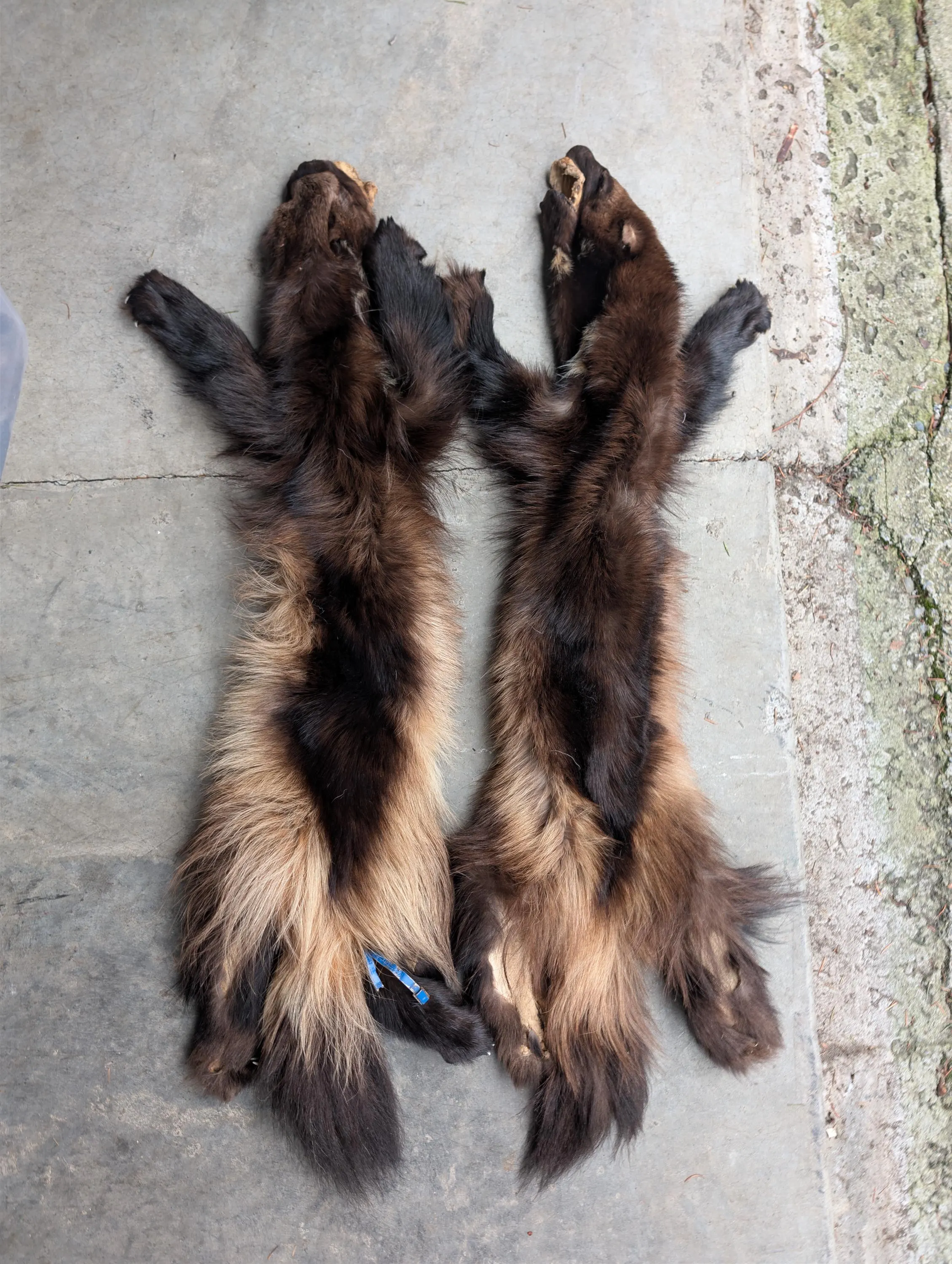
Gulo gulo
scavengers but also eat berries, insects, and eggs
historically an economically important furbearer (still heavily protected)
dens under trees and near ravines (many times in snow)
Gulo gulo

Lontra (Lutra) canadensis
oily, thick coat (20,000 - 30,000/year trapped for fur)
close their nostrils under water
vibrassae (whiskers) help them sense prey underwater
among most social mustelids (groups made up of females and offspring) (males and females together only for breeding)
Lontra (Lutra) canadensis
oily, thick coat (heavily protected from fur trade)
close their nostrils under water
vibrassae (whiskers) help them sense prey underwater
great at controlling sea urchin populations
Enhydra lutris

Mephitis mephitis
aposematic coloration
kits can spray musk at 8 days (thiols)
typically warm (stamp feet) prior to spraying
male offspring leave mother their first fall, females not until following spring (both reproductively mature at ~10 months)
bred specifically as pets in some places
Mephitis mephitis
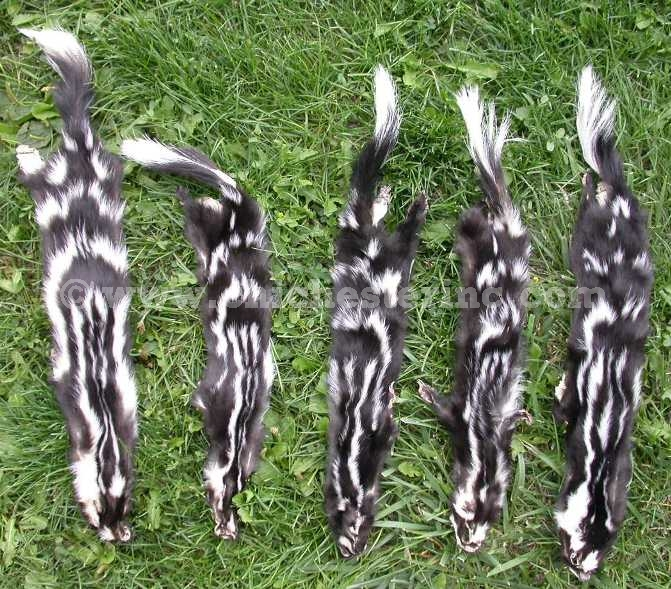
Spilogale putorius
aposematic coloration
climbs trees
sprays from “handstand” position
Spilogale putorius
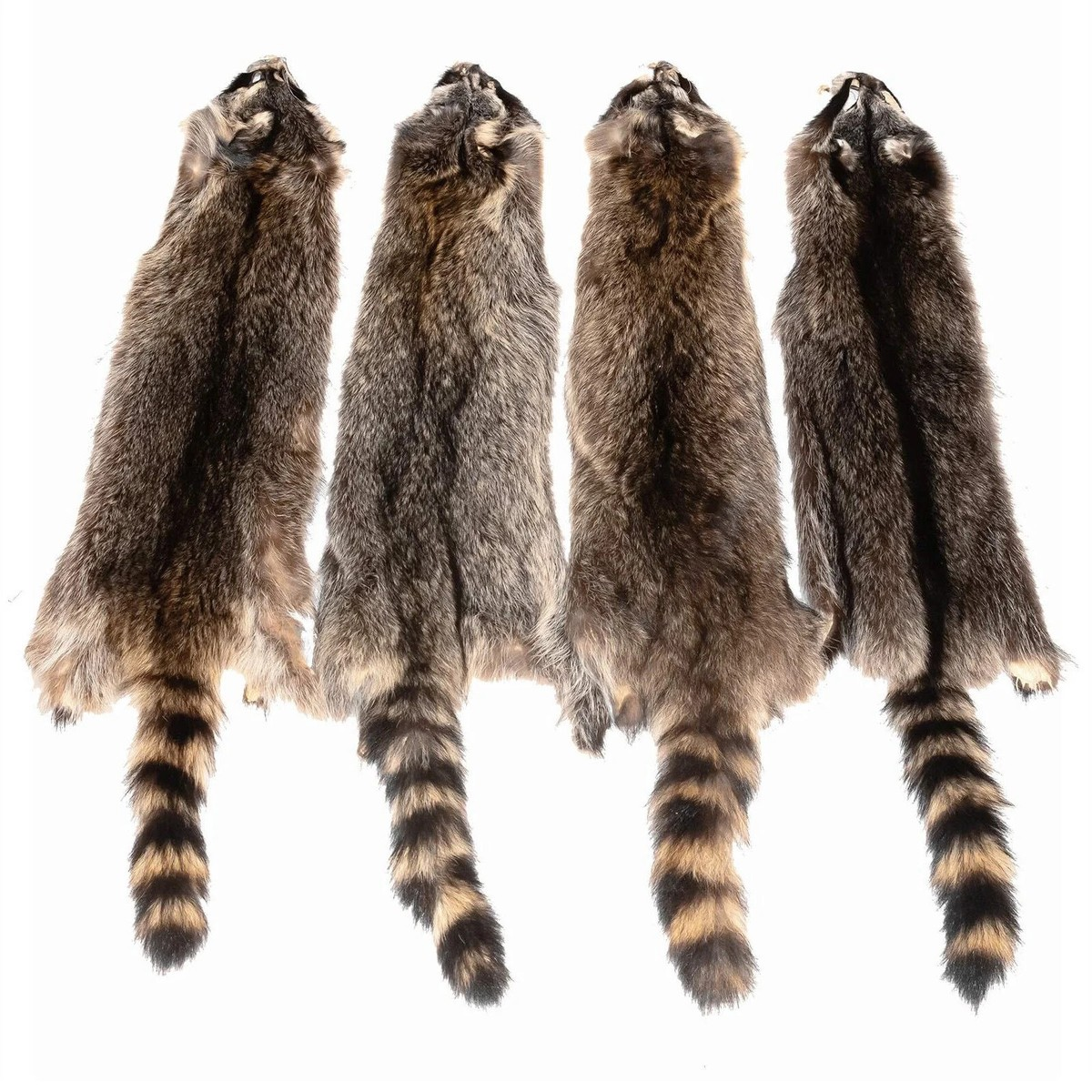
Procyon lotor
omnivorous
commensal with humans in many areas
weigh 5 - 15lbs in wilderness (up to 60lbs in urban/suburban areas)
dexterous hands
males don’t participate in raising kits
do not hibernate
Procyon lotor

Canis lupus
complex social system based around family dynamic (breeding adult pair and their offspring)
pup disperse after 10 - 54 months, triggered by onset of sexual maturity and/or competition with food within pack
habitat generalist, but prefer remote areas
Canis lupus
occupied southeastern US before mid-1900s
thought to have preferred swamps and bottomland river forests of the SE
pre-extirpation diet consisted of rodents, rabbits, and nutria
23 - 25 individuals in the wild currently
Canis rufus

Canis latrans
produce litters of 4 - 7 pups
live in either pairs or family “packs”
broad diet (everything from fruit to vertebrates)
habitat generalist, large geographic range
currently recolonizing urban/suburban landscapes
Canis latrans
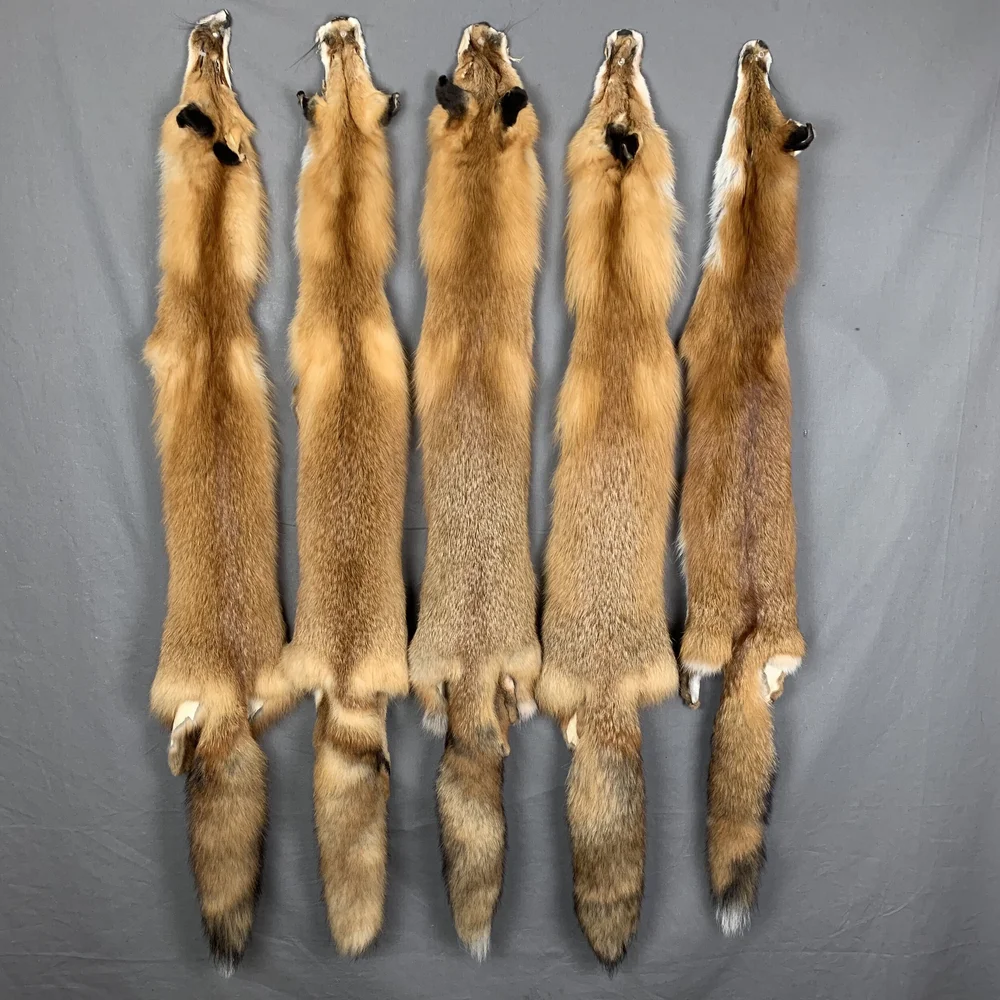
Vulpes vulpes
most widespread canid species in the world
one home range typically occupied by one adult male, one or two adults females, and their offspring (pup)
Vulpes vulpes

Urocyon cinereoargenteus
typically occur in deciduous wooded areas
only canid in North America that climbs trees (flexible forelimbs and semi-retractible claws)
solitary except when breeding/raising pups (winter)
Urocyon cineroeoargenteus

Vulpes lagopus
most restricted range of foxes
various pelage based on season
feed on small mammals, birds, and seal pups
pelage varies
Vulpes lagopus

Lynx rufus
solitary and territorial
prey on many small vertebrates (specialize on cottontails)
used to be extensively hunted for fur
currently recolonizing urban/suburban landscapes
Lynx rufus
widespread carnivore, extirpated from eastern US
historically, widest distribution of all terrestrial American mammals
will take many small and large prey (specialize on deer)
860-1300 kg/year (humans - 88kg meat/year)
in some areas, will migrate between summer and winter home ranges
Puma concolor
omnivorous
excellent sense of smell (Jacobson’s organ)
extirpated from non-forested habitats
winter lethargy (time varies regionally)
cubs nurse throughout winter, emerge weighing 2 -5kg
Ursus americanus
“eared” seal
fastest of all seals/sea lions
Carnivora, Otariidae, Zalophus californianus
“earless” seal
inflatable sac on their nose
Carnivora, Phocidae, Cystophora cristata
“earless” seal
can spend up to 2 days at sea foraging for food
can dive underwater for up to 30 minutes
Carnivora, Phocidae, Halichoerus grypus
occur in both temperate and polar regions
highly specialized for an aquatic existence (cumbersome movements on land)
may occur in fresh water
primarily consume fish and mollusk
ear hole, no flap
scoots on belly while on land
Phocidae
occur in both temperate and polar regions
highly specialized for an aquatic existence (cumbersome movements on land)
don’t occur in fresh water
primarily consume fish and mollusks
ear with flap
“walking” on land
Otariidae
“earless” seal
most abundant seal species in northern hemisphere
migrate up to nearly 5,000km round trip
Carnivora, Phocidae, Pagophilus groenlandicus
“earless” seal
up to 85% of their day can be spent foraging
seen in the Chesapeake Bay
Carnivora, Phocidae, Phoca vitulina