622 11/10 GLA HIV and Opportunistic Infections
 Call Kai
 Learn
 Practice Test
 Spaced Repetition
 Match
 Flashcards
 Knowt Play
1/65

There's no tags or description
Looks like no tags are added yet.
66 Terms
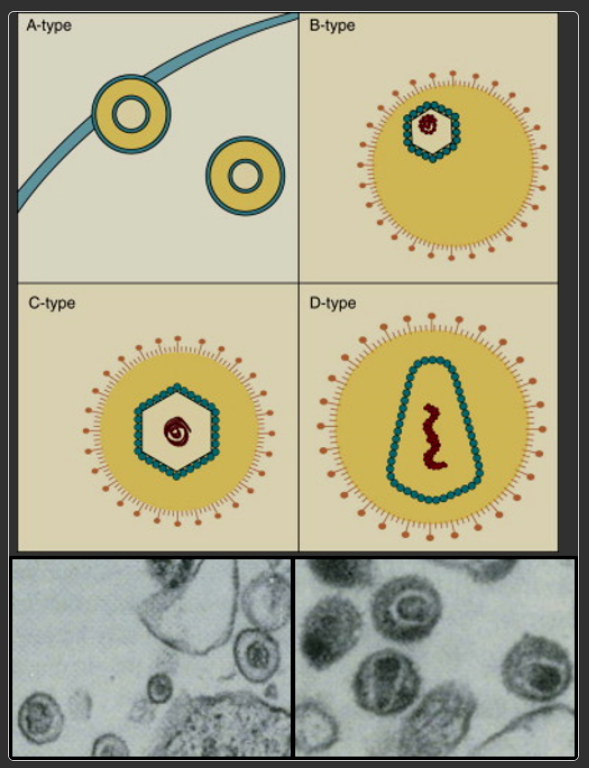
4 Categories of Retrovirus Classification
A type (ntracisternal particles, endogenous retroviruses)
B type (enveloped, extracellular particles, mause mammary tumor virus)
C type (enveloped, extracellular particles, most mammalian and avian retroviruses)
D type
D-Type Retroviruses
enveloped, extracellular particles
ex: HIV
2 Retroviridae Subfamily
oncovirinae
lentivirinae
Oncovirinae
retroviridae subfamily, associated with cancer and neurologic disorders
HLTV-1,2,5
Lentivirinae
retroviridae subfamily, associated with immunosuppressive and neurologic disorders, slow growth
HIV-1 and 2
HIV
zootonic virus (moves from animals to humans)
AIDS
acquired immunodeficiency syndrome, term used to describe the opportunitstic infections of kaposi sarcoma and pneumocystis jiroveci penumonia
2 Types of HIV
HIV-1
HIV-2 (from sooty mangabeys, mostly in west africa)
4 Groups of HIV-1
M
N
O
P
Group M
most widespread HIV-1 group, includes nine subtypes (A-K) and recombinant forms (CRFs)
Subgroups of HIV-1 Group M
B: north america, europe, australia
A &C: africa, russia, india
HIV-1
highly transmissible, rapid progession to AIDS, higher viral loads
HIV-2
less transmissable, slower disease progression, lower viral loads
3 Routes of HIV Transmission
inoculation of blood
sexual transmission
perinatal transmission
HIV Transmission Chart

Reverse Transcriptase
enzyme unique to retriviruses that allows it to create cDNA from its RNA, integrating with the host cells’ DNA and making replication possible
Reverse Transcriptase in Viral Replication Diagram

HIV Infection Cycle
binding and fusion
HIV (once inside the cell) releases numerous viral proteins, including the enzymes reverse transcriptase and integrase
reverse transcriptase action, inflammasomes, and pyroptosis
in activated, proliferating T cells, the DNA now enters the cell’s nucleus, the new viral DNA is inegrated into the host DNA with the help of integrase
with each cell division, the integrated pro-viral DNA is replicated along with the most DNA
physiologic acitvation of T cells by antigens and cytokines from activated macrophages (or other APCs) leads to induction of transcription factors within the host cell, therefore trasncription of proviral DNA to viral RNA and protein
new HIV proteins and RNA travel to the surface fo the cell and assemble into immature (noninfectious) HIV virions
the immature HIV virions exit the cell and release protease, which cleaves the immature proteins to yield mature, infective HIV virions which then go on to infect other cells
a subset of latently-infected CD4+T helper cells will remain as a reservoir of HIV that can reactivate in the future if HIV treatment is stopped
Protease
released by immature HIV virions, cleaves the immature proteins to yield mature, infective HIV virions which then go on to infect other cells
Integrase
helps integrate the new viral DNA into the host DNA during HIV infection
Binding and Fusion of HIV Infection Cycle
HIV enters the mucosa and through the help of the HIV surface envelope protein gp-120 bind to a cell expressing CD4+
once gp-120 binds to CD4+, a confirmational chage occurs in gp-120 that facilitates binding to the co-receptors CCR5 or CXCR4 that allows the virus to become internalized within the cell
binding of the coreceptor induces a confirmational change in another HIV surface protein gp-41 that exposes a fusion peptide, which can insert into te membrane of target cells leading to fusion with the host cell
Reverse Transcriptase Action of HIV Infection Cycle
converts viral RNA into proviral DNA
if the T cell is inactivaed, nondividing, the proviral DNA will remain in the cytoplasm and not replicate
the buildup of viral DNA in the cytoplasm leads to activation of inflammasomes
Inflammasomes in HIV Infection Cycle
activated by buildup of viral DNA in the cytoplasm, produces cytokines that promote inflammation and acitvate caspase-1, resulting in pyroptosis and ultimately cell death
this CD4+ t cell depletion ultimately results in AIDS if the patient remains untreated
What ultimately results in AIDS if a patient with HIV is left untreated?
CD4+ T-cell depletion
HIV Reservoir
subset of latently-infected CD4+ T helper cells that can reactivate in the future if HIV treatment is stopped
HIV Surface Proteins Diagram

3 Genes of HIV Genome
Gag
Pol
Env
Gag Gene
gene of HIV genome, codes for proteins that build viral particles
Pol Gene
gene of HIV genome, codes for inegrase, protease, and reverse transcriptase
Env Gene
gene of HIV genome, codes for envelope proteins
Long Terminal Repeat (LTR)
sequences involved in viral genome integration and act as promoter for RNA pol II
Co-Receptor Tropism
when HIV selectively attaches to a particular coreceptor on the surface of a host CD4 cell
3 HIV Coreceptors
CCR5 (R5-trophic)
CXCR4 (X4-trophic)
both (dual trophic)

CCR5 Coreceptor (R5 Type)
coreceptor used by HIV-1 during the early symptom-free stage of infection to enter cells and can infect both T cells and macrophages
CXCR4 Coreceptor (X4 Type)
coreceptor that can develop as HIV-1 progresses
switching to this coreceptor is often linked to a faster immune system decline and the onset of AIDS
switch does NOT always occur
Mixed Viral Populations
can develop in advanced HIV-1 infection where CCR5 and CXCR4 coreceptors are both used
CCR5Δ32
mutation in CCR5 gene that allows some individuals to be resistanct to HIV infection
results in a smaller protein that is ineffective in the viral attachement process
Homo and Heterozygotes of CCR5Δ32
homo lack functional CCR5 coreceptors on CD4+ T cells that are usually exploited by HIV-1 to gain entry, high degree of natural resistance
hetero may have delayed disease progression due to reduced receptor density
Maraviroc
CCR5 antagonist that mimics the protective effect of having a mutation in that gene, prevents gp-120 mediated fusion
HIV History Diagram
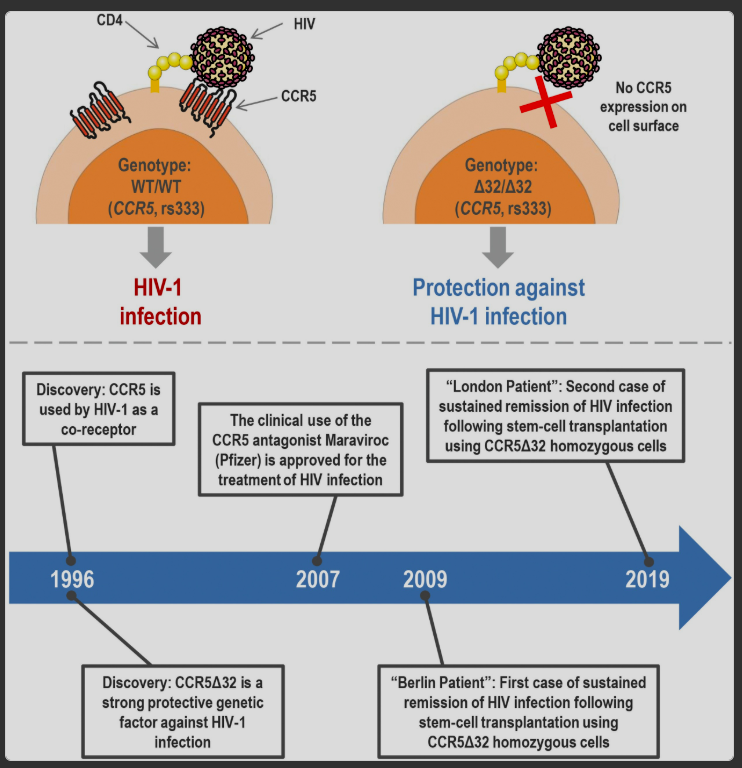
Stem Cell Transplantation and Gene Editing of Autologous T Cells
thereputic strategies for HIV that are based on the delta32 mutation discovery
Typical Clinical Course of HIV Diagram

Stages of HIV Infection Diagram

Inital Sympoms of HIV Infection
typically none
in some, acute illness may occur 2-4 weeks after infection with symptoms similar to those of mononucleosis (fever, sore throat, rash, lymphadenopathy, GI upset, myalgia)
Long Clinical Latency Period
follows the inital mononucleosis-like symptoms
initial infection iwth R5-M-trophic virus, then X4-T-trophic virus
the decrease in number of C4+ T cells, even during the latency period, allows opportunistic infections to occur
What defines the stages in HIV disease?
the CD4 T-cell levels
occurence of opportunistic diseases
What three ways do we detect HIV?
presence of p24
HIV genome
antibodies to the virus
Pathogenesis of HIV
causes lytic and latent infection of macrophage, dendritic cell, and CD4 T cells and dirsupts neuronal function
the outcomes of these actions are immunodeficiency and acquired immunodeficiency syndrome (AIDS) dementia
3 Stages of HIV Infection (differentiated by symptoms)
acute HIV infection
clinical latency
AIDS
Acute HIV Infection
first stage of HIV infection, within 2-4 weeks after infection about 2/3 of people will have flu-like illness as the body’s natural reaction to HIV infection
can last anywhere from a few days to several weeks, but some people have no symptoms at all
What is specific about stage 1 HIV?
there will be anti-HIV antibodies present
Symptoms of Acute HIV Infection
fever and chils, rash, night sweats
muscle aches, sore throat, fatigue
swollen lymph nodes, mouth ulcers
Clinical Latency (Chronic)
second stage of HIV infection, virus is multiplying at very low levels, people may or may not have symptoms
people can be in this stage for 10-15 years
Viral Load
determines if HIV is active and can be transmitted
low/undetectable load = can lead a healthy life and not transmit it to others
detectable load = can be transmitted even if you don’t have symptoms
AIDS
stage 3 of HIV infection, weakening of the body’s immune system due to untreated HIV
AIDS Symptoms
rapid weight loss, recurring fever or profuse night sweats, extreme and unexplained tiredness, prolonged swelling of lymph nodes, diarrhea more than a week
sores (mouth, anus, genitals), pneumonia, kaposi sarcoma, memory loss, depression, neurologic disorders
How do we know if someone has HIV?
since the symptoms of AIDS overlap with other things, we must test for HIV to diagnose it
CD4 Cell Count <200/mm³
time after acute illness where patient can go many years without becoming severely immunosupressed
AIDS-Realted Complex (ARC)
can manifest in HIV patient when they are not severely immunosupressed, still indicates patient with possibly decreasing CD4 levels
CD4 count between 200/mm³ and 499/mm³
How does HIV cause cellular immune deficiency?
depletion of CD4 cells, which then leads to opportunistic infections and cancers
ELISA
test that detects antibodies to HIV
useful preliminary test, performed in lab and highly sensitive
PCR
can detect HIV infection before antibodies form
high cost and difficulty
HIV-1/HIV-2 Differentiation ELISA
confirmatory test after a positive screeing result, high specificity
Rapid-Screeing Antibody Tests
for HIV, can be performed at home
use oral fluid or blood, provides preliminary screening that needs to be confirmed
Summary 1

Summary 2
