Ceutics 7 modified release dosage forms
 Call Kai
 Learn
Learn Practice Test
 Spaced Repetition
 Match
Match Flashcards
 Knowt Play
1/63

There's no tags or description
Looks like no tags are added yet.
Name | Mastery | Learn | Test | Matching | Spaced | Call with Kai | Chat |
|---|
No analytics yet
Send a link to your students to track their progress
64 Terms
a drug prepared in a suitable form for administration is known as
dosage form/ delivery system
MRDFs
drug products designed to alter the time and rate of release of the drug
(modified release dosage forms)
delayed release dosage form definition
a dosage form that releases a discrete portion of drug at a time other than promptly after administration
repeat action dosage form
= delayed release
= release of 2 doses successively: immediate and then delayed
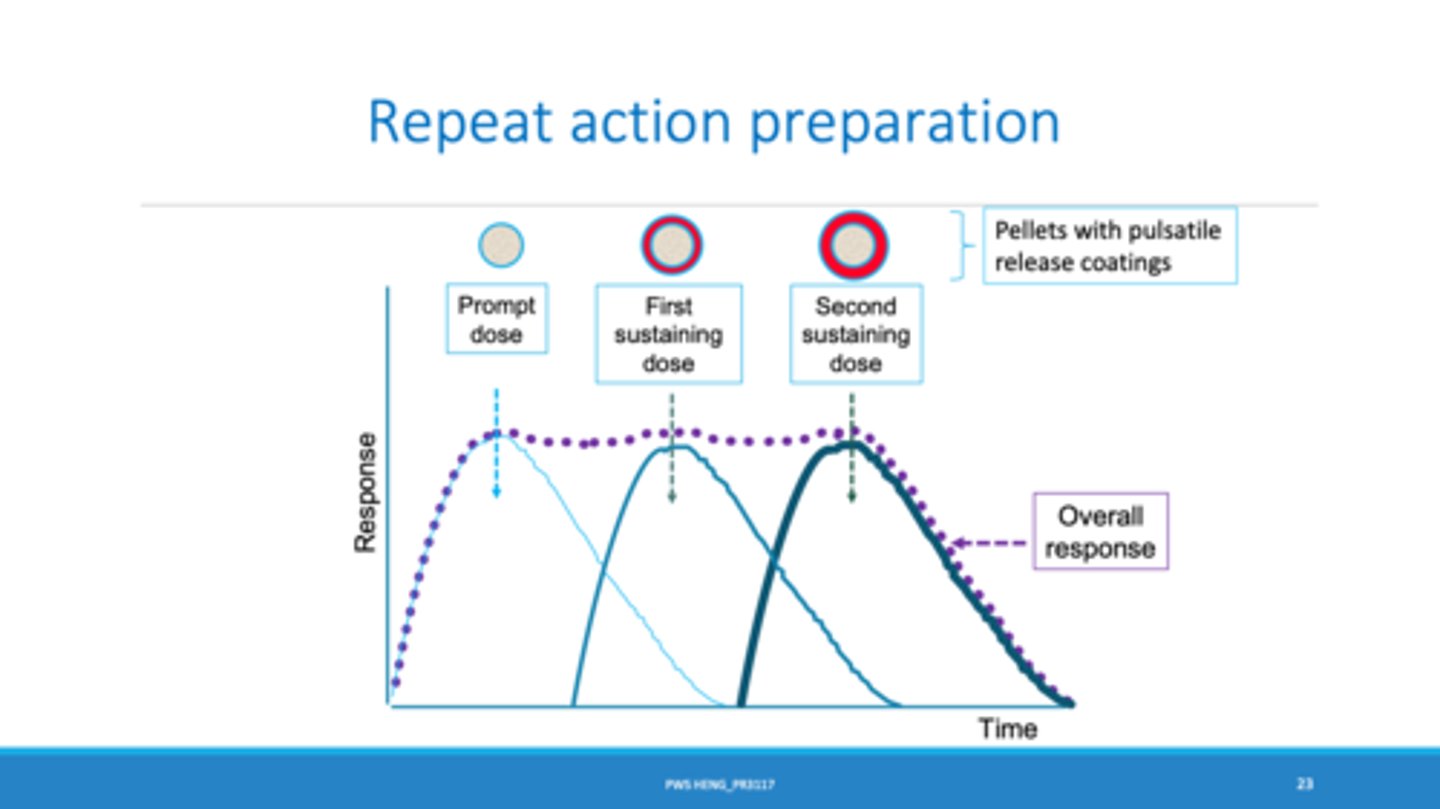
prolonged action dosage form
=delayed release dosage form
= initial dose + replenishment
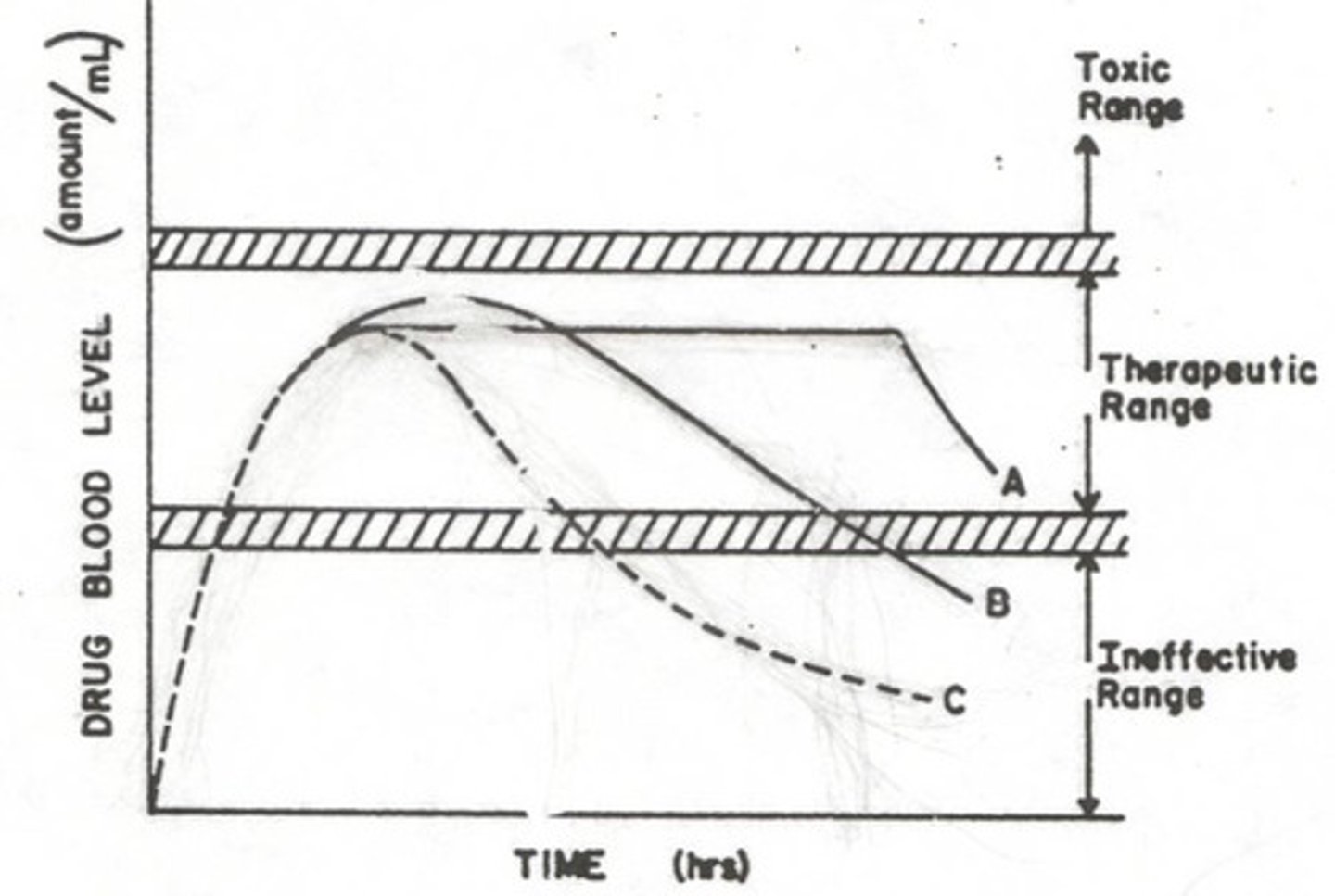
enteric coated tablet dosage form
= delayed release dosage form
= timed release via polymer barrier coating
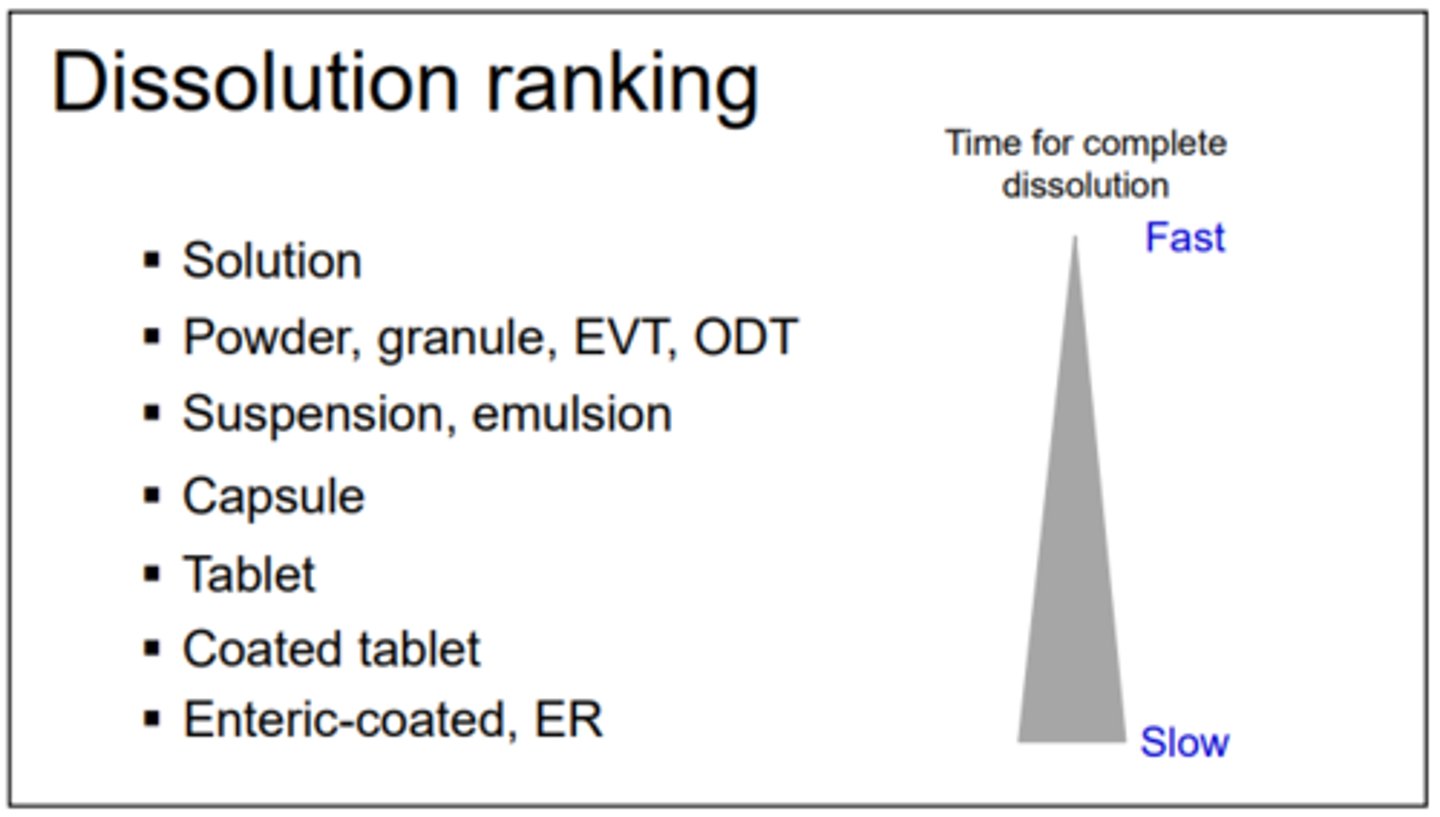
modified enteric coated tablet dosage form
= DR dosage form
= additional drug is applied over enteric coat and is released in the stomach, while remainder is released further down GI tract
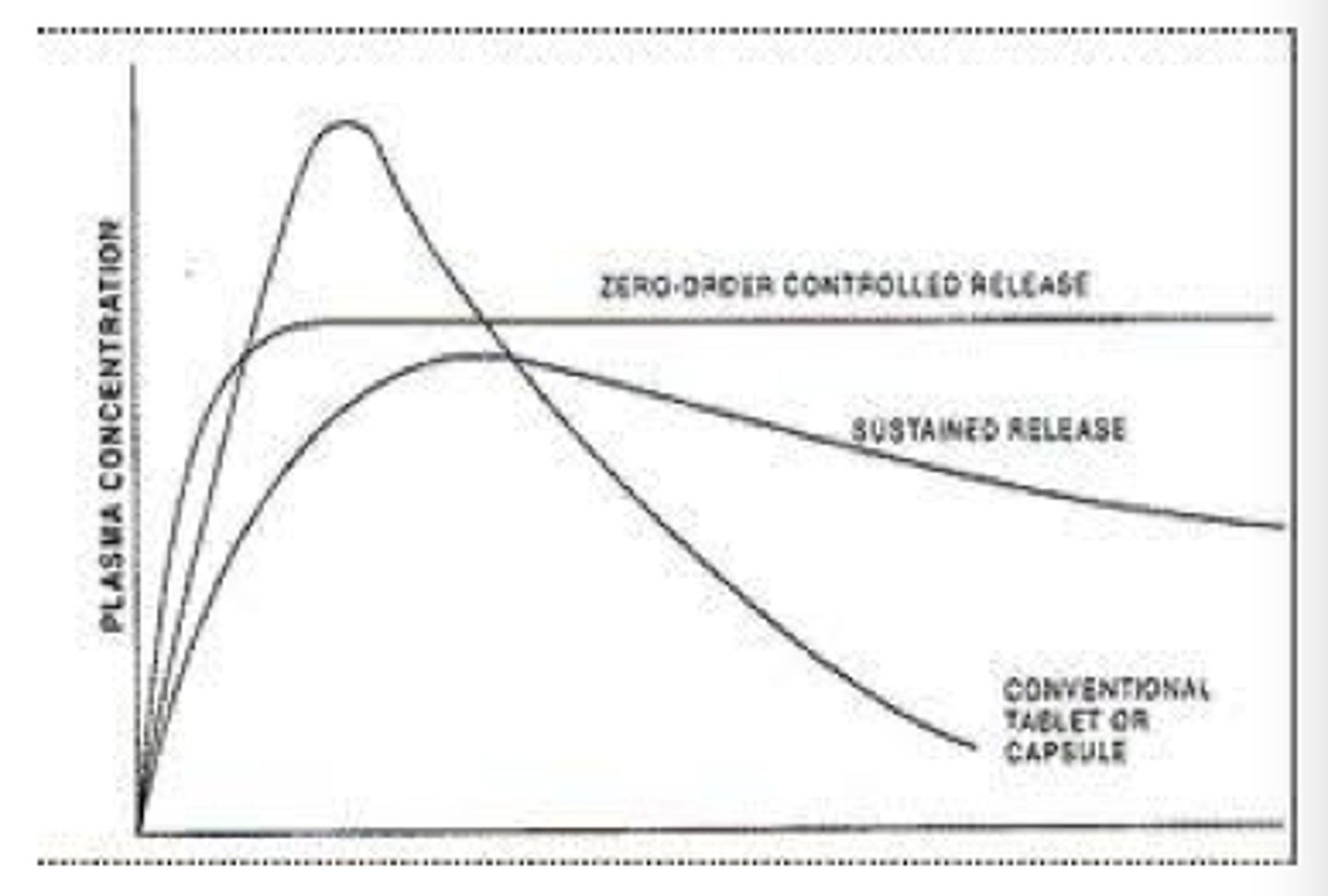
controlled release
= releases drug over extended period of time
= avoids undesirable sawtooth characteristics of plasma concentration vs time
= rate of release is controlled to constant drug concentration= less dosing frequency
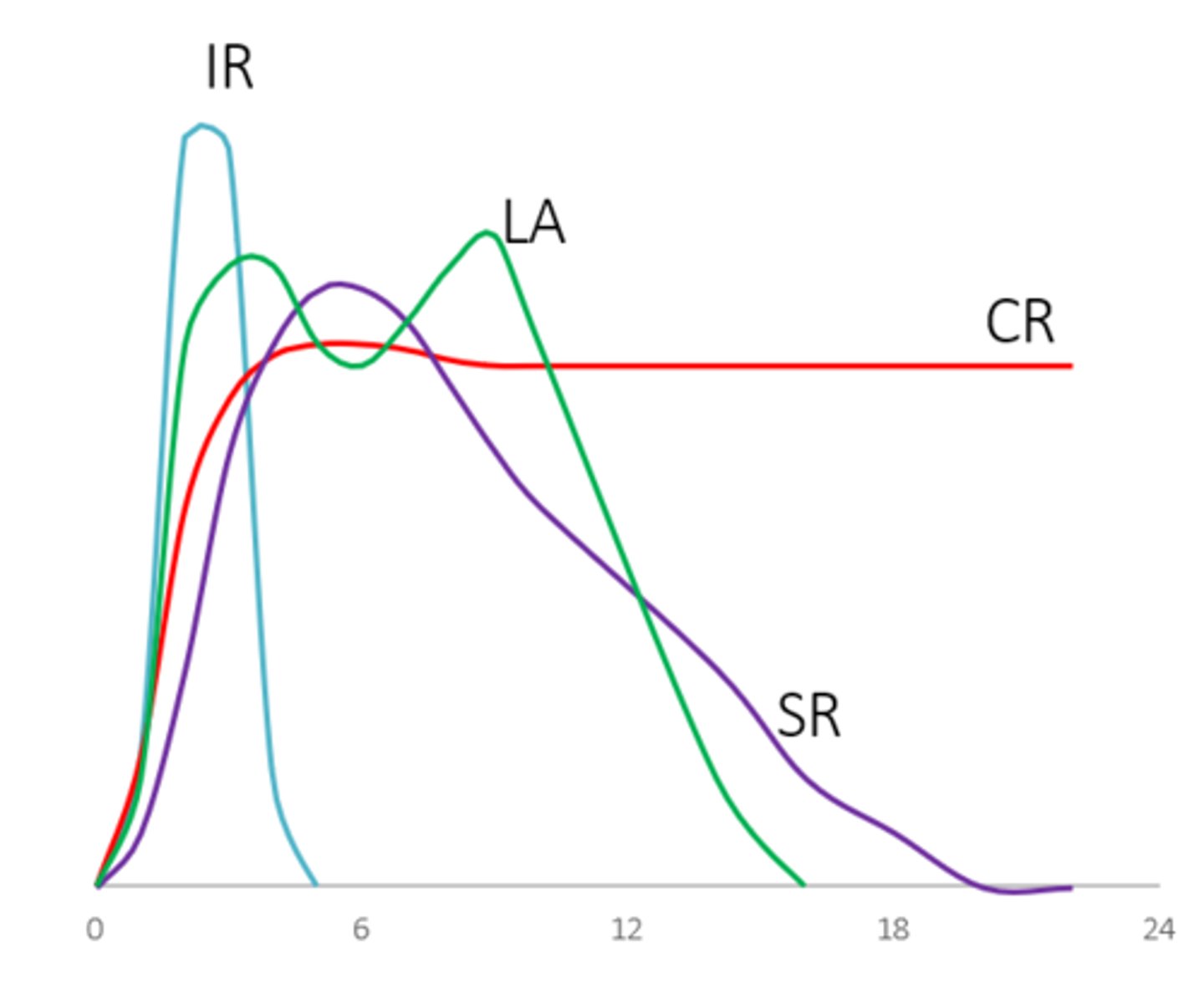
sustained release
initial release of sufficient amount of drug to provide an IMMEDIATE therapeutic dose then GRADUAL release over an extended period
site specific vs receptor targeting dosage forms
site specific= drug release is at organ or site of absorption
receptor= drug release is at RECEPTOR for drug action
advantages of MRDFs
1. constant plasma drug level in therapeutic window= increased efficacy
2. reducing dosing frequency and eliminating drug accumulation= less side effects
3. increased patient compliance
4. cost of treatment for chronic diseases is reduced
disadvantages of MRDFs
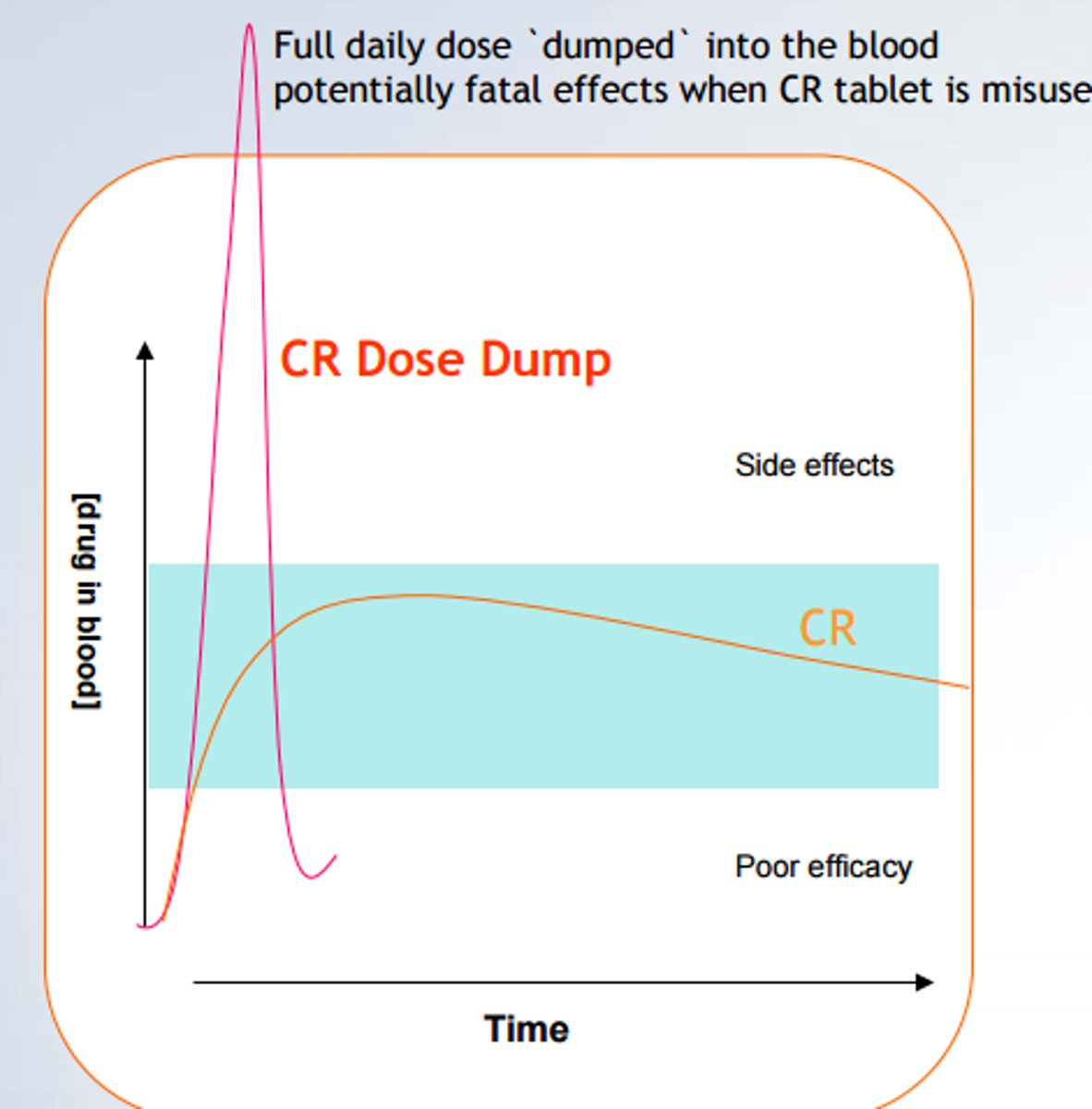
1. dose dumping= potential adverse plasma levels
2. withdrawal of drug from body is difficult once administered
3. oral drugs may yield erratic drug absorption-> drug ineffectiveness
dose dumping
risk of sudden and total drug release; this is potentially a major disadvantage of extended-release products
basic principle in design of oral CONTROLLED-release drugs that controls DRUG AVAILABILITY is kinetics of __________
drug release (NOT DRUG ABSORPTION)
oral controlled release drugs are classified based on __________
mechanism that controls the release of the drug
diffusion controlled systems
1. what serves as a physical barrier to release
2. what are the 2 types?
1. polymers are a physical barrier that control rate of release
2. two types: reservoir and matrix
nonporous vs microporous diffusion-controlled reservoir system
nonporous= drug must diffuse through polymer (there are no holes to escape through)
porous= drug is released through micropores (usually filled w water or oil)
diffusion devices with microporous membranes can contain what 2 elements in their pores? why?
water: for hydrophilic drug diffusion
oil: for hydrophobic drug diffusion
drug release from a reservoir device can happen in what 2 ways
1. water/ gastric juice penetrates polymer coat and dissolves drug
2. drug molecules diffuse through polymer coating
a ________ rate of drug release occurs if drug concentration in polymer core remains at saturation
constant
what 2 things are added to INCREASE polymer coating permeability
1. plasticizers= increase fluid uptake
2. water-soluble additives (aka pore formers)= additives dissolve in water to leave pores in coating (forming disperse phase)
= allows both lipophilic and hydrophilic drugs to pass through
describe how water soluble additives in reservoir devices work
additives dissolve in water to leave pores in coating (forming disperse phase)
= allows both lipophilic and hydrophilic drugs to pass through
ex: iron
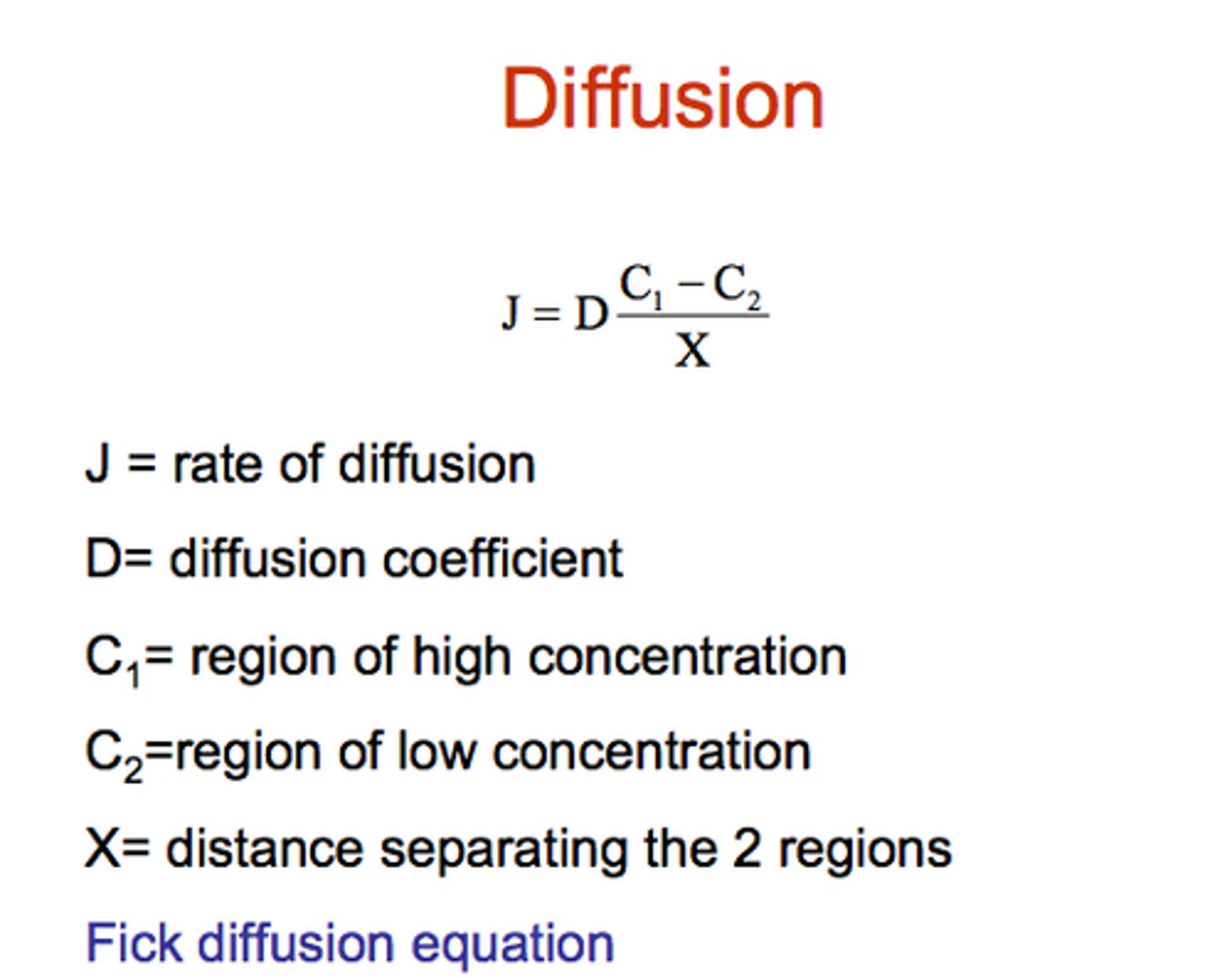
the release of drugs from diffusion reservoir devices is based on what law?
Fick's law of diffusion
= rate of transfer is proportional to concentration gradient
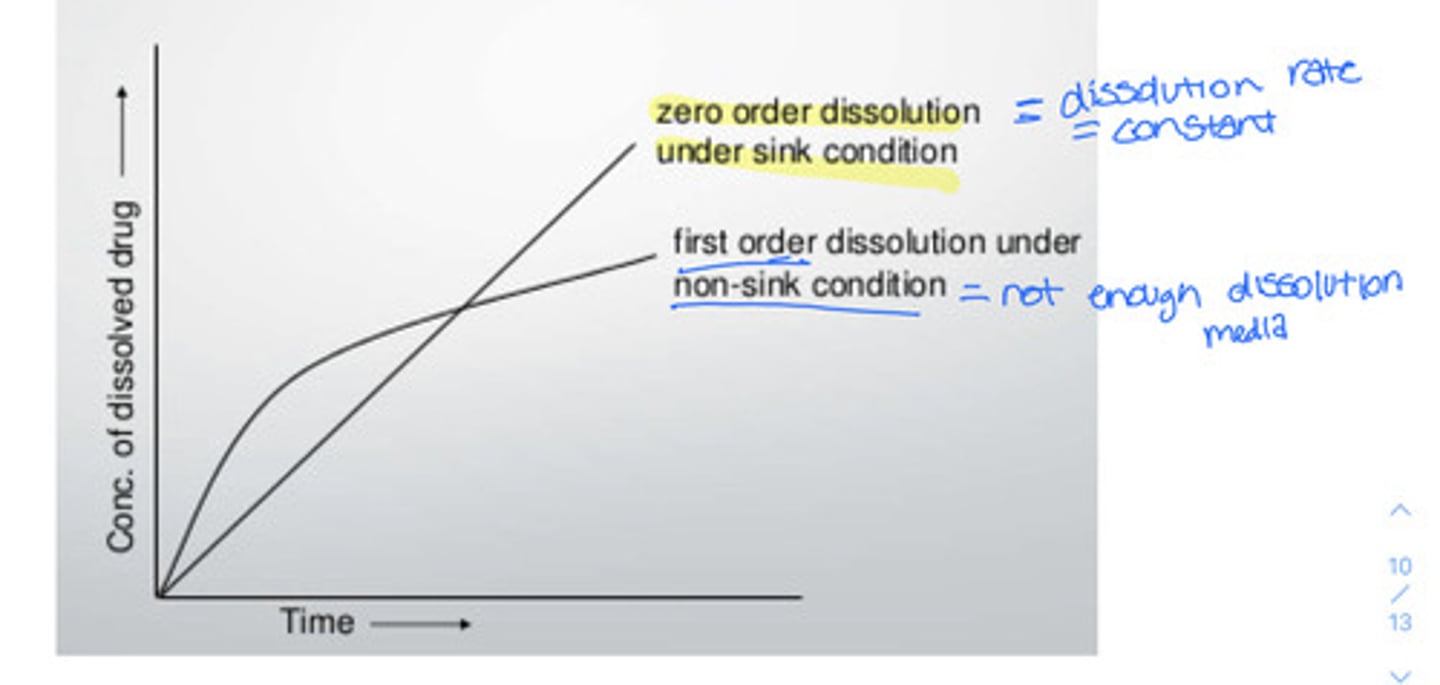
what are sink conditions
solution in receptor is constantly replaces so that drug concentration does not build up
= ensures steady state
= replicates stomach environment
how can you prepare a reservoir device using coated beads or pellets
1. coat drug onto preformed core (bead/pellet)
core= starch, sucrose, lactose, microcrystalline cellulose
2. cover core with insoluble and permeable coat
= pan coating or air suppression techniques
coat materials: cross-linked poly, hydroxypropyl cellulose, polyvinyl acetate, ethyl cellulose, polyethylene glycol, beeswax, cetyl alcohol
- also plasticizers and pore-formers added
examples of coat materials used to make reservoir devices
cross-linked poly, hydroxypropyl cellulose, polyvinyl acetate, ethyl cellulose, polyethylene glycol, beeswax, cetyl alcohol
2 ways to form reservoir devices via microencapsulation
1. coacervation (simple)
-liquid/solid that needs to be encapsulated is dispersed in polymer solution
-polymer nonsolvent is added to form coacervate (polymer rich layer) around disperse phase
- crosslinking forms capsule walls
2. complex
- 2 opposite charged polymers in solution
- deposition of polymer layer at particle-solution interface
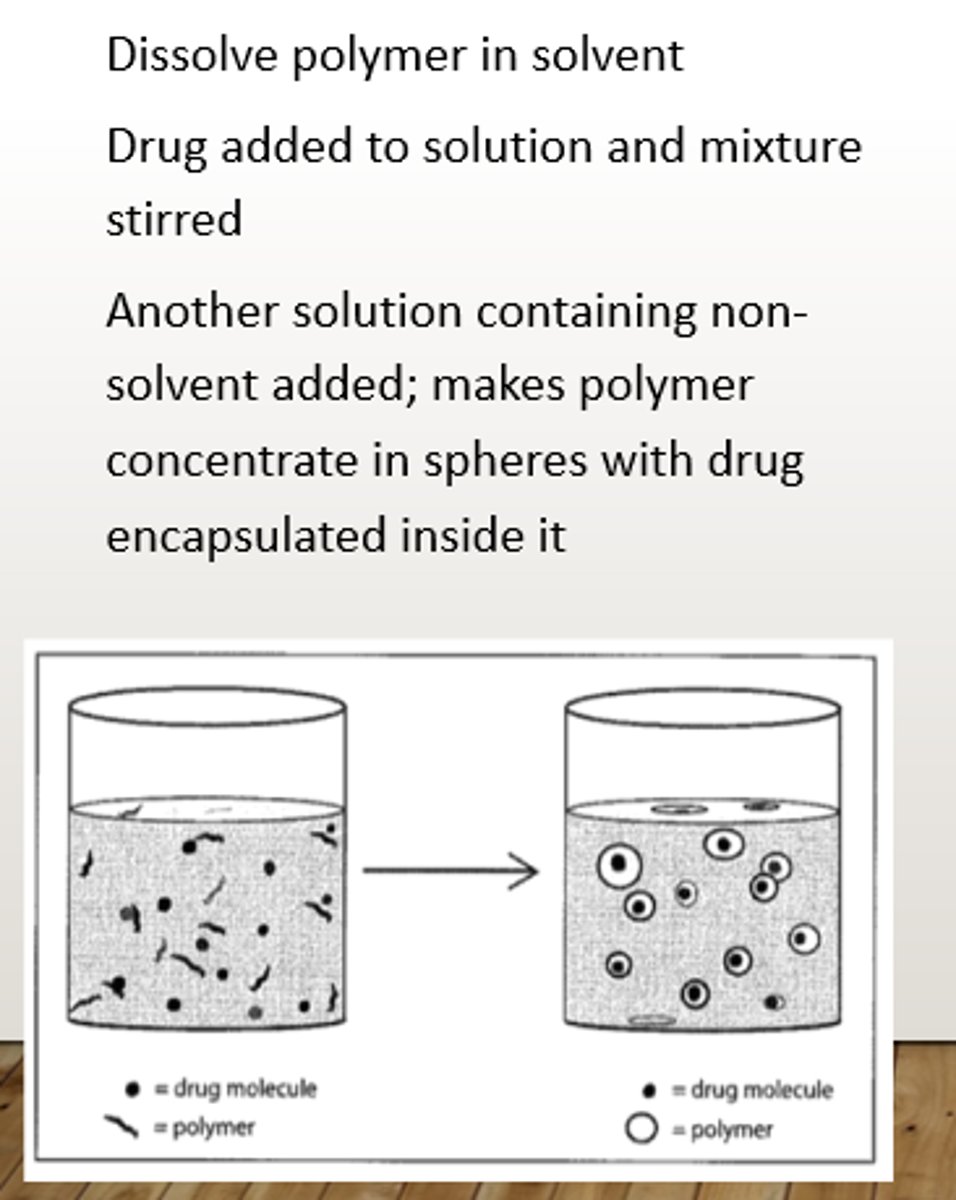
examples of polymers used for coacervation
gelatin, gum, acacia, hydroxyethylcellulose, starch, polyvinyl alcohol, cellulose nitrate
interfacial polymerization
rxn of oil-soluble and water-soluble polymers at o/w or w/o interfaces of emulsions
- monomers diffuse to interface and form polymeric membrane
- drug is dissolved in disperse phase
- size of microcapsules depends on size of emulsion droplets
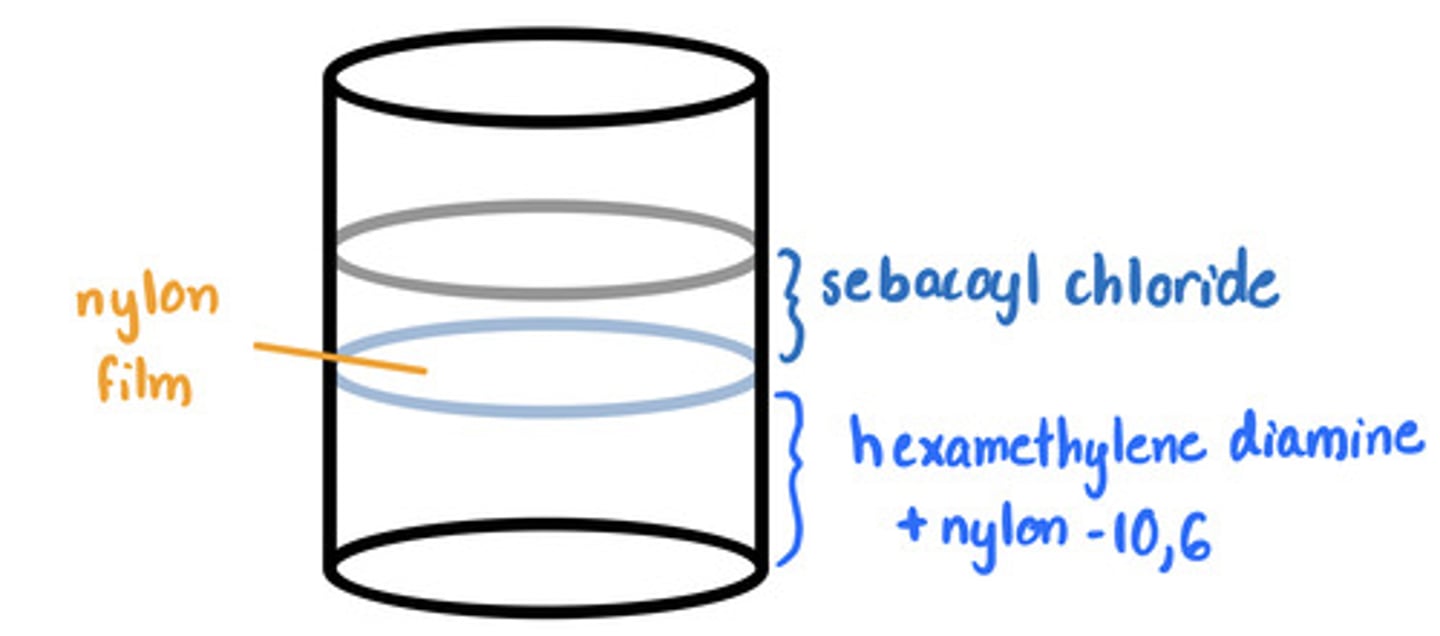
the size of microcapsules in interfacial polymerization is dependant on what
size of emulsion droplets
brief summary of the methods for preparing reservoir devices
1. coated beads/pellets
2. microencapsulation
a. coacervation
b. interfacial polymerization
c. solvent evaporation
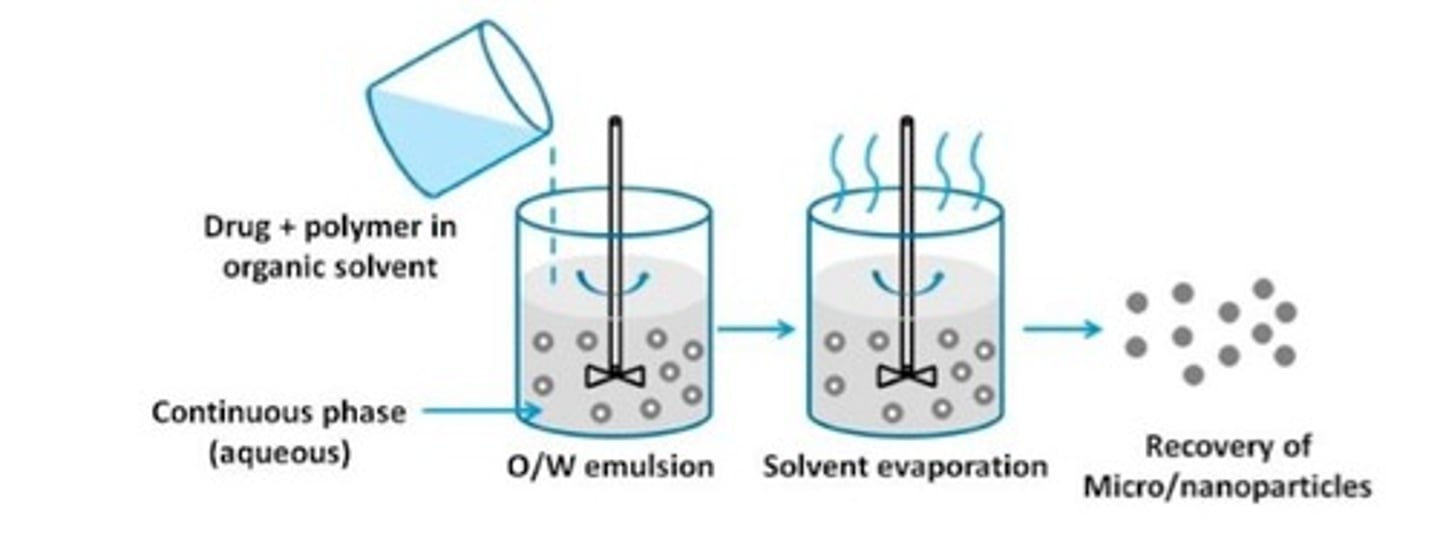
solvent evaporation
-microencapsulation technique
-polymer and drug are suspended in water-immiscible VOLATLE solvent (evaporates quickly)
- yield is dispersed in aqueous solution and surfactant to form emulsion
- evaporate solvent= get polymer microcapsules left over
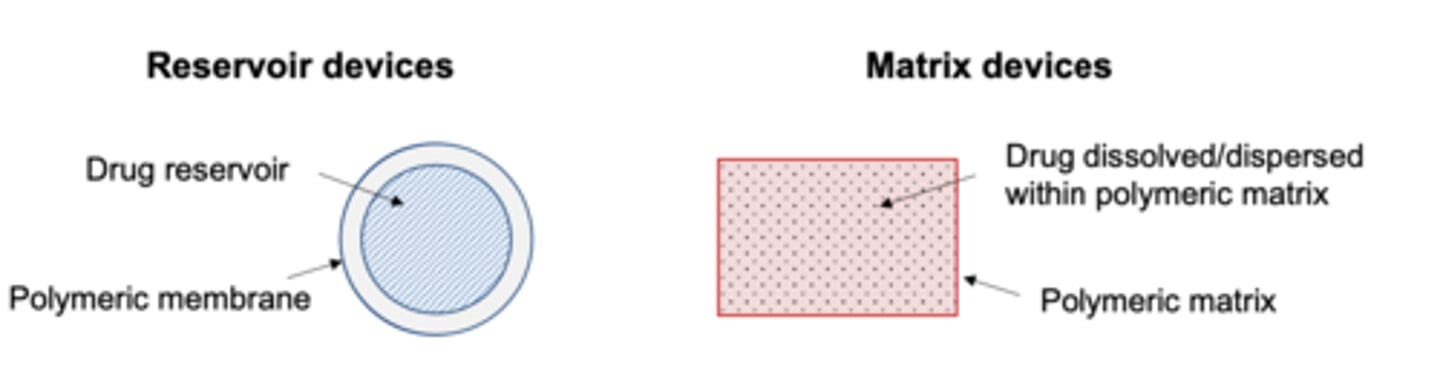
reservoir vs matrix devices
reservoir: drug core and polymer
matrix: inert polymeric matrix in which a drug is dissolved or uniformly dispersed (throughout)
homogenous vs heterogenous vs hydrophilic matrix devices (summary)
homo: drug is dissolved throughout
-release depends on SQUARE ROOT of time
-Higuchi equation
hetero: hydrophobic polymer with drug permeation triggered by fluids (negligible permeation)
-hydrophobic polymer with
hydrophilic: drug release occurs by gelation and diffusion
-size and shape of matrix changes as water penetrates
describe how a drug is released from a homogenous matrix device. what is assumed?
drug release depends on square root of time (Higuchi)
=assumed that solid drug dissolves from surface layer and this layer becomes exhausted of dispersed particles
Higuchi's equation
measures amount of drug released for homogeneous matrix
-depends on square root of time

how is drug released from a heterogenous/porous matrix
release of drug from hydrophobic polymer is triggered by ingress of water/GI fluids into pores and channels-> dissolution, diffusion
example of polymers used in porous matrix
copolymers of methylmethacrylate, methyl acrylate, polyvinyl chloride, polyethylene
example of polymers used in hydrophilic matrix
sodium alginate, carboxymethylcellulose, sodium carboxymethyl cellulose, hydroxypropyl methylcellulose
describe how you would prepare a dissolution controlled matrix system
1. drug is dispersed/dissolved within a slowly soluble polymeric matrix
OR
2. direct compression (drug+polymer+other excipients)
describe how a drug is released from a dissolution controlled matrix system and what determines rate of penetration
drug is released as matrix is eroded
via rate of penetration of gastric fluid into matrix
= rate of penetration depends on the porosity of the matrix
describe how an encapsulated dissolution control system releases drugs
polymeric materials surrounding drug is dissolved-> drug core is available for immediate release
what affects drug release rate in encapsulated dissolution systems
1. adjusting thickness-> affects dissolution rate
why would drug particles without a polymeric barrier be needed
immediate release
by compressing multiple particles of drug with varying thickness into a tablet, it is possible to obtain _____________ release
uniform sustained release
examples of materials used for coating of particles in encapsulated devices
cellulose acetate butyrate
cellulose acetate phtalate
ethylcellulose
shellac
gelatin
carnuba wax
by increasing the thickness of a polymer layer in an encapsulated device, the rate of dissolution is _________
decreased
all polymers must be _________ or _____________ in order to dissolve
water soluble or biodegradable
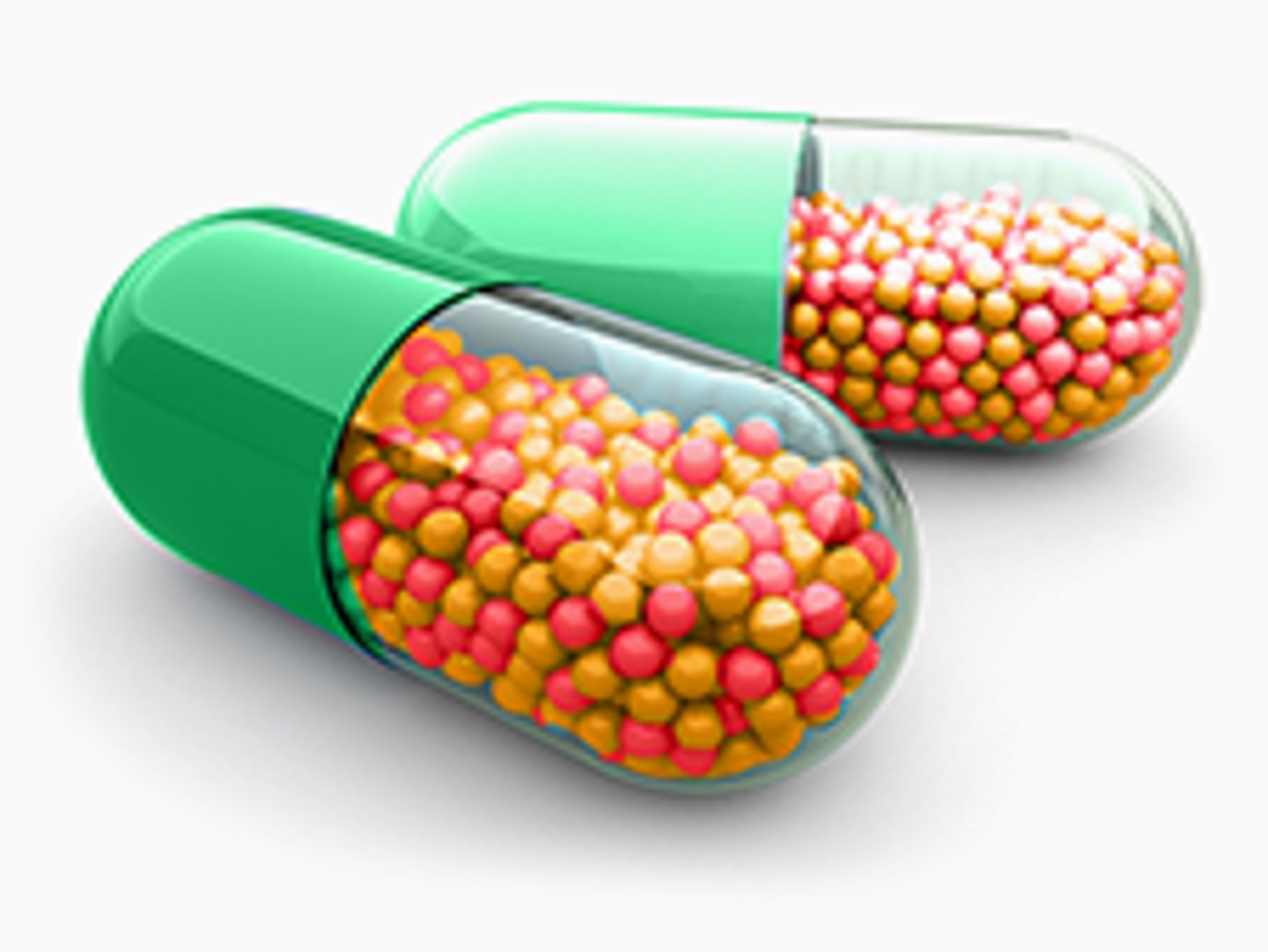
spansules
sustained release capsules; contains time released beads of medication
an osmotic device consists of
1. drug core OR drug+osmotic agent
2. surrounded by semipermeable polymer membrane with delivery orifice
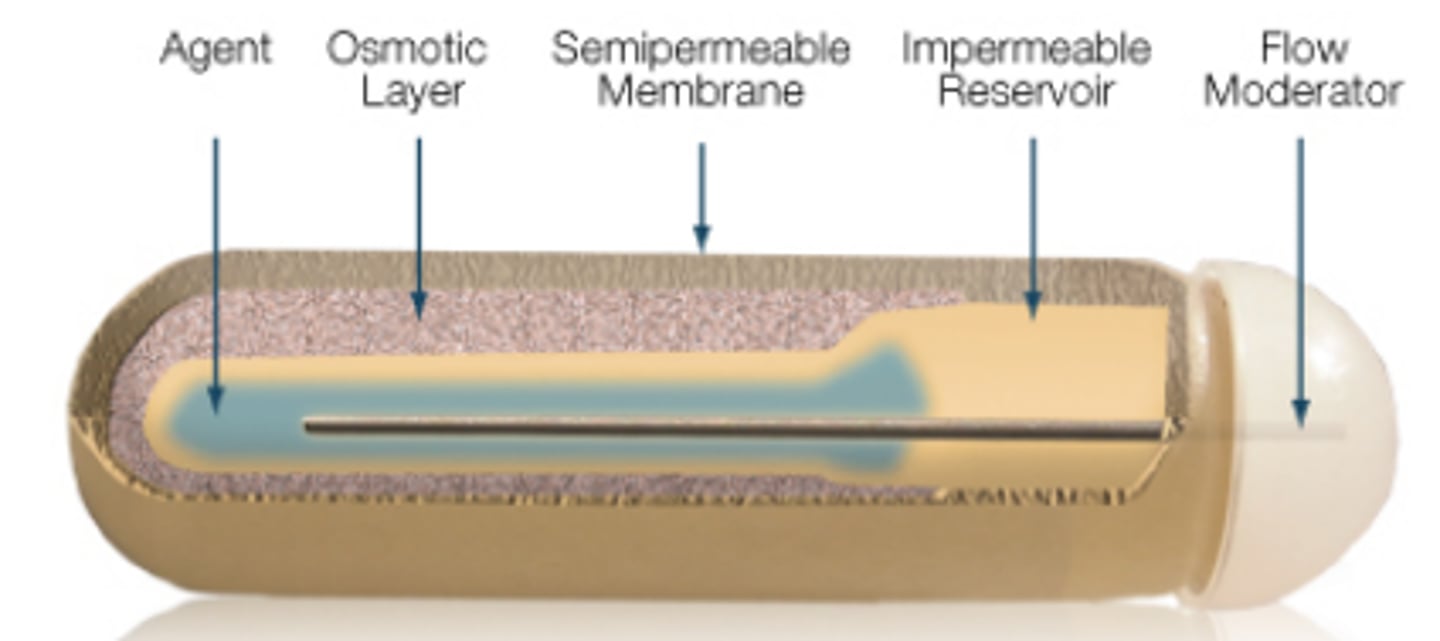
example of polymers used to make semipermeable membranes in osmotically controlled systems
cellulose acetate
ethylcellulose
polyvinyl chloride
polyvinyl alcohol
how does an osmotically controlled system work
=osmotic agent draws in water through its semipermeable membranes
=increase in water/volume develops pressure inside device
=flow of saturated drug solution out of delivery orifice relieves pressure
*****CONSTANT RATE
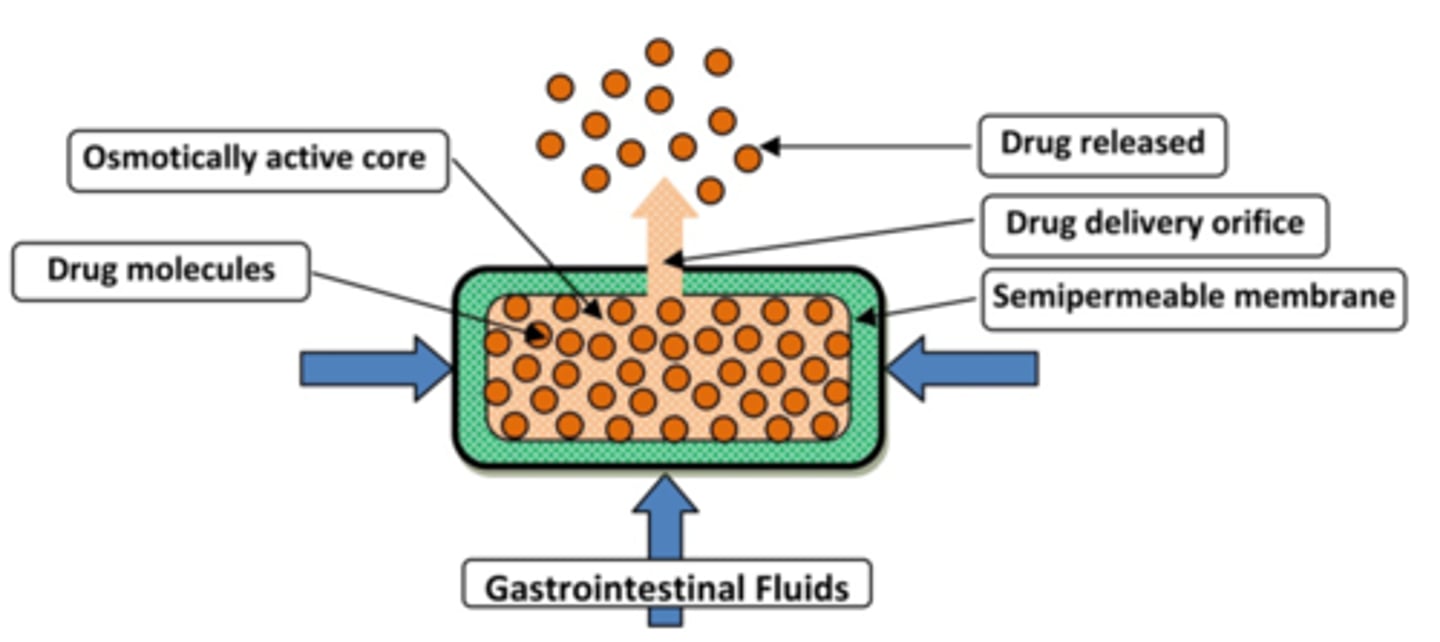
osmotically controlled devices release the drug from the orifice at a ________ rate
constant rate; as long as osmotic gradient is constant
examples of the osmogen seen in osmotic devices
sucrose
mannitol
does pH affect release rate of osmotic drugs
no
what is the pioneer oral osmotic pump drug delivery system
Oros by Alza
drug release rate of osmotic devices is affected by what 4 things
1. type of membrane
2. osmotic pressure
3. delivery orifice size
4. saturated solubility of drug
MODS
as long as the concentration of drug solution is above saturation in an osmotic device, the release rate is ________ and follows _________ kinetics
constant; zero-order
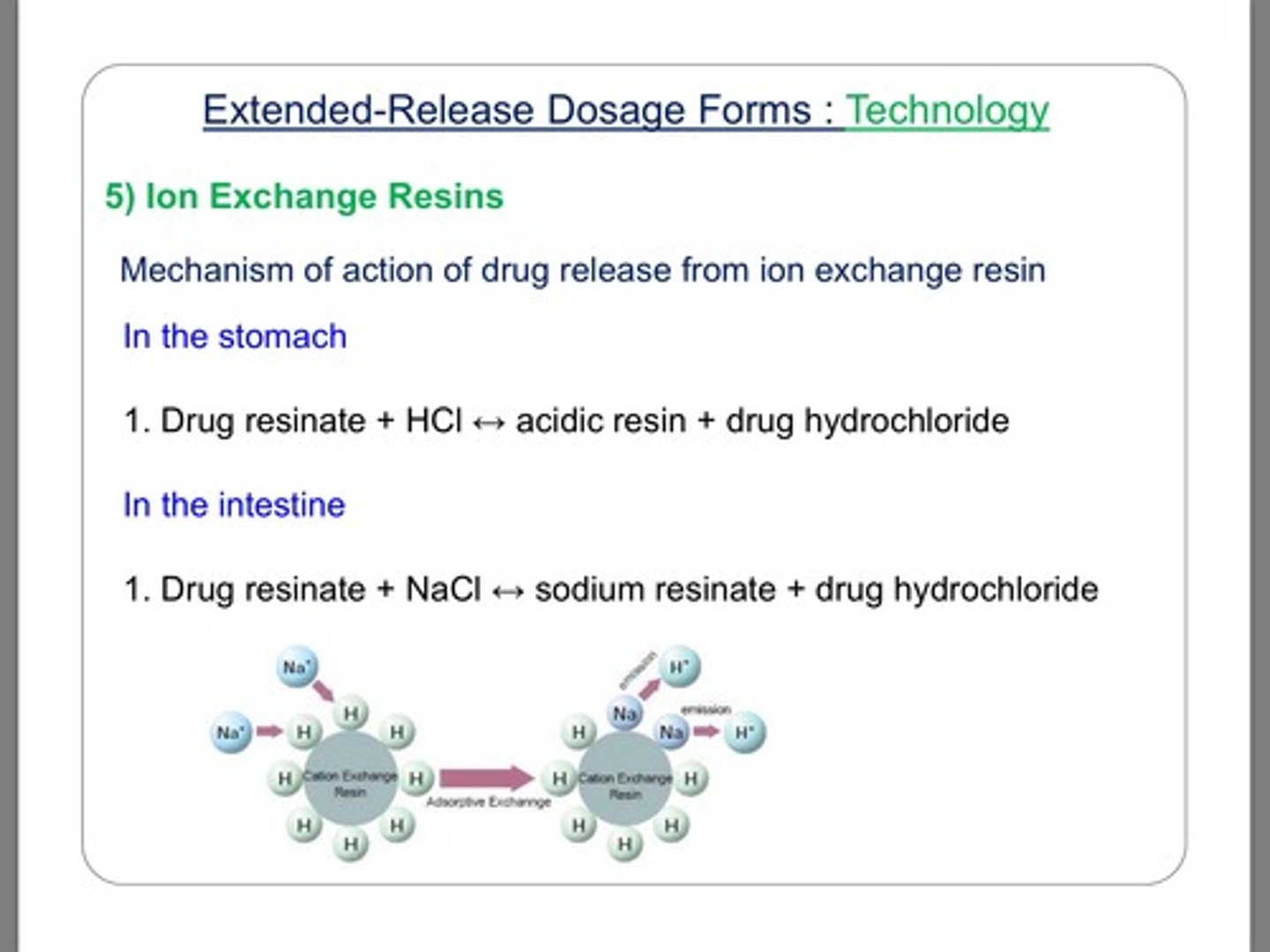
describe makeup of ion-exchange resin controlled systems
crosslinked polymer networks with ionizable groups capable of exchanging ions of the SAME charge present in solution
-cation vs anion
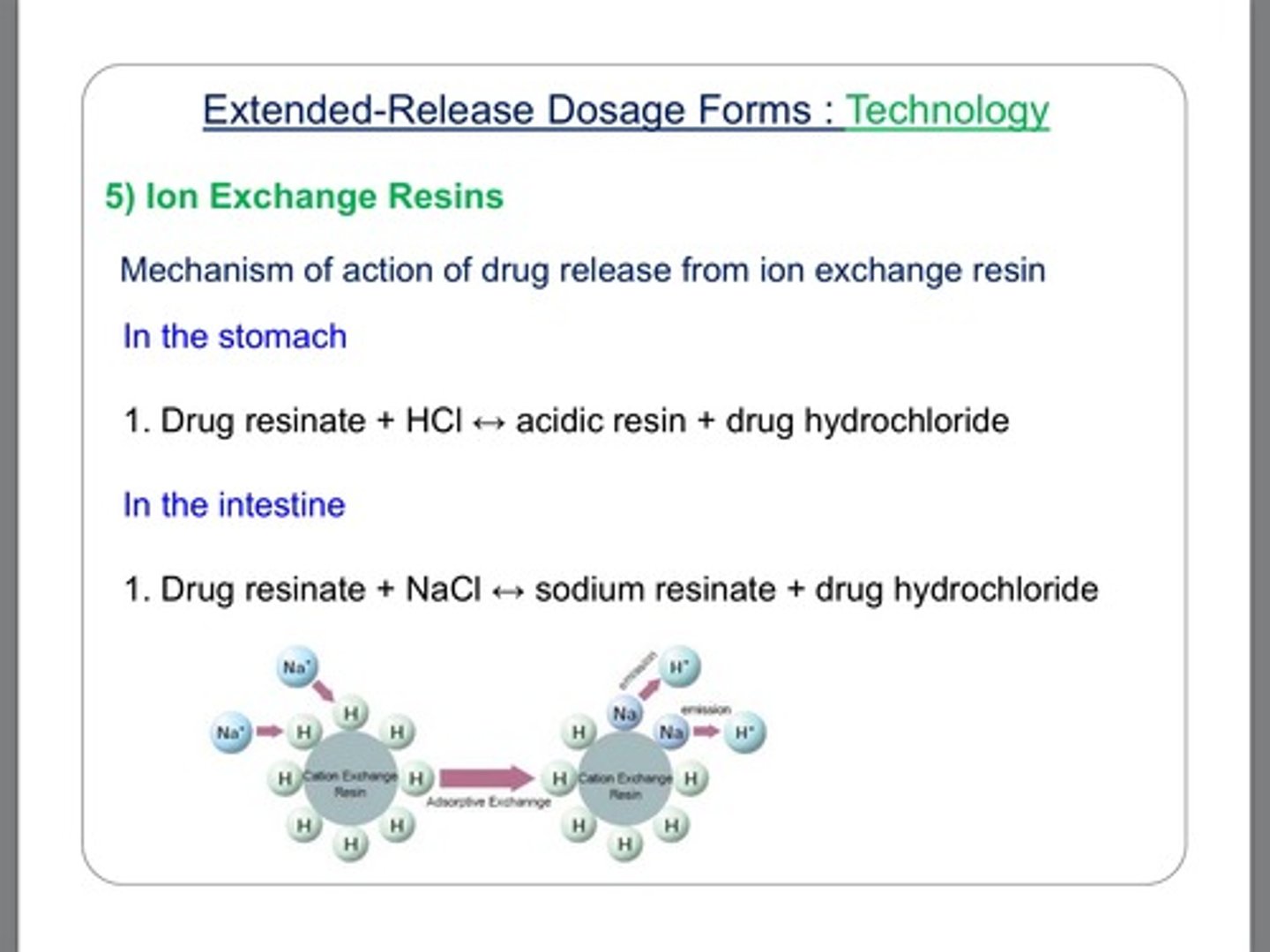
cation vs anion exchangers in resin control systems
cation: drug is positive, resin is negative
anion: drug is negative, resin is positive
-ions diffuse into and out of resin
-the +/- drug on resin is exchanged for H+ or Cl-, therefore being released
release rate of ion-exchange resins is affected by what 4 things
CPED
-crosslinking degree within resin
-pKa
-electrolyte concentration in environment
-diameter of resin beads
constant rate of drug release may occur if the concentration of drug in polymeric core remains ________
at saturation
pore formers (water soluble additives) allow what kinds of drugs to pass through
-lipophilic
-hydrophilic
- weakly acidic or basic
T/F: drugs suitable for extended release should have short half-lives
false