Chinese art ID quiz 2
 Call Kai
 Learn
 Practice Test
 Spaced Repetition
 Match
 Flashcards
 Knowt Play
1/28

There's no tags or description
Looks like no tags are added yet.
Name | Mastery | Learn | Test | Matching | Spaced | Call with Kai | Chat |
|---|
No analytics yet
Send a link to your students to track their progress
29 Terms

Reconstructions of Bright Hall, Han dynasty

Aerial view of coffin chambers and diagram of vertical pit, tomb of Lady Dai at Mawangdui, Han dynasty (168 BCE)

T-shaped Painting, tomb of Lady Dai at Mawangdui, Han dynasty (168 BCE)

Detail of T-shaped Painting, tomb of Lady Dai at Mawangdui, Han dynasty (168 BCE)

Detail of T-shaped Painting, tomb of Lady Dai at Mawangdui, Han dynasty (168 BCE)

Detail of T-shaped Painting, tomb of Lady Dai at Mawangdui, Han dynasty (168 BCE)

Detail of T-shaped Painting, tomb of Lady Dai at Mawangdui, Han dynasty (168 BCE)

Nested lacquer coffins, tomb of Lady Dai at Mawangdui, Han dynasty (168 BCE)

Innermost coffin with embroidery and feathers, tomb of Lady Dai at Mawangdui, Han dynasty (168 BCE)

Vermilion lacquer coffin, tomb of Lady Dai at Mawangdui, Han dynasty (168 BCE)

End of vermilion lacquer coffin decorated with image of deer and mountain, tomb of Lady Dai at Mawangdui, Han dynasty (168 BCE)

End of vermilion lacquer coffin decorated with bi disc, tomb of Lady Dai at Mawangdui, Han dynasty (168 BCE)
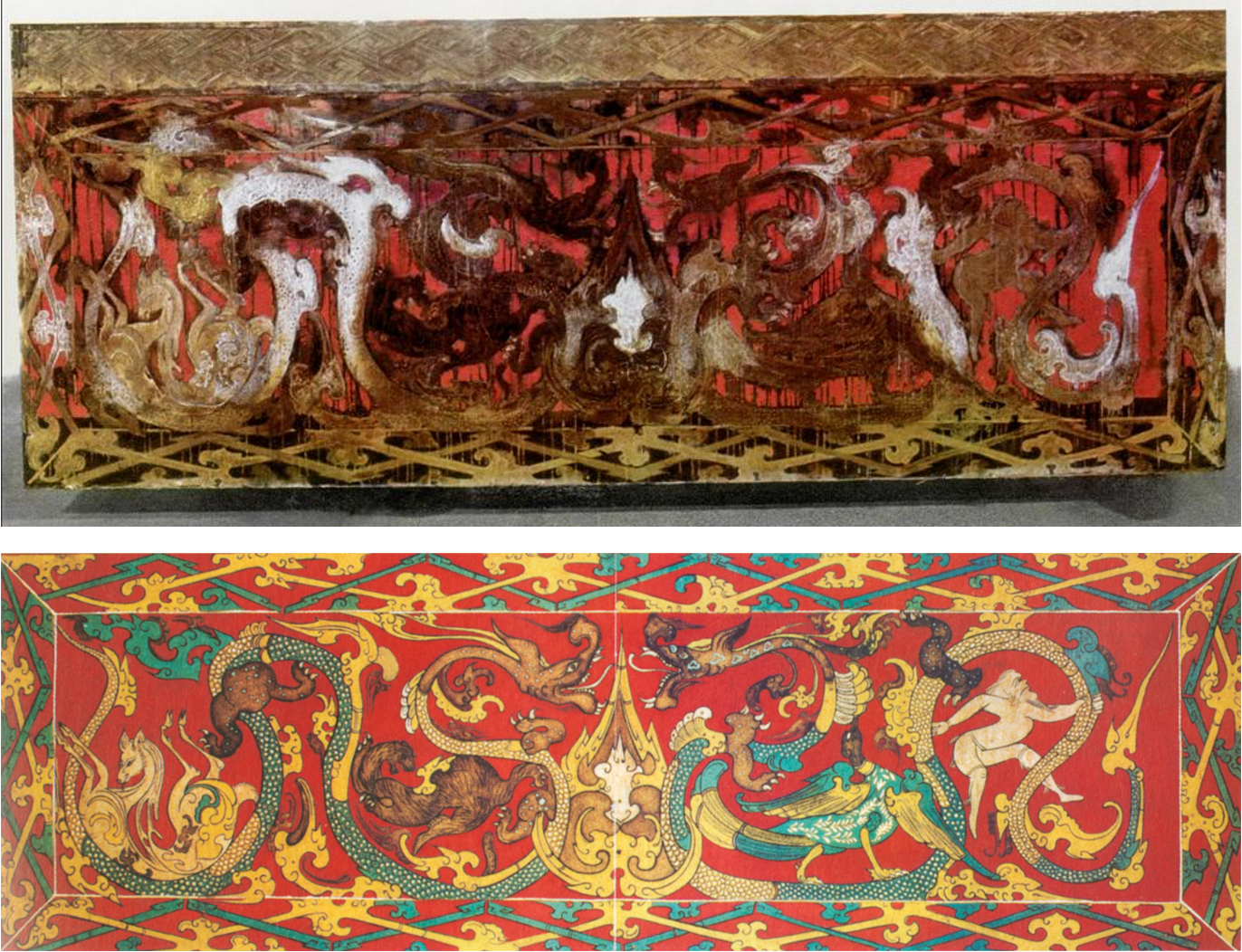
Side view of vermilion lacquer coffin, tomb of Lady Dai at Mawangdui, Han dynasty (168 BCE)

Black lacquer coffin with cloud patterns and animated characters, tomb of Lady Dai at Mawangdui, Han dynasty (168 BCE)

End of black lacquer coffin with cloud patterns and animated characters, tomb of Lady Dai at Mawangdui, Han dynasty (168 BCE)
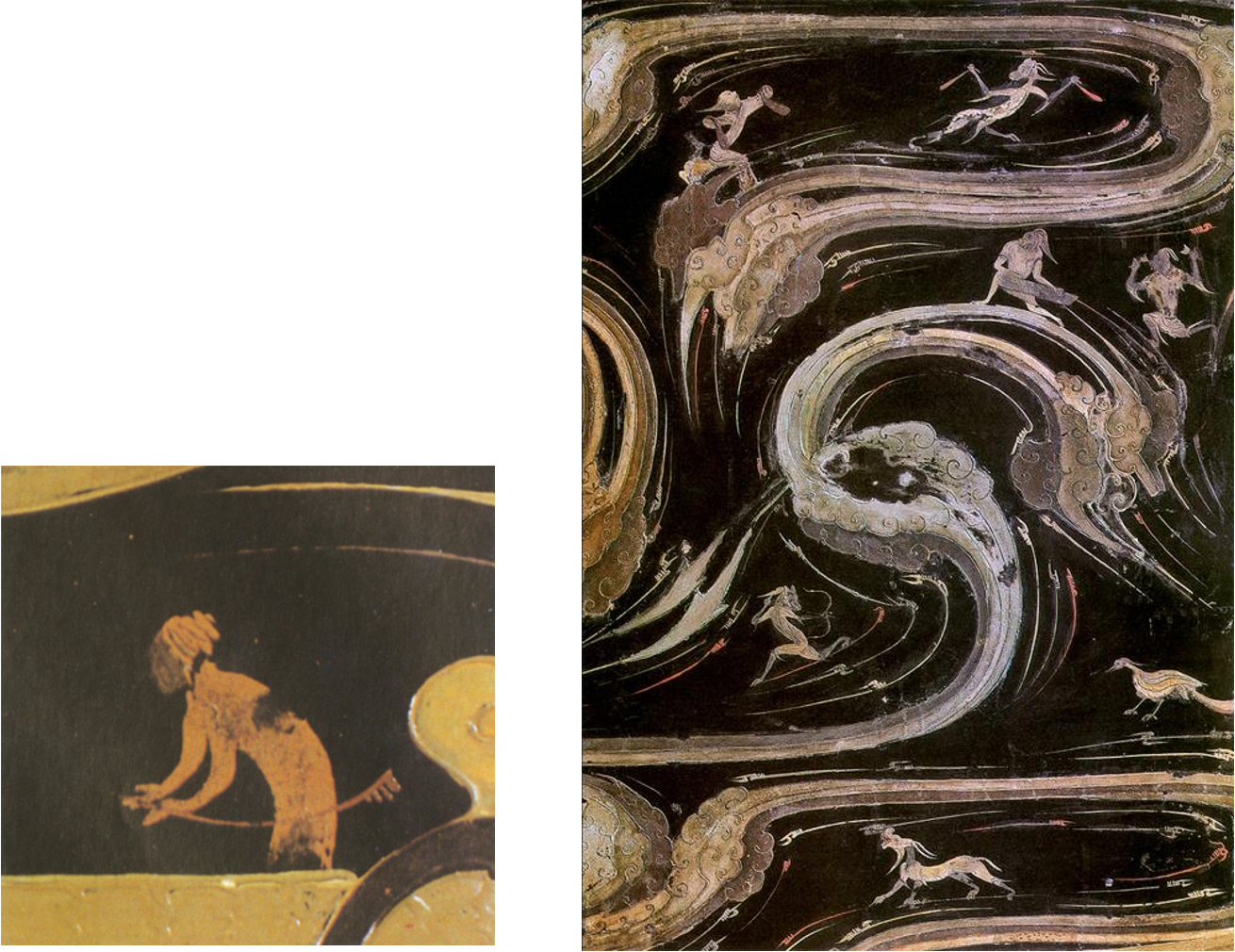
Details of black lacquer coffin with cloud patterns and animated characters, tomb of Lady Dai at Mawangdui, Han dynasty (168 BCE)

Painted wooden figurines, tomb of Lady Dai at Mawangdui, Han dynasty (168 BCE)
Han
202 BCE - 220 CE
Five phases
Chinese idea of foundation “elements'“ of wood, fire, earth, metal, and water. Applied to many aspects, as well as believed to create and destroy each other.
Yin Yang
The cosmological concept of categorizing the world into two opposing forces. Yin often represents the dark, damp, the cold while yang represents the bright, dominant, and warm.
Minqi
“Spirit objects” which are burial objects made purely for purpose of being buried in a tomb. Often made with inexpensive wood, terracotta, etc.

Reconstruction drawing of Tomb of Liu Sheng, Han dynasty (113 BCE)
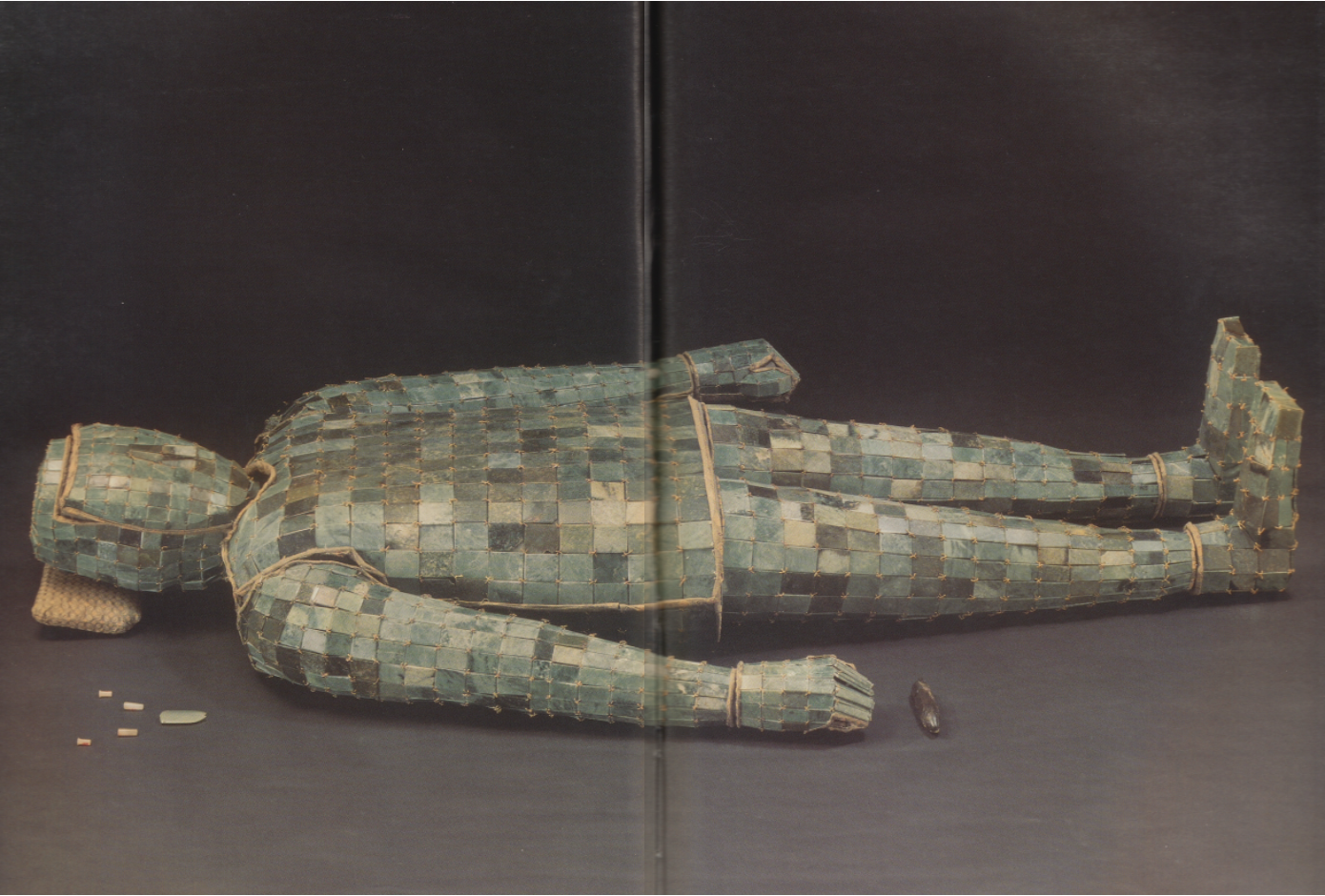
Burial suit/body of Liu Sheng with jade plugs, jade plaques sewn with gold thread, Tomb of Liu Sheng, Han dynasty (113 BCE)

Bi disc with dragon motifs, jade, Tomb of Liu Sheng, Han dynasty (113 BCE)

Incense burner, bronze inlaid with gold, Tomb of Liu Sheng, Han dynasty (113 BCE)

Seated Buddha, stone, Cave 20 at Yungang, Northern Wei dynasty (c. 460 CE)
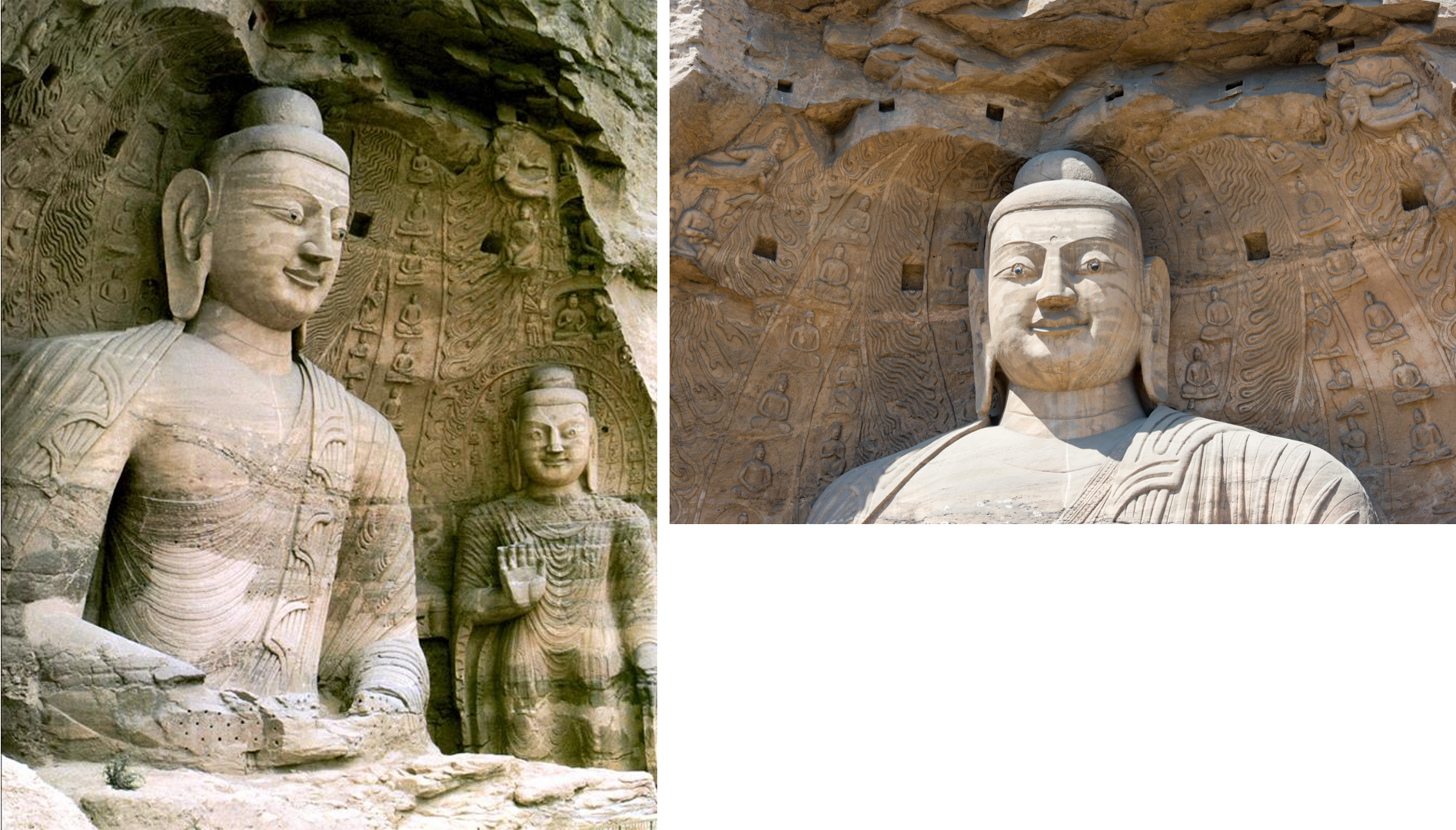
Details of Seated Buddha, stone, Cave 20 at Yungang, Northern Wei dynasty (c. 460 CE)
Northern Wei
386–584 CE; also acceptable 4th–6th CE
Tang
618–907 CE; also acceptable 7th–10th c. CE