IB Bio ecological niches
 Call Kai
 Learn
 Practice Test
 Spaced Repetition
 Match
 Flashcards
 Knowt Play
1/39

There's no tags or description
Looks like no tags are added yet.
40 Terms
niche definition and things that make up a niche
definition- The role of a species within its habitat
The role of a species includes
What it eats
Which other species depend on it for food
What time of day a species is active
Exactly where in a habitat a species lives and feeds
The abiotic factors acting on a species
The biotic factors acting on a species
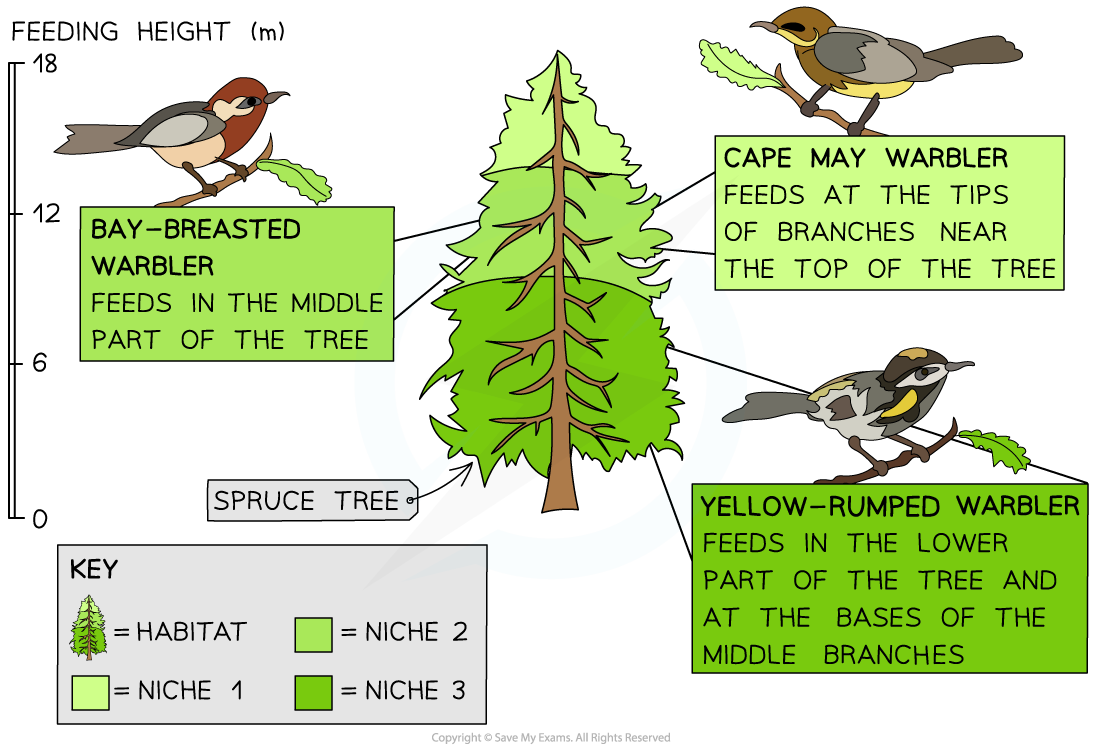
why can no two species fill the same niche within a habitat
they will be in direct competition and eventually outcompete one another
even if it seems like species are occupying the same niche, there will be subtle differences in their role e.g. they have different feeding locations or times throughout the day
obligate anaerobes+ examples
can only respire anaerobically
they cant tolerate oxygen
e.g. early bacteria due to the lack of O2 in the atmosphere ages ago
the only ones now are found in deep soil or water
facultative anaerobes and examples
mainly respire aerobically but can switch to anaerobic
e.g. brewers yeast or E Coli
obligate aerobes and examples
These organisms cannot survive in the absence of oxygen; they rely on aerobic respiration to release energy from food
They may be able to carry out anaerobic respiration in some cells for short periods, but they cannot survive on anaerobic respiration alone
e.g. most animals, most fungi except yeast, bacteria like mycobacterium tuberculosis
what is ATP and where does it come from
it is energy which is stored in the form of ATP
organisms need this to survive
the energy stored in ATP comes from carbohydrates and is transferred during respiration
method/ mode of nutrition definition
the way by which an organisms gains its organic molecules to fuel respiration
2 modes of nutrition and how they work
autotroph- produces its own organic molecules from inorganic substances in its environment
heterotroph- gains organic molecules from the tissues of other organisms
photoautotrophs and chemoautotrophs
photoautotrophs are organisms that use light energy
chemo are organisms that se energy from the oxidation of chemicals
examples of photosynthetic organisms (photoautotrophs)
examples of photosynthetic organisms aka producers are:
plants (terrestrial and aquatic)
algae (single cellular and multicellular seaweeds)
photosynthetic bacteria like cyanobacteria
how do photoautotrophs produce their own food
they use light energy to convert CO2 into organic molecules like carbohydrates
their pigments like chlorophyll absorb the light energy, enabling this process
the light energy is transferred into chemical energy
holozoic nutrition
definition- involves internal digestion
organisms that use holozoic nutrition are heterotrophs who ingest, digest, absorb and then assimilate molecules from the tissues of other cells
ingest= eat
digest= break down larger molecules into smaller ones
absorb= the transport of molecules from digestive tract into cells
assimilation- using molecules to build cells
mixotrophs
these are organisms which are able to make use of more than one mode of nutrition, such as auto and heterotrophy
examples include
corals
marine plankton
carnivorous plants
obligate mixotrophs
Obligate mixotrophs must constantly have access to both methods of nutrition
Facultative mixotroph
Facultative mixotrophs can survive using one method of nutrition, which is supplemented by the other
saprotrophs and examples
these are heterotrophs which externally digest their food by secreting an enzyme onto it before absorbing the products of this digestion
examples are fungi and bacteria (decomposers)
how do saprotrophs work and what products do they produce before absorption
Saprotrophs secrete a wide range of digestive enzymes that allow them to hydrolyse a large variety of biological molecules, and so to release a large range of products.
Examples of these products include mineral ions, such as ammonium ions and phosphate ions
do saprotrophs absorb all of the products that are released during hydrolysis
no, some minerals are left behind in the surrounding soil for absorption by other organisms such as plants
why are saprotrophs important?
without them, all of the locked up nutrients in dead matter would never be released and plants wouldn’t be able to absorb enough minerals
archaea definition
a diverse group of single celled organisms which make up one of the 3 domains
they can be phototrophic, chemotrophic and heterotrophic
phototrophic archaea
use energy from light to generate ATP
chemoautotrophic archaea
they produce ATP by chemosynthesis:
energy is released from chemicals in the environment
this energy is transferred to carbon compounds
these carbon compounds are used for ATP production
examples of chemicals in the environment which can act as energy sources for chemosynthetic archaea
hydrogen gas
ammonia
methane
hydrogen sulphide
chemoheterotrophs (archaea)
these use chemicals to produce ATP but they gain their carbon compounds from other organisms, they dont produce them
heterotrophic archaea
gain their carbon compounds from other organisms and then use these carbon compounds to generate ATP
adaptation definition
traits that aid an organisms survival to its environment
adaptations for herbivory in insects and mammals
insects:
aphids have specialised mouthparts called stylets which allow them to pierce plant tissues and reach sugary sap inside the phloem
caterpillars and other insects have mouthparts called mandibles which allow them to cut through leaves
mammals:
they have the ability to neutralise the toxins produced by plants
they may have flat teeth for grinding plants
ruminant mammals are able to regurgitate and re-chew their food
example of a mixotroph
euglena is a freshwater protist which is both auto and heterotrophic.
plant adaptations against herbivory
mechanical deterrents:
-cacti have sharp spines
-nettles have hairs which contain toxins and irritate the skin
-thick nark prevents aphids piercing stems
toxic compounds:
-foxgloves produce digitalis which affects the heartbeats of humans and animals
-many plants produce tannins which deter herbivores by their bitter taste
types of predator/ prey adaptations
chemical
physical (features)
behavioural
chemical predator adaptations
snakes, scorpions and spiders produce venom
-this either damages the circulatory system or interferes with nerve impulses
chemical mimicry attracts prey
physical predator adaptations
either sense organs:
birds of prey have great vision
predators have eyes at the front of the skull for good perception of distance
or body structures:
swordfish are streamlined so can swim fast
cheetahs have long limbs so can run fast
behavioural predator adaptations
crocodiles approach their prey from underwater before bursting out of the water at high speed
pack predators increase their chance of success by working together
chemical prey adaptations
some prey animals produce toxins that deter predators like skunks producing unpleasant smells
poison dart frogs produce toxins in their skin
physical prey adaptations
camouflage
mimicry such as owl butterflies who have wings that look like owl eyes
turtle shells
spines in hedgehogs and porcupines
behavioural prey adaptations
rabbits run to their burrows when they sense a predator
grouping together
warning calls to others in the group
pretending to be dead (bluffing)
plant adaptations for harvesting light
trees that grow to the upper canopy are called emergent trees and gain the most sunlight
lianas- woody vines that grow around tree trunks to reach sunlight at the canopy. they get their nutrients from their roots in the soil
epiphytes- similar to lianas, but they grow around tree branches and don’t begin their lives on the forest floor, instead get their nutrients from the canopy
strangler epiphytes- same as above but grow roots down to the floor so gain nutrients and water from the soil
shade tolerant shrubs and herbs- grow on the forest floor and are adapted to absorb limited range of light wavelengths that reach the understory. they contain different photosynthetic pigments allowing them to absorb other light wavelengths. they have large leaves to maximise surface rea
fundamental niche
the potential and full range of conditions in which a species could survive and reproduce, based on is adaptations and tolerance limits
realised niche
the actual conditions and resources in which a species exists, due to biotic interactions and competition
competitive exclusion and its results
when a species is eliminated from its niche due to competition with another species in the same niche.
its either forced to occupy a slightly different niche
or is made locally extinct