Micro Exam 4 total
 Call Kai
 Learn
 Practice Test
 Spaced Repetition
 Match
 Flashcards
 Knowt Play
1/646

There's no tags or description
Looks like no tags are added yet.
647 Terms
relatively how many microorganisms are pathogens?
few
virulence factors
distinct characteristics that allow avoidance of body defenses to increase reproduction, and transmit to the next host
normal microbiota
community of microorganisms found in/ on body of healthy individual
resident microbiota
inhabit sites for extended periods
transient microbiota
inhabit temporarily (hours-days)
-host innate and adaptive defenses
-competition and antagonism
a significant contribution to protection against pathogens via
comepetition
-covering binding sites
-consumption of available nutrients
-production of toxic compounds
Dysbiosis
when resident microbiota are killed or suppressed, the competition is eleminated and pathogens can colonize
adaptive immune system
defense mechanism that targets unique pathogens and creates long-lasting immunological memory
cross reactive immunity
antibodies produced against normal microbiota that cross react with pathogens
Cross-reactive immunity occurs when the immune system recognizes and responds to antigens from different sources due to structural similarities
parasite
an organism that recieves benefits at the expense of a host
pathogen
bacterial, viral and fungal parasitic agents of disease. any infectious biologicla agent that causes disease
Ectoparasites vs. Endoparasites
Ectoparasites live on the outside of an organism
Endoparasites live inside organisms
when does an infection occur ?
when a pathogen or parasite enters or begins to grow on a host
disease
any prolonged abnormal condition in which host cells are damaged and symtoms and/or signs of illness are present
host
an organism that harbors another organism either on or within itself
disease is dependendent on what 3 things
on charachteristics of the host, pathogen, and enviornment
disease is characterized by what
signs- objective evidence of infection (fever, rash, pus, swelling)
symptoms- subjective effects experienced by patient ( nausea or pain)
immunopathogenesis
immune response to a pathogen is a contributing cause of pathology and disease
to fully understand any infectious disease, researchers must study what
both pathogenic mechanisms of the pathogen and the disease symptoms/ signs caused immunopathogenesis
colonization
a microbe establishing itself and multiplying
The term infection can be used to
refer to a pathogenic microbe that colonizes, establishes, and multiplies
infection does not always lead to...
disease
subclinical infection
pathogen establishes and replicates in the host but at low levels that do not produce obvious signs and symptomsno or very mild signs or symptoms
colonization =
no pathogens
infection =
pathogens
carriers may unknowingly harbor and spread what
infectious agents in the absence of signs and symptoms
primary infection, and what is it caused by?
initial infection in a healthy individual , caused by a priamry pathogen
primary pathogens cause what
disease in a healthy individual
secondary infection and what its caused by
damage from a primary infection (or treatment of ) can predispose an individual to a secondary infection caused an opportunisic pathogen
opportunitunistic pathogens cause disease only when
The body's immune defenses are compromised or when introduced into an unusual location
opportunistic pathogens are typically members of
normal microbiota or common enviornmental microbe
Which pathogen is a common environmental microbe that can cause fatal infections in people with cystic fibrosis
pseudomonas aeruginosa
viral respiratory illness impairing barrier defenses can result in what
pneumonia
pathogenicity
an organisms ability to cause disease
infectivity
the ability of a pathogen to establish an infection in a host -> how easily the pathogen enters, survives, and multiplies in the host
virulence
the degree of harm or damage a pathogen causes to its host -> how severe the disease is
transmissibility
the process of spreading from one host to another -> how easily a pathogen is transmitted between hosts
virulence
a measure of the degree, or the severity of disease (signs and symptoms) in a host
invasiveness
ability to spread within a host
toxigencity
ability to produce toxins
highly virulent bacterial strains cause what
severe disease
infectivity -> ____ dose
infectious ID 50
number of cells/ virions required to cause infection in 50% of hosts
the lower the number means the less number of pathogens required to cause infection
lower number= more dangerous
virulence -> ____ dose
lethal LD50
number of cells/virions required to cause death in 50% of hosts
lower the number= more fatal
transmissibility -> _____ _____ number
basic reproductive number R0
average number of secondary infections caused by one infected individual in a population
R0
how easily a pathogen spreads in population is measured by Ro
The average number of healthy people that one sick person will infect
virulence factors are genes/ products that allow microbes to cause disease. helps with ...
-colonization: of a niche in the host
-entry into and exit out of cells
-invasiveness: the ability to spread within a host (tissue to tissue)
immunoevasion: evasion of the host's immune response
-immunosupression: inhibition of the hosts immune response
-obtain nutrition from the host
-toxixity: the ability of a pathogen to secrete a toxin
lysogenic conversion
virulence genes can sometimes be transferred horizontally or acquired through temperate phages
attenuation
the decrease or loss of virulence
what needs to overcome host defenses long enough to multipley and then exit host to infect another
successful pathogens
pathogenns and hosts are constantly struggling to keep up with each other in an evolutionary arm race, this concept is called what?
Red queens hypothesis
the infection cycle
describes the route of transmission of an infectious organism
horizontal transmission
passage from one person or animal to another within the same generation
horizontal transmission can be ___ or ____
direct (handshaking) or indirect (sharing contaminated objects)
formite transmission
Any inanimate object -> skin contact
vehicle transmission
ingetsted or inhaled materials like food water or air
verticle transmission
passage from a mother to her fetus during pregnancy
complex infection cycles often involve vectors as intermediates usually what?
arthropods
mechanical vector
carries the pathogen externally from one host to another without being infected itself
biological vector
becomes infected with the pathogen and then transmits it to another host, often after the pathogen undergoes part of its life cycle inside the vector
(like mosquito in malaria)
reservoir
an animal bird or arthropod that normally harbors the pathogen, often without exhibiting disease -> critically important for the survival of a pathogen
what virus is an example of a resevoir cycle
West Nile virus
amplifying host
a host in which the pathogen multiplies to high levels, increasing transmission risk
dead end host
an organism that becomes infected with a pathogen but does not contibute to further transmission of that pathogen to other hosts or vectors
incidental hosts
dead end hosts are also these
-an organsim that is not part of the normal transmission cycle but becomes infected accidentally. incidental hosts may or may not be dead end hosts
course of infection
the progression of disease within one host
incubation period
time between exposure and onset of illness (signs/ symptoms)
incubation time depends on what?
generation time of microbe
condition of the host
infectious dose
latent period
time between exposure and becoming contagious

prodromal stage
symptoms begin (vague symptoms like headache malaise = general feeling of illness

illness period
a period when signs and symptoms of disease appear

convalescence and what are some side effects
time when a person recovers from disease- some permenant damage may occur
-immune system
-medical treatment
acute infections
symptoms develop quickly, last a short time (strep throat)
persistant infections
chromic infections :can develop slowly, last moths/years
latent infections : similar to acute, but pathogen never eliminated , it can reactivate later
decrease immunity may allow what to occur?
reactivation of a latent infection
what are some causes of reactivation
age ( shingles is more common in people over 50
- weakened immmune system
-certain medications
(corticosteriods)
acute infections are a result of ___ infections usually in ___ duration
-productive infetions
short
persistant infections are a result of the ___ ___ ___ in the host
pathogen continually present
two types of persistant infections
chronic infections - continuous production of low levels of virions/ cells
latent infections- viral genome (provirus) remains silent in host cell; can reactivate
herpes simplex virus is what type of infection?
latent infection
herpes simple virus moves up ______ and becomes latent in ___
cranial nerve
neuron
in herpes simplex virus, what is integrated into host chromosome
provirus
localized infection
microbe limmted to small area (boil caused by staphylococcus aureus
systemic infection
agent spread throughout the body- circulatory/ lymphatic system
a systemic infection can cause what 3 differnt types of immune responses
bacteremia- bacteria circulating in the blood
toxemia
viremia
sepsis
acute, life threatening inflammation caused by infectilous or products in the bloodstream
List Koch's postulates

limitation to koch's first postulate
subclinical infection -> carriers (infected idividuals do donot always display symptoms)
limitations to kochs second postulate
some organisms cannot be grown in laboratory medium (ex: treponema palladium)
limitations to kochs third postulate
suitable animal hosts not always available for testing
-subclinical infection may occur
moleculars Koch's Postulates rely on studying _____ ____
virulence factors (gene or product)
3 molecular koch's postulates
1) virulence gene or product is found in all pathogenic strains of the organism
2) mutating the virulance factor gene to disrupt function should reduce virulence
3) reversion or replacement of the gene should restore virulence to the strains
pathogenic mechanisms follow several differnt types of patterns (4)
1- produce toxins that are ingested
2- colonize mucous membranes, multiply and produce toxins
3-invasde host tissues and then produce toxins
4- invade host tissues avoid host defenses and multiply
____ _____ grows on canned foods, produce the neurotoxin botulinum
clostridium botulinum
pathogenic mechanisms follow what 4 general patterns
1) produce toxins that are ingested
2) colonize mucous membranes, multiply, and produce toxins
3) invade host tissues and then produce toxins
4) avoid host defenses, invade host tissues and multiply
what microbe causes tetanus
clostridium tetani
with tetanus, bacteria colonize wound and secreete _____
tetanospasmin
overview of macrophage immune response
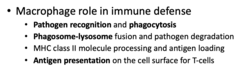
how does yersinia pestis act on cells
virulence factors turn off the killing ability of macrophages once inside them then they multiply
-infected macrophages die and release bacteria
how do mycobacterium tuberculosis act on cells
macrophages engulf TB cells but are unable to destroy because of the mycolic acids in cell wall prevents a phagosome with lysosome
-bacteria leave phagosome and multiply within macrophage
to cause disease, pathogens must... (5 things)
-enter a host
-fins a suitable niche
-avaoid circumvent, or subvert normal host defenses
-multiply
-transmit to a new susceptible host