Anatomy practical 3
 Call Kai
 Learn
 Practice Test
 Spaced Repetition
 Match
 Flashcards
 Knowt Play
1/181

Earn XP
Description and Tags
neurons and stuff
182 Terms

what is this structure
neuron cell body

what is this structure
axon

what is this structure
dendrite

what is this structure
myelinated nerve fiber

what is this structure
myelin sheath

what is this structure
node of rainier
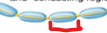
what is this structure
Schwann cell
what is an example of a unipolar neuron
(Dorsal root ganglion (DRG) neurons)
what is an example of a bipolar neuron
retinal cells
what is an example of a multipolar neuron
motor neuron

what is this layer of the nerve
epineurium
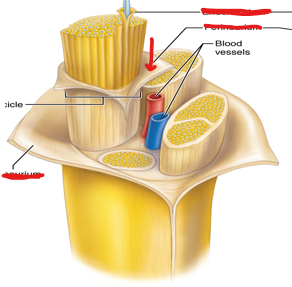
what is this layer of the nerve
perineurium
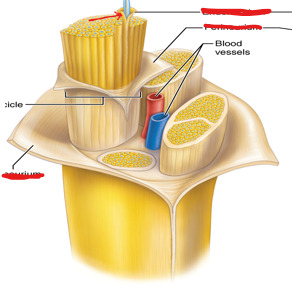
what is this layer of the nerve
endoneurium

what is this structure
dura mater

what is this structure
arachnoid mater
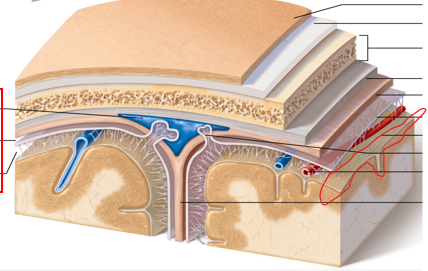
what is this structure
pia mater
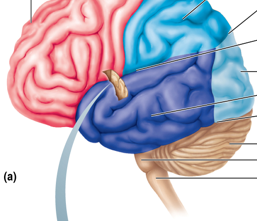
what lobe is this (pink)
frontal

what lobe is this (middle blue)
parietal
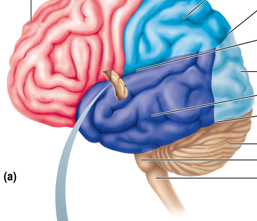
what lobe is this (light blue)
occipital

what lobe is this (dark blue)
temporal

what structure is this
arbor vitae of the cerebellum

what structure is this
Dural sinuses/superior sagittal sinus
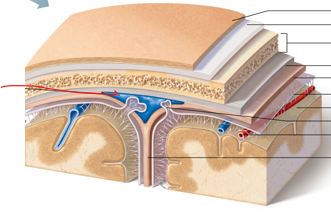
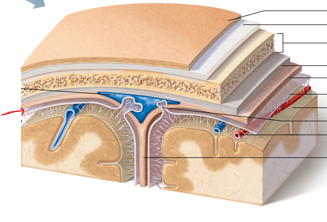
what structure is this
subdural space

what structure is this
subarachnoid space
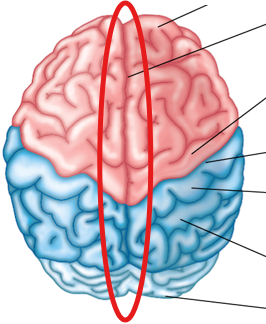
what structure is this
longitudinal fissure
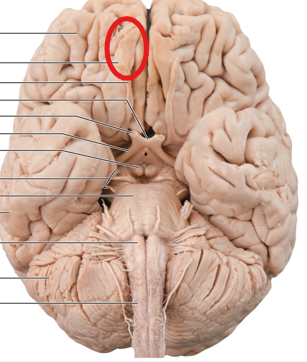
what structure is this
olfactory (I) bulb

what structure is this
olfactory tract

what structure is this
optic nerve (II)

what structure is this
optic chiasma

what structure is this
pituitary gland

what structure is this
mamillary body

what structure is this
midbrain (mesencephalon), in brainstem

what structure is this
cerebral peduncles (midbrain)

what structure is this
oculomotor (III) nerve (midbrain)
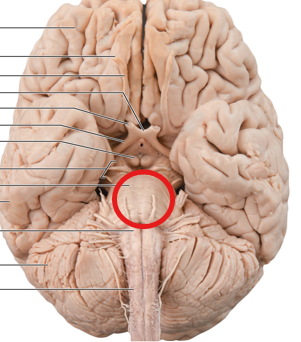
what structure is this
pons

what structure is this
trigeminal (V) nerve (pons)
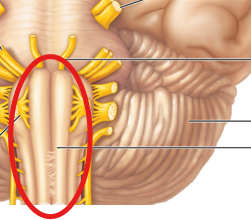
what structure is this
medulla oblongata

what structure is this
corpora quadrigemina

what structure is this
superior colliculi (corpora quadrigemina)

what structure is this
Inferior colliculi (corpora quadrigemina)
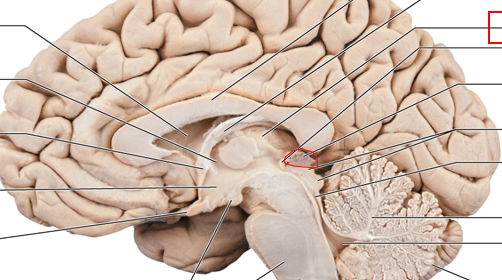
what structure is this
pineal gland

what structure is this
corpus callosum

what structure is this
fornix

what structure is this
hypothalamus

what structure is this
thalamus

what structure is this
lateral ventricle
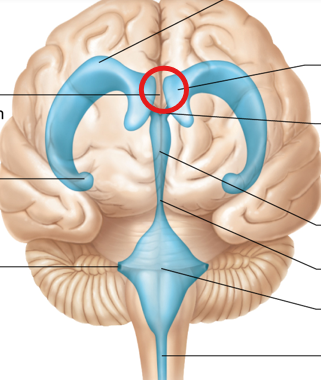
what structure is this
septum pellucidum

what structure is this
third ventricle

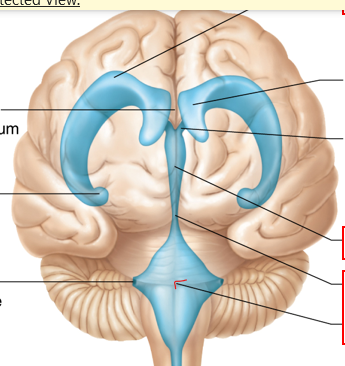
what structure is this
fourth ventricle


what structure is this
cerebral aqueduct

what structure is this
olfactory nerve (I)

what structure is this
trochlear (IV)

what structure is this
abducens (VI)

what structure is this
facial (VII)

what structure is this
vestibulocochlear (VIII)

what structure is this
glossopharyngeal (IX)

what structure is this
vagus (X)

what structure is this
accessory (spinal) nerve (XI)

what structure is this
hypoglossal (XII)
what are the meninges of the spinal cord
dura mater, arachnoid mater, pia mater
what structure is between the dura mater and bony vertebrae
epidural space

what structure is this
posterior/dorsal funiculi

what structure is this
lateral funiculi

what structure is this
Anterior/ventral funiculi
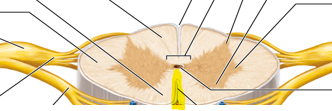
what structure is this
anterior/ventral median fissure

what structure is this
posterior/dorsal median fissure/sulcus

what structure is this
dorsal horns

what structure is this
ventral horns

what structure is this
lateral horns (thoracic region)

what structure is this
central canal
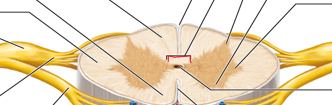
what structure is this
gray commissure

what structure is this, signal type and direction
dorsal root, sensory (afferent)

what structure is this
dorsal root ganglia

what structure is this, also signal type and direction
ventral root, motor (efferent)

what structure is this, what vertebrae
cervical plexus (C1-C5)

what structure is this, what vertebrae
brachial plexus (c5-t1)
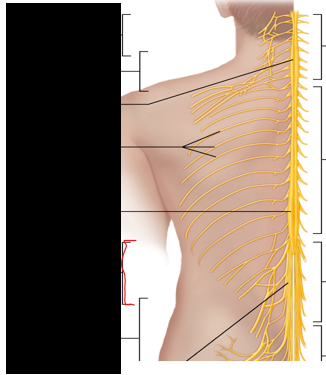
what structure is this, what vertebrae
lumbar plexus (t12-l4)

what structure is this, what vertebrae
sacral plexus (l4-s3)
what is a function of the neuron cell body
houses the nucleus
what is a function of the axon
transmit electrical impulses AWAY from the cell body
dendrite function
conduct electrical impulses TOWARD the cell body
myelin sheath function
allows electrical impulses to travel quick and efficiently
nodes of ranvier function
facilitate rapid transmission of action potential
schwann cell function
aid in development, maintenance and function and regeneration of PNS nerves
unipolar neuron function
primary afferents (info towards CNS) found in dorsal root ganglion
bipolar neuron function
primary sensory afferents (info towards CNS), found in retinal cells
multipolar neuron
most common neuron type, all motor neurons
endoneurium function
CT surrounding myelinated axons
perineurium function
CT surrounding fascicles
epineurium function
surrounds multiple fascicles to make a nerve
dura mater function
protects the CNS, provide support system for blood vessels/sinuses (esp superior sagittal sinus)
arachnoid mater function
protects CNS, creates a space for CSF to circulate and exist
pia mater function
protects the CNS, helps maintain the stiffness of the spinal cord, allows for the passage of blood vessels
frontal lobe function
manages thinking, emotions, personality, and judgement mainly, also processes memories
parietal lobe function
self-perception and awareness, location awareness, sensory integration and learned movements
occipital lobe function
distance and depth perception, object and facial recognition, visual processing
temporal lobe function
language understanding and expression, memory storage, and recall, emotional reactions and processing
arbor vitae of cerebellum
brings sensory and motor information to the cerebellum
superior sagittal sinus function
drains a number of veins within the brain
subdural space function
this is a potential space meaning it is where blood or CSF can flood into if there is trauma or pathology present