General Chemistry: Atomic Structure, Periodic Trends, Nomenclature, Reactions, and the Mole
 Call Kai
 Learn
 Practice Test
 Spaced Repetition
 Match
 Flashcards
 Knowt Play
1/34

Earn XP
Description and Tags
Comprehensive vocabulary flashcards covering atomic structure, electron configurations, periodic trends, chemical nomenclature, chemical reaction types, balancing equations, and mole stoichiometry.
35 Terms
Bohr Model of the Atom
A model of atomic structure in which electrons surround the nucleus in well-defined circular paths or energy levels, where energy increases as the distance from the nucleus increases.

Energy Sublevels
Energy subdivisions within a principal energy level, designated by the letters s, p, d, and f, with each individual orbital containing a maximum of 2 electrons.
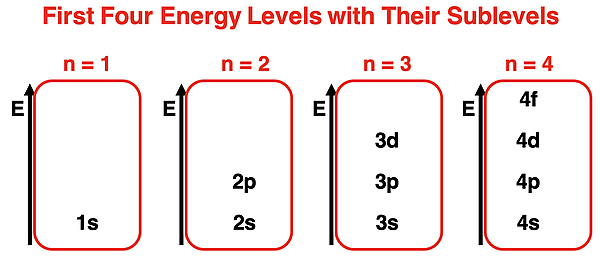
s Sublevel
An energy sublevel consisting of 1 s orbital per energy level, holding a maximum capacity of 2 electrons.
p Sublevel
An energy sublevel consisting of 3 p orbitals per energy level, holding a maximum capacity of 6 electrons.
d Sublevel
An energy sublevel consisting of 5 d orbitals per energy level, holding a maximum capacity of 10 electrons.
f Sublevel
An energy sublevel consisting of 7 f orbitals per energy level, holding a maximum capacity of 14 electrons.
Electron Configuration
The systematic description of the arrangement of electrons in orbitals around the nucleus, filling sequentially from the lowest energy level to higher energy levels.
Representative Elements
The main-group elements located in the s-block and p-block of the periodic table, known for predictable chemical properties.
Transition Elements
The metallic elements located in the d-block (middle groups) of the periodic table, which exhibit less predictable chemical behavior.
Rare Earth Elements
The series of metallic elements occupying the f-block of the periodic table.
Atomic Size Trend
The periodic pattern where atomic radius decreases from left to right across a period due to increased attraction drawing electrons inward, and increases moving from top to bottom down a group.
Metallic Character Trend
The periodic trend wherein metallic characteristics decrease when moving from left to right across a period and increase when moving from top to bottom down a group.
Electron Dot Formula (Lewis Structure)
A structural notation that displays the chemical symbol of an element surrounded by dots representing its valence electrons.
Octet Rule
The chemical guideline stating that atoms tend to gain, lose, or share electrons until their valence shell contains 8 electrons, matching the stability of a noble gas.
Isoelectronic
A condition describing atoms or ions that possess the exact same total number of electrons and identical electron configurations.
ion
An atom or group of bonded atoms that possesses a net electrical charge due to an imbalance between the total number of protons and electrons.
cation
A positively charged ion formed when a neutral atom (typically a metal) loses one or more valence electrons.
anion
A negatively charged ion formed when a neutral atom (typically a nonmetal) gains one or more valence electrons.
Inorganic Compounds
Chemical compounds that do not contain carbon, excluding specific exceptions such as CO2, CO32−, and HCO3−.
Binary Ionic Compound
A class of inorganic compound composed of exactly two different elements: one metal cation and one nonmetal anion (e.g., NaCl, LiF).
Ternary Ionic Compound
An inorganic compound composed of three different elements, consisting of at least one metal and one nonmetal, often containing a polyatomic ion (e.g., KNO3).
Binary Molecular Compound
A compound composed of two distinct nonmetal elements bonded together through the sharing of electrons rather than ionic attraction (e.g., H2O, NH3).
Binary Acid
An aqueous solution composed of hydrogen and a nonmetal, named by prefixing 'hydro-', adding the nonmetal stem, and ending with '-ic acid' (e.g., HCl(aq) is hydrochloric acid).
Ternary Oxyacid
An aqueous solution composed of hydrogen, oxygen, and another nonmetal element (e.g., H2SO4(aq)).
Monoatomic Ion
An individual atom that has gained or lost electrons to acquire a net electrical charge (e.g., Li+, Mg2+, F−).
Polyatomic Ion
A covalently bonded group of atoms that carries an overall net electrical charge (e.g., NH4+, CO32−, SO42−, PO43−).
Stock System (Roman Numerals in Nomenclature)
The nomenclature rule for naming transition metal cations with variable charges, using a Roman numeral in parentheses to specify the charge of the metal ion (e.g., Fe2+ is iron (II) ion; Fe3+ is iron (III) ion).
"-ide" Suffix
The suffix added to the stem name of a nonmetal element when naming monoatomic anions (e.g., bromide for Br−, oxide for O2−).
Greek Numerical Prefixes
Prefixes (such as mono-, di-, tri-, and tetra-) used in binary molecular nomenclature to indicate the number of atoms of each nonmetal element in a molecule.
Precipitate
An insoluble solid substance that separates out from a liquid solution, serving as evidence of a chemical reaction.
Catalyst
A substance that accelerates the rate of a chemical reaction without undergoing permanent chemical change or being consumed in the process.
Law of Conservation of Mass
The fundamental principle stating that matter cannot be created or destroyed in a chemical reaction; thus, the number of each type of atom in the reactants must equal the number in the products.
Acid-Base Neutralization Reaction
A chemical reaction in which an acid and a base react to yield an ionic salt and water (HX+BOH→BX+H2O).
Mole
A fundamental counting unit in chemistry representing 6.02×10²³ representative particles (atoms, molecules, or formula units) of a substance.
Avogadro's Number
The numerical value 6.02×10²³, defining the number of particles contained in 1mole of a substance, directly relating formula mass in atomic mass units to mass in grams.