BIOL 1030 Exam 1
 Call Kai
 Learn
Learn Practice Test
 Spaced Repetition
 Match
Match Flashcards
 Knowt Play
1/202

Earn XP
Description and Tags
Chapters 22-24, 26-28
Name | Mastery | Learn | Test | Matching | Spaced | Call with Kai | Chat |
|---|
No analytics yet
Send a link to your students to track their progress
203 Terms
evolution
“descent with modification”; both a pattern and a process.
The Darwinian Revolution
challenged traditional views (young Earth with unchanging species)
Darwin’s ideas had deep historical roots
the study of fossils (remains/ traces of organisms) helped to lay the groundwork for Darwin’s ideas.
Superposition

Paleontology
Study of Fossils
George Cuvier (1769-1832)
thought that older species were less similar to present species
species could appear/disappear when moving to another layer (extinction common, against evolution)
Catastrophism
Catastrophism
(disproven) speculating that each boundary between strata represents a catastrophe
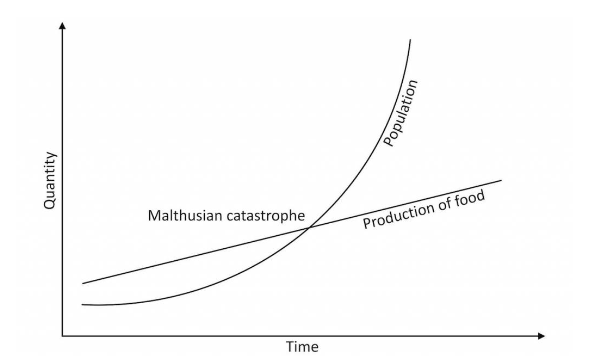
Thomas Malthus (1766-1834)
“an essay on the Principle of Population”
Human populations will outpace food production
James Hutton (1726-1797) and Charles Lyell (1797-1875)
perceived that changes in Earth’s surface can result from slow continous actions still operating today.
Lyell’s principle of uniformitarianism states that the mechanisms of change are constant and slow
this view strongly influenced Darwin’s thinking
Jean- Baptiste Lamarck (1744-1829)
first hypothesis of evolution
hypothesized “use and disuse of body parts” and the “inheritance of acquired characteristics”
the mechanisms he proposed are unsupported by evidence
acquired traits cannot be inherited (ex. Haircuts are not inherited)

Darwin’s Research
during his travels on the Beagle, Darwin collected specimens of South American plants and animals
He observed that fossils resembled living species from the same regions, and resembled other species of nearby regions.
Darwin was influenced by Lyell’s “Principles of Geology” and thought that the earth was more than 6000 years old.
Adaptation
inherited characteristics of organisms that enhance their survival and reproduction in specific environments
ex: Galapagos finches (beaks adapted to food sources)
Evolution in Beta Development
Darwin perceived adaptation to the environment and the origin of new species as closely related processes
In 1844, Darwin wrote an essay on natural selection as the mechanism of descent with modification
he did not introduce his theory publicly
Natural Selection definition
a process in which individuals with favorable inheried traits are more liekly to survive and reproduce
Wallace’s Influence on Darwin
1858- Darwin receives a manuscript from Alfred Russel Wallace (1823-1913), who had developed a theory of natural selection similar to Darwin’s
Quickly after, Darwin finished “Origin” and published it the next year
“On the Origin of Species”
explained 3 broad observations
unity of life
the diversity of life
the match between organisms and their environments
Darwin never used the word evolution in the first edition
The “descent with modification” summarized Darwin’s perception of the unity of life
the phrase refers to the view that all organisms are related through descnet from ancestors that lived in the remote past.
Tree of Life
in the Darwinian view, the history of life is like a tree with branches representing life’s diversity.
Darwin’s theory meshed well with the hierarchy of Linnaeus
Main Branches are Eukaryotes, Bacteria, and Archaea
Darwin’s Observations
members of a population often vary in inherited traits
reproductive potential exceeds environmental tolerances
Darwin’s Inferences
more “fit” individuals will leave more offspring than others
overtime, a pipulation will change to match its environment
Natural Selection
populations evolve overtime, individuals DO NOT
natural selection is NOT random
natural selection can only increase or decrease heritable traits that vary in a population (doesn’t create new traits)
Local environment determines which traits will be selected for or selected against
Artificial Selection
humans have modified other species by selecting and breeding individuals with desired traits
Homology
similarity resulting from common ancestry
anatomical
molecular (DNA)

vestigial structures
remnants of features that served important functions in the organism’s ancestors
evolutionary trees
hypotheses about the relationship among different groups
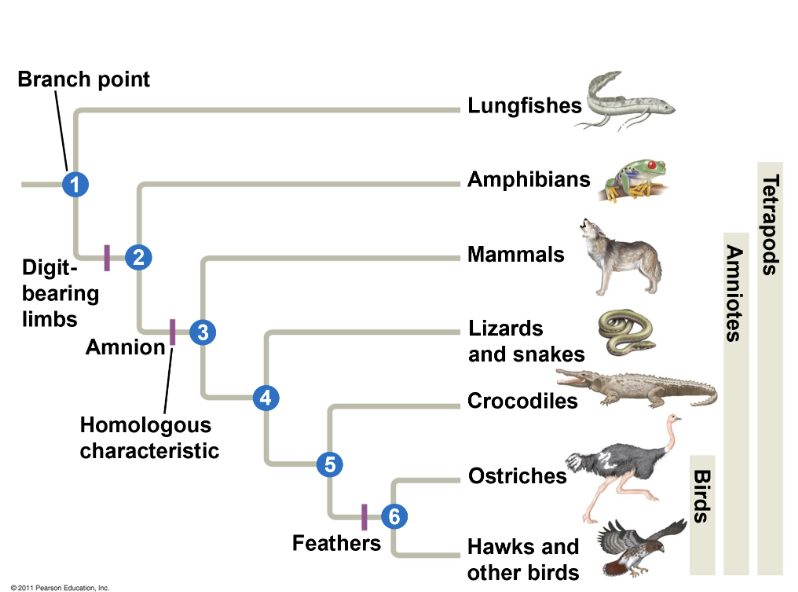
divergent evolution (based on DNA)
the evolution of homologous characteristics into new forms/phenotypes in the same clade
% homology
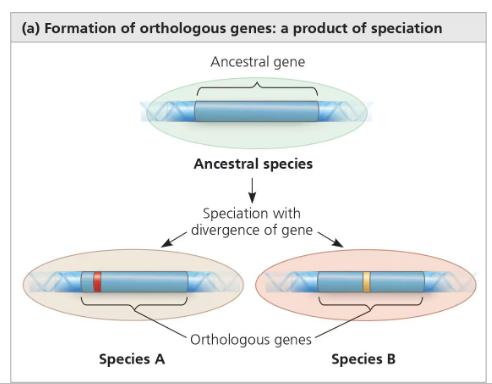
orthologs
paralogs
orthologs
divergent evolution across two species
paralogs
divergent evolution within a species

convergent evolution (no common ancestor)
the evolution of similar or analogous features, in distantly related groups
does not provide info about ancestry, but does demonstrate how similar traits can be adaptive in similar biomes
analogous traits
arise when groups independently adapt to similar environments similar ways
ex: sugar glider and flying squirrel
fossil record
provides evidence of the extinction of species, the origin of new groups, and changes within groups over time
biogeography
the geographic distribution of species, and provides evidence of evolution
endemic species
species that are no found anywhere else in the world
islands have many of these that are often closely related to species on the nearest mainland or island
population
the smallest unit of evolution (natural selection occurs on all levels: individuals, cells, genes, molecules. but evolution only occurs on this level)
localized group of individuals capable of interbreeding and producing fertile offspring
microevolution
a change in allele frequencies in a population over generations
driven by natural selection, genetic drift, and gene flow
only natural selection consistently causes adaptive evolution
genetic drift
chance events that alter allele frequencies
gene flow
the transfer of alleles between populations
alleles can be transferred through the movement of fertile individuals or gametes (ex: pollen)
tend to reduce variation among populations overtime
can increase the fitness of a population
genetic variation
describes how allele frequencies fluctuate unpredictably from one generation to the next
caused by differences in DNA
tends to reduce genetic variation through losses of alleles
phenotype is the product of inherited genotype and environmental influences with a genetic component
natural selection can only act on variation with genetic component
discrete characters
can be classified on an either-or basis
ex: bloodtype
quantitative characters
vary along a continuum within a population
ex: height
sources of genetic variation
new genes and alleles can arise by mutation or gene duplication
only mutations in cells that produce gametes can be passed to offspring
point mutation
change in one base in a gene
silent- no change in amino acid
missense- change in amino acid
nonsence- change in STOP codon
effects of point mutations
mutations in noncoding regions of DNA are often harmless
mutations in a gene can be neutral because of redundancy in the genetic code
mutations that result in a change to the protein are often harmful but can sometimes be beneficial
altering gene number or position
chromosomal mutations that delete, disrupt, or rearrange many loci are typically harmful
duplication of small pieces of DNA increases genome size and is usually less harmful
duplicated genes can take on new function by further mutation
an ancestral odorant receptor gene has been duplicated many times (ex: humans have ~380 receptors and mice have ~1200 receptors)
sexual reproduction
can shuffle existing alleles into new combinations
in organisms that reproduce sexually, recombination of alleles is more important than mutation in producing the genetic differences that make adaptation possible.
fixed locus
all individuals in a population are homozygous for the same allele
frequency of an allele in a population can be calculated
diploid organisms: the total number of alleles at a locus is the total number of individuals times 2
the total number of dominant alleles at a locus is 2 alleles for each homozygous dominant individual plus 1 allele for each heterozygous individual
allelic frequency
will add up to 1 (100%)
dominant (A) and recessive allele (a)
frequency of A is represented as p
frequency of a is represented as q
p + q = 1
genotypic frequency
frequency of all genotypes in a population will also add up to 1
dominant (A) and recessive allele (a)
frequency of A is represented as p
frequency of a is represented as q
(p+q) x (p+q) = p² +2pq + q² = 1
p² represents frequency of AA
q² represents frequency of aa
2pq represents frequency of Aa
Hardy-Weinberg Principle
states that frequencies of alleles and genotypes in a population remain constant from generation to generation
describes a population that is NOT evolving
if a population does not meet the criteria of the Hardy-Weinberg principle, it can be concluded that the population is evolving
NULL model for the case where evolution is NOT occurring
Conditions for Hardy-Weinberg Equiibirum
The five conditions for nonevolving populations are rarely met in nature
No mutations
random mating
no natural selection
extremely large population size
no gene flow (Immigration or emigration)
Three major factors that alter allele frequencies
natural selection
genetic drift
gene flow
founder effect
occurs when a few individuals becoe isolated from a larger population
bottleneck effect
a sudden reduction in population size due to a change in the environment
the resulting gene pool may no longer be reflective of the original population’s gene pool
if the population remains small, it may be further affected by genetic drift
sexual selection
it can result in sexual dimorphism, marked differences between the sexes in secondary sexual characteristics
can drive sympatric speciation
intra-sexual selection
competition among individuals of one sex (often males) for mates of the opposite sex
inter-sexual selection
(mate choice), occurs when individuals of one sex (usually females) are choosy in selecting their mates.
neutral variation
genetic variation that does not confer a selective advantage or disadvantage
diploidy
maintains genetic variation in the form of hidden recessive alleles (heterozygotes can carry recessive alleles that are hidden from the effects of selection)
balancing selection
occurs when natural selection maintains stable frequencies of two or more phenotypic forms in a population (heterozygote advantage and frequency - dependent selection)
heterozygote advantage
occurs when heterozygotes have a higher fitness than do both homozygotes
frequency dependent selection
the fitness of a phenotype declines if it becomes too common in the population
Why Natural Selection Cannot Fashion Perfect Organisms
selection can act only on existing variations
evolution is limited by historical constraints
Adaptations are often compromises
Chance, natural selection, and the environment interact
speciation
the origin of new species, is at the focal point of evolutionary theory
evolutionary theory
must explain how new species orginate and how populations evolve
macroevolution
broad patterns of evolutionary change above the species level
biological species concept
states that a species is a group of populations whose members have the potential to interbreed in nature and produce VIABLE, FERTILE OFFSPRING; they do no breed successfully with other populations.
emphasizes reproductive isolation
reproductive isolation
the existence of biological factors (barriers) that impede two species from producing viable, fertile offspring
can be classified by whether factors act before fertilization (pre-zygotic) or after fertilization (post-zygotic)
hybrids
offspring of crosses between different species
pre-zygotic barriers
block fertilization from occury by impeding different species from attempting to mate, preventing the successful completion of mating, and hindering fertilization if mating is successful
Habitat isolation
temporal isolation
behavioral isolation
mechanical isolation
gametic isolation
habitat isolation
two species encounter each other rarely, or not at all, because they occur different habitats, even though not isolated by physical barriers
apple magots and blueberry magot fly
temporal isolation
species that breed at different times of the day, different seasons, or different years cannot mix their gametes
western spotted skunk mates in late summer and eastern spotted skunks mate in late winter
behavioral isolation
courtship rituals and other behaviors unique to a species are effective barriers
blue footes boobies (high step)
mechanical isolation
morphological differences can prevent successful mating (if their shells are opposite directions, their genital openings will not align)
gametic isolation
sperm of one species may not be able to fertilize eggs of another species
red and purple seas urchin gametes cannot fuse b/c their extracellular proteins bind poorly)
post-zygotic barriers
prevent the hybrid zygote from developing into a viable, fertile adult
reduced hybrid viability
reduced hybrid fertility
hybrid breakdown
reduced hybrid viability
genes of the different parent species may interact and impair the hybrids development
most Ensatina hybrids do not complete development
reduced hybrid fertility
even if hybrids are vigorous, they may be sterile
mules (female horse x male donkey) are usually infertile
hybrid breakdown
some first-generation hybrids are fertile, but when they mate with another species or either parent species, offspring of the next generation are feeble or sterile
limitations of the biological species concept
it cannot be applied to fossils or asecual organisms (including all prokaryotes)
it emphasizes absence of gene flow, however, gene flow can occur between distinct species
grizzly bear and polar bear can produce “grolar bears”
morphological species concept
defines a species by structural features
applies to sexual and asexual species but relies on subjective criteria
ecological species concept
views a species in terms of its ecological niche
it applies to sexual and asexual species and emphasizes the role of disruptive selection
phylogenetic species concept
defines a species as the smallest group of individuals on a phylogenetic tree
it applies to sexual & asexual species, but it can be difficult to determine the degree of difference required for separate species
allopatric speciation
a population forms a new species while geographically isolated from its parent population
"other country”
ex: the grand canyon
evidence: 15 pairs of sibling species of shapping shrimp (Alpheus) are separated by the Ithmus of Panama
sympatric speciation
a subset of a population forms a new species without geographic separation (geographically overlapping populations)
cases are rare
caused by gene flow reduction: polyploidy, habitat differentiation, and sexual selection
polyploidy
the presence of extra sets of chromosomes due to accident during cell division
much more common in plants than in animals
oats, cotton, potatoes, tobacco, and wheat are polyploids
autopolyploid
an individual with more than two chromosomes sets, derived from ONE SPECIES (Not hybrids)
allopolyploid
a species with multiple sets of chromosomes derived from DIFFERENT SPECIES (hybrids)
habitat differentiation
sympatric speciation can also results from the appearance of new ecological niches
hybrid zone
a region in which members of different species mate and produce hybrids
hybrids are the result of mating between species with incomplete reproductive barriers
Hybrid Zone - Reinforcement
strengthening reproductive barriers
Hybrid Zone- Fusion
weakening reporductive barriers
Hybrid Zone- Stability
continued formation of hybrid individuals (increased fitness)
Niles Eldredge & Stephen Jay Gould
coined the term punctuated equilibria to describe periods of stasis by sudden change
Biodiversity
number of species, genera, etc
taxonomy (taxa, taxon)
the naming of groups of organisms
classification
assigning organisms to hierarchical groups
systematics
study of diversification and relationships
phylogeny
evolutionary history
Carolus Linnaeus (1707-1778)
discovered the science of naming and classifying organisms (taxonomy)
many of his classifications were inaccurate but much of his system persists today
binomial nomenclature
Linnaean Classification
Domain
Kingdom
Phylum
Class
Order
Family
Genus
Species
(Dear King Phillip Comes Over For Good Soup)
clades
a lineage of organisms that is derived from a single common ancestor and contains ALL descendants
e.g. Mammals