psych 1101 module 48
 Call Kai
 Learn
Learn Practice Test
 Spaced Repetition
 Match
Match Flashcards
 Knowt Play
1/56

There's no tags or description
Looks like no tags are added yet.
Name | Mastery | Learn | Test | Matching | Spaced | Call with Kai | Chat |
|---|
No analytics yet
Send a link to your students to track their progress
57 Terms
When brain danger detection system becomes hyperactive
greater risk of anxiety disorder
anxiety > shyness is what we call it
three disorders that involve anxiety
OCD, PTSD, and somatic symptom disorder
anxiety disorder
psychological disorders characterized by distressing, persistent anxiety or maladaptive behaviors that reduce anxiety
examples that anxiety is becoming a problem
Staying home avoid anxious feelings, but maladaptive
Avoiding others prevented from learning to cope and left him feeling lonely
generalized anxiety
in which a person is, for no obvious reason, continually tense and uneasy
panic disorder
in which a person experiences panic attacks—sudden episodes of intense dread—and fears the next attack
specific phobias
in which a person is intensely and irrationally afraid of something.
generalized anxiety disorder real definition
an anxiety disorder in which a person continually tense, apprehensive, and in a state of autonomic nervous system arousal
2/3 women who have
generalized anxiety they worry continually, often jittery, agitated and sleep deprived, concentration suffer
symptoms of generalized anxiety
autonomic nervous system arousal may leak out through furrowed brows, twitching eyelids, trembling, perspiration, or fidgeting.
could be dizziness, sweating palms, and heart palpitations
generalized anxiety could be considered
free floating > not linked to a specific stressor or threat
Accompanied by depressed mood
Age 50 becomes rare
Could lead to physical problems like high blood pressure
panic attack
a minutes-long episode of intense fear that something horrible is about to happen
Irregular heartbeat, chest pains, shortness of breath, choking, trembling, or dizzines
may accompany the panic
panic disorder
an anxiety disorder marked by unpredictable minutes long episodes of intense dread in which a person may experience terror and accompanying chest pain, chocking or other frightening sensations; often followed by worry over a possible next attack
3% of people have this
these anxiety tornados strike suddenly, wreak havoc, and disappear, but are not forgotten
panic disorder could lead to
agoraphobia > fear or avoidance of public situations from which escape might be difficult
Nicotine is a simulant, and smokers have double chance
of having a panic disorder
specific phobias
an anxiety disorder marked by a persistent, irrational fear, and avoidance of a specific object, or situation
examples of specific phobias are
animals, blood, insects, heights, enclosed places
A strong fear becomes a specific phobia if
it provokes a compelling but irrational desire to avoid the dreaded object or situation

obsessive compulsive disorder (OCD)
a disorder characterized by unwanted repetitive thoughts (obsessions) and actions (compulsions) or both
Unwanted, seemingly unending
Our lives filled with little rehearsals and fussy behaviors
Crosses line when they persistently interfere with everyday life and cause distress
About 2% cross the line
Compulsive behaviors are response to those thoughts
OCD is more common
among teens and young adults than older people
A 40-year follow-up study of 144 Swedes diagnosed with the disorder found that, for most, the obsessions and compulsions had gradually lessened,
though only 1 in 5 had completely recovered
Some people experience other OCD-related disorders
hoarding disorder (cluttering one’s space with acquired possessions one can’t part with),
body dysmorphic disorder (preoccupation with perceived body defects),
trichotillomania (hair-pulling disorder),
excoriation (skin-picking) disorder.
table of common obsessions and compulsions among children and adolescents with obsessive compulsive disorder
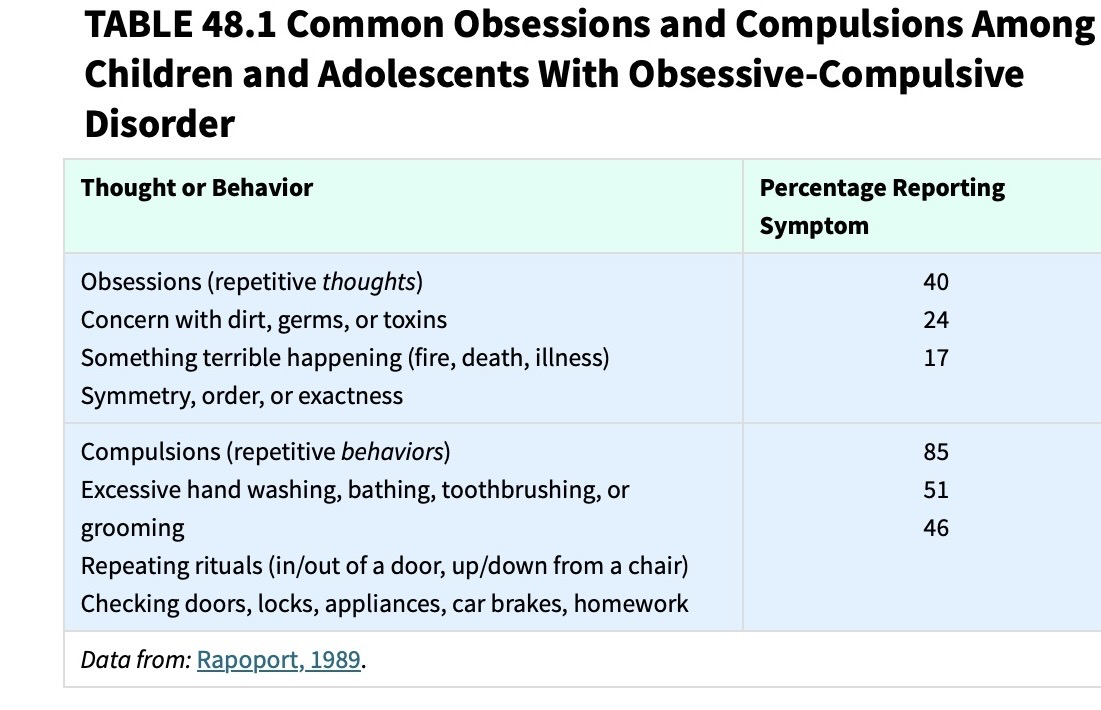
Soldiers experience this, out of 104,000 veterans returning from Iraq and Afghanistan, 25% were diagnosed with psychological disorder, the most frequent was
PTSD
posttraumatic stress disorder (PTSD)
a disorder characterized by haunting memories, nightmares, hypervigilance, avoidance of trauma related stimuli, social withdrawl, jumpy anxiety, numbness of feeling, and/or insomnia that lingers for four weeks or more after a traumatic experience
Survivors of terror, torture, rape, earthquakes, and refugee displacement have also exhibited
PTSD
hallmark symptoms of PTSD is
recurring, vivid, distressing memories and nightmares
Half trauma victims report
posttraumatic growth
Why do some 5 to 10 percent of people develop PTSD after a traumatic event while others do not
factor is amount of emotional distress
Influences PTSD development
more sensitive emotion processing limbic system floods their bodies with stress hormones, genes and gender matter, twins are commonly share PTSD risk factors, women experience PTSD more than men
somatic symptom disorder
a psychological disorder in which the symptoms take a somatic (bodily) form without apparent physical cause
somatic means
relating to the body
symptoms of somatic symptom disorder
complaints vomiting, dizziness, blurred vision, difficulty swallowing, severe and prolonged pain.
illness anxiety disorder
a disorder in which a person interrupts normal physical sensations as a symptom of a disease
Cultural context has big effect on people's physical complaints and how they explain them
China anxiety is most common, more sensitive and willing to report
people with this relatively common disorder interpret normal sensations (a stomach cramp today, a headache tomorrow) as symptoms of a
dreaded disease
Sigmund Freud proposed that beginning in childhood
people repress intolerable impulses, ideas, and feelings. Freud believed that this submerged mental energy sometimes leaks out in odd symptoms, such as anxious hand washing.
Most psychologists instead embrace three modern perspectives for understanding anxiety related disorders
conditioning, cognition, and biology
conditioning
Through classical conditioning, our fear responses can become linked with formerly neutral objects and events
used lab rats to
understand the link between learning and anxiety, used electric shocks
Likewise, anxious or traumatized people learn to associate their anxiety with certain cues
58 percent of those with social anxiety disorder experienced their disorder after a traumatic event, Anxiety is more likely to develop when
bad events happen unpredictably and uncontrollably
stimulus generalizations
occurs when a person experiences a fear-provoking event and later develops a fear of similar events
reinforcement
helps maintain learned fears and anxieties, anything that enables us to avoid or escape a feared situation can reinforce maladaptive behaviors
cognition
influences our feelings of anxiety, but so do our thoughts, memories, interpretations, and expectations
We humans similarly learn fears by observing others
Nearly all monkeys raised in the wild fear snakes, yet lab-raised monkeys do not. Surely, most wild monkeys do not actually suffer snake bites. Do they learn their fear through observation?
After repeatedly observing their parents or peers refusing to reach for food in the presence of a snake, the young monkeys developed a similar strong fear of snakes that persisted when retested three months later
9 in 10 worries proved groundless, these people tend to be hypervigilant, more often interpret stimuli as
threatening
Anxiety is especially common when people cannot switch off such
intrusive thoughts and helpless
A monkey reacts more strongly to stress if its close biological relatives are
anxiously reactive
If twin has an anxiety disorder, the other is at risk, if separated when growing up
twins can still develop same specific phobias
One research team identified 17 gene variations associated with
typical anxiety disorder symptoms
Some genes influence disorders by regulating brain levels of neurotransmitters
These include serotonin, which influences sleep, mood, and attending to threats
glutamate which heightens activity in the brain's alarm center
A history of wartime trauma or child abuse can leave long-term epigenetic marks, these molecular tags attach to our
chromosomes and turn certain genes on or off.
Traumatic fear-learning experiences can leave tracks in the brain, creating fear circuits within the
amygdala
Brain scans of people with OCD reveal elevated activity in specific brain areas during behaviors such as
compulsive hand washing, checking, organizing, or hoarding
anterior cingulate cortex
a brain region that monitors our actions and checks for errors, is often especially hyperactive
Some antidepressant drugs dampen this fear circuit activity and its associated obsessive-compulsive behavior
natural selection
We seem biologically prepared to fear threats faced by our ancestors.
Those fearless about these occasional threats were less likely to survive and leave descendants
It is easy to condition and hard to extinguish fears of such “evolutionarily relevant” stimuli
Some of our modern fears can also have an evolutionary explanation