5. insect musculature, locomotion, and limb diversity
 Call Kai
 Learn
Learn Practice Test
 Spaced Repetition
 Match
Match Flashcards
 Knowt Play
1/34

There's no tags or description
Looks like no tags are added yet.
Name | Mastery | Learn | Test | Matching | Spaced | Call with Kai | Chat |
|---|
No analytics yet
Send a link to your students to track their progress
35 Terms
for bugs, is the SA:V ratio high or low? why?
very high
enables cuticle to support far more RELATIVE weight
light weight means surface tension of air and water is higher for insects

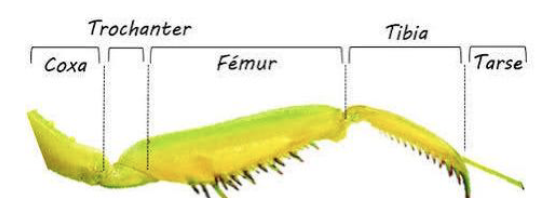
5 universal segments of legs + 2
coxa
trochanter
femur
tibia
tarsus
pretarsus and claws

gait
coordination of limb mvmts to adjust for speed and stability
tripod gait characteristics
ipsilateral fore- and hindlegs step w contralateral middle leg
center of mass remains in triangle, so more stable
metachronal wave gait characteristics
limbs lift in a wave (hind legs first)
enables higher speeds, but less stable
most visually obv for millipedes
ambulatory/cursorial legs (what kind of mvmt, shape, example insects)
walking and running (fast mvmt on ground)
slender, relatively unmodified
ex: cockroaches, ground beetles, ants

saltatorial legs (kind of mvmt, 2 leg traits, example insects)
jumping
enlarged hind femur w powerful muscles
long lever-like tibia for jumping
ex: grasshoppers, crickets, locusts

what do hoppers use for rapid, precise jumps?
gears

raptorial legs (2 leg traits, example insects)
forelegs modified into spines/claws for seizing prey
often folded like a trap for grasping
ex: mantids, mantisflies, some aquatic bugs

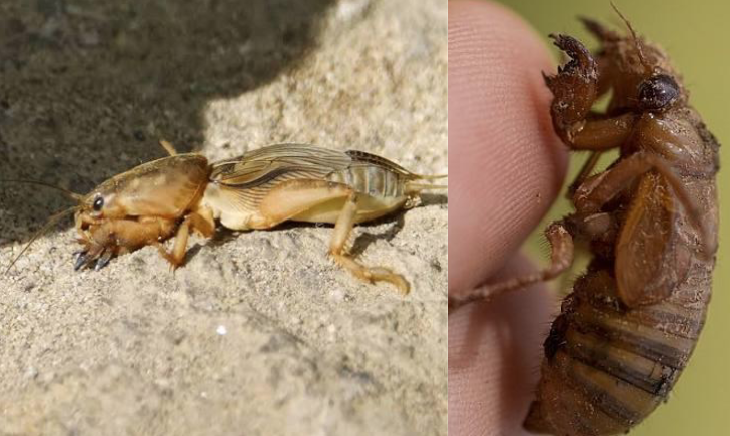
fossorial legs (kind of mvmt, 2 leg traits, insect examples)
digging
broad, shovel-like forelegs
strong spines and flattened shape
ex: mole crickets, cicada nymphs
natatorial legs (1 leg trait, example bug)
flattened w fringe of hairs increasing SA for propulsion
ex: water striders (they have many microscopic hairs to trap bubbles)


label + identify what kind of legs they are
raptorial

label + identify what kinds of legs they are

limb coordination for swimming/skating
swimming/skating use gaits that BILATERALLY synchronize limbs
scansorial legs (2 traits, example)
clinging legs adapted for climbing and holding onto hair or feathers
hook extension from tibia and strong claw on tarsus tip
ex: biting and sucking lice
describe legs for pollen collecting
metathoracic legs of bees flattened, wide tibia and femurs w fringe of hairs (basket)

describe legs for adhesion
tarsomeres w pads (“pulvilli” or “arolium”) for smooth surface or grasping, often w hooks (“ungue”)

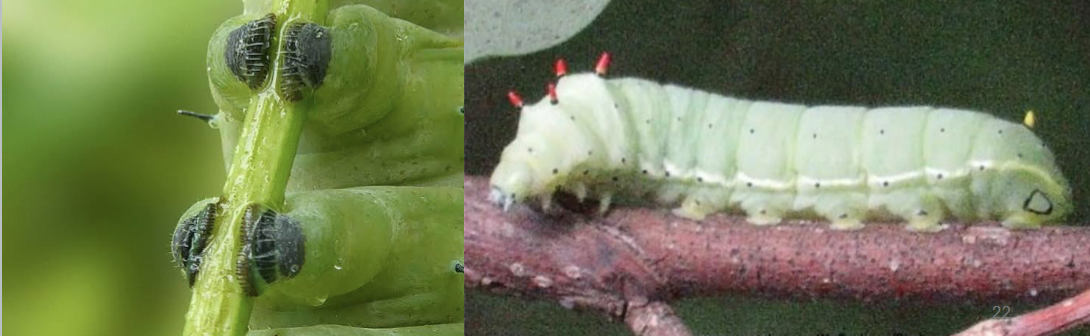
prolegs
hydrostatic legs used by caterpillars + sawfly larvae
not articulated like thoracic legs
5 benefits wings provide
expansion of access to resources
means of escape or crypsis
increased access to genetic diversity
means of communication
physical protection
general structure of wings
composed of 2 membranes
hardened on the costal (front) edge
hinges alter angle to maximize lift on downstroke, shearing on upstroke
wings are wind and chemical sensors
2 hypotheses on the origin of wigns
Gill-Exite hypothesis
Paranotal hypothesis
Gill-Exite hypothesis
wings arose from a leg outgrowth
Paranotal hypothesis
wings are a novel body wall structure
vertebrate vs. insect winsg
vertebrate wings are limbs → muscles inside the wing allow flapping
insect wings are not limbs → muscles connect to base of wing
halteres
highly reduced wings that sense initial forces rather than generate lift`
elytra and hemielytra
hardened FWs protect against mechanical damage and dehydration

what are the only wings beetles beat?
beetles only beat HWs, though its elytra generates lift
how many times did insect evolve wings?
once — then it lost it many times
2 reasons why insects lost wings
to prevent catching while crawling
crypsis
examples of insects that lost their wings
subterranean: termites, ants, snow flies
parasitic: batflies, keds, fleas, bedbugs, aphids (sometimes)
specifically for crypsis: walking sticks
how do muscles move limbs?
by connecting cuticle w apodemes
synchronous insect muscles (function, # contractions, used by which insects)
function: precise control, for strong direct force output
one motor neuron AP = one muscle contraction
max freq of contraction limited by refractory period of the motor neurons (<100 Hz)
used by walking and jumping legs, mouthparts, wings of “slow-flying” insects (e.g., dragonflies, butterlifes

asynchronous insect muscles (function, AP mechanism, kinds of insects)
function: high frequency (up to 1000 Hz), energy efficient but less precision
AP initiates contraction, but stretch continues to trigger (myogenic/mechanical)
1 AP = ~20 contractions
used by wings of “fast-flying” insects (e.g., flies, bees)

direct flight muscles + order
attach directly to wings to provide power
Paleoptera

indirect flight muscles + order
attach to thorax, not wings
deforms thorax to provide power in wing strokes
direct flight muscles are reduced, provide flight control
most Neoptera
