Fundamentals Exam 2
 Call Kai
 Learn
 Practice Test
 Spaced Repetition
 Match
 Flashcards
 Knowt Play
1/57

There's no tags or description
Looks like no tags are added yet.
58 Terms
Hyper/Hypoglycemia markers
BG 70-120
Hypoglycemia: Hangry and passing-out symptoms
Causes: Too much insulin, not enough carbohydrates, increased exercise
Hyperglycemia: Weakness, headache, urination
Causes: Not enough insulin, too many carbohydrates, stress
Nomenclature
Chemical/Pharmacologic - generic (NCLEX) - Brand Name
Pharmacokinetics
What the body does to the drug ADME
Absorb, Distribute, Metabolize (Liver), Excrete (Kidney)
Half Life
50% of drug decrease, 4-5 until out of system
20 minute half life, after 40 minutes it would be 25%
Idiosyncratic Reaction
Unusual/unintended response
Contraindication vs. Precaution
Contraindication - medication should not be given
Precaution - given with additional assessment or monitoring
Urticaria / Pruritus
Urticaria - Hives: raised, red, itchy wheals
Pruritus - Itching

Anaphylaxis
Emergency 911, airway swelling/difficult breathing, IM epinephrine
Abbreviations
Units > U
International Unit > IU
Daily > QD
Every other day > QOD
No trailing zeros, yes leading zeros
Write Morphine Sulfate or Magnesium Sulfate
Reassure kg or lbs
Glass Ampules (meds that bind to rubber stopper)
Filter needle → administration needle
Schedules I and V
Schedule I: No medical use; high potential for misuse
Schedule V: Lowest misuse
Drug Diversion
Tampering/contaminating medications/equipment → expose patients to infections. Report immediately
Two Tiers of Precautions
Standard precautions: Treat every patient; treat blood, body fluids except sweat, secretions, excretions, non-intact skin, and mucous membranes as potentially infectious.
Transmission-based precautions: Infections or routes
Respiratory Hygiene
Educate signs, cover coughs/sneezes, (HH) after respiratory secretions, offer masks, provide spatial separation (3 feet)
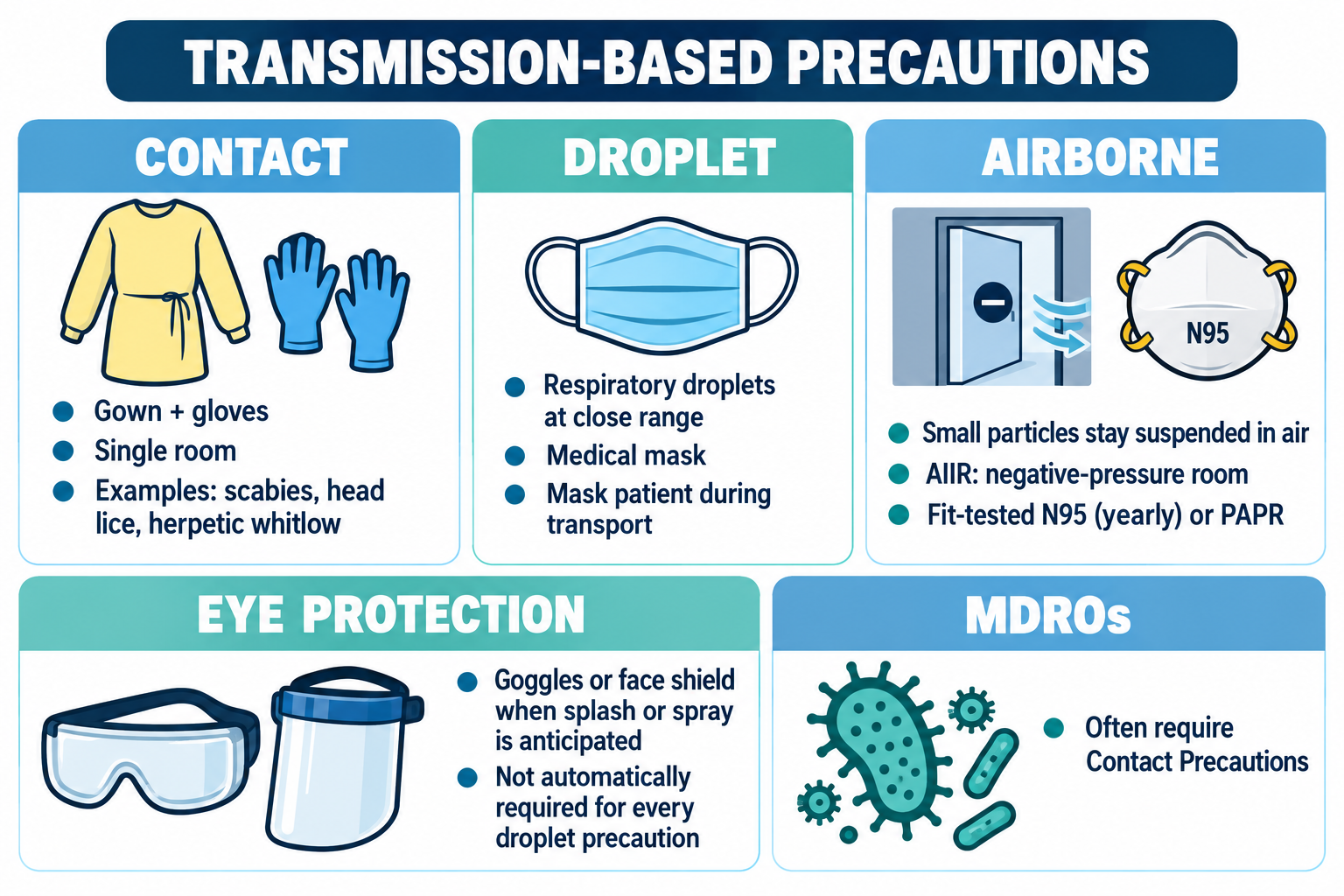
Transmission based precautions
Contact: Gown and gloves, single room (scabies, head lice, MDROs)
Droplet: Spread through respiratory droplets at close range. Medical mask; mask the patient during transport (eye protection is not automatically required)
Airborne: Spread through small particles that remain suspended in the air. Airborne Infection Isolation Room (AIIR) with negative pressure; fit-tested for N95 (once a year); PAPR Powered Air Purifying Respirator
Medication Routes
Enteral - GI, mouth (PO), feeding tube (NG tube), rectally. Oral Liquids shake
Parenteral - Bypasses GI (IV), (IM), (SubQ), and (ID) injections.
Transdermal Patch - Wear gloves, remove the old patch, document the application time and date. Label with date, time, and initials according to facility policy.
Inhalers - MDI: Metered-dose inhaler. pMDI: Pressurized metered-dose inhaler. DPI: Dry-powder inhaler. A spacer can help when coordination is difficult with an MDI. Corticosteroid: rinse the mouth → oral thrush.
DPI Capsules - Load and pierce the capsule; inhale powder; do not swallow/crush

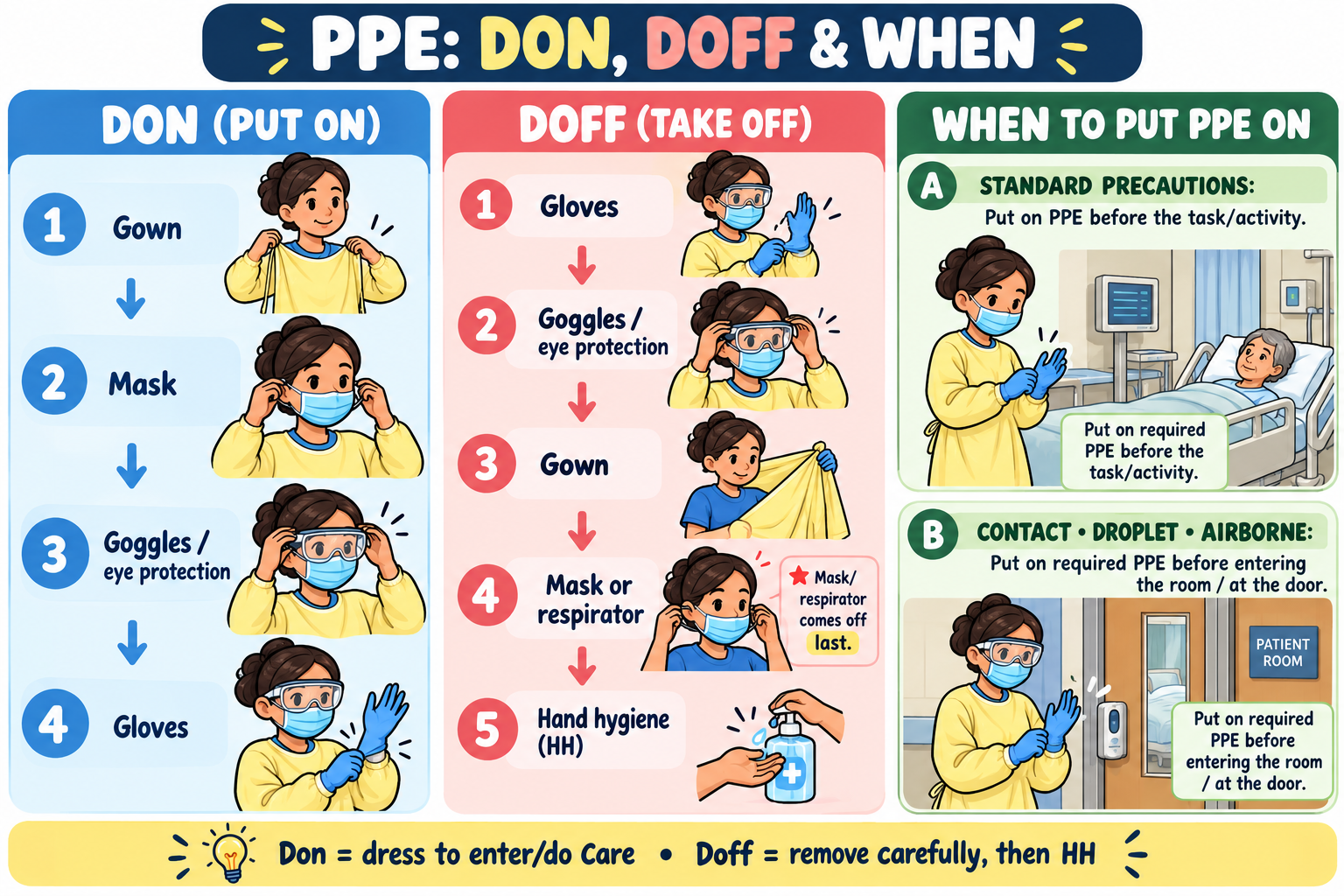
Putting on (Don) and Taking off (Doc)
Don: Gown → Mask → Goggles → Gloves
Doc: Gloves → Goggles → Gown → Mask or Respirator → HH
Standard Precautions: put on before you do the activity
Contact, Droplet, Airborne: put on before the door
Enhanced barrier precautions in LTC
Wounds, indwelling devices, MDRO → gown and gloves for high contact activities
Medical Asepsis vs. Surgical Asepsis
Medical Asepsis: Clean Technique, HH, Clean gloves (colonoscopy)
Surgical Asepsis: Sterile gloves & field; no microorganisms; invasive procedures that break the skin → body cavity (IV, IM). Sterile touches sterile
Pressure Injury Risk Factors & Reactive Hyperemia
Extrinsic factors: Friction, Shear, Moisture
Intrinsic factors: Nutrient, hydration, mobility, sensory
Hyperemia
Tissue compressed; press it, blanching = good; document
Check in an hour; if still there = abnormal reactive hyperemia
Pressure Injuries
Stage 1: intact skin, no blanching; tomato
Stage 2: Partial thickness or serum-filled blister - peeled potato
Stage 3: Full thickness, no muscle, tender, or bone; small bite out of an apple
Stage 4: Muscle, tendon, or bone; peach with bite taken out (eschar on heel is not necessary to remove)
Unstageable: Can’t see the bottom obscured by slough or eschar.
Deep tissue pressure injury (DTI): ohh, that looks bad or blood-filled blister; skin is still intact; eggplant - worse than Stage 2 separate category
“Healing Stage 4”
Prevention: Reposition, support surfaces, manage moisture, protect skin, support nutrition.

Indicates Healthy Wound Healing
Red/pink moist tissue - Granulation Tissue good
Slough (Yellow) - A barrier to wound healing, dead cells/micros
Eschar Black - heal doesn’t need debridement
Wound Excretate / Drainage
Cleared internally: lymphatic system
Removed externally: In dressing material/drains
Serous - clear, watery plasma
Sanguineous: Bright red, containing RBCs
Serosanguineous: pale red, combination of serous plasma and blood.
Purulent: Thick, yellow, green, tan, or brown

Secondary Intention healing
Optimal environment for healing: Warm and moist—not too wet or too dry.
Exposed bone: Use non-wicking material. Fluff, don’t stuff
Hydrogels: Add moisture to the wound for dry or minimally exudative (fluid) wounds.
Moisture Vapor-Permeable Films (Transparent): Protect the wound and maintain moisture. Wounds with light exudate.
Hydrocolloids: Light to moderate exudate. Maintain moisture and support autolytic debridement
Foams: Moderate to heavy exudate. Absorb exudate & maintain a moist environment.
Alginates: Heavily exudative wounds; absorb large amounts of exudate.
Jackson-Pratt (JP) Drains: Remove fluid and reduce tension, anchor the drain
Hemovac Drains: Negative pressure, compressed while active to maintain suction.

Wound dimensions
L (12:00-6:00) x W (3:00-9:00) x D (post-clean, deepest point to wound edges)
Undermining: Hidden tissue destruction under wound edges → Traps bacteria/exudate (effusion caused by inflammation), delaying healing
Tunneling: Deep narrow tracts → difficult to clean/pack, risk of abscess/pus//infection

Types of Wound Healing
Primary Intention – Sutures, staples, adhesive; minimal tissue loss, faster healing
Secondary Intention – Wound heals from the base up (granulation); tissue loss and slower healing
Tertiary Intention – Wound is left open initially and closed later with sutures or other closure methods after swelling or infection is managed.

Insulin
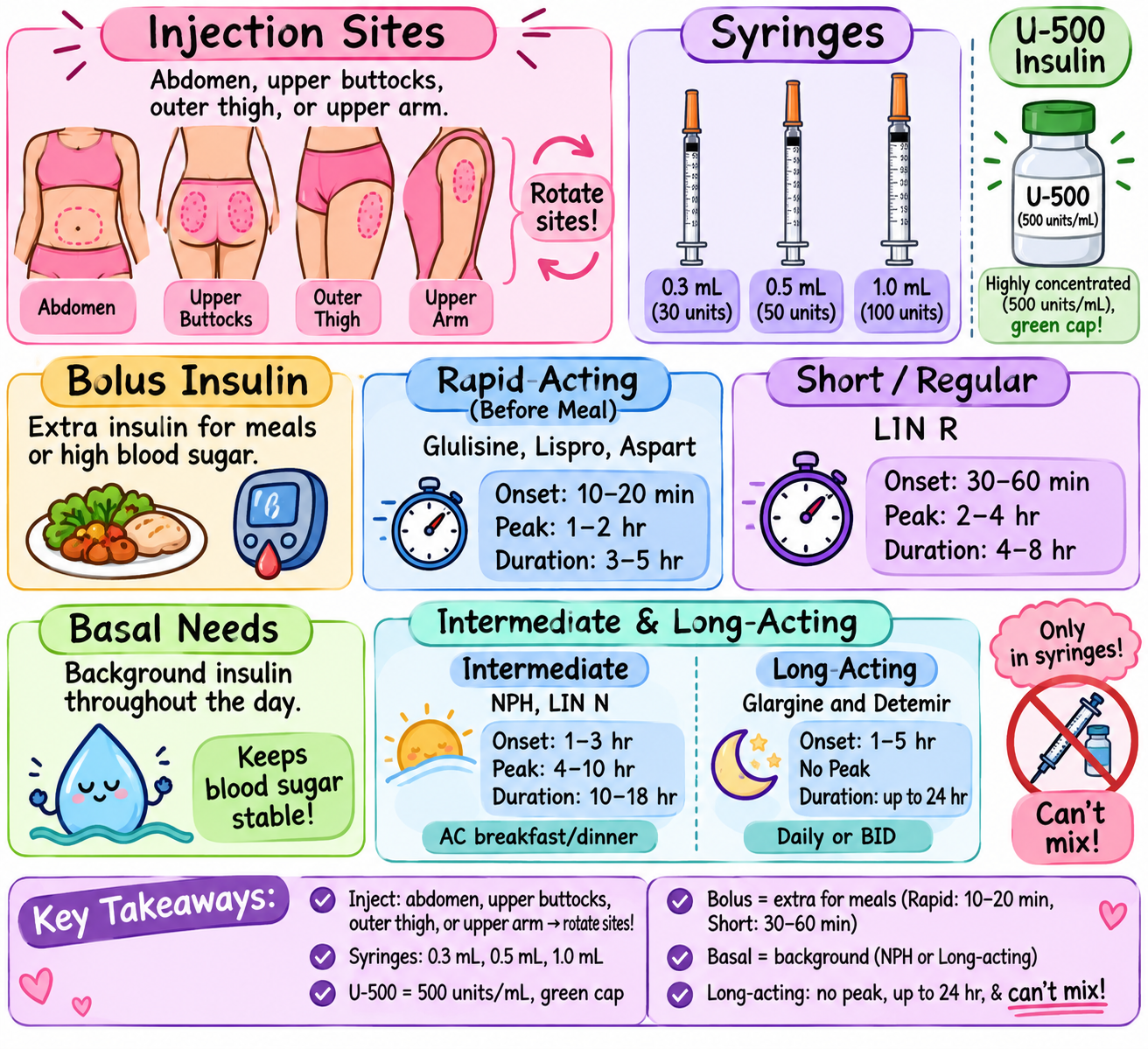
Abdomen, upper buttocks, outer thigh, or upper arm. pinch, rotate sites
Syringes: 0.3 mL (30 units), 0.5 mL (50 units), 1.0 mL (100 units)
U-500 insulin: Highly concentrated (500 units/mL), green cap
Bolus - Extra insulin for meals or high blood sugar.
Rapid - Glulisine, Lispro, Aspart; onset 10-20 minutes, peak 1-2 hours, duration 3-5 hours (Before meal)
Short/Regular - LIN R; onset 30-60 minutes, peak 2-4 hours, duration 4-8 hours
Basal needs - Background insulin throughout the day
Intermediate - NPH, LIN N; onset 1-3 hours, peak 4-10 hours; duration 10-18 hours; AC breakfast/dinner
Long-acting: glargine and detemir; only in syringes; can’t mix; onset 1-5 hours, no peak, duration up to 24 hours (Daily or BID)
Rapid -
Glue a pita close → Glulisine is Apidra
Listen to the human → Lispro is Humalog
If you grow apart you’ll have no vote → Aspart is Novolog
Long -
I’m gonna need a large place to land - Glargine is Lantus
That will determine if I Lev or not - Detemir is Levemir
72 Grams of CHO, BG 240, 1:10, 1:20>120
72 ÷ 10 = 7 units
(240 − 120) ÷ 20 = 6 units
Total insulin: 7 + 6 = 13 units
>5g of fiber, subtract from CHO
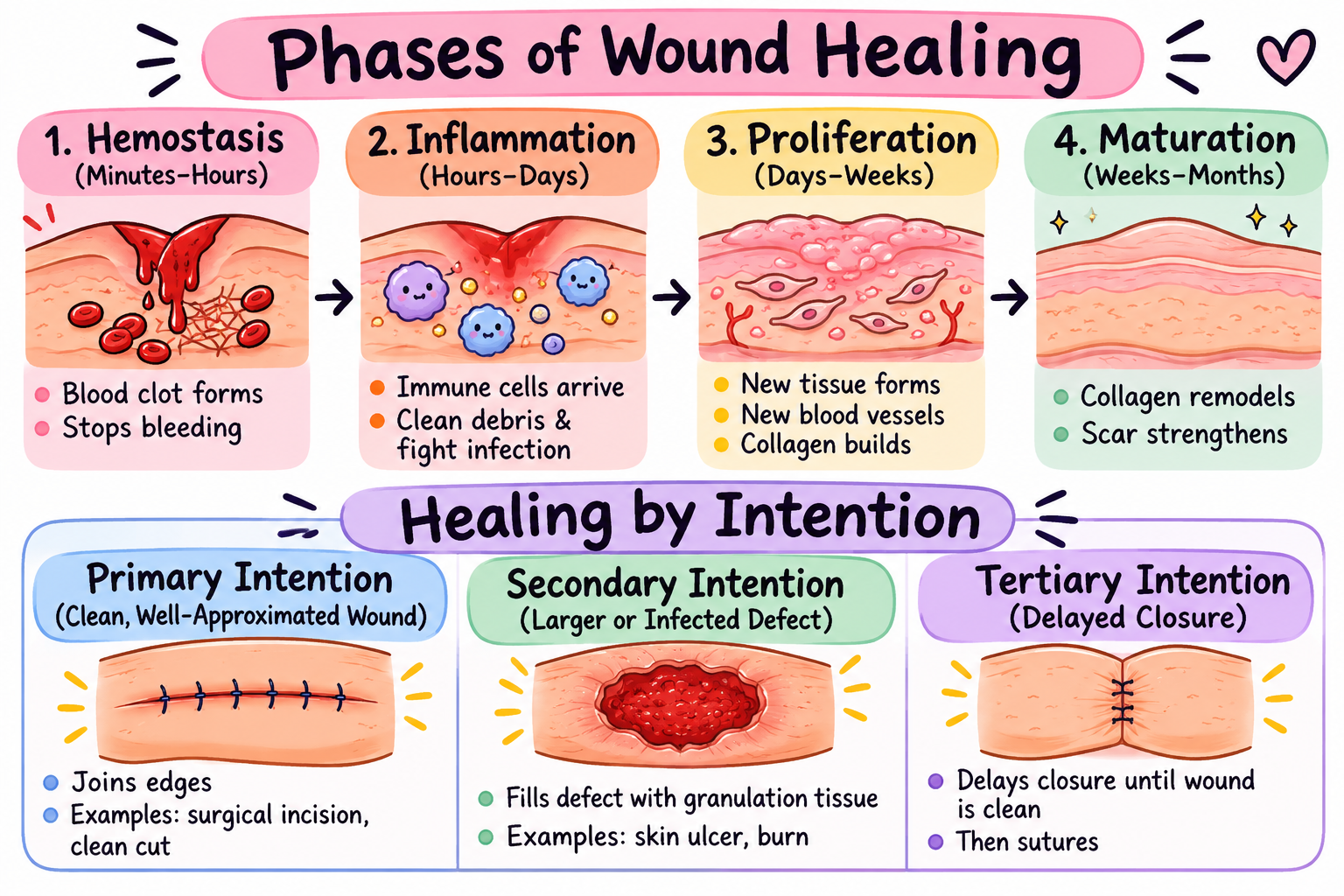
Stages of Wound Healing
Hemostasis - Bleeding controlled
Inflammation - Exudate present, wound bed being cleaned
Proliferation - Granulation tissue, collagen, replacement tissue from the bottom up
Maturation - Surface fully closed, collagen strengthens
Collagen production + Scar Appearance
Hypertrophic - within borders (too much collagen)
Keloid - beyond borders (too much collagen)
Atrophic - depressed contour (too little collagen)
Papyraceous - Fragile, wrinkled tissue paper (too little collagen)

Wound infection
All open wounds are contaminated
Colonization: Microbial adherence of organisms to the wound surface
Critical colonization: Bioburden interferes with healing without signs
Infection: Noticeable reaction; wound culture result, Red, Swelling, Pain, Purulent
Regional → Systemic (Swollen lymph nodes, fever, chills, increased WBC, N/V, LOC)
Contained/traumatic wound: signs of infection 2-3 days
Surgical Wound: 4th to 5th day post-op; occurs within 30 days
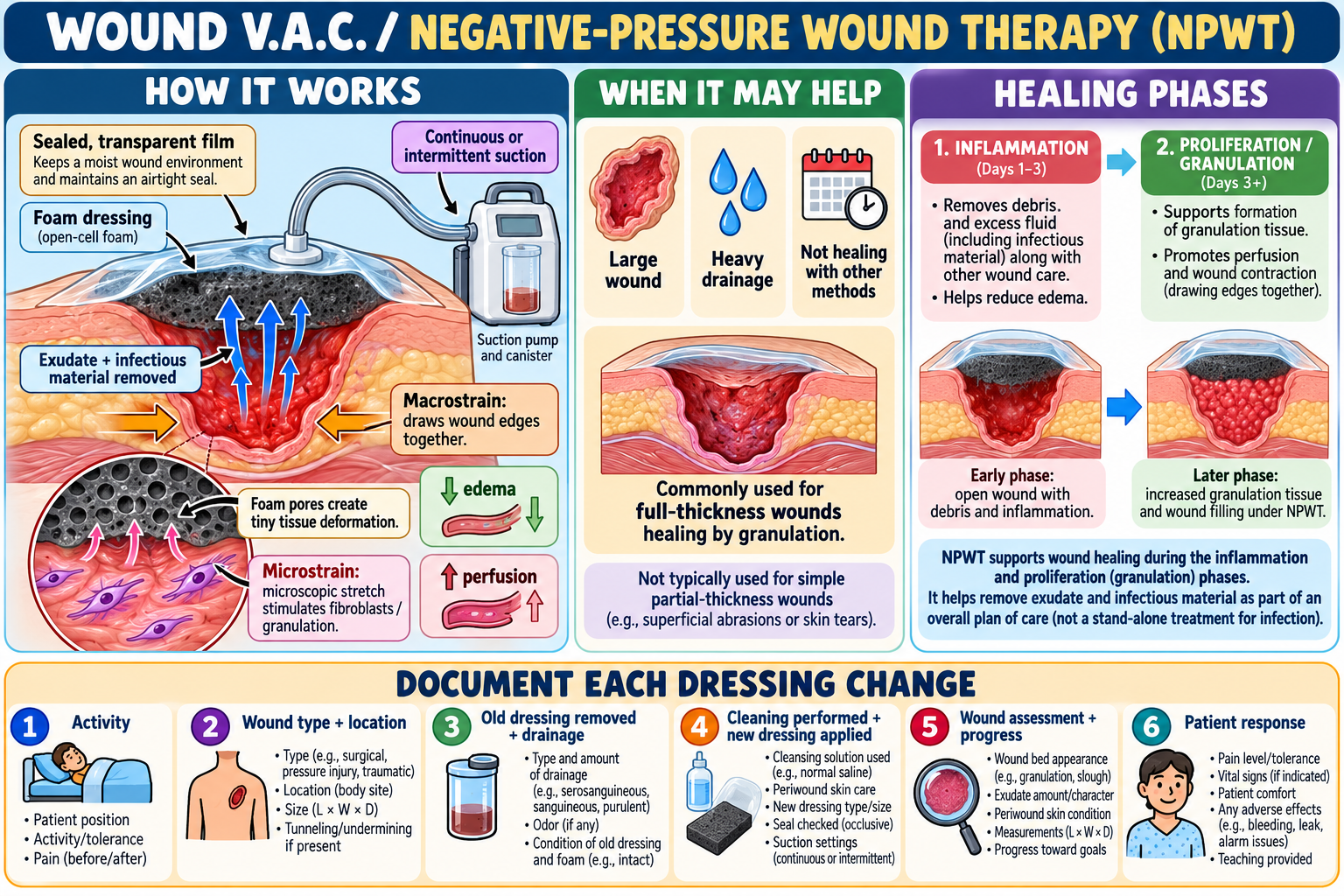
Wound Vacuum V.A.C
Continuous intermittent suction removes exudate while keeping a moist wound bed, removes infectious materials, reduces edema, promotes perfusion, large, excessive drainage, or when other methods fail
Microstrain - Fiberglass, cellular new tissue growth
Macro strain - Draws wound edges together
Good placement for wound V.A.C. Inflammation Phase, Proliferation phase, and full-thickness wounds heal with granulation tissue, not partial thickness
Documentation: Activity, wound type, location, Removal of Old Dressing and Drainage, Cleaning performed and new dressing, Wound Assessment and Progress, Patient response
What do granulation, slough, and eschar describe?
Granulation is new vascular tissue
Slough is soft yellow/tan devitalized tissue
Eschar is thick, often dark necrotic tissue.
Record what is present and how much.

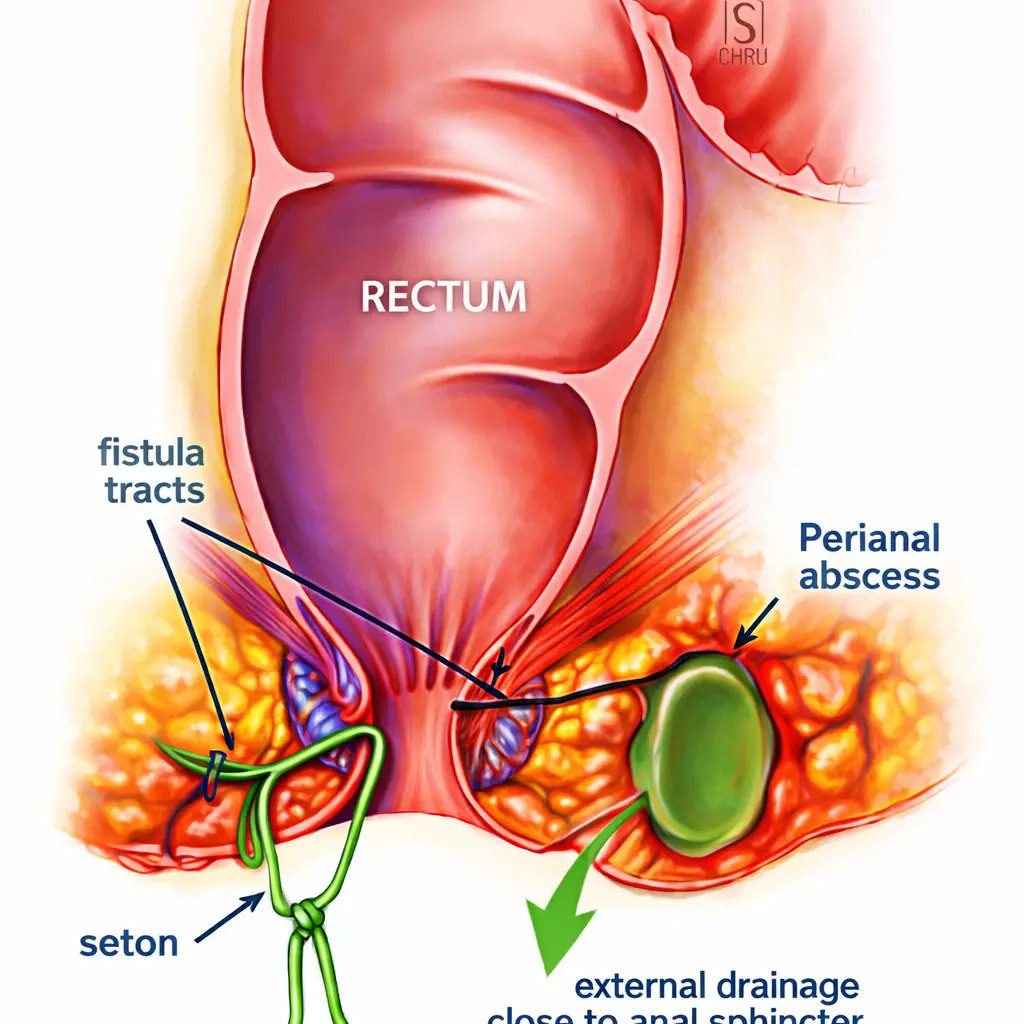
What are dehiscence, evisceration, fistula, and abscess?
Dehiscence is separation of wound edges
Evisceration is protrusion of organs through a separated incision
Fistula is an abnormal passage
Abscess is a localized collection of pus.
How do cleansing and debridement support healing?
Cleansing removes debris (tissue-compatible solution, saline)
Debride dead tissue using sharp, mechanical, autolytic, enzymatic, or biotherapy. Some stable eschar may be left intact per guidance.

What are the phases and patterns of wound healing?
Phases: hemostasis, inflammation, proliferation, maturation.
Healing by primary intention joins edges; secondary intention fills a defect; tertiary intention delays closure.
How do you choose dressings, pack a wound, and use NPWT (Negative pressure wound therapy) safely?
Moisture and exudate. Pack loosely, leave tail, document material. NPWT removes exudate, supports healing, seals, and restores suction within 2 hours

Core elements of Standard Precautions
1) Hand hygiene
2) Exposure-based PPE
3) Respiratory hygiene
4) Safe injections and sharps handling
5) Equipment disinfection
6) Environmental cleaning
7) Safe linen handling
8) Patient placement
9) Masks for spinal or epidural procedures when indicated.
And these are always

How should PPE be selected?
Task & anticipated exposure, not diagnosis alone. Combine gloves, gown, mask or respirator, and eye protection as needed for contact with droplets, sprays, or aerosols.
When is a respirator or PAPR relevant?
Airborne precautions: fit-tested N95 respirator or PAPR per policy. Know fit-testing and seal-check requirements; a PAPR may be used when a respirator is unsuitable
How do Contact, Droplet, and Airborne precautions differ?
Contact: direct or indirect touch
Droplet: respiratory droplets over short distances
Airborne: smaller particles that remain suspended
What does an AIIR provide?
Airborne infection isolation room, airborne, negative pressure, and air exchanges.
How do you use CDC Appendix A?
Look up the diagnosis or suspected condition, then verify recommended precautions and duration
What is an MDRO, and does colonization equal infection?
MDROs resist multiple antimicrobial drugs; MRSA and VRE
Colonization: organisms are present without disease
Infection includes clinical illness.
Enhanced Barrier Precautions in long-term care?
Gown and gloves for high-contact care activities: wounds, indwelling devices, MDRO.
When might full Contact Precautions be needed in LTC?
Drainage, secretions, outbreak investigation, and public health or facility direction.
What is the difference between medical and surgical asepsis?
Medical asepsis reduces the number and spread of microorganisms.
Surgical asepsis eliminates microorganisms; sterile-to-sterile and no-touch principles
What are the 7 rights of medication administration?
Patient, medication, dose, route, time, documentation, indication & clinical judgement
What medication safety checks belong at preparation and bedside?
Prepare for one patient at a time; give only medications you prepared. Read the label at the required three checks, verify against the source closest to the drug, and confirm the medication with the patient
What should you do if an allergy is suspected or the patient questions a medication?
Pause administration, verify the allergy or order with the appropriate clinician, document and report per policy; never dismiss a refusal.
Which IM injection site is generally preferred, and what is Z-track for?
Ventrogluteal, Z-track, seal medication in the muscle for irritating or staining
What should you know about SQ injections and enoxaparin?
SubQ, do not rub the site, don’t remove airbubble in prefiled syringes
What are onset, peak, duration, and half-life?
Onset: effect begins; Peak: strongest effect; duration: how long the effect lasts
Half-life is the time for the amount or concentration to fall by half. After three half-lives, about one-eighth remains
How can route and patient condition change drug effects?
IV → bypasses GI absorption/first-pass metabolism; PO absorption varies with food, GI function, Liver disease, and kidney impairment. Dose changes require an order
What are priority signs and actions for anaphylaxis?
Airway swelling, breathing difficulty, wheezing, hypotension, or widespread hives. Emergency: stop the medication, call for help
Calculations
1 g = 1,000 mg
1 mg = 1,000 mcg
kg = lb / 2.2
1 cup = 8 oz
30 mLs = 1 oz
1 kg = 2.2 lb
Controlled-substance
Secure, count-control drugs, document waste, witness
Check dose against the order and safe range
Documenting Wound Change
1) Wound Cleaning, Dressing Change, Correct Stage
2) Location
3) Type of dressing removed (outer and packing), #, drainage, exudate type, and amount
4) Cleaning and irrigation performed; cleaning solution NS and method
5) L x W x D
6) Wound base: black eschar, red, yellow, necrotic, granulation tissue, and slough %
7) Edges - color (pale, red, pink, purple, mottled, natural color); thick, thin, swollen, indurated, firm, warm, dry, moist, blanching
8) Surrounding skin - Color, warm, dry, intact, cool, moist, tape abrasions, blanching
9) Odor
10) Tunneling or undermining (clock & measurement)
11) Pain, how patient responded
12) Relevant changes over time
13) Outer dressing type, internal packing dressing type, internal packing dressing amount, # of pieces of gauze, foam, alginate
Example 1:
1000 Dressing change with wound cleaning of a healing Stage 4 pressure injury of the right hip. Removed foam secondary ABD dressing, with 4cm spot thin pink drainage. Removed packing: 3 2x2 gauze pads, all saturated with serosanguineous exudate. Cleaned with NS and a 4x4 gauze pad. Irrigated with NS using a syringe and IV catheter. Slight odor after cleaning. Measurement of opening: L/W/D 2 cm/1 cm/2 cm. Base is 100% red tissue. Wound edges 1 cm from opening, natural color, slightly edematous, tender to touch. Tunnel 3 cm in the base at 6 o’clock. No undermining. Surrounding skin natural color, warm, dry, intact. Packed with one piece of alginate. Covered with Duoderm. Appears worse than last week when tunnel was not present. Pain level 2 during change and cleaning; states, “cannot feel it now; pre-medication helped a lot”
Example 2:
0800: Dressing change with wound cleaning. Stage 3 pressure injury of sacrum. Removed outer abd pad with no drainage. Removed packing: 3 pieces of alginate saturated with serosanguineous exudate. Cleaned with commercial spray wound cleaner and 4x4 gauze pads. No wound odor after cleaning. Measurement of wound opening: L 3.5 cm, W 5 cm, D 2cm. Base is 90% red granulation tissue, 10% yellow slough. Wound edges 0.5 cm from the opening are pink and blanchable, slightly moist and non-edematous. Undermining 1.5 cm deep from 3 o’clock to 6 o’clock. No tunneling. Surrounding skin natural color, warm, dry, intact. Packed with 3 pieces of alginate. Covered with ABD pad. Appears improved from last week. Pain level 3, and throbbing during cleaning but resolved after the procedure was complete. Cleaning: NS, Sterile Gauze Pad. Dressing: Petrolatum Gauze, hydrocolloid gel adhesive pads, Hydrocellular foam dressing, non-adhesive