patient provider relationships and diabetes and depression (post midterm 2)
 Call Kai
 Learn
 Practice Test
 Spaced Repetition
 Match
 Flashcards
 Knowt Play
1/30

There's no tags or description
Looks like no tags are added yet.
31 Terms
traditional Patient provider relationships
Traditional expert or biomedical model:
Doctors have objective knowledge set
Doctor communicate knowledge to passive patient
Patient acts on doctor’s advice
new patient provider relationship model
Patient experts on own experience and beliefs
Doctors are human
Patient centered approach
Alternative to expert model:
Patient centered approach
Meeting of two experts
Patient centered approach3 components
Doctor receptive to patient’s opinions
Patient involved in decision making
Attention to emotions (patient and provider)
Little consensus to meaning on this definition
What do providers bring? in communication
Doctors go in with an open mind towards patients
A trusting environment can bring better diagnosis.
Clear understanding of expectations prior to appointment.
Respect patient’s decisions (even if they disagree with them)
Get to know the person.
Doctors can make mistakes
What do patients bring? in communication
Willingness to share
what impacts communication
Both providers, patients, and context impact communication
How do we improve communication?
Training providers
Training patients
Training both
Improving communication and Training Physician
empathizing , education, enlisting
Motivational interviewing techniques
Recognizing and addressing communication problems
Coaching based audiotaped interactions
Improving communication and training patients
Help with planning and organizing questions
Encourage to:
Discuss choices
Negotiate best plan
Repeat back the plan
Ask questions
Improving communication study Haskard ET AL. 2008 (looked at above strategies) results
Trying to improve patients communication did not work
Trying to improve physicians made the physicians feel stressed and rate the experience as poor
Trying to improve both had benefits on both sides.
Diabetes and depression risk levels
People diagnosed with type 2 diabetes had 2x higher risk of depression and type 1 diabetes had 3x higher risk of depression.
why is there a link between diabetes and depression (non-causal ones)
Shared risk factors for both (non-causal)
Maybe lifestyle, genetic, dysregulation of the HPA axis
causal relationship between diabetes and depression
Psychological impact of managing illness?
Depression is a risk factor for diabetes (onset and progression) ?
Psychological impact of managing illness (diabetes→ depression) reasons
Demanding self-management routines (diet, exercise, checking vitals, insulin injections)
Heavy burden = greater risk of depression
Fear of long-term complications
Disease will not be concerned, can impact any part of the body, can be deadly or lead to bodily impairment.
Physiological stress from persistent abnormalities blood glucose
why might Physiological stress come from persistent abnormalities blood glucose
Greater hypoglycemia = greater risk of depression
Depression leading to diabetes reasons
Depression increases:
Risk for type 2 diabetes
Complications (neuropathy, sexual dysfunction, retinopathy)
death
Prigge et al. 2022 study
Having depression alone increases chances of death slightly (1.2)
Patients with just diabetes have a larger increase compared to last group (1.6)
Diabetes and depression patients have more than just the sum of the two risks. Synergistic impact showing that depression does increase the risk of diabetes (2.25)
Why might depression lead to diabetes? onset and progression of disease
Onset
poor er dietary behaviors
Less physical activity
Sleep disturbances
Progression of disease
Poorer medical appointments attendance
Less interest in health management
Poorer glucose monitoring
Poorer adherence to medication
takeaway of diabetes and depression relationship
Take-away: each condition can exacerbate the other
Depression and diabetes and dementia
Decline in cognitive function severe enough to interfere with daily life
Depression and diabetes are independently associated with greater dementia risk (x20 with diabetes and x83 with depression)
Depression and diabetes have synergistic effect where having both causes a x177% of getting dementia
ACCORD-MIND study (Sullivan et al., 2013) question
Is depression associated with accelerated cognitive decline among patients with well-managed T2 diabetes?
ACCORD-MIND study (Sullivan et al., 2013) set up
Longitudinal study
Time 1: measure depression, cognition, general health, medication use, age
Patients’ cognition reassessed at 20 and 40 months
cognitive ability assessed
How was cognitive ability assessed in ACCORD-MIND study
Digit symbol subsitution test: 90 seconds: match symbols with numbers. Measure of attention and shift tasks.common intelligence task
Rey auditory verbal learning test: two lists of random words, repeat only words from list one. Tests memory and recall
ACCORD-MIND study (Sullivan et al., 2013) results
Depression = later cognitive decline (next 20 months?) better vs same vs worse (same is baseline 0)
DSST, not depression had declined in this task. The depressed group had a significant decrease in this pattern recognition task.
RAVLT: not depression had increased in this task (now they know to remember list 1 the second time around). The depression group had a very tiny increase in this task.
Study argued evidence for depression and diabetes both increase cognitive decline.
Depression and diabetes and dementia overall
Depression associated with cognitive decline
Poor mental health not only increases risk of illness, but is associated with poorer outcomes after diagnosis.
Could improving mental health improve cognitive functioning?
Diabetes treatment and QoL
Technological advances to manage type 1 diabetes
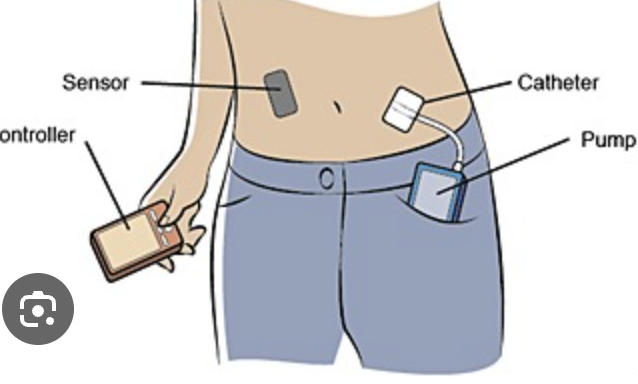
-Continuous subcutaneous insulin infusion (CSII)- insulin pump
-Continuous glucose monitoring
Do new technologies provide “better” treatment? (one thing health psychologists are focused on)
Important to know if new technologies impact QoL
-Reduces burden of multiple injections/blood testing?
-Discomfort and mechanical problems?
Continuous subcutaneous insulin infusion (CSII)
delivers rapid-acting insulin continuously 24 hours a day through a small portable device to manage diabetes
Diabetes and QoL Yu et a;., 2024 question
Does QoL differ for CSII and multiple daily injections?
Diabetes and QoL Yu et a;., 2024 set up
Individuals with type 1 diabetes (18+)
102 matched pairs with CSII or injections
Insulin theraoy related QoL assessed
Diabetes and QoL Yu et a;., 2024 results
Evidence that CSII can increase QoL in activites of daily living, social activities, and psychological states compared to multiple daily injections
No difference in adverse insulin reactions though