Pathology - Unit 2 Week 6, Abdomen Pathology
 Call Kai
 Learn
 Practice Test
 Spaced Repetition
 Match
 Flashcards
 Knowt Play
1/39

Earn XP
40 Terms

Peritoneum definition:
Double-walled sac that lines the abdominal cavity and covers organs (parietal and visceral).
Parietal Peritoneum definition:
Outer layer of the peritoneum that lines the internal surface of abdominolpelvic wall
Visceral Peritoneum definition:
The inner layer of the peritoneum that covers the external surfaces of the organs
Peritoneal Cavity definition:
The cavity contains serous fluid
(lubricant for organs)
The________ peritoneum covers the organs.
Visceral
Ascites:
Abnormal accumulation of fluid in the peritoneal cavity of the abdomen
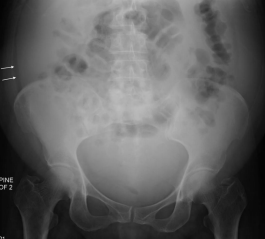
What happens to the bowel in a patient with ascites?
Displaces the bowel centrally (towards the middle)
Ascites: Additive or Descructive?
Additive - increase kVp by 5-15%
What are the usual causes of ascites?
Chronic conditions like:
Cirrhosis of the liver
Metastatic disease to the peritoneal cavity
Ascites may be treated with ______ and _______
diuretics
drainage
The loss of mobility in the small bowel is referred to as:
adynamic ileus
Pneumoperitoneum definition:
Free air in the peritoneal cavity
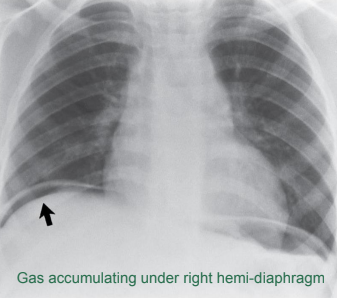
What are the causes of pneumoperitoneum?
Perforation of a gas-containing viscus (intestine)
Pneumoperitoneum: Additive or destructive?
Destructive, decrease mAs 25-50% or use AEC
To demonstrate air-fluid levels in the abdomen, the technologist can use what kind of position and beam? (2)
a horizontal beam and an upright patient
a horizontal beam and a left lateral decubitus
True or False:
Pneumos unrelated to a perforated bowel (ex. post-op trapped air from surgery) will typically resolve on their own with no intervention needed
True
What should you do if the patient cannot stand for the abdominal XR and you need to see air-fluid levels?
Do a Left Lateral Decub

Peritonitis definition:
Redness and swelling (inflammation) of the lining of the peritoneum.
What can typically cause Peritonitis?
An infection from a hole in the bowel or a burst appendix.
What is dynamic or Mechanical Bowel Obstruction?
Partial or complete blockage in the intestine due to adhesions or foreign body
What is the most common site for dynamic or mechanical bowel obstruction?
common in the small bowel
Fibrous adhesions:
Fibrous band of tissue interrelates with the intestine, creating a blockage
Distended loops of air-filled small intestine
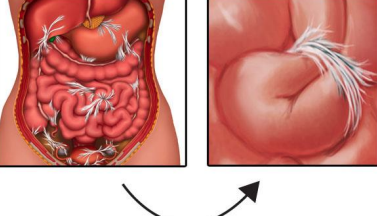
What is the most common cause of mechanically based obstruction?
Fibrous adhesions
Fibrous Adhesions: Additive or Destructive?
Destructive, decrease mAs 25-50% or use AEC
What can happen if fibrous adhesions are not treated?
They can tighten around the intestines and cause ischemia or necrosis

What kind of position was used for this abdominal image?
supine
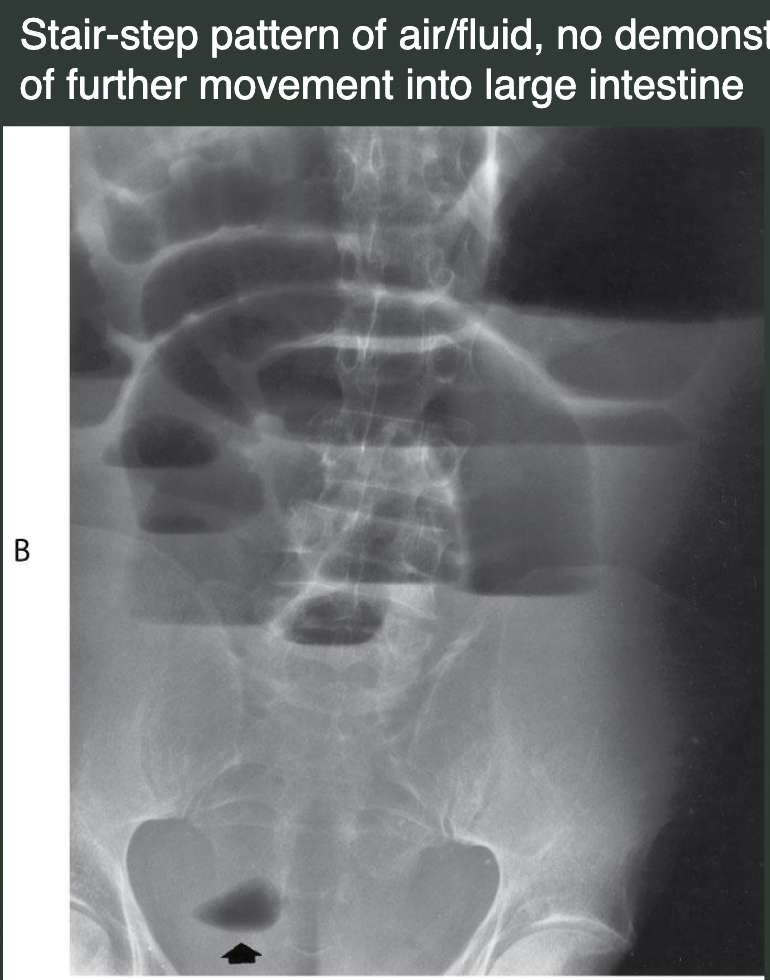
What kind of position was used for this abdominal image?
upright
Ileus (non-mechanical obstruction) definition:
Non-mechanical obstruction involving large amounts of air.
True or False:
Ileus occurs in almost every patient who undergoes abdominal surgery and typically resolves in 4 days
False,
Often resolves within 1-3 days
Ileus (Non-mechanical obstruction): Additive or Destructive?
Destructive, decrease mAs 25-50% or use AEC
Adynamic ileus/paralytic ileus (3):
Occurs more often than mechanical bowel obstruction
Common disorder of intestinal motor activity (nerves & muscles aren’t communicating)
Fluid and gas do not progress normally (things aren’t moving like they should)
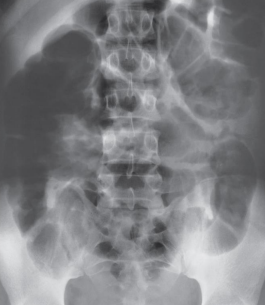
Factors that impede intestinal mobility for ileus/non-mechanical obstruction (3):
Neural (pertaining to nervous system)
Hormonal
Metabolic (build up and break down of bodily substances)
Causes of Adynamic ileus (4):
Peritonitis
Medications that decrease intestinal peristalsis
Electrolyte and metabolic disorders
Trauma
Intussusception:
Telescoping of one part of the intestinal tract into another because of peristalsis
Air-filled “coiled spring” appearance on an x-ray

True or False:
Intussusception is common with geriatric patients
False
seen more with pediatrics
Intussusception: Additive or Destructive?
Destructive, decrease mAs 25-50% or use AEC
Intussusception can be corrected during _______ enema under an x-ray
contrast/air

Volvulus:
Twisting of a loop of intestine, which creates an obstruction
Bird’s beak appearance
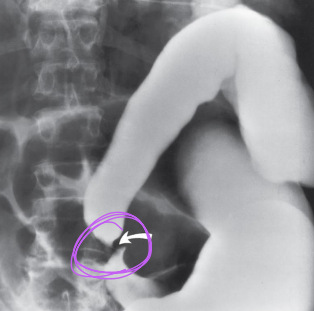
The most common sites for volvulus are on the:
cecum
sigmoid
Volvulus may require surgery for correction, especially if _______ and/or ________ is a concern
ischemia
necrosis