Heart Valves + Blood Flow Through the Heart
 Call Kai
 Learn
 Practice Test
 Spaced Repetition
 Match
 Flashcards
 Knowt Play
1/11

There's no tags or description
Looks like no tags are added yet.
12 Terms
Function of the Heart Valves
Blood flow through the heart must occur in only one direction, so two sets of valves prevent backflow
Backflow doesn’t occur in the veins draining into the atria because gravity and pressure in the veins drive blood into the atria; no valves needed
Pressure in the ventricles when they contract is very high, which would push blood back into the atria
Blood flowing out of the ventricles moves against gravity into high-pressure arteries, which could cause it to flow backward into the ventricles
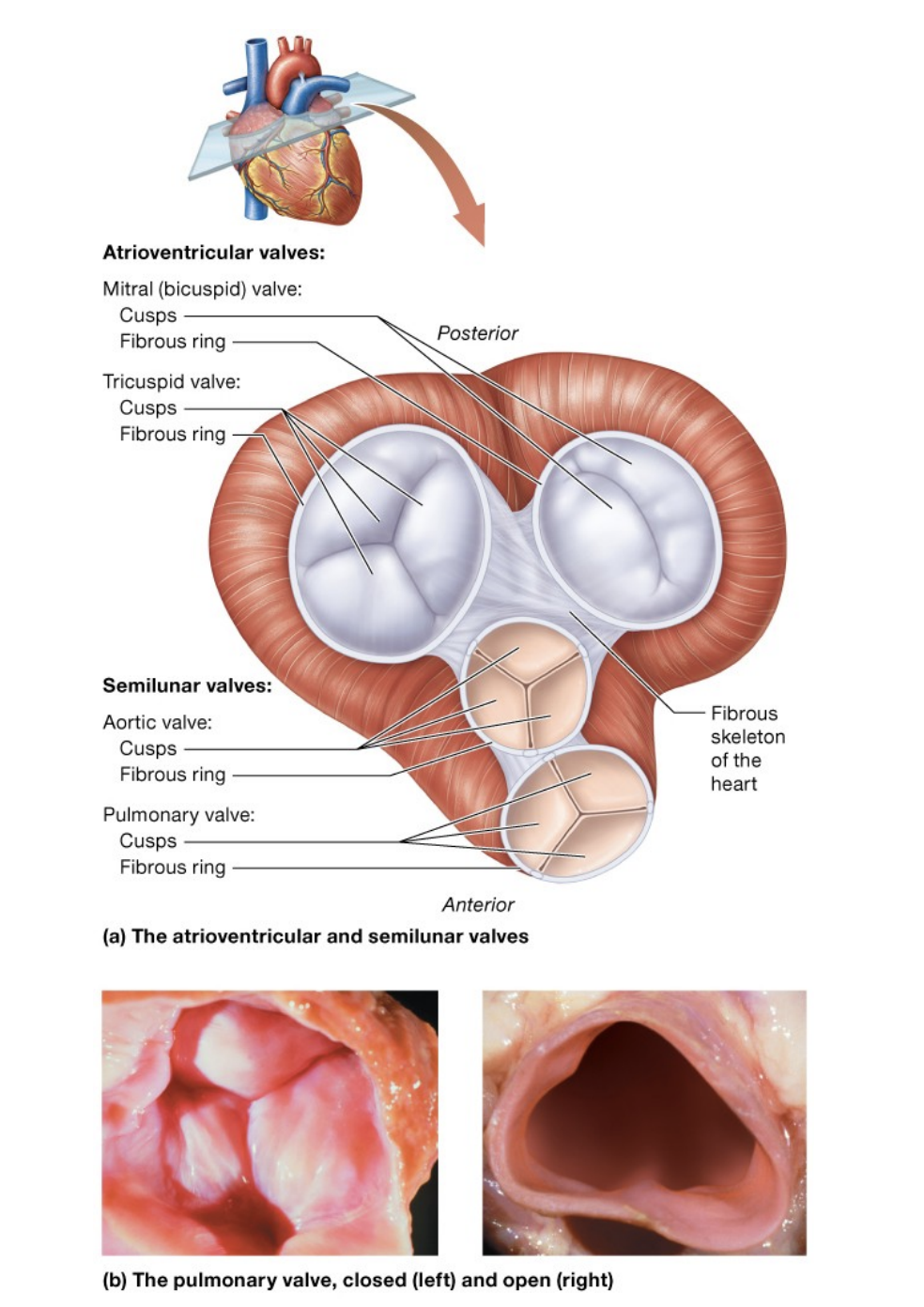
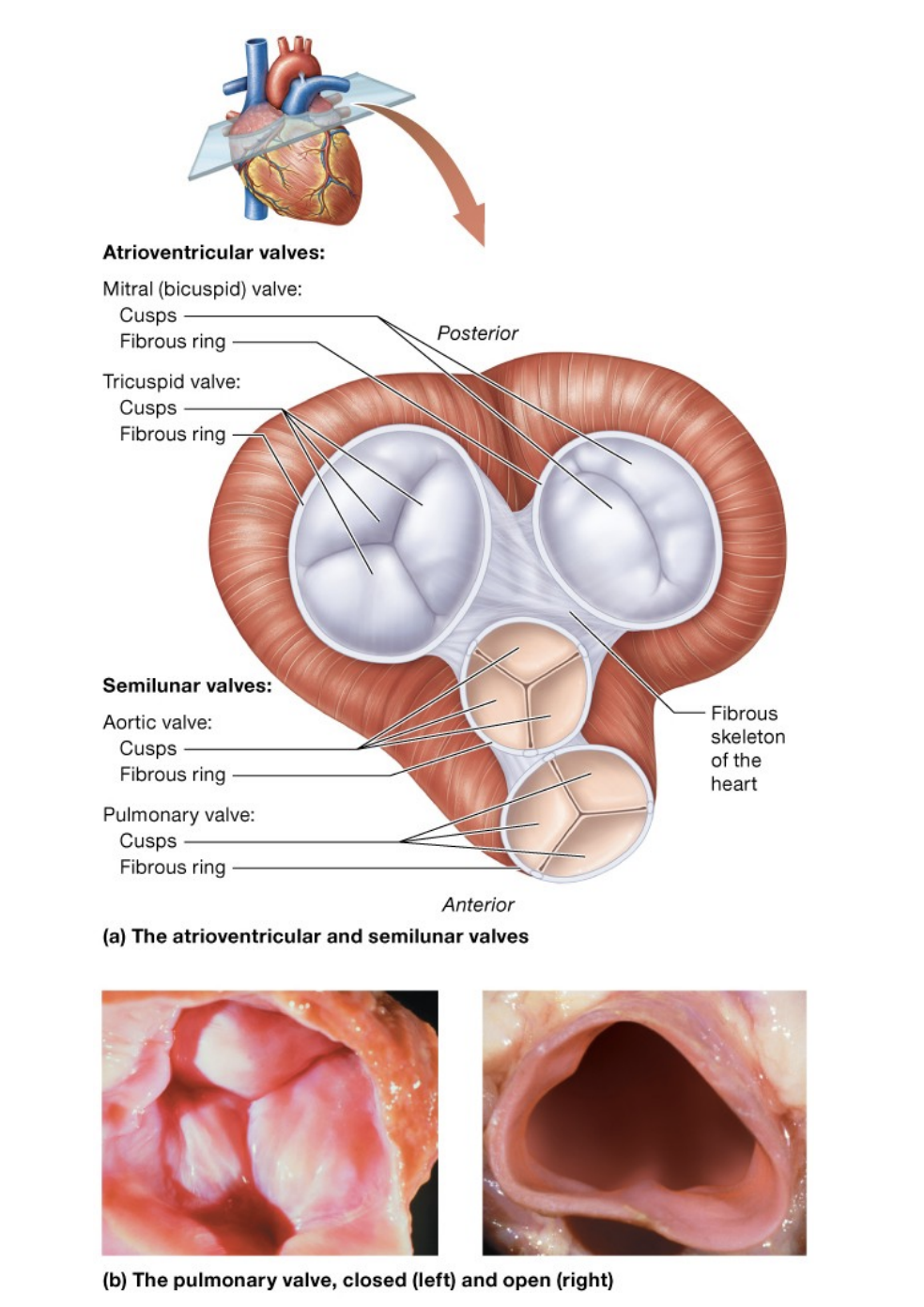
Atrioventricular Valves (AV)
Valves between the atria and ventricles
consist of flaps called Cusps, composed of endocardium overlying extensions of the fibrous skeleton with rings surrounding the opening of the valves
“Inflow” valves
includes tricuspid valve and bicuspid valve

Tricuspid Valve
Between the right atrium and right ventricle
three cusps
Bicuspid (Mitral) Valve
Between the left atrium and left ventricle
two cusps
Chordae Tendineae and Papillary Muscles
Both are supported by the chordae tendineae that attach to papillary muscle
prevent cusps from everting back into the atria
Semilunar Valves (SL)
Valves between the ventricles and the arteries
consist of three cusps with half-moon shapes
Also composed of endocardium and a thin layer of the fibrous skeleton with rings surrounding the opening of the valves
“Outflow” valves
includes pulmonary valve and aortic valve
– No chordae tendineae or papillary muscles are present
Pulmonary Valve
Between the right ventricle and the pulmonary trunk
Aortic Valve
Between the left ventricle and the aorta
Major Types of Valvular Defects
May be congenital or from an infection, cancer, or immune system disorder
insufficient, stenotic
Both cause an audible “swooshing” of blood when the heart beats, called a Heart Murmur
may include heart enlargement, fatigue, dizziness, and heart palpitations
Mitral and Aortic valves are most commonly affected
Insufficient Valve
Valve fails to close fully, allowing blood to leak backward
Stenotic Valve
Calcium deposits built up in the cusps, making them hard and inflexible making it harder for the heart to eject blood

Blood Flow Through the Heart
