Oral patho study guide***
 Call Kai
 Learn
 Practice Test
 Spaced Repetition
 Match
 Flashcards
 Knowt Play
1/55

There's no tags or description
Looks like no tags are added yet.
56 Terms
Anodontia
Complete lack of tooth formation
Hypodontia
Reduction in number of teeth (1–5 missing teeth)
Oligodontia
6 or more missing teeth
Hyperdontia
Extra teeth (supernumerary teeth)
Microdontia
Abnormally small teeth
Macrodontia
Abnormally large teeth
Gemination
Partial division of a single tooth germ
Fusion
Union of two developing tooth germs by dentin
Concrescence
Union of two teeth by cementum only
Hypercementosis
Excessive deposition of cementum
Dilaceration
Abnormal bend in the root
Taurodontism
Enlarged pulp chamber of a multirooted tooth
Cystic hygroma, a type of lymphangioma, may become a medical emergency if the tumor grows large enough to block the airway.
True
False
True
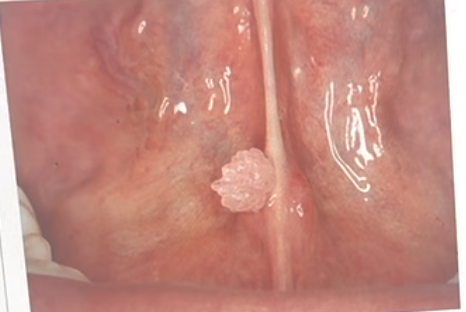
This 32-year-old male presents with a solitary, pedunculated papillary nodule of the right lateral aspect of the sublingual frenum measuring 0.5 cm diameter. What is the most likely diagnosis?
squamous papilloma
verruca vulgars
condyloma acuminatum
sialolithiasis
ranula
squamous papilloma
Nasolabial cysts have a strong female predilection and present as soft tissue swellings along the nasolabial groove.
Truel
False
True
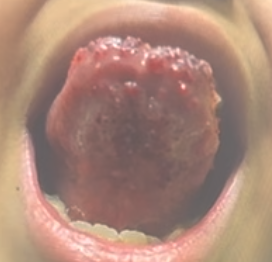
An asymptomatic 8-year-old boy presents for routine dental care with a fairly diffuse cobblestone appearance of the anterior dorsal tongue that appears somewhat translucent. Which of the following is the most likely diagnosis?
granular cell tumor
squamous papilloma
squamous cell carcinoma |
Lymphangioma
mucocele
Lymphangioma
A 56-year-old female presents with a somewhat firm, non-tender, pink, smooth-surfaced nodule of the left anterior buccal mucosa at the height of the occlusal plane. Which of the following would be the most likely diagnostic consideration?
lipoma
fibroma
neurofibroma
neunlemmoma
squamous papilloma
• fibroma
A bony firm swelling in the midline hard palate most likely represents a:
fibroma
mucocele
lipoma
palatal torus
palatal torus
A lipoma:
is very common in the mouth
appears brown in color
is a benign tumor of fat cells
has a high recurrence rate when surgically removed
• is a benign tumor of fat cells
Hodgkin lymphoma is much more common than Non-Hodgkin lymphoma, with over 77,000 new cases diagnosed in the U.S. each year.
true
False

An asymptomatic 3 mm yellowish-white soft papule of the posterior lateral tongue associated with the lingual tonsil most likely represents:
mucocele
sialolith
oral lymphoepithelial cyst
thyroglossal duct cyst
dermoid cyst
Oral lymphoepithelial cyst
The Reed-Sternberg cell is the malignant cell associated with:
• leukemia
non-hodgkin lymphoma
hodgkin lymphoma
mucoepidermoid carcinoma
adenoid cystic carcinoma
Hodgkin lymphoma
All of the following are characteristics of a benign neoplasm EXCEPT:
slow growth
encapsulation
movable on palpation
infiltrative growth
no metastasis
infiltrative growth
Which of the following is NOT a typical feature of fibrous dysplasia?
slow growth
pain
• bony swelling
ground gland appearance of bone radiographically
pain
Paget's disease of bone is usually___ , while fibrous dysplasia is usually ___.
Answer 1: Polyostotic —
Answer 2: Monostotic —

The radiographic presentation of scooped out radiolucencies of the alveolar bone, giving the appearance of teeth "floating in air" is characteristic of which of the following conditions?
Traumatic bone cyst
Ameloblastoma
Langerhans cell histiocytosis
Central giant cell granuloma
Langerhans cell histiocytosis
'Ground glass" radiographs are a term used to describe:
Fibrous dysplasia
• Paget's disease of bone
Langerhans cell histiocytosis
Ossifying fibroma
Fibrous dysplasia
A focal area of increased bone density is found incidentally on routine radiographs. The adjacent tooth is vital. What is the most likely diagnosis?
condensing osteitis
idiopathic osteosclerosis
hypercementosis
astoosurcoma
idiopathic osteosclerosis
Primary malignancy of bone is termed:
Chondrosarcoma
Multiple myeloma
• Osteosarcoma
Langerhans cell histiocytosis
Osteosarcoma
Multiple jaw osteomas, epidermoid cysts of the skin and polyps of the colon is suspicious for what condition?
fibrous hyperplasia
langerhans cell histiocytosis
Gardner's syndrome
cleidocranial dysplasia
cherubism
Gardner's syndrome
Multiple "punched out" radiolucencies describes the radiographs seen with:
• multiple myeloma
Langerhans cell histiocytosis
osteosarcoma
Paget's disease of bone
• multiple myeloma
Gardner's syndrome patients are at a very high risk of developing lung cancer.
True
False
True
A significant complication of Paget's disease can be the development of osteosarcoma.
• True
Flase
True

An asymptomatic radiolucency at the border of the mandible below the level of the inferior alveolar canal is most likely to represent:
Stafne defect
Osteoma
• Simple bone cyst
Paget's diseae
Stafne defect

A 7-year-old boy presents with painless enlargement of both sides of his face. A panoramic film indicates the presence of multilocular radiolucencies in the posterior right and left mandible. The most likely diagnosis is:
cherubism
traumatic bone cyst
Paget's disease of bone
Gardner syndrome
Periapical cemental dysplasia
cherubism

A young patient presents with a well-defined radiolucency that scallops between tooth roots of the posterior mandible apical to teeth #29 - 31. Upon biopsy, the surgeon finds and empty bone cavity. What is the most likely diagnosis?
• Osteoma
Cemento-osseous dysplasia
Fibrous dysplasia
Lateral periodontal cyst
Traumatic bone cyst
Traumatic bone cyst
A patient born without clavicles is likely to have cherubism
True
False
False
In oral cavity, the most common site for salivary gland neoplasms is
Palate
Upper lip
Lower lip
Buccal mucosa
Palate
Muccoceles:
Most commonly arise on the upper labial mucosa
Frequently present as recurring soft tissue swelling
Represent a benign salivary gland neoplasm
Are best treated by incision and drainage
All of the above
Frequently present as recurring soft tissue swelling
Mucoepidermoid carcinoma is the most common malignant salivary gland tumor.
True
False
True
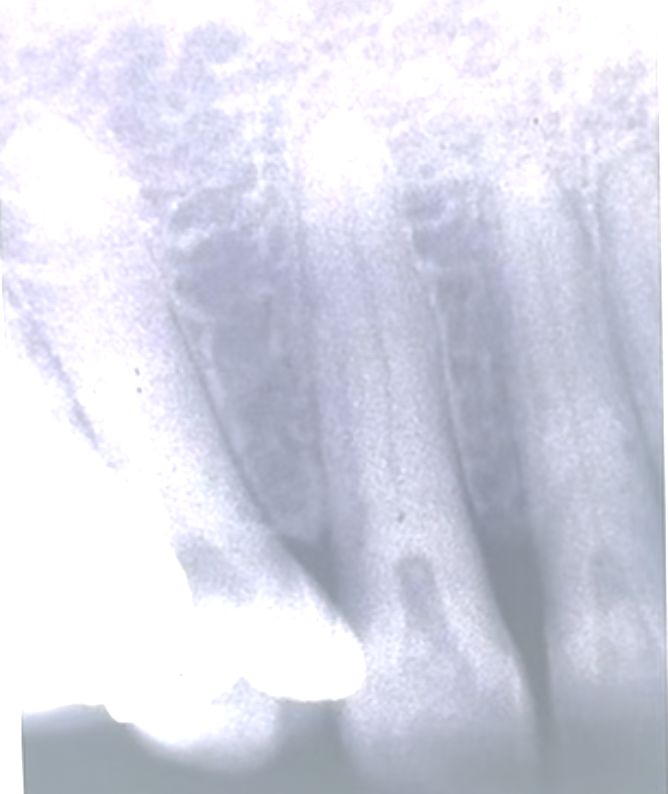
Your patient presents with teeth that clinically appear normal, however, radiographic examination reveals large pulp chambers with a "thistle tube" appearance and multiple pulp stones. What is the most likely diagnosis?
amelogenesis imperfecta
dentinogenesis imperfecta
dentin dysplasia
enamel hypoplasia
concrescence
dentin dysplasia
A patient with multiple congenitally missing teeth, conical-shaped teeth and fine, sparse hair may have which of the following disorders?
Cherubism
Cleidocranial dysplasia
Paget's disease
Gardner's syndrome
Ectodermal dysplasia
Ectodermal dysplasia
Which of the following is NOT associated with Sjogren's syndrome?
xerostomia (dry mouth)
xerophthalmia (dry eyes)
dental caries
oral candidal infection
none of the above (ie - all are associated)
none of the above (ie - all are associated)
Which of the following statements is FALSE regarding sialolithiasis?
most commonly involve submandibular gland
this process is limited to major salivary glands
may result in clinical swelling of the associated gland due to ductal obstruction will appear radiopaque on a radiograph
• none of the above (le - all statements are correct)
This process is limited to major salivary glands
Dens invaginatus most commonly affects:
maxillary lateral incisors
mandibular lateral incisors
mandibular premolars
mandibular molars
maxillary molars
maxillary lateral incisors
Which of the following presents as a hard tissue "bump" that may be detected in the furcation of a molar during periodontal probing and could be mistaken for calculus?
odontogenic fibroma
dilaceration
enamel pearl
lateral periodontal cyst
dens invaginatus
enamel pearl
Your patient presents with this scaly plaque and ulceration of his lower lip. What do you suspect?
• Actinic Cheilitis |
Actinic Keratosis |
Squamous Cell Carcinoma
Basal Cell Carcinoma
• Actinic Cheilitis |
Which of the following is NOT a common feature of melanoma?
color variegation
diameter larger than 6 mm
irregular borders
symmetry
none of the above ie - all features are common)
symmetry
An elderly female presents with a cluster of three non-tender soft yellowish umbilicated papules above the right eyebrow of unknown duration. Each lesion measure 2-3 mm in diameter. Which of the following would be the most likely diagnostic consideration?
Seborrheic keratosis
Actinic keratosis
Sebaceous hyperplasia
Herpes zoster
Dermatosis papulosa nigra
Sebaceous hyperplasia
Name the common lesions seen in the image above
freckles
Which of the following statements is FALSE regarding the acquired melanocytic nevus?
common lesion that may develop from the first year of life through fourth decade
risk for malignant transformation is relatively small
No treatment is absolutely necessary
color variegation within a lesion is a common finding
• often involute with aging
color variegation within a lesion is a common finding
Which of the following is a premalignant sun-induced lesion of skin that if left untreated may develop into squamous cell carcinoma?
actinic lentigo
actinic keratosis
seborrheic keratosis
sebaceous hyperplasia
actinic keratosis
Which of the following statements would NOT be accurate for seborrheic keratosis?
typically develops after age 40
benign process
presents on sun exposed skin
slightly raised pigmented plaque with crisp borders
Excisional is biopsy is required
Excisional is biopsy is required
Basal cell Carcrinoma most commonly occurs in the middle 1/3 of the face
True
False
True
Actinic lentigines are pigmented skin lesions that occur in older patients and tend to wax and wane with sun exposure.
• True
False
False
What does the B in the ABCDE mnemonic stand for?
Borders
HINT:
A – Asymmetry
B –
C – Color variation
D – Diameter (typically greater than 6 mm)
E – Evolution (changes in size, shape, or color)