Marine Geology, Sediments, and Micropaleontology
 Call Kai
 Learn
 Practice Test
 Spaced Repetition
 Match
 Flashcards
 Knowt Play
1/109

Earn XP
Description and Tags
Comprehensive practice flashcards covering deep-sea sediment classification, depositional mechanisms, biostratigraphic index microfossils, radioisotopic geochronology, and oceanic sediment budgets.
110 Terms
Challenger Expedition (1872–1876)
The first comprehensive scientific expedition to systematically study the world's deep oceans, carrying seven scientists under the direction of chief naturalist Charles Wyville-Thomson.
Sir John Murray
The Scottish naturalist who supervised the compilation and publication of the 50-volume, 29,552-page 'Report of the scientific results of the voyage of HMS Challenger' over a span of 19years.
Deep-Sea Sediments
Marine sediments deposited at oceanic water depths exceeding 500m, characterized by the predominant accumulation of biogenic skeletal material.
Emiliani & Milliman (1966) Sedimentation Mechanisms
The four fundamental processes governing deep-sea deposition: settling from the water column, bottom gravity flows, geostrophic/contour currents, and chemical or biogeochemical seafloor precipitation.
(Eu-) Pelagic Deposits
Open-ocean sediments where less than 25% of the grain fraction >5μm is of terrigenous, volcanogenous, or neritic origin, characterized by a median grain size of <5μm.
Pelagic Clays
Extremely fine-grained deep-sea deposits consisting of less than 30% fossil remains, accumulating predominantly in abyssal basins located beneath the calcium compensation depth.
Biogenic Oozes
Pelagic sediments comprising greater than 30% skeletal and shell remains of pelagic micro-organisms, with the remaining fraction consisting primarily of clay minerals.
Hemipelagic Muds
Continental margin and slope sediments where more than 25% of the grain fraction >5μm is terrigenous, volcanogenic, or neritic in origin, having a median grain size of >5μm.

Globorotalia menardii
A warm-water, tropical planktonic foraminifer whose stratigraphic presence or absence was utilized by W. Schott (1935) to identify postglacial sediments and calculate Atlantic sedimentation rates.

Glomar Challenger
A pioneering scientific drilling ship utilized during the Deep Sea Drilling Project (DSDP) to retrieve sediment cores and sample the underlying basaltic ocean crust across global basins.
Ocean Basin Sediment Thickness
The total vertical accumulation of sediment on oceanic crust, averaging approximately 500m in the Atlantic Ocean basins and 300m in the Pacific Ocean basins.
Biological Pump
The oceanographic mechanism by which carbon fixed through photosynthesis in the upper euphotic layer (0–100m) is exported as organic particles into the deep ocean and seafloor sediments.
Marine Snow
Macroscopic composite aggregates of living microplankton, organic detritus, mineral grains, and extracellular mucus that accelerate the downward flux of particulate matter to the deep seafloor.

Calanus finmarchicus
A marine copepod species whose grazing upon spring phytoplankton blooms produces concentrated pulses of rapidly sinking fecal pellets enriched in chlorophyll a.

Fish Fecal Pellets
Large, rapidly sinking organic pellets produced by forage fish that sink at an average rate of 787m/day, enabling surface-derived organic carbon to reach seafloor depths of 1000m in under two days.
Red Clay
An abyssal seafloor sediment deposited below the CCD, composed of two-thirds clay minerals along with quartz, feldspar, pyroxenes, zeolites, and iron-manganese oxides and hydroxides.
Phyllosilicates
Sheet silicate minerals featuring layered atomic structures built from polymeric sheets of silicon-oxygen tetrahedra (Si4+) and aluminum-hydroxide/oxide octahedra (Al3+).
Kaolinite
A non-expanding 1:1 two-sheet clay mineral with a basal crystal spacing of 7A˚, produced primarily by the intense subaerial chemical leaching and weathering of rocks in humid tropical regions.
Illite
A non-expanding 2:1 three-sheet clay mineral with a basal crystal spacing of >10A˚, featuring non-exchangeable potassium ions (K+) held within the interlayer space.
Smectite
An expandable 2:1 three-sheet clay mineral group (including montmorillonite) exhibiting a basal spacing of >14A˚, commonly formed by the marine alteration and weathering of basaltic volcanic materials.
Chlorite
A 2:1:1 four-sheet clay mineral with a basal spacing of 14A˚ containing an interlayer brucite-like magnesium-hydroxide sheet, typical of cold, high-latitude physical weathering regimes.
Calcium Compensation Depth (CCD)
The specific ocean depth level where the supply rate of calcium carbonate (CaCO3) to the seafloor is exactly balanced by the dissolution rate, resulting in zero net carbonate accumulation.

Lysocline
The critical oceanic boundary depth where the rate of calcite dissolution increases sharply, separating well-preserved from partially dissolved, poorly-preserved foraminiferal assemblages.

Cenozoic CCD Deepening
The long-term global descent of the calcite compensation depth from approximately 3.0–3.5km at 55Ma down to modern depths of 4.6km, driven by deep-ocean cooling and shifting weathering fluxes.
Deep-Sea Chert (DSC)
A hard, dense microcrystalline or cryptocrystalline quartz rock formed in deep-sea sediments through the diagenetic dissolution, mobilization, and reprecipitation of biogenic opal via intermediate fibrous cristobalite.
Marine Micropaleontology
The branch of paleontology dedicated to the investigation of microscopic fossilized organism remains preserved in marine sediments to decipher past ocean environments, climates, and stratigraphic ages.
Planktonic vs. Benthic Microfossils
Planktonic forms inhabit the upper sunlit water column (0–200m) and dominate deep-sea pelagic oozes, while benthic forms inhabit the seafloor substrate and dominate shallow neritic shelf deposits.
Calcareous Microfossils
Microscopic fossils with skeletons or tests composed of calcium carbonate (CaCO3), including foraminifera, calcareous nannoplankton, ostracods, pteropods, and calpionellids.
Siliceous Microfossils
Microscopic fossils composed of amorphous hydrated opaline silica (SiO2⋅nH2O), including diatoms, radiolarians, ebridians, and silicoflagellates.
Foraminifera
Single-celled, testate eukaryotic protozoans belonging to the Rhizaria, characterized by chambered shells possessing internal communicating openings termed foramina and dynamic networks of reticulopodia.
Foramen
The primary aperture or internal opening in a foraminiferal test septum that interconnects adjacent chambers across the entire cell.
Agglutinated Tests
Foraminiferal test walls constructed by gathering foreign mineral grains or micro-organism shells and gluing them with mineralized or organic cements onto an organic tectin foundation.
Tectin
A flexible, biological sheet composed of glycoproteins and polysaccharides that serves as the organic basal layer upon which agglutinated foraminiferal tests are assembled.
Hyaline Tests
Calcareous foraminiferal shells constructed of laminated microcrystalline calcite pierced by microscopic perforating pores, imparting a translucent or glassy appearance.
Porcelaneous Tests
Imperforate calcareous foraminiferal shells composed of randomly arranged, submicron high-magnesium calcite crystals that scatter incident light to produce an opaque, porcelain-like appearance.
Microgranular Tests
A primitive foraminiferal shell wall structure consisting of tightly packed, equidimensional microgranules of crystalline calcite, producing a sugary texture under the microscope.
Fusulinids
An extinct Paleozoic order of large, complex foraminifera with microgranular test walls that proliferated globally before dying out during the Permian-Triassic extinction event.

Coccolithophores
Unicellular, autotrophic marine haptophyte algae that produce an external spherical armor composed of interlocking calcitic elliptical discs called coccoliths.
Coccosphere
The complete, spherical protective exoskeleton formed by the overlapping arrangement of minute individual calcareous plates (coccoliths) encasing a living coccolithophore cell.

Discoasters
Star-shaped calcareous nannofossils (asteroliths) produced by extinct warm-water haptophytes, spanning from the late Paleocene to their extinction at the Pliocene/Pleistocene boundary (1.6Ma).
Ostracods
Small aquatic bivalved crustaceans (0.15–2mm long) possessing a calcified, hinged carapace that encloses a laterally compressed, segmented body.
Carapace
The protective external shell of an ostracod, comprising two calcified lateral valves joined along a dorsal hinge margin and operated internally by an adductor muscle.
Diatoms
Unicellular photosynthetic microalgae possessing a two-part, interlocking shell (frustule) composed of amorphous hydrated opaline silica (SiO2⋅nH2O).
Frustule
The rigid, porous box-and-lid opaline silica cell wall of a diatom, composed of an upper overlapping epitheca and an underlying hypotheca connected by girdle bands.
Centric Diatoms
Radially symmetrical diatoms characterized by round, cylindrical, or triangular valve geometries arranged symmetrically around a central point, dominating marine phytoplankton communities.

Pennate Diatoms
Bilaterally symmetrical diatoms with elongated valve profiles arranged along an axis of symmetry, common in benthic habitats and frequently bearing a median raphe slit.
Raphe
A longitudinal median slit running along the valve face of many pennate diatoms through which cytoplasmic streaming enables active gliding locomotion over sediment surfaces.
Radiolaria
Holoplanktonic, marine amoeboid protozoans possessing a perforated central capsular membrane and an internal skeleton constructed of amorphous opaline silica.

Spumellaria
A suborder of polycystine radiolarians characterized by spherical, discoidal, or concentric latticed opaline skeletons exhibiting radial symmetry around a central point.
Nassellaria
A suborder of polycystine radiolarians exhibiting heteropolar, conical, or helmet-shaped skeletons with a distinct apical-antapical longitudinal growth axis.
Dinoflagellate Cysts (Dinocysts)
Resting cysts formed after sexual reproduction in the life cycle of dinoflagellates, primarily composed of a highly resistant, fossilizable organic biopolymer called dinosporin.
Dinosporin
A complex, chemically resistant organic macromolecule analogous to sporopollenin that forms the durable walls of fossilizable dinoflagellate cysts.
Theca
The external organic armor of a vegetative dinoflagellate cell, consisting of a species-specific, orderly arrangement of cellulosic plates called tabulation.

Kofoid Tabulation System
The standardized alphanumeric labeling system used to classify the arranged series of thecal plates (apical, intercalary, precingular, cingular, postcingular, antapical) on armored dinoflagellates.
Redfield Ratio
The universal empirical atomic ratio of carbon, nitrogen, and phosphorus found in marine phytoplankton and open-ocean waters: C:N:P=106:16:1.
Conodonts
Extinct microscopic phosphatic tooth elements (200μm–6mm) composed of crystalline fluorapatite and an organic matrix, serving as primary index fossils from the Cambrian to the Late Triassic.

Conodont Apparatus
The complete, bilateral skeletal assembly of 15 discrete conodont elements situated in the pharynx of the conodont animal, comprising food-grasping (S and M) and food-shearing/processing (P) elements.

Conodont Animal
An extinct, soft-bodied, eel-like early marine chordate bearing large eyes, V-shaped myomeres, a notochord, and an anterior conodont feeding apparatus.

Simple Cone Conodonts
Primitive conodont elements consisting of an unbranched single tooth or denticle on an expanded base, widely utilized as index fossils from the Cambrian through Ordovician.

Platform Conodonts
Morphologically advanced conodont elements possessing broad, grooved, or tuberculate lateral platforms evolved from blade units, serving as primary index fossils from the Ordovician to the Late Triassic.
Chronostratigraphy
The branch of stratigraphy focused on determining the relative and absolute ages of rock strata and correlating time-equivalent rock units (systems, series, stages) on a global scale.
Geochronology
The scientific discipline of quantifying the numerical ages of geological materials, strata, and events using radioactive isotope decay systems alongside relative dating techniques.
Numerical Dating
Dating methods that provide a calculated geological age in calendar or solar years before present, preferred over the older term 'absolute dating' because all such ages carry analytical uncertainties.
Radioactivity
The spontaneous physical process wherein an unstable parent atomic nucleus decays into a more stable daughter configuration through the emission of subatomic particles and ionizing energy.
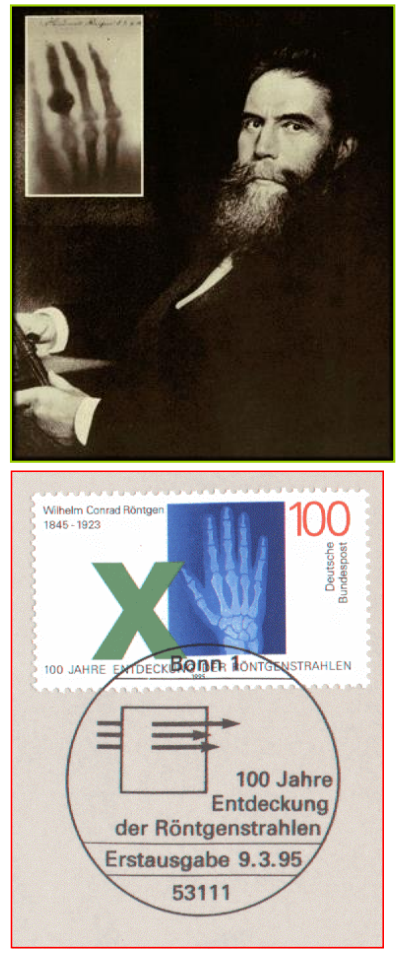
Wilhelm Conrad Röntgen
The German physicist who discovered X-rays in 1895, generating the famous radiographic image of his wife's hand and receiving the inaugural Nobel Prize in Physics in 1901.

Henri Becquerel
The French physicist who discovered natural radioactivity in 1896 after uranium salts accidentally exposed wrapped photographic plates in darkness, earning the 1903 Nobel Prize in Physics.
Alpha Decay (α-decay)
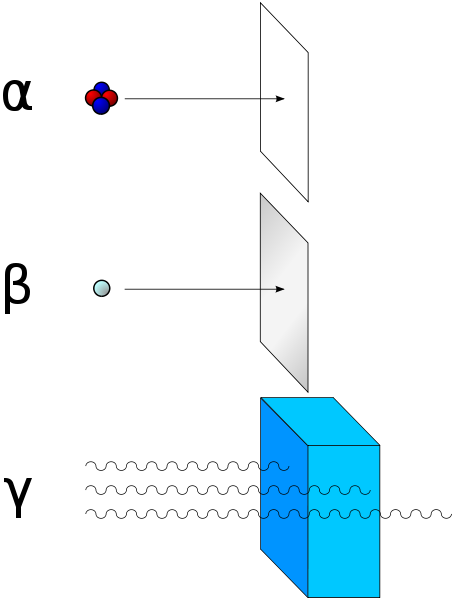
A mode of radioactive decay where a parent nucleus expels an alpha particle (2 protons and 2 neutrons), reducing its atomic number by 2 and its mass number by 4.
Beta Decay (β-decay)
A radioactive decay mode wherein a nuclear neutron converts into a proton while emitting a high-speed electron (β− particle), increasing the atomic number by +1 without changing mass number.
Electron Capture
A decay mechanism in which a nuclear proton captures an inner orbital atomic electron, transforming into a neutron and decreasing the atomic number by −1 with no change in mass number.
Gamma Decay (γ-decay)
The emission of high-energy photons from an excited nucleus dropping to a lower energy state, characterized by high penetration power requiring dense lead shielding to attenuate.
Half-Life (t1/2)
The time required for exactly one-half of the initial population of radioactive parent nuclei to decay into daughter products, mathematically defined as t1/2=λln(2)=λ0.693.
Primordial Radionuclides
Radioisotopes inherited from the initial accretion and creation of the Earth that persist due to exceptionally long half-lives, including 238U, 235U, 40K, and 87Rb.
Cosmogenic Radionuclides
Radioactive nuclides continuously produced in the upper atmosphere by nuclear reactions between incoming cosmic-ray neutrons and atmospheric gases, such as 14C, 10Be, and 7Be.
Anthropogenic Radionuclides
Artificial radioactive isotopes released into the environment by nuclear bomb detonations, nuclear accidents, and reactor operations, including 137Cs, 131I, and 239Pu.
Caesium-137 (137Cs)
An artificial gamma-emitting fission product with a half-life of 30years, widely employed to chronologically date sediments deposited over the last 50–70years.
Chernobyl Fallout Horizon (1986)
A sharp, distinct subsurface concentration peak of 137Cs deposited across Europe following the April 26, 1986 reactor explosion at Chernobyl, serving as an absolute stratigraphic marker.
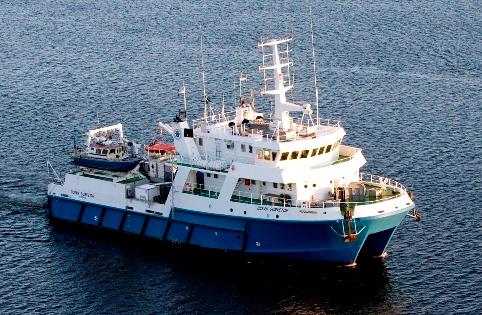
R/V Ocean Surveyor
A marine research vessel operated by the Geological Survey of Sweden (SGU) that conducted seabed sediment sampling to map the spatial distribution of 137Cs contamination across Swedish waters.
Fukushima Daiichi Fallout
The major nuclear accident in March 2011 that discharged massive quantities of 137Cs into the Pacific Ocean via cooling water and damaged reactor leakage, serving as a modern oceanic tracer.
Lead-210 (210Pb)
A natural radioisotope in the 238U decay series possessing a half-life of 22.3years, used extensively to establish sediment geochronologies covering the past 20–150years.
Supported Lead-210 (210Pbsup)
The fraction of 210Pb produced directly within sediments by the in situ decay of parent radium-226 (226Ra), existing in secular equilibrium with its precursor.
Unsupported Lead-210 (210Pbxs)
Excess 210Pb delivered to sediments via atmospheric fallout or water-column scavenging from radon-222 (222Rn) decay, which decreases exponentially with core depth.
Constant Rate of Supply (CRS) Model
A 210Pb age-depth model that assumes a constant atmospheric fallout flux of excess 210Pbxs per unit time, accommodating variable sediment accumulation rates downcore.
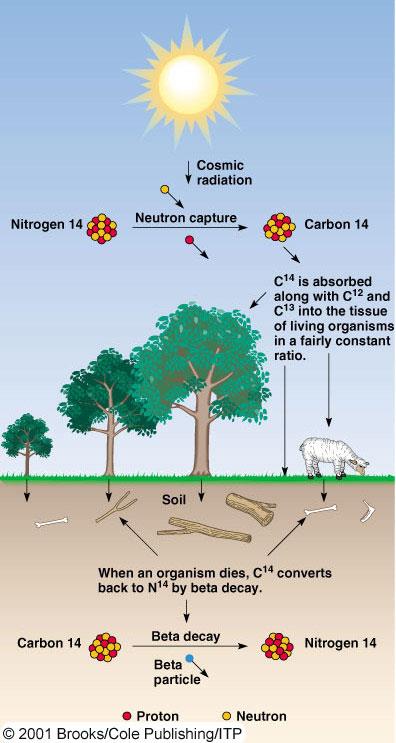
Radiocarbon Dating (14C)
A radiometric dating method measuring the residual activity of cosmogenic 14C in organic remains to determine time elapsed since biological death for materials up to 70,000years old.
Willard F. Libby
The American chemist who developed the radiocarbon dating technique with his colleagues at the University of Chicago, for which he received the Nobel Prize in Chemistry in 1960.
Libby Half-Life
The early experimentally determined radiocarbon half-life value of 5568±30years, distinguished from the internationally accepted true physical half-life of 5730±40years.
Suess Effect
The modern decrease in atmospheric 14C specific activity caused by the industrial combustion of ancient, radiocarbon-dead fossil fuels.
Hard Water Error
Anomalously old radiocarbon ages caused by aquatic organisms incorporating dissolved bicarbonate derived from the weathering of ancient, 14C-free carbonate rocks.
Precision vs. Resolution
Precision represents the analytical reproducibility and statistical uncertainty (±) of a measurement, whereas resolution is the capacity to differentiate two closely spaced geological events in time.
Marine Geology
The scientific study of seafloor features, processes, sediment provenance, and tectonic history across marine environments from beaches to the deepest abyssal trenches.
Philip Kuenen (1958) Axiom
The famous principle stating 'No Geology without Marine Geology', highlighting that most sedimentary rocks exposed on continents originated from ancient marine depositional basins.
Lithogenous Sediments
Clastic marine sediments derived from the subaerial weathering, physical disintegration, and erosion of continental and island volcanic rocks, transported to oceans by water, ice, or wind.
Hydrogenous Sediments
Chemical sediments formed through direct mineral precipitation from seawater or interstitial sediment pore waters, such as evaporites, phosphorites, and manganese nodules.
Cosmogenous Sediments
Extraterrestrial matter that settles onto the seafloor from outer space, including chondritic dust spherules, interplanetary dust particles, and impact microtektites.
Marginal Filters
Estuarine and coastal mixing zones that trap over 90% of river-borne suspended sediments, permitting only approximately 7% of continental silt and clay to reach open pelagic waters (Lisitsyn, 1995).
Flocculation
The aggregation of suspended colloidal clay particles into larger clusters upon encountering saline waters, caused by seawater electrolyte cations neutralizing negative clay mineral surface charges.
Base Level of Erosion
The lowest theoretical elevation down to which subaerial running water and denudation can erode land surfaces, traditionally defined by mean sea level.
Sinking Deltas
Vulnerable coastal river deltas experiencing rapid drowning due to the combination of upstream dam sediment trapping, accelerated subsurface compaction, and eustatic sea-level rise.
Ice-Rafted Debris (IRD)
Terrigenous coarse sediment and gravel scoured from land by glaciers, incorporated into icebergs, and dropped onto the seafloor as the ice melts in open marine waters.
Dropstones
Oversized glacial rock fragments transported by floating icebergs that fall to the seabed, disrupting and piercing the fine laminations of underlying marine sediments.
Heinrich Events
Abrupt, episodic pulses of massive iceberg armadas discharged from the Laurentide Ice Sheet during glacial periods, depositing prominent lithic-rich detrital carbonate layers across the North Atlantic every 100–500years.
