ASCI 356: Exam 1 Review
 Call Kai
 Learn
Learn Practice Test
 Spaced Repetition
 Match
Match Flashcards
 Knowt Play
1/108

There's no tags or description
Looks like no tags are added yet.
Name | Mastery | Learn | Test | Matching | Spaced | Call with Kai | Chat |
|---|
No analytics yet
Send a link to your students to track their progress
109 Terms
stress
force applied
strain
Result of stress force
Tension (stressor)
a pulling force that stretches or attempts to pull a structural member apart (pressurizing)
Torsion (stressor)
a twisting force that acts around a structural member's longitudinal (lengthwise) axis
Compression (stressor)
a crushing or squeezing stress that tends to shorten, press together, or reduce the size of a structural member
sheer force (stressor)
a force acting parallel to a material's surface or cross-section, causing internal layers to slide past one another
Bending (force)
compression and tension forces applied together upon a structure
deformation
a change to the shape or form of a object/material
Elastic Deformation
deformation can be reversed
Plastic Deformation
object/material will never be original shape again
strongest geometric shape
circle
stress concentration
a location in an object where the stress is significantly greater than the surrounding region

Which Diagram is stress and which is strain

DeHavilland Comet
hidden metal fatigue to form and rapidly spread around sharp structural corners, leading to catastrophic mid-air fuselage failure
Truss Type Fuselage
rigid framework and frabric (wood to metal) only good for bending/compression and can't carry anything (INCLUDE IMAGE)
Flight Control Surface
actively steers the airplane
Stabilizer
keeps the aircraft steady and level (does not move)
Tapered Wing
Trapezoid shaped wings that are smaller and induce less drag on the aircraft
spars (false)
run the span of the wind (vertical)
ribs (false)
run from the bleeding to trailing edge of wing (horizontal)
cantilever wing
has sufficient internal support structures to keep it steady in its location, does not have any external support
Lamination (single cut pieces)
bonding multiple thin layers of a material to a structure, making it stronger. Has variable thicknesses depending on stress area
stress skin
transferring load concentration from one stress area to the rest of the aircraft (Skin → rivet → rib → stringers and spars)

Know how to label parts of wing


Know how to label parts of fuselage

bulkhead
a vertical structural partition or dividing wall built across the fuselage to separate different compartments, support the airframe, and maintain cabin pressure
frame/former
internal structural cross-members in an aircraft fuselage that establish its shape and support the outer skin
skin (fuselage term)
the outer covering of the fuselage that provides aerodynamics and protects internal structures from environmental forces
longeron (fuselage term)
a primary, continuous longitudinal structural member in an aircraft fuselage that runs lengthwise to carry major bending and axial loads
bulkhead (fuselage term)
a solid, upright wall or partition built inside an aircraft's fuselage
stringer (fuselage term)
a lightweight longitudinal structural member attached to the inside of an aircraft's skin and formers to reinforce the skin
C-172 Fuselage
All metal – semi-monocoque
Bulkheads, stringers, skin
Front and rear carry-through spars
Front: 2 attachment points
Rear: 1 attachment on partial span spar
4 engine mount stringers from door forward
Externally braced wings
Integral fuel tanks
Vertical stabilizer has 1 spar
Horizontal stabilizer has 2 spars
Lead acid battery
pink/red
Used in most GA aircraft
Most common
Most affordable
Easier to determine condition
Nickel Cadmium battery
Typical in Turbine Powered aircraft
More Expensive
Can meet higher current demand
Can thermal runaway - low internal resistance
Require bench testing
Steady voltage until “cliff”
Lithium Ion battery
new technology
significant wieght reduction
high energy storage
reduced maintainance
can thermal runway
lots of heat and vapor issues
unreliable when not in between 20 and 80 %

What are the three batteries and which line represents which
Refer to diagram

Battery Basics
Converts chemical energy into electrical energy
Only produces DC power
batteries come with an ampere hour rating (current flow x time)
current flow
the movement of electrons through a conductor measures in ampperes.
rectifier
converts AC into DC power
inverter
converts DC into AC power
Factors affecting resistance
Type of conductor material used
Length of conductor material
Cross-section of conductor material
Temperature of conductor material
What type of energy does resistance make
heat and/or light
Types of resistance
variable
fixed
Voltage
Electrical pressure measured in volts. Most small aircraft use a 14-volt or 28-volt Direct Current (DC) system.
Conductors
conduct electrical current; have a few loosely bound electrons that will move
Insulators
do not conduct electrical current very well; do not produce free electrons
ammeter
an instrument used to measure the amount of electrical current flowing through a circuit, measured in amperes (amps)
voltmeter
an instrument used to measure electrical pressure or potential difference between two points in a circuit, measured in volts
loadmeter
measures the total electrical current being generated by an aircraft's alternator or generator
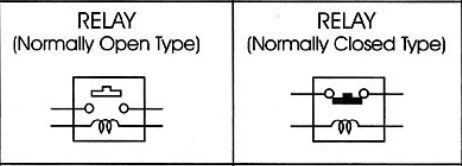
relay
(usually a switch) Uses a small amount of to control a large amount of current
open circuit
electrons are NOT flowing
closed circuit
electrons are flowing
AC Power
Current that flows back and forth in the circuit (alternating)
DC Power
Current that flows in one direction
loadshedding rules
turn the things off that take the most energy (if it spins, lights up, or heats up, it takes a lot of power)
do not turn anything off if you do not know what the consequence will be
If still upright, start load shedding gradually
If on fire or not staying upright, turn the entire electrical system off and add only what you need
4 ammeter cases
slightly to right (+5 amps) = stable flying conditions, battery is charging
slightly to left (-5 amps) = battery is not charging and is loosing power gradually
all the way to right (+20 amps) = too much current in flowing into battery (bad regulator)
all the way to left (-20 amps) = engine not working, plane on battery power (start loadshedding)
AC Electrical System Requirements for Aircraft
115 V
3-phase
400 hz
Amppere Hours Math Problems
Refer to class notes
Battery (electrical symbol)

fuse (electrical symbol)

relay (electrical symbol)
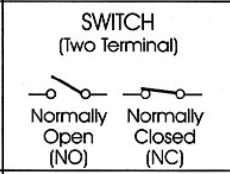
switch (electrical symbol)
rotary switch (electrical symbol)

Resistor (electrical symbol)

Constant Speed Drive (CSD)
AC Generators need a faily consistent speed input
CSD takes varying engine accessory gearbox output speeds and gives gen a constant input speed
Alternator
an engine-driven electrical component that converts mechanical energy into alternating current
Bus
a central electrical conductor or junction that distributes power from a source
Generator
an engine-driven machine that converts mechanical rotation into electrical energy
Inverter
an electrical component that converts direct current (DC) power from the aircraft's battery or generator into alternating current (AC)
Transformers
changes the voltage level of an existing AC power supply using electromagnetic induction
Switch
a specialized electrical or mechanical control device used to start, stop, or redirect current flow
C-172 Electrics
28-v dc electrical system
24-volt battery
60-amp alternator (belt driven)
2 primary buses with (connected between them)
Essential bus
Crossfeed bus
Standby battery
Master switch = primary buses energized
Each powers an avionics bus
Hydraulic Actuators
transforms fluid pressure into mechnical force
housing
piston
seals
Linear actuator
uses pressurized fluid to create straight-line push-and-pull motion
rotary actuator
a specialized mechanical or fluid-powered device that converts input energy into controlled rotational force, tansforming hydraulic pressure
single action actuator
operates under hydraulic or pneumatic pressure in only one direction, relying on an internal mechanical spring or external load to return the piston
double action actuator
uses hydraulic fluid or pneumatic pressure on both sides of a piston to power movement in two directions
Hydraulic Resevior
A tank where hydraulic fluid is stored and returned
Replaces fluid lost through leakage
Servicing point
Overflow for fluid expansion
Place to purge air bubbles

Types of valves
Constant displacement pump
Converts mechanical force into pressure.
Moves an unchanging volume of fluid during every single rotation or stroke, no matter how high or low the system pressure gets
Must incorperate pressure relief valve
Qualities of hydraulic oil
well suited to transmit and distribute force
Depending on the system the fluid requirements are different depending on:
System pressures
Temperatures (inside & outside)
Corrosion
Qualities that matter:
Low viscosity
Chemically stable
High flash point
Flow control valves
controls the speed and/or direction of fluid flow in the system
pressure relief valve
open at a preset system pressure and route fluid away and/or back to reservoir
Prevents failure or rupture of other hydraulic components
selector valve
control the direction of movement of a hydraulic actuating cylinder or similar device
The pilot valve receives the actual controlling input and then steers hydraulic fluid to the actuator
check valve
allows fluid to flow impeded in one direction, but prevents or restricts fluid flow in the other direction
proof pressure
the maximum safe pressure a device can handle without permanent damage or calibration shifts
ultimate pressure
the absolute limit where the component suffers structural rupture or catastrophic failure
closed center hydraulic system
More used in aircraft because of instantaneous response
Faster
Always under continuous pressure
Pressure surges are greater
Not as smooth
open center hydraulic system
Because of less responsive, not used as much in aircraft
Slower
Not always under continuous pressure
Pressure surges are less
smoother
hydraulic system math
Input Force x Distance = Output Force x Distance
components of basic hydraulic system
Reservoir
Pump
Filter
selector valve
relief valve
actuator
Examples of hydraulic systems
Landing gear
breaks
propellers

Hydraulic heat exchanger
Hot hydraulic fluid temps are used to preheat fuel
Cool fuel temps are used to remove heat from hydraulic fluid

Label Selector Valve Diagram (Including the position each diagram is in)

DA-42 Hydraulic System
Brakes
Hydraulically actuated
Individually controlled
Propeller
Hydraulically controlled
To DECREASE prop pitch, oil is pumped into the hub
Prop governor has its own accumulator
Landing gear
Electric gear pump may take 5-20 second to charge system from zero
Powered by hydraulic pump
Hydraulic valves are electrically actuated
Hydraulic pressure “lock” keeps the landing gear retracted
Hydraulic accumulator is part of twinstar hydraulic system
Hydraulic Reservoir Functions
A tank where hydraulic fluid is stored and returned
Replaces fluid lost through leakage
Servicing point
Overflow for fluid expansion
Place to purge air bubbles
Types of Hydraulic Resevoirs
Two types:
Non-Pressurized
Right-side up aircraft
Fly in lower altitudes
Pressurized
Often found in airliners and mil aircraft
fill port (hydraulic pump)
A dedicated fluid entry point on a hydraulic pump or reservoir assembly
vent port (hydraulic resevoir)
allows the tank to breathe and maintain atmospheric or regulated pressure
baffles (hydraulic resevoir)
internal metal plates that prevent fluid sloshing, reduce turbulence, and separate air and heat from the hydraulic oil