HSAR 3247 Greek Art Exam 1
 Call Kai
 Learn
Learn Practice Test
 Spaced Repetition
 Match
Match Flashcards
 Knowt Play
1/15

There's no tags or description
Looks like no tags are added yet.
Name | Mastery | Learn | Test | Matching | Spaced | Call with Kai | Chat |
|---|
No analytics yet
Send a link to your students to track their progress
16 Terms

Zeus or Poseidon (Statue)
-Origin: The Sea off Cape Cod Artemision, Greece
-Maker: Unknown
-Year: 460 - 450 BCE (5th c. BCE)
-Material: Bronze
-Location: National Archaeolgical Museum, Athens
-Importance: Shows power and influence

Rhea gives Cronus a Swaddled Stone Instead of Zeus (Storage Vase)
-Origin: Attica, Greece (region in Athens)
-Maker: Nausicaä painter
-Year: 460 BCE (5th c. BCE)
-Material: Red-figure terracotta
-Location: The Metropolitan Museum of Art, New York
-Importance: Depicts the trickery of Rhea and the corruption of Cronus, trope of difficult father-son relationships

The Mask of Agamemnon (Funerary Mask)
-Origin: Mycenae, Greece
-Maker: Unknown
-Year: 1600 - 1500 BCE (17th - 16th c. BCE)
-Material: Beaten gold
-Location: National Archaeological Museum, Athens
-Importance: Linked to Homer’s epics

Paris Abducting Helen of Troy (Mixing Bowl)
-Origin: Thebes, Greece
-Maker: Unknown
-Year: 730 BCE (8th c. BCE)
-Material: Pottery (terracotta)
-Location: The British Museum, London
-Importance: Depicts Paris abducting Helen of Troy because he was promised the love of the most beautiful woman in the world by Aphrodite
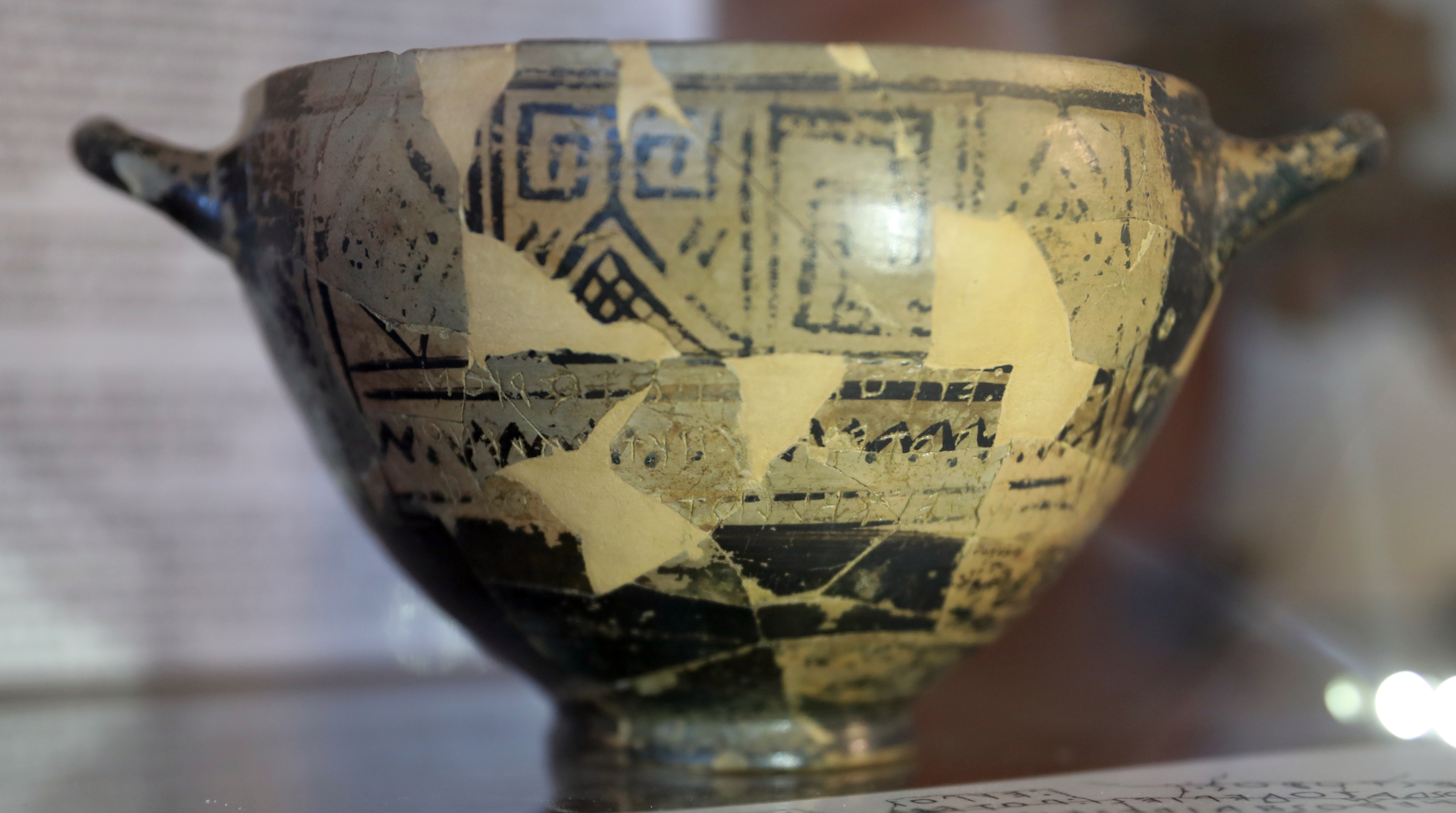
Nestor’s Cup (Geometric Cup)
-Origin: Ischia, Italy
-Maker: Unknown
-Year: 720 BCE (8th c. BCE)
-Material: Clay (terracotta)
-Location: Villa Arbusto Archaeological Museum, Ischia
-Importance: Has the inscription “I am Nestor's cup, good to drink from. Whoever drinks this cup empty, straightaway desire for beautiful-crowned Aphrodite will seize him.”

Eleusis Amphora (Storage Vessel)
-Origin: Attica, Greece
-Maker: Polyphemos Painter
-Year: 650 BCE (7th c. BCE)
-Material: Clay (terracotta, black-and-white style)
-Location: Archaeological Museum of Eleusis, Greece
-Importance: Depicts Odysseus in Book 9 of the Odyssey, they blind the Cyclops (Polyphemus)

Penelope and Telemachus (Wine Cup)
-Origin: Attica, Greece
-Maker: Penelope Painter
-Year: 440 BCE (5th c. BCE)
-Material: Clay (terracotta, red-figure technique)
-Location: National Etruscan Museum in Chiusi, Italy
-Importance: Penelope (Odysseus’ wife) and Telemachus (his son) depicted together, she is in grief about his 20 year absence while her son wants to find him

The Nessos Amphora (Storage Vessel)
-Origin: Athens, Greece
-Maker: The Nessos Painter
-Year: 625 - 600 BCE (7th c. BCE)
-Material: Clay (terracotta, black-figure technique)
-Location: National Archaeological Museum of Athens, Greece
-Importance: Herakles stabs Nessos (the centaur) with a sword because Deianeira (Herakles’ wife) was assaulted by Nessos on the river. Herakles said that the blood from Nessos would act as a love potion if he was ever unfaithful, but it had Hydra venom in it. She put it on Herakles’ shirt, and he burned to death due to it
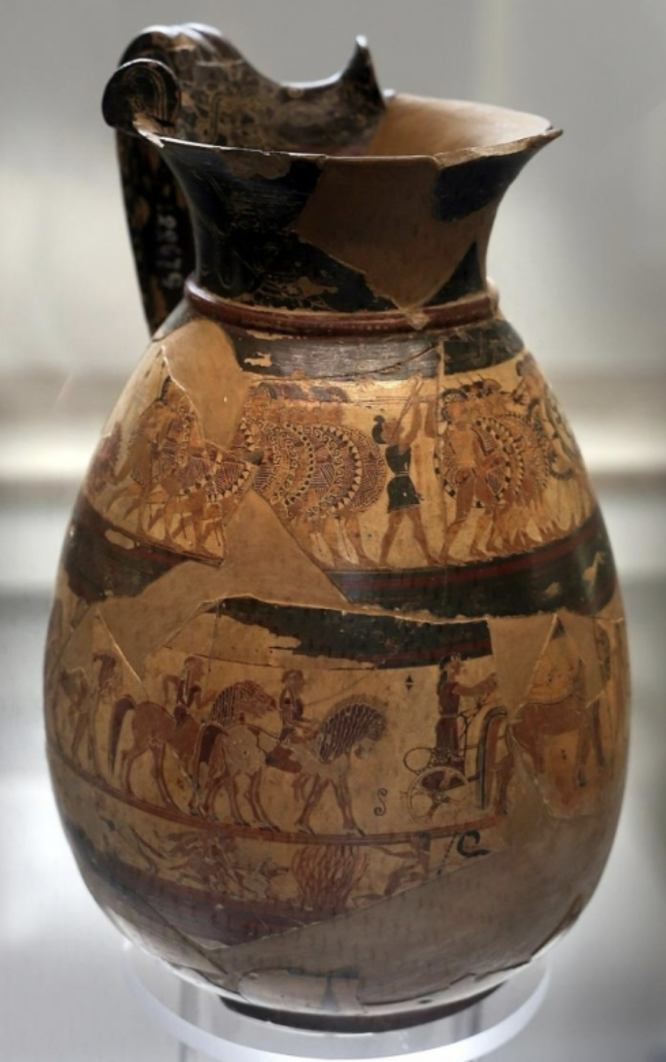
Chigi Vase
-Origin: Corinth, Greece
-Maker: Unknown
-Year: 650 - 640 BCE (7th c. BCE)
-Material: Clay (terracotta, black-figure technique)
-Location: National Etruscan Museum, Rome
-Importance: Depicts the Phalanx Formation to form a defensive wall of shields. Also shows Also shows the Judgment of Paris. Paris (Prince of Troy) was judging Hera, Athena, and Aphrodite

The François Vase (Krater or Mixing Bowl)
-Origin: Etruscan Tomb, Italy
-Maker: Kleitias and Ergotimos
-Year: 570 BCE (6th c. BCE)
-Material: Clay (terracotta, black-figure technique)
-Location: National Archaeological Museum of Florence, Italy
-Importance: Shows the marriage of Peleus and Thetis which helped start the Trojan War. Also became the parents of Achilles who went on to become a hero in the war
Shows the Calydonian Boar Hunt in which heroes of the village (mainly Meleager) had to stop a boar sent by Artemis after the king did not leave an offering for him
Shows Achilles chasing the Trojan Prince Troilus on horseback because if Troilus did not reach 21 then Troy would not fall
Shows Achilles after being killed by Paris being carried by Ajax
Shows the Return of Hephaistos in which he comes back after being cast off Mt Olympus by Hera as a baby because he was born ugly

Ajax and Achilles Playing Dice (Amphora)
-Origin: Vulci, Italy
-Maker: Exekias
-Year: 540 - 530 BCE (6th c. BCE)
-Material: Clay (terracotta, black-figure technique)
-Location: Vatican Museums, Vatican City
-Importance: Not depicted in any actual story, but shows Achilles and Ajax taking a break from the Trojan War. Maker likely made up this story

Achilles Bandaging Patroclus (Cup)
-Origin: Vulci, Italy
-Maker: Sosias
-Year: 500 BCE (6th c. BCE)
-Material: Clay (terracotta, red-figure technique)
-Location: Altes Museum, Berlin
-Importance: Shows Achilles tending to Patroclus who is in pain, reflects a story in the Iliad, and shows their bond

Achilles slaying the queen of the Amazons, Penthesilea (Amphora)
-Origin: Vulci, Italy
-Maker: Exekias
-Year: 540 - 530 BCE (6th c. BCE)
-Material: Clay (terracotta, black-figure technique)
-Location: The British Museum, London
-Importance: Shows Achilles slaying the queen of the Amazons after she came to the battlefield to fight for the Trojans after Hector’s death, but Achilles fell in love with her after seeing her face and felt sad about it
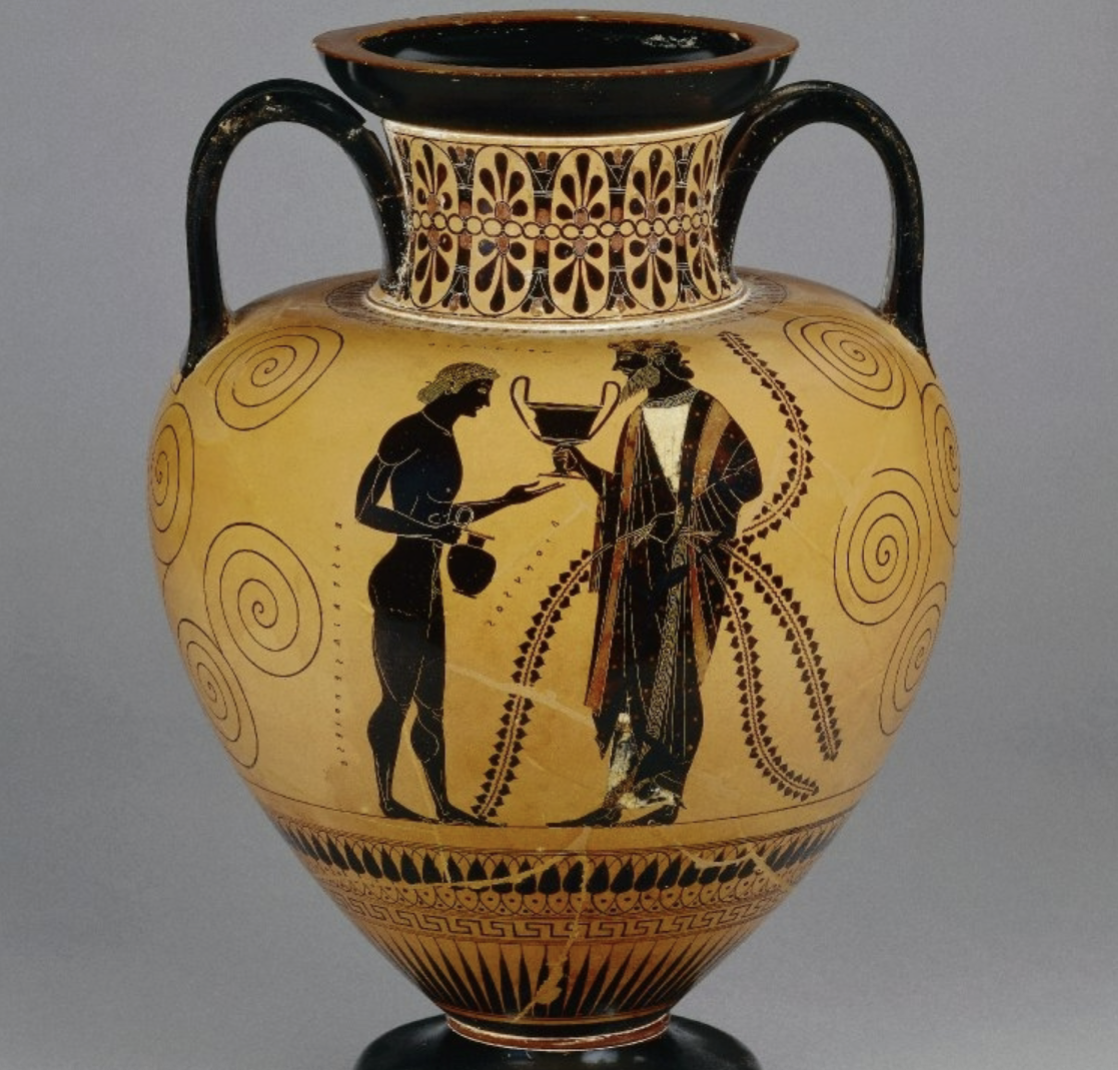
Dionysos and his son Oinopion (Amphora, same as Achilles and Penthesilea)
-Origin: Vulci, Italy
-Maker: Exekias
-Year: 540 - 530 BCE (6th c. BCE)
-Material: Clay (terracotta, black-figure technique)
-Location: The British Museum, London
-Importance: Relates Dionysos with wine
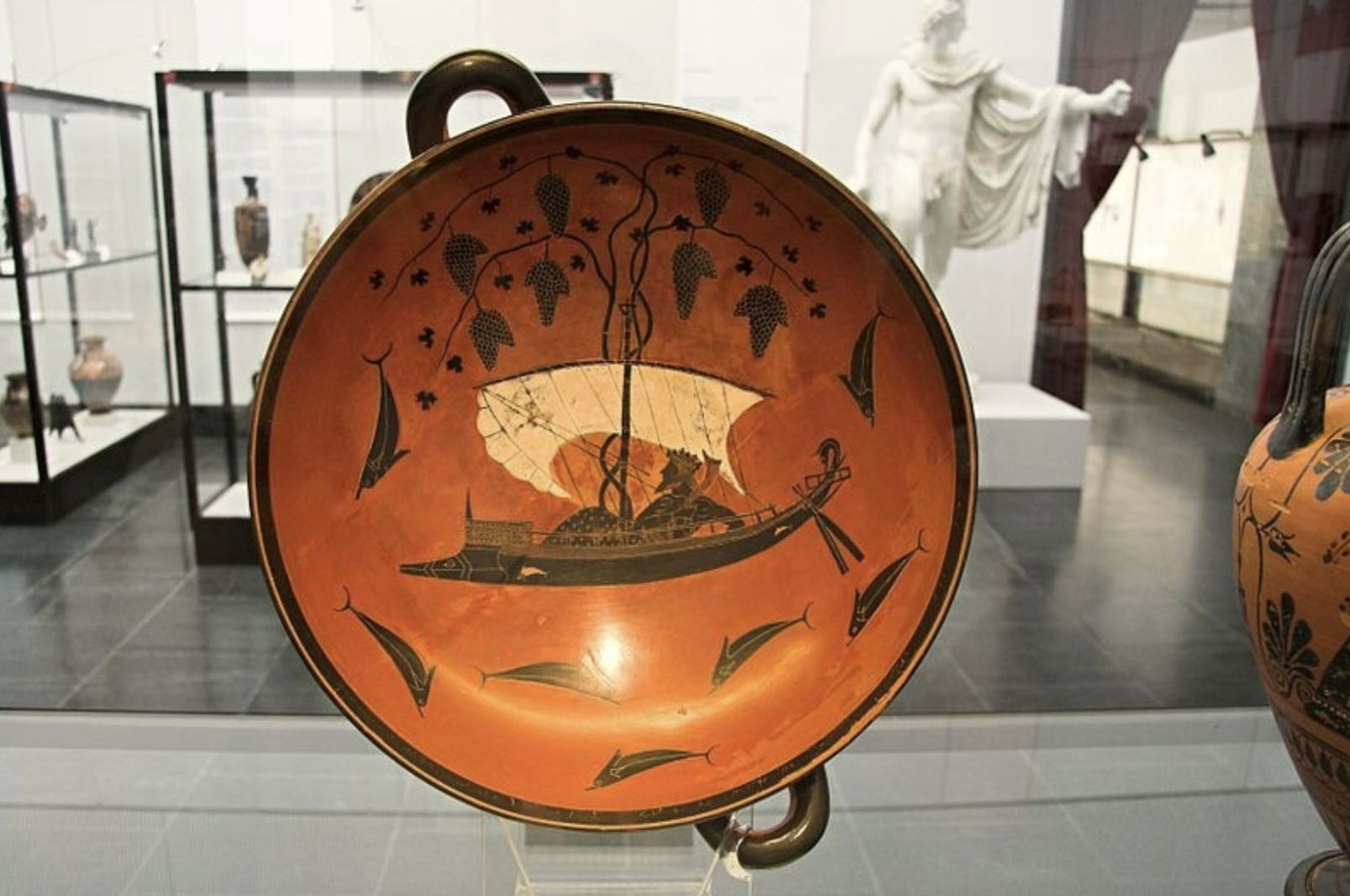
Dionysos in the Sea with Dolphins (Drinking Cup)
-Origin: Vulci, Italy
-Maker: Exekias
-Year: 540 - 530 BCE (6th c. BCE)
-Material: Clay (terracotta, black-figure technique)
-Location: The Staatliche Antikensammlungen, Munich
-Importance: Pirates try to kidnap him (Homeric Hymn to Dionysos), and he turns them into dolphins and turns the mast of the ship into vines. Exterior is a depiction of Medusa that makes it look like a mask when drinking from it