Week 3 MODELS FOR POPULATION HEALTH
 Call Kai
 Learn
Learn Practice Test
 Spaced Repetition
 Match
Match Flashcards
 Knowt Play
1/28

There's no tags or description
Looks like no tags are added yet.
Name | Mastery | Learn | Test | Matching | Spaced | Call with Kai | Chat |
|---|
No analytics yet
Send a link to your students to track their progress
29 Terms
What is population health?
“Population health is the distribution of health outcomes within a population, the determinants that influence distribution, and the policies and interventions that affect determinants.”
What do we mean by population?
Geographically defined population such as county, state, or country
At-risk groups
CommunityHealth vs. Population Health

Health inequality
Health inequality is defined as differences in the distribution of health status and achievement of health outcomes that exist among specific groups due to genetic or other factors that cannot be prevented or modified
Differences in the distribution of health outcomes across populations
Health disparities
Preventable differences in the burden of disease, injury, violence, or opportunities to achieve optimal health that are experienced by socially disadvantaged populations
A disproportionate number of health conditions and deaths compared with the general population
Social Determinants of Health
The non-medical factors that influence health outcomes. They are the conditions in which people are born, grow, work, live, and age, and the wider set of forces and systems shaping the conditions of daily life.
Health inequities
Disparities in metrics of health outcomes due to avoidable differences in social, economic, geographical, and healthcare resources that are unfair and unjust. This concept is grounded in the notion of distributive justice
Built environment
Human-made or modified environment where we live, work, and play
Health indicators
An approach to capture specific health characteristics of a particular population
True or False: the following statement refers to the term "stressor" - Tension producing stimuli that have the potential to cause disequilibrium
True
What is Public Health Nursing?
Public health nursing is the practice of promoting and protecting the health of populations using knowledge from nursing, social, and public health sciences
Theories/Models of population health
Fundamental Causes
Weathering
Allostatic Load
Fetal Origin
Embodiment
Historical Trauma
Epigenetics
Social Status Syndrome

Fundamental Causes
Social conditions are fundamental causes of health inequities
Social determinants of health


Weathering Hypothesis
Consistent exposure to stressors leads to accelerated aging
Accelerated aging
Chronic stress exposure
Marginalized group

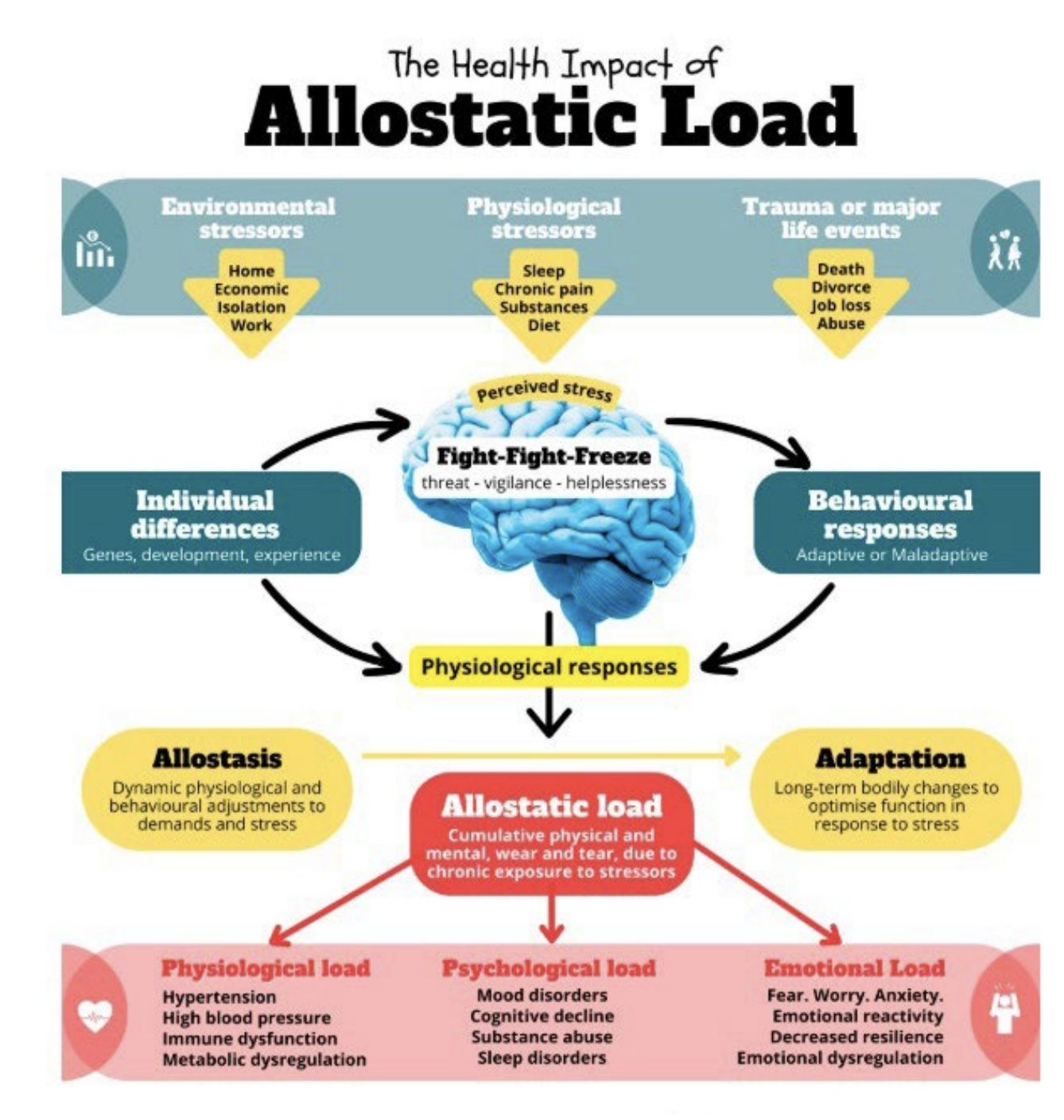
Allostatic Load Theory
The cumulative, physical "wear and tear" on the body that results from chronic, repeated exposure to stress
Acute stress triggers the fight-or-flight response; the body builds up cortisol and adrenaline
Long-Term Damage: When stressors never let up or recovery time is missing, these same survival hormones keep blood pressure, heart rate, and inflammation elevated, eroding health over time.
Health Impacts: High allostatic load correlates with a higher risk of cardiovascular disease, type 2 diabetes, immune dysfunction, and major depressive disorder.
Early warning signs, morbidity

Historical Trauma
Higher prevalence of diseases among populations that historically experienced trauma
Collective trauma the group is experiencing continues to perpetuate
Intergenerational trauma


Epigenetics
External factors influence gene expression
NOT gene mutation
Whether/how genes are expressed
Exposure to social/environmental and other factors affects how and what information genes can carry.
Doesn’t change the gene

Embodiment theory
Embodiment of material and social world
Biological embodiment of life and work conditions
Resulting in production and reproduction of social and biological inequities

Fetal Origin Theory
SES and environment of the mother even before conception predicts the health trajectory of the fetus in later life
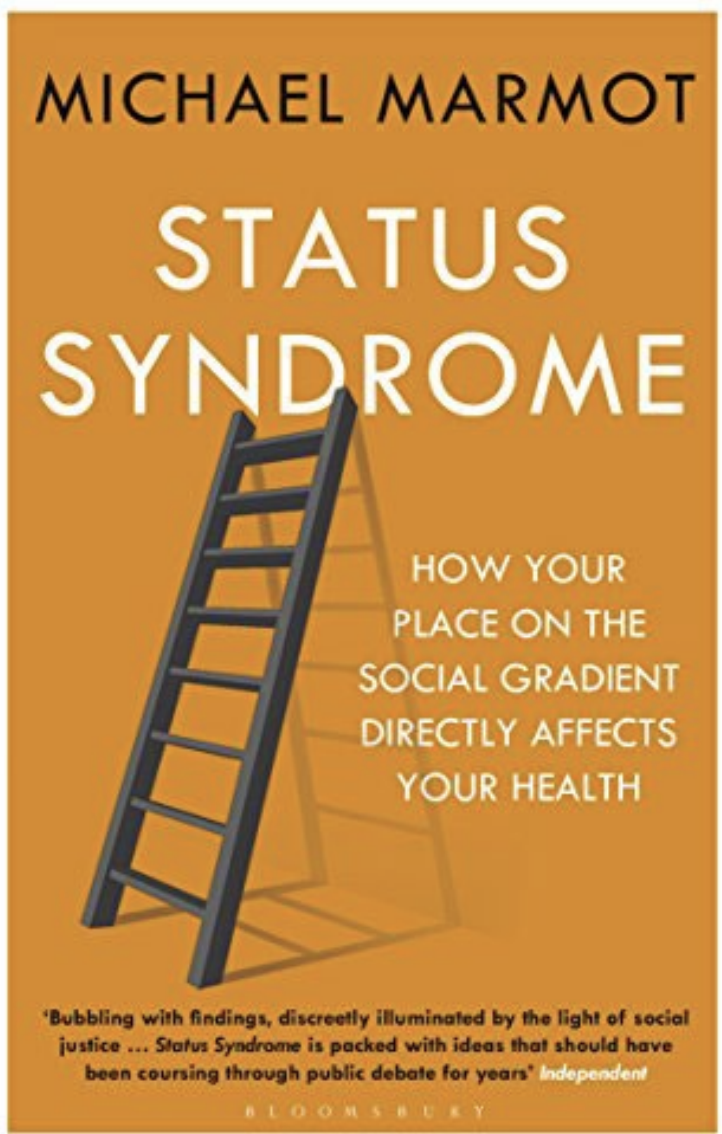
Social Status Syndrome
Better social status is a better predictor of health

World Health Organization (WHO)
Measurable Impact
Life Expectancy (LE)
Healthy Life Expectancy (HALE)
Targets by 2023 (Triple billion)

Healthy People 2030
Overarching Goals:
Attain healthy, thriving lives and well-being free of preventable disease, disability, injury, and premature death.
Eliminate health disparities, achieve health equity, and attain health literacy to improve the health and well-being of all.
Create social, physical, and economic environments that promote attaining the full potential for health and well-being for all.
Promote healthy development, healthy behaviors, and well-being across all life stages.
Engage leadership, key constituents, and the public across multiple sectors to take action and design policies that improve the health and well-being of all

CDC
Uses the Healthy People 2030 Framework
Focusing on key areas:
Healthcare access and quality
Education access and quality
Social and community context
Economic stability
Neighborhood and built environment
Programs & evaluation

Robert Wood Johnson (RWJF)
Culture of Health
Health equity at the core
County Health Rankings & Roadmaps

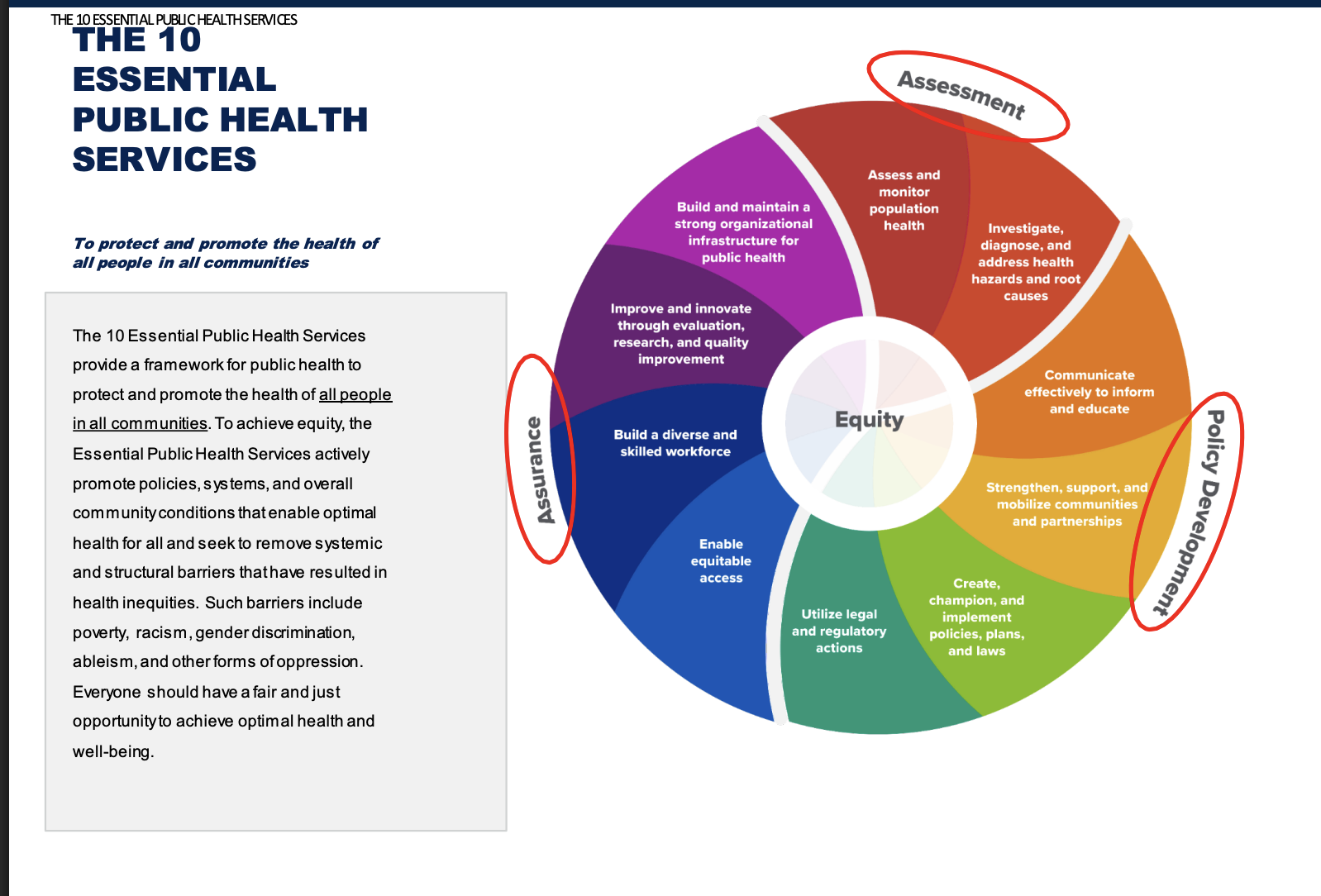
THE 10 ESSENTIAL PUBLIC HEALTH SERVICES
“Public health nursing practice focuses on population health through continuous surveillance and assessment of multiple determinants of health with the intent to promote health and wellness, prevent disease, disability and premature death; and improve neighborhood quality of life. These population health priorities are addressed through identification, implementation, and evaluation of universal and targeted evidence-based programs and services that provide primary, secondary, and tertiary preventive interventions. Public health nursing practice emphasizes primary prevention with the goal of achieving health equity’ (American Nurses’ Association [ANA], 2013)
![<p>“Public health nursing practice focuses on population health through continuous surveillance and assessment of multiple determinants of health with the intent to promote health and wellness, prevent disease, disability and premature death; and improve neighborhood quality of life. These population health priorities are addressed through identification, implementation, and evaluation of universal and targeted evidence-based programs and services that provide primary, secondary, and tertiary preventive interventions. Public health nursing practice emphasizes primary prevention with the goal of achieving health equity’ (American Nurses’ Association [ANA], 2013)</p>](https://assets.knowt.com/user-attachments/07e1163d-0fc4-4b13-9973-e09d0a318ca7.png)

SDOH

SOCIAL DETERMINANTS AND SOCIAL NEEDS

Core Focus for Upstream Thinking
Root Cause
Systemic Interventions
Equity and Justice
Collaboration and Multilevel approach
Long-Term Impact
Thinking Upstream
