Lecture 20 - Genetically Modified Organisms
 Call Kai
 Learn
 Practice Test
 Spaced Repetition
 Match
 Flashcards
 Knowt Play
1/79

There's no tags or description
Looks like no tags are added yet.
80 Terms

Genetically modified organism (GMO)
An organism whose genetic material has been altered using genetic engineering techniques

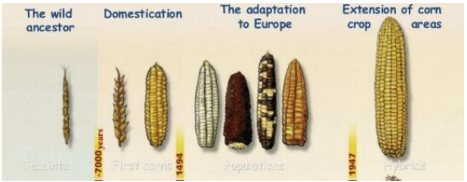
Traditional breeding methods
Cross-breeding, selective breeding and mutation breeding
used by humans for more than 10,000 years to modify crops and animals
Key limitation of traditional breeding
These methods often involve mixing all of the genes from two different sources
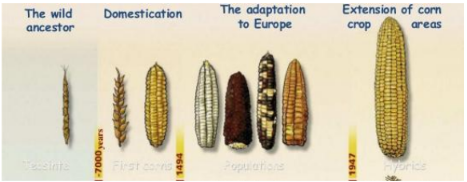
Products of traditional breeding
Common crops like modern corn varieties and seedless watermelons
How modern genetic engineering differs
Scientists can take just a beneficial gene, such as insect resistance or drought tolerance, and transfer it into a plant
Reasons for genetic modification today
Higher crop yields, longer storage life, better appearance, better nutrition, or some combination of these traits
similar to the reasons thousands of years ago
Application of GMOs: animals
Genetically modified animals may be used to grow human transplant tissues and organs (xenotransplantation)
Application of GMOs: microorganisms
A number of microorganisms are being considered as future clean fuel producers and biodegraders
Application of GMOs: pharmaceuticals
Pharmaceutical companies are exploring introducing vaccines, antibodies and medicines into foods
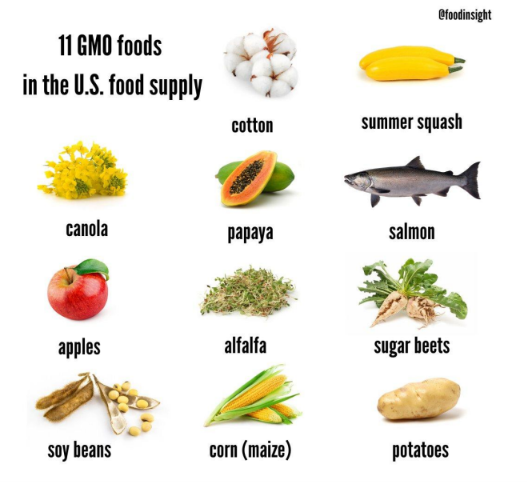
Eleven GMO foods in the US food supply
Cotton, summer squash, canola, papaya, salmon, apples, alfalfa, sugar beets, soybeans, corn (maize), and potatoes
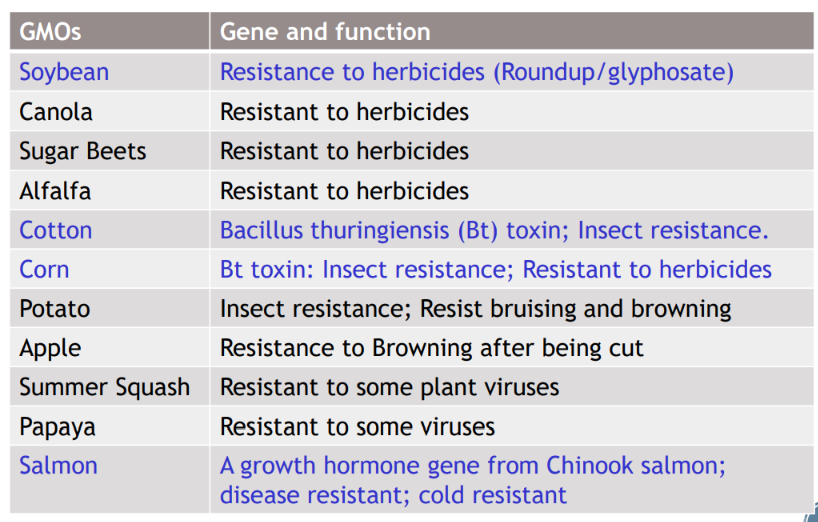
Five trait categories introduced into GMOs
Resistance to herbicide (saves labor)
resistance to insects (reduces pesticide use)
resistance to browning (reduces food waste)
resistance to virus (higher yield)
fast growing (higher yield)

Agrobacterium tumefaciens method step 1
The Ti plasmid is removed from the bacterium
T-DNA is cut by a restriction enzyme

Agrobacterium method steps 2–3
Foreign DNA is cut by the same enzyme
inserted into the T-DNA of the plasmid, creating a recombinant Ti plasmid

Agrobacterium method steps 4–5
plasmid is reinserted into a bacterium
bacterium is used to insert the T-DNA carrying the foreign gene into the chromosome of a plant cell

Agrobacterium method steps 6–7
The plant cells are grown in culture
plant is generated from a cell clone in which all cells carry the foreign gene and may express it as a new trait

Phenylketonuria (PKU)
An inherited disorder that increases the levels of phenylalanine in the blood
phenylalanine is a building block of proteins obtained through the diet, found in all proteins and in some artificial sweeteners

Phenylalanine hydroxylase (PAH)
The enzyme necessary to metabolize phenylalanine → tyrosine

Biochemistry of PKU
When PAH activity is reduced, phenylalanine accumulates and is converted into phenylpyruvate via a minor transaminase pathway with glutamate
build-up of toxic phenylpyruvate (plus phenylacetate and phenylethylamine) detectable in urine
tyrosine deficiency
SYNB1618
A GM probiotic developed by Synlogic
derived from the safe probiotic strain Escherichia coli Nissle 1917

How SYNB1618 works
It carries genes encoding phenylalanine ammonia lyase (PAL), which converts phenylalanine to cinnamic acid, a non-toxic compound

Transgenic animal
An animal that carries a foreign gene deliberately inserted into its genome
giving it certain properties different from non-GMO’s

Transgenesis
The process by which introduction of foreign genes takes place
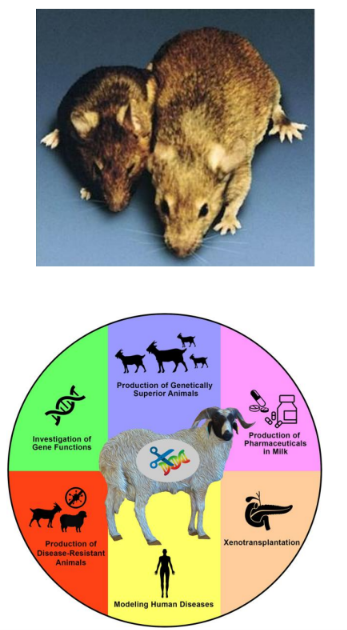
How foreign genes are inserted into animals
Into the germ line of the animal
using plasmid vectors, viral vectors, pronuclear injection or liposomes — so that the gene can be transmitted to the progeny

First transgenic animal
The "Super Mouse," created in 1982 by inserting a human growth hormone gene (PEPCK-C, which helps make glucose) into the mouse genome
producing offspring larger than the parents

Model transgenic animals besides the mouse
Pig, goat, cow, sheep and fish
Five examples of inserting a foreign gene
Injecting DNA into the nucleus of a fertilized egg
injecting DNA into embryonic stem cells
using viruses to transfer the gene by recombinant DNA
introducing genetic material into sperm that fertilize eggs
electrically induced membrane fusion
Research uses of transgenic animals
Understanding regulation of gene expression and immune system function
treating genetic disease
overcoming viral diseases
cancer research
toxicological studies
development of cell factories for therapeutics production
pharmaceutical research
disease models
promotion of reproductive performance

Timeline of transgenic animals


Pronuclear injection (PNI)
Among the first techniques used between 1980 and the 1990s to generate transgenic animals
introducing DNA constructs into the pronucleus of fertilized eggs and transferring the injected eggs to foster mothers

Pronucleus
The stage of a fertilized egg where the sperm head has not yet merged with the egg nucleus, giving two distinct pronuclei that subsequently fuse to create a diploid zygote nucleus
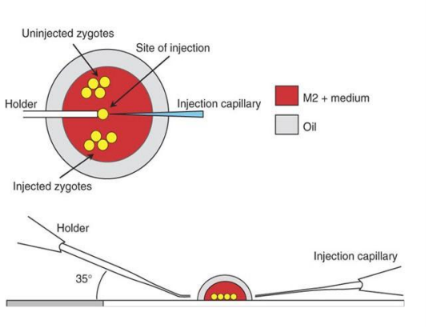
Efficiency of PNI
In both sheep and goats, reported efficiencies of conventional PNI of DNA constructs were ~1% of the injected zygotes

Causes of low PNI efficiency
Random integration and variable copy number of integrated DNA constructs, making transgene expression unpredictable
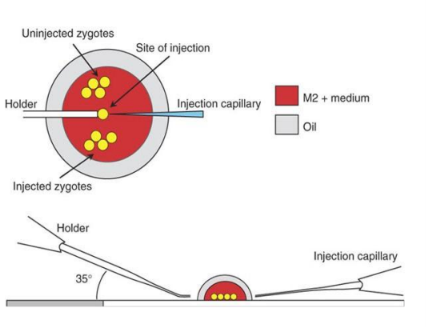
Technical challenge of PNI in livestock
Visualization of the pronucleus is obstructed by a large amount of lipid granules in livestock eggs
makes the cytoplasm nontransparent

Sperm-mediated gene transfer (SMGT)
A transgenic technique
transfers genes based on the ability of sperm cells to spontaneously bind and internalize exogenous DNA and transport it into an oocyte during fertilization

Magnetic nanoparticles (MagNPs) in SMGT
They have characteristics making them well-suited for generating transgenic animals:
high carrying efficiency
non-immunogenicity
strong targeting inducible via magnetic fields
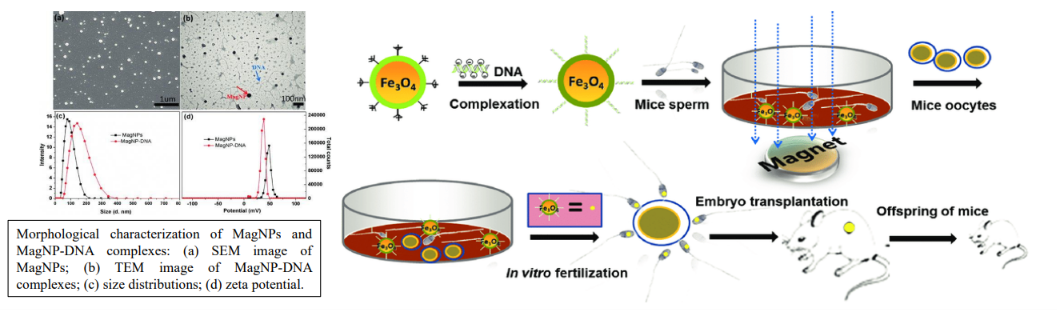
MagNP-SMGT experiment
Exogenous plasmid DNA loaded onto Fe3O4 MagNPs was delivered into mouse sperm cells under a magnetic field
transfected sperm were incubated with oocytes to complete fertilization
transgenic EGFP mice were generated through embryo transplantation
Advantages of MagNP-SMGT
Exceedingly facile, fast and cost-effective, with higher transfection efficiency than conventional liposome methods

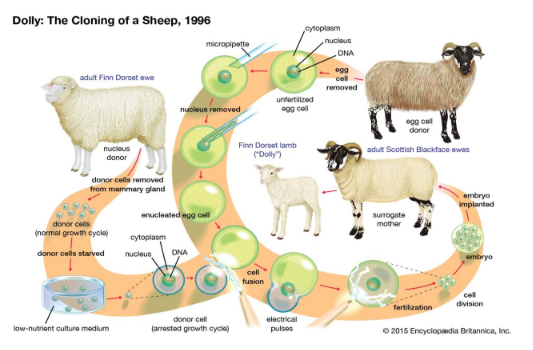
Somatic cell nuclear transfer (SCNT)
Somatic cell cloning, in which the nucleus of a somatic (body) cell is transferred to the cytoplasm of an enucleated egg (egg w/ nucleus removed)
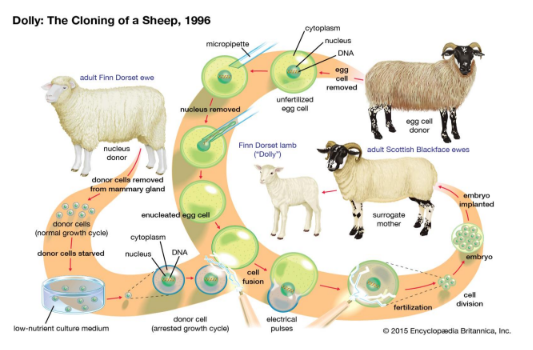
Reprogramming in SCNT
Once inside the egg, the somatic nucleus is reprogrammed by egg cytoplasmic factors to become a zygote nucleus
Getting ESCs from SCNT
egg is allowed to develop to the blastocyst stage
culture of embryonic stem cells (ESCs) can be created from the inner cell mass

Species in which SCNT-derived ESCs have been made
Mouse, monkey and human
human ESCs have potential applications in both medicine and research
Status of SCNT as a method
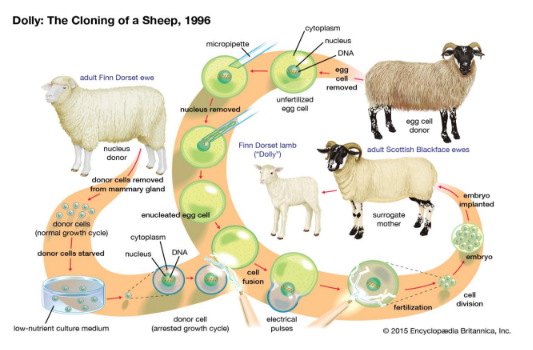
Despite relatively low efficiency and the potential for developmental anomalies, SCNT has become — in parallel with PNI — a basic and dominant methodology to generate transgenic and gene-targeted sheep and goats

Dolly the sheep
Successfully cloned in 1996 by fusing the nucleus from a mammary-gland cell of a Finn Dorset ewe into an enucleated egg cell from a Scottish Blackface ewe
carried to term in another Scottish Blackface ewe, she was a genetic copy of the Finn Dorset ewe

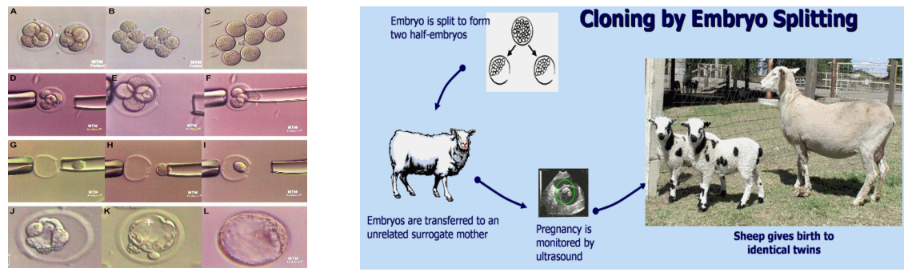
Cloning by embryo splitting
“twinning by separation of blastomeres”
a set of primary reproductive techniques that have been applied to fulfill purposes related to the production of identical twins, multiplets, and chimeras
Embryo splitting procedure
Collection of cleaved embryos from super-ovulated donor females
blastomere separation
placement of each half into the zona pellucida
embedding in agar
transfer to recipient mothers
Limitation of embryo splitting
Technical difficulties and suboptimal pregnancy rates mean only a relatively small number of individuals are produced
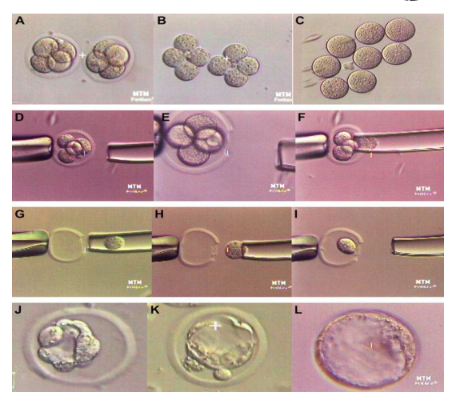
visual steps of embryo splitting
(A,B,C) Blastomere separation where the embryo is split into individual cells
(D,E,F) Creation of an empty zona pellucida where the empty mouse zonae pellucidae were created by removing and discarding the blastomeres from the mouse embryos
(G,H,I) Microinjection of the blastomere where a single blastomere is shown in the transfer pipette, positioned for placement into a surrogate zona pellucida, and immobilized using a holding pipette
(J,K,L) In vitro culturing of a split embryo to a blastocyst.
Virus-based transgenesis
Using viral vectors as vehicles or carriers to deliver chosen exogenous DNA constructs into targeted expression positions
Intra-mammary injection strategy
Direct intra-mammary injection via the teat canal for the transient production of valuable proteins in milk
Viral vectors + RNAi mechanism
Used to mediate loss of gene expression in order to:
investigate potential biological functions of genes
suppress expression of disease-related genes
inhibit expression of genes that negatively regulate economically important traits

Steps of viral-vector RNAi transgenesis
A siRNA construct is transfected into a packaging cell line
packaged viral particles are purified by centrifuging the cell supernatant. interference efficiency is tested in cell culture
particles are injected into the perivitelline space of a fertilized egg
after in vitro culture the infected early-stage embryos are transferred into recipients
after gestation, founder transgenic animals are born and tested for resistance
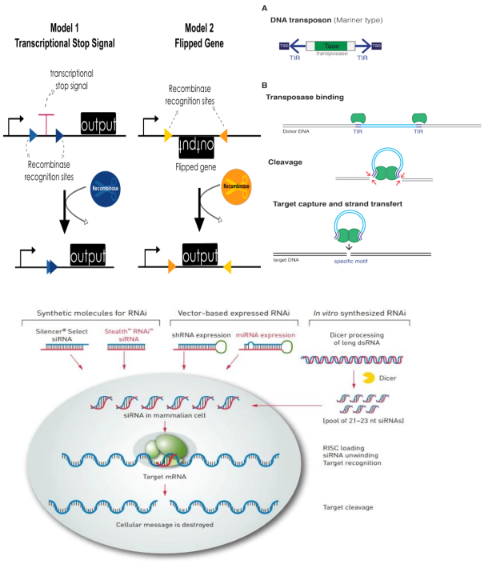
Recombinases
Enzymes that catalyze site-specific recombination events within DNA
i.e., genetic recombination (crossover) during meiosis, which generates new combinations of alleles on chromosomes

Unidirectional tyrosine recombinases
Cre or FLP
used to remove a transcriptional stop signal so a downstream gene can be expressed

Unidirectional serine recombinase
TP901
used to flip a gene from off → on orientation

Transposons
Segments of DNA that can move around to different positions in the genome of a single cell
they may cause mutations, increase/decrease the amount of DNA in the genome
if the cell is a gamete precursor, affect the genomes of descendants

RNA interference (RNAi)
A biological process in which RNA molecules inhibit gene expression or translation
done by neutralizing targeted mRNA molecules

Historical names for RNAi
Co-suppression, post-transcriptional gene silencing (PTGS), and quelling

Four major classes of site-specific endonucleases
Meganucleases
ZFNs
TALENs
CRISPR/Cas9

Abbreviations in the endonuclease figure
FokI is the type IIS restriction enzyme from Flavobacterium okeanokoites
PAM is the protospacer adjacent motif
sgRNA is single-guide RNA

Delivery approaches for endonucleases
Direct microinjection into embryos (mainly cytoplasmic injection in sheep and goats)
somatic cell nuclear transfer, mainly using fibroblast cells
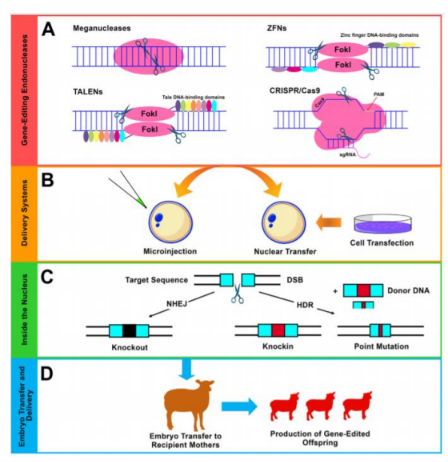
NHEJ outcome after endonuclease cutting
Non-homologous end joining results in small insertions and/or deletions (indels)
leading to gene knockout or disruption

HDR outcome after endonuclease cutting
Homology-directed repair acts in the presence of exogenous donor DNA
mediates precise genetic modification, including knockin (site-specific integration) and point mutation (single-nucleotide alteration)

Final step of the endonuclease workflow
Embryo transfer, gestation, and the generation of genetically edited offspring
Why animal models are chosen for human disease
Because of their similarity to humans in terms of genetics, anatomy and physiology
Leading organism for disease research
The mouse
only mammal providing a rich resource of genetic diversity coupled with the potential for extensive genome manipulation
Sources of mouse genetic variation
A rich resource occurs naturally in inbred and special strains owing to spontaneous mutations
Five ways to obtain desired gene mutations in mice
Targeted mutations that eliminate function in the whole organism or a specific tissue
forward genetic screens using chemicals or transposons
introduction of exogenous transgenes as DNAs
bacterial artificial chromosomes (BACs)
reporter constructs
Natural variation
A change in one or more nucleotides between individuals
Reverse genetics
The ability to introduce a mutation by design
Forward genetics
Using agents including chemicals, radiation, and viruses to disrupt genes
identify their functions and the diseases associated with them
Transgenics
A gene that does not inherently belong to the organism but is introduced into its genome from an outside source

Why the mammary gland is preferred for therapeutic protein production
Large quantities can be extracted and purified

Therapeutic proteins from transgenic sheep and goats
derived from the mammary gland:
Antithrombin III (AT III)
tissue plasminogen activator (TPA)
α-antitrypsin

Glycosidase from transgenic rabbits
Produced in rabbit milk and used in the treatment of Pompe disease
Pompe disease
A rare genetic disease characterized by the abnormal buildup of the sugar molecule glycogen inside cells

Therapeutic proteins from eggs
The proteins are encoded in the chicken's DNA and produced as part of the egg white

Making the transgenic chickens
Lentiviral vectors were packaged and injected into embryos from new-laid eggs
generate G0 transgenic birds producing human cytokine interferon α2a and two species-specific Fc fusions of the cytokine CSF1
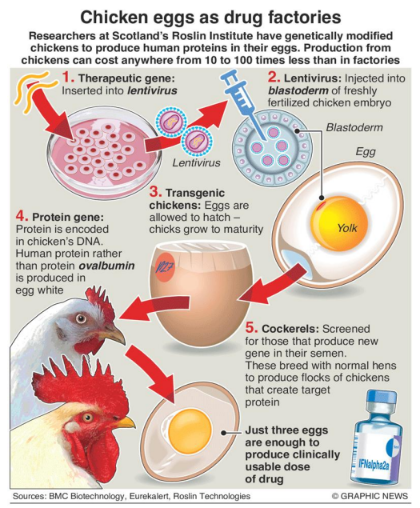
Screening the transgenic birds
G0 birds with vector sequence in the germ line at a frequency >1% were bred with wild-type hens to make G1 birds
screened by PCR and Southern transfer analysis to confirm the complete gene was present as a single copy
egg white from G1 hens or female G2 offspring of G1 cockerels was then tested for transgene-derived protein

Cost advantage of chicken production
Production from chickens can cost from 10 to 100 times less than mammalian cell culture

Findings of the egg-protein study
High quantities of protein can be recovered from each egg using a simple purification system
no adverse effects on the chickens, which lay eggs as usual