MS1 - Dialysis and Transplant
 Call Kai
 Learn
 Practice Test
 Spaced Repetition
 Match
 Flashcards
 Knowt Play
1/27

There's no tags or description
Looks like no tags are added yet.
28 Terms
SYSTEMIC MANIFESTATIONS OF KIDNEY FAILURE
Urinary System Cardiopulmonary Gastrointestinal Tract Nervous System (central & peripheral) Integument Eyes Endocrine Hematopoietic Skeletal
Loss of kidney function requires
dialysis or transplantation (aka renal replacement therapy)
Hemodialysis (HD) =
a dialysis method that uses a machine to filter waste and excess fluids from the blood.
Peritoneal dialysis aka
continuous ambulatory peritoneal dialysis (CAPD)
continuous cycling peritoneal dialysis (CCPD)

hemodylasis
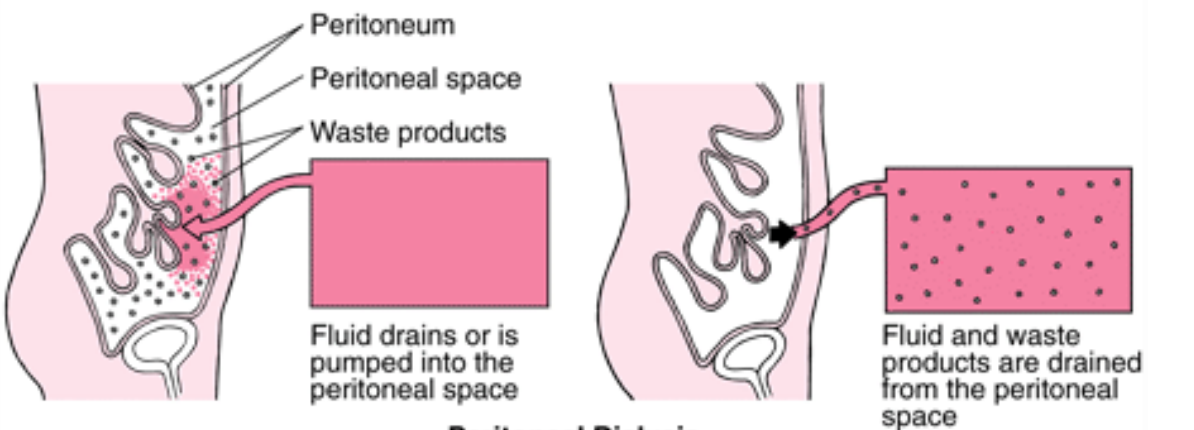
peritoneal dialysis
What is the most common form of dialysis (95%)?
hemodailysis
HEMODIALYSIS frequency
3 sessions/week; 3-4 hrs/session
HEMODIALYSIS blood flows through
dialysis machine and back into venous system
AV fistula placement Waste products, excess fluid and electrolytes diffuse into dialyzing solution
HEMODIALYSIS can be done
at home or in a dialysis center (more common)
PERITONEAL DIALYSIS is typically admin
overnight/sleep
Many patients cannot effectively manage this independently at home
With peritoneal dialtsis the catheter is
implanted in the peritoneal cavity and a sterile dialyzing solution is installed, then drained
PERITONEAL DIALYSIS increases risk of
infection, catheter malfunction, dehydration, hyperglycemia, hernia
DIALYSIS COMPLICATIONS =
Fluid shifts, depression, INC infecrion rate, metabolism disorders, anemia, peripheral NP, check and back pain, hypersentivity, thromboses at access site
Fluid retention may lead to
HTN
Excess fluid removal may lead to
hypOtension
Metabolism disorders such as
Catabolism, anorexia, malnutrition
Peripheral neuropathy may improve with
consistent, adequate dialysis
Chest and back pain is termed
first-use syndrome
To prevent dialysis access site thromboses, obserse and monitor
site, peripheral pulses, edema
Exercise may be performed
before, during, or after dialysis
Functional capacity is typically
2 standard deviations below the age- and gender-predicted norm (ADLs is likely primary focus)
Exercise may improve
Physical functioning Exercise tolerance Quality of life Fatigue
Monitor virals but DO NOT take BP on
arm used for dialysis
RENAL TRANSPLANTATION is a treatment coice for
ESRD
Donor availability is a
limiting factor
For adults, graft is placed
extraperitoneal
in iliac fossa
For children, graft is placed
retroperitoneal